
Sikidy
possibly from Arabic sichr, meaning incantation or charm
An algebraic geomancy practiced by Malagasy peoples using seeds to read fate and prescribe remedies
Sikidy is a form of geomancy practiced in Madagascar by Malagasy peoples. It uses tree seeds arranged in a tableau to interpret vintana, or fate. The practice blends indigenous traditions with Islamic influences from medieval Arab traders.
- Uses fàno or tamarind seeds arranged in a toetry table
- Blends indigenous Malagasy traditions with Islamic astrology
- Practiced by Antemoro diviners since at least the fourteenth century
- Involves Boolean algebra and logical operations on seed piles
- Considered the Bible of ancestors by some practitioners
What it is
Sikidy is a divinatory system practiced by the Malagasy people of Madagascar. It is a form of algebraic geomancy that uses random data to reveal vintana, which translates to fate. A diviner arranges seeds into a specific table called a toetry. This arrangement undergoes mathematical operations to decode the initial random data. The resulting patterns are interpreted to answer questions about the future and identify sources of misfortune. The practice is considered central to traditional Malagasy religion and is viewed as a guide for daily life and major decisions.
Where it comes from
The practice is several centuries old and derives from Islamic geomantic traditions brought by Arab Muslim traders. Most historians link its origins to sea trade between India, the Persian Gulf, and East Africa in the ninth or tenth century. Scholars suggest it began as an indigenous art later influenced by Islamic astrology. The Antemoro people, who lived in southeastern Madagascar, were key carriers of this knowledge. They adapted Arabic astrological systems to local agricultural cycles and lunar months. The Matatane region served as a historic center for learning and training diviners.
How it is done
A practitioner known as an mpisikidy performs the ritual. He begins by gathering specific tree seeds, such as fàno or tamarind. Before starting, he may perform physical preparations involving incisions and pastes to empower his fingers and tongue. He then ritually arranges the seeds into a sixteen-column tableau called a toetry. Four columns contain randomly generated data, while eight columns are derived from logical operations. The diviner checks the table for errors before interpreting the results. The process involves algorithmic steps that resemble Boolean logic and parity checks.
Tools and materials
The primary tool is a set of tree seeds, specifically fàno (Entada species) or kily (tamarind). These seeds are gathered during initiation rituals. Sakalava diviners often place a fragment of hyaline quartz in front of the seeds. The seeds are arranged on a mat or in the sand. The toetry table consists of sixteen columns representing different lands and symbolic figures. The arrangement follows strict procedural rules consistent across Madagascar, though minor variations exist in cardinal alignment.
Sikidy, drawn and placed
- Living
- Revived
- Fading
- Historical
- Legendary
- Performed
- Lineage
- Islamic geomancy adapted to Malagasy culture
- Timing
- for newborns, migrations, and misfortune
What it is for
Sikidy is consulted for various questions regarding fate and the future. It helps identify sources of misfortune and prescribes ways to avoid bad luck. Diviners read the fate of newborns and plan annual migrations. The practice also addresses personal crises and health issues. Solutions often involve sacrifices or expiations to avert calamities. Clients seek guidance on everyday actions and significant life events. The diviner interprets the seed patterns to provide answers and recommendations.
Who does it
The diviner is called an mpisikidy, ny màsina, ombiasy, or ambiàsa. These terms reflect a lineage of prophetic knowledge. Initiation requires a long apprenticeship under a master. Students, called mianatsy, must gather specific seeds and pay a small fee. Among the Sakalava, men must be at least forty years old to practice. Initiates may perform physical rites involving incisions and pastes to gain power. The Antemoro are considered the true professionals and keepers of the tradition.
Peoples and places
Sikidy is practiced by Malagasy peoples throughout Madagascar. The Antemoro people in the southeast are credited with spreading the art. They maintained strong ties to Arab astrological traditions. Other groups, such as the Sakalava and Merina, have their own variations. The Merina use a simplified version called sikidy joria. Despite regional differences, the core mathematical construction remains uniform. The practice was historically important to pre-Christian Malagasy religion and royal courts.
At a glance: who, where and when
Who does it
Belief worlds


What people believe
The worldview behind sikidy involves spirits, gods, and fate. Diviners believe the seeds can communicate truth if awakened properly. Incantations are used to constrain spirits from deceiving the client. The practice links to Arab ancestors who walked on water and received the art from Zanahary, the supreme deity. A mythic lineage traces the transmission from Ranakandriana to the people. Sikidy is seen as a trust from sovereigns and a judgment of the people.
When it is done
Sikidy is used for births, journeys, and crises. It guides annual migrations and daily decisions. Historical records mention its use for newborns and state matters. The practice aligns with Malagasy lunar months, called volana. These were adapted to match astrological months, vintana. Specific days, like Friday, appear in myths and predictions. The timing of actions is often determined by the divination results.
How scholars and sceptics see it
Scholars view sikidy as a blend of indigenous and Islamic traditions. Stephen Ellis and Solofo Randrianja consider it one of the oldest components of Malagasy culture. Umar H. D. Danfulani notes the clear integration of Arabic divination. Chemillier et al. highlight the procedural consistency of the seed arrangements. Researchers document the historical role of Antemoro diviners in Malagasy kingdoms. The practice is studied as a unique example of cultural adaptation and mathematical application in divination.
Cautions and what is closed
Initiation involves physical risks, such as incisions and painful pastes. Among the Sakalava, practicing without proper age or preparation is believed to risk death. Myths warn of severe consequences for false predictions, including execution. Diviners must navigate the trickiness of communicating entities. The practice is closed to outsiders, requiring formal apprenticeship. Misuse or deception is warned against in incantations.
Compare and confuse
Sikidy is related to Islamic geomancy and Arabic astrology. It shares features with other seed-based divination methods. The term vintana connects to astrological concepts. Unlike Western geomancy, it uses specific Malagasy seeds and tables. The practice differs from general fortune-telling due to its mathematical structure. It is distinct from other African divination forms by its strong Arab influence.
Questions people ask about Sikidy
What is sikidy?
Sikidy is a form of algebraic geomancy practiced in Madagascar. It uses tree seeds arranged in a tableau to interpret fate and answer questions about the future.
Where does sikidy come from?
It originates from Islamic geomantic traditions brought by Arab traders. It blends these with indigenous Malagasy divinatory arts, likely developing through trade networks in the ninth or tenth century.
Who practices sikidy?
It is practiced by Malagasy peoples, particularly the Antemoro, Sakalava, and Merina. Diviners, known as mpisikidy, undergo long apprenticeships to learn the art.
How is sikidy performed?
A diviner gathers seeds and arranges them into a sixteen-column table. Mathematical operations decode the random data, which is then interpreted to reveal fate and prescribe remedies.
Good reading and sources
- Sikidy on WikipediaEncyclopedia
- More photos on Wikimedia CommonsPhotos and video
- Wikidata recordOpen data
The facts on this page come from the Wikipedia article "Sikidy", written by its contributors and used under the CC BY-SA 4.0 licence, and from its Wikidata record (CC0). EveryJaadu rewrote the text in its own words, with AI assistance, and compares every page with the article to make sure no passage is copied. It may be reused under the same CC BY-SA 4.0 licence with a link back.
It may contain mistakes. Names and customs differ from one community to the next, and some knowledge is closed to outsiders and left out here. This page describes belief and practice. It does not say that any of it works, it is not a how-to, and it is not medical advice. If something is wrong, tell us. Last refreshed 2026-10-05.
More from Madagascar
All the entries from Madagascar 🇲🇬 MadagascarMalagasy mythology
The oral traditions and ancestral beliefs of the Malagasy people in MadagascarTradition · Speaking with spirits and the dead · Protection Living
🇲🇬 MadagascarFamadihana
A Malagasy ritual to rewrap ancestors and celebrate their return to the spirit worldRite · Speaking with spirits and the dead · Luck and prosperity Fading
🇲🇬 MadagascarMalagasy mythology
The oral traditions and ancestral beliefs of the Malagasy people in MadagascarTradition · Speaking with spirits and the dead · Protection Living
🇲🇬 MadagascarFamadihana
A Malagasy ritual to rewrap ancestors and celebrate their return to the spirit worldRite · Speaking with spirits and the dead · Luck and prosperity Fading
 🇸🇳 Senegal and 5 moreAncestor veneration
Rituals of respect and offerings for the dead across many culturesTradition · Protection · Speaking with spirits and the dead Living
🇸🇳 Senegal and 5 moreAncestor veneration
Rituals of respect and offerings for the dead across many culturesTradition · Protection · Speaking with spirits and the dead Living
 🇲🇬 Madagascar and 4 moreGeomancy
A cross-cultural system of divination using earth, sand, and landforms to read the future or align spaces.Oracle · Seeing and foretelling · Power and authority Living
🇲🇬 Madagascar and 4 moreGeomancy
A cross-cultural system of divination using earth, sand, and landforms to read the future or align spaces.Oracle · Seeing and foretelling · Power and authority Living
Related elsewhere
All oracle 🇩🇿 Algeria and 1 moreAhmad al-Buniأحمد البوني المالكي
A medieval Sufi scholar known for works on letter mysticism and talismansText · Power and authority · Seeing and foretelling Historical
🇩🇿 Algeria and 1 moreAhmad al-Buniأحمد البوني المالكي
A medieval Sufi scholar known for works on letter mysticism and talismansText · Power and authority · Seeing and foretelling Historical
 🇮🇹 ItalyFortunaFortūna
The Roman goddess of luck and fate, shown with a wheel and a horn of plentyBeing · Luck and prosperity · Seeing and foretelling Historical
🇮🇹 ItalyFortunaFortūna
The Roman goddess of luck and fate, shown with a wheel and a horn of plentyBeing · Luck and prosperity · Seeing and foretelling Historical
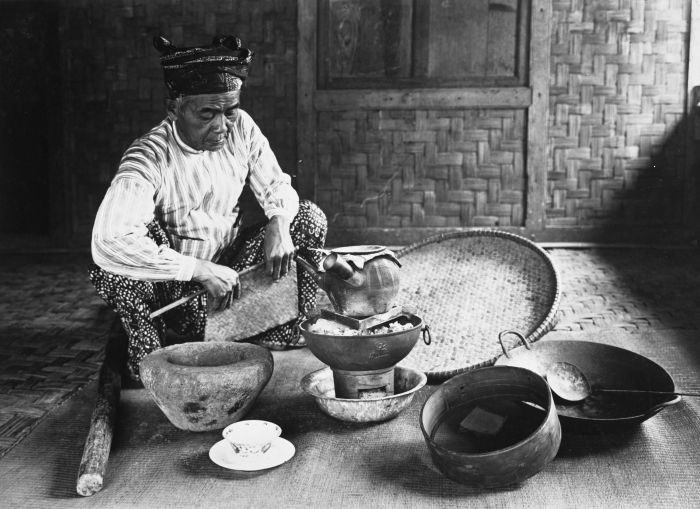 🇮🇩 Indonesia and 2 moreDukun
A traditional healer and spirit medium in Indonesian folk practiceTradition · Healing · Seeing and foretelling Living
🇮🇩 Indonesia and 2 moreDukun
A traditional healer and spirit medium in Indonesian folk practiceTradition · Healing · Seeing and foretelling Living
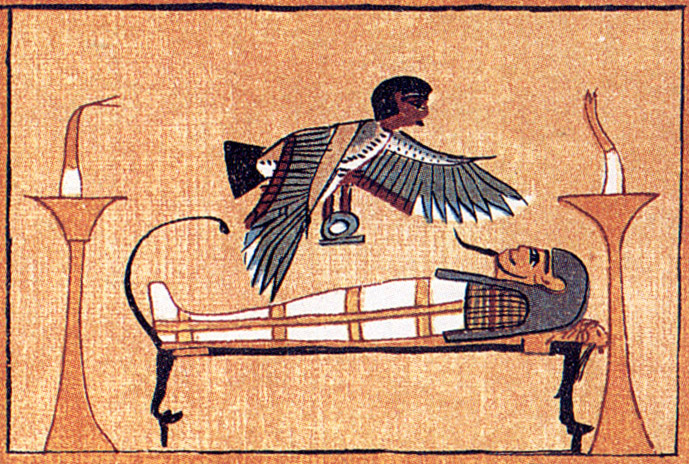 🇸🇪 Sweden and 1 moreSoul flight
A trance practice where the spirit leaves the body to visit other realmsRite · Healing · Seeing and foretelling Historical
🇸🇪 Sweden and 1 moreSoul flight
A trance practice where the spirit leaves the body to visit other realmsRite · Healing · Seeing and foretelling Historical