Nang Kwak
In its own language: นางกวัก
A Thai figure who beckons customers and money luck into shops and homes
A beckoning lady of Thai folklore, kept in shops and homes to draw customers and money luck. Thai tradition treats her as a household goddess and benevolent spirit, and Buddhist legends welcome her into the faith as a blessed merchant's daughter.
- Her raised right hand copies the Thai gesture for waving a customer over
- Figurines and pha yant cloths of her stand beside shrines in shops across Thailand
- One legend makes her a merchant's daughter blessed with luck in selling
- Another links her to the Ramakien, where her merit drew wealthy gift-givers
- Her image echoes the Hindu goddess Lakshmi and Japan's beckoning cat
What it is
Nang Kwak is a female figure of Thai folklore, treated as a household goddess, a spirit, or in some tellings a bodhisattva, a compassionate being on the Buddhist path. She belongs to the everyday world of trade rather than the temple: her image stands where money changes hands, and devotees credit her with drawing customers and bringing luck and prosperity to a household. Thais group her with the tutelary beings that guard a home or business, alongside figures such as Kuman Thong. She sits closer to popular story than to formal doctrine, yet Buddhist legend has been written to give her a place in the religion.
Where it comes from
Her roots lie in Thai folk story, and the old accounts disagree about who she is. One strand of belief makes her the rice goddess Mae Po Sop in another shape; her standing image matches that goddess, minus the sheaf of harvested rice carried on the shoulder. Two Buddhist legends claim her for the faith. In one, she is Supawadee, daughter of the merchants Sujidtaprahma and Sumanta, who sold their wares from a cart and heard a sermon that stirred her to convert; the monk Phra Gumarn Gasaba Thera then blessed her family with luck in selling. In the other, drawn from the Ramakien, the Thai telling of the Ramayana, she is the daughter of a mountain lord whose merit brought crowds of wealthy givers to a cursed demon's child.
How it is done
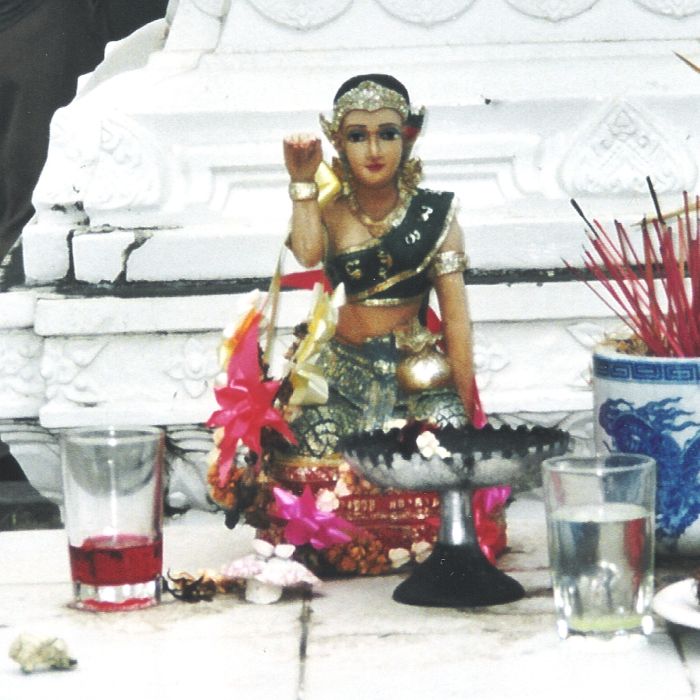
Devotion to her is simple and domestic. A small figurine of the lady, or a printed cloth poster known as a pha yant, or yantra cloth, is set by the household or shop shrine and left there to work on the premises. People who travel from town to town selling their wares carry her image instead, worn at the neck as an amulet. The figure itself does the inviting: her right hand is raised with the palm curved downward, the gesture Thais use to wave a customer over, while her left hand rests on her hip or carries a bag of gold at her lap.
Tools and materials
Her signs are few and readable at a glance. The beckoning hand, palm turned down, copies the motion Thai shopkeepers use to call a buyer over. A bag full of money or gold at her lap names the reward she is asked for. Her red Thai dress and golden crown fix her as a gracious lady of means. When a flat image is wanted, it appears as a pha yant, a yantra cloth hung like a poster.
Nang Kwak, drawn and placed
- Living
- Revived
- Fading
- Historical
- Legendary
- Performed
- Lineage
- Thai folk belief, claimed for Buddhism by legend
- Timing
- kept year-round at shop and home shrines; amulets worn when selling on the road
What it is for
Devotees ask her for luck, and above all for money. She is held to be a patron of merchants and salesmen, and shopkeepers set her image where customers pass, trusting her to draw trade. At home, families keep her for everyday fortune, plenty and abundance for the whole house. The blessing is said to reach whole families: in the trader legend, the monk's favour fell on Supawadee and her kin together, and in the Ramakien tale her presence drew merchants and nobles bearing gifts to a weaver's door.
Peoples and places
She belongs to Thailand. Statues and cloth images of her stand in nearly every shop and place of trade in the country, and many families keep one at home beside the shrine. Travelling traders who carry their wares from town to town wear her amulet around the neck. Her stories name a wide cast: a merchant family of the old province of Sawadtii, a forest lord of an Asura heaven, and a demon's daughter at her loom. Outside Thailand she is known chiefly through comparison with figures such as Japan's beckoning cat.
At a glance: who, where and when
Who does it
Peoples
Belief worlds
Occasions


What people believe
The picture of her changes with the teller. Folk practice treats her as a benevolent spirit attached to home and market, one of the tutelary beings who watch over a place. Buddhist retellings give her a different standing: a maiden whose faith earned a monk's blessing, or a figure whose merit drew wealth to others in the Ramakien. Some hold her to be the rice goddess Mae Po Sop in a trading-age shape, and her look borrows from Sri Lakshmi, the Hindu goddess of wealth and fortune. In the Ramakien story, merit is the working force: her own earned goodness, not a spell, summons the merchants and nobles who arrive with gifts.
Compare and confuse
She is easily mixed with her neighbours. Pose and dress mirror Mae Po Sop, the Siamese rice goddess, who however carries a sheaf of harvested rice on her right shoulder, which Nang Kwak lacks. Her beckoning hand recalls the Maneki Neko, the Japanese cat that waves customers into shops. As a giver of wealth and fortune she parallels Sri Lakshmi of Hindu tradition. She is grouped with Phosop and Kuman Thong among tutelary beings.
Today
She is a living part of Thai commerce. Her image is a common sight in shops across the country, and many families keep one at home beside the shrine for the luck of the house. Travelling sellers carry her at the neck while they work. Her stories remain in print through collections of Thai folklore, and her legends are retold within Thai Theravada Buddhism.
Questions people ask about Nang Kwak
Who is Nang Kwak?
A female figure of Thai folklore, treated as a household goddess, a spirit or a bodhisattva. Devotees believe she brings good luck, prosperity and customers to a business, and she is honoured as a patron of merchants and salesmen.
Where does she come from?
From Thailand, where she belongs to popular folklore rather than formal doctrine. Buddhist legend claims her for the faith: one story makes her the merchant's daughter Supawadee, blessed by the monk Gasaba Thera, and another places her in the Ramakien epic.
What does she look like?
A beautiful woman in a red Thai dress and golden crown, seated or kneeling. One hand is raised with the palm curved downward, the Thai beckoning gesture, while the other rests at her side or grips a pouch of gold.
Who keeps her image?
Shopkeepers and merchants across Thailand, families at home, and travelling traders who wear her amulet around the neck while selling their wares from town to town. Her figure is said to stand in nearly every business establishment in the country.
Is she linked to other goddesses?
Yes. She is held to be the rice goddess Mae Po Sop in another form, though she lacks that goddess's rice sheaf, and her look and role recall Sri Lakshmi of Hindu tradition. Her beckoning hand resembles Japan's Maneki Neko cat.
Good reading and sources
- Nang Kwak on WikipediaEncyclopedia
- More photos on Wikimedia CommonsPhotos and video
- Wikidata recordOpen data
The facts on this page come from the Wikipedia article "Nang Kwak", written by its contributors and used under the CC BY-SA 4.0 licence, and from its Wikidata record (CC0). EveryJaadu rewrote the text in its own words, with AI assistance, and compares every page with the article to make sure no passage is copied. It may be reused under the same CC BY-SA 4.0 licence with a link back.
It may contain mistakes. Names and customs differ from one community to the next, and some knowledge is closed to outsiders and left out here. This page describes belief and practice. It does not say that any of it works, it is not a how-to, and it is not medical advice. If something is wrong, tell us. Last refreshed 2026-10-16.
More from Thailand
All the entries from Thailand 🇲🇾 Malaysia and 5 morePenanggalan
A floating head with trailing organs from Malay folklore, said to hunt pregnant women and newborns.Being · Cursing and harm Legendary
🇮🇩 Indonesia and 3 moreToyoltuyul
An undead infant spirit in Southeast Asian folklore, invoked for theft and fortune.Being · Luck and prosperity · Cursing and harm Living
🇲🇾 Malaysia and 5 morePenanggalan
A floating head with trailing organs from Malay folklore, said to hunt pregnant women and newborns.Being · Cursing and harm Legendary
🇮🇩 Indonesia and 3 moreToyoltuyul
An undead infant spirit in Southeast Asian folklore, invoked for theft and fortune.Being · Luck and prosperity · Cursing and harm Living
 🇹🇭 Thailand and 5 moreKrasueกระสือ
A floating head with trailing organs from Southeast Asian folkloreBeing · Cursing and harm Living
🇹🇭 Thailand and 5 moreKrasueกระสือ
A floating head with trailing organs from Southeast Asian folkloreBeing · Cursing and harm Living
 🇹🇭 Thailand and 1 moreNang Taniนางตานี
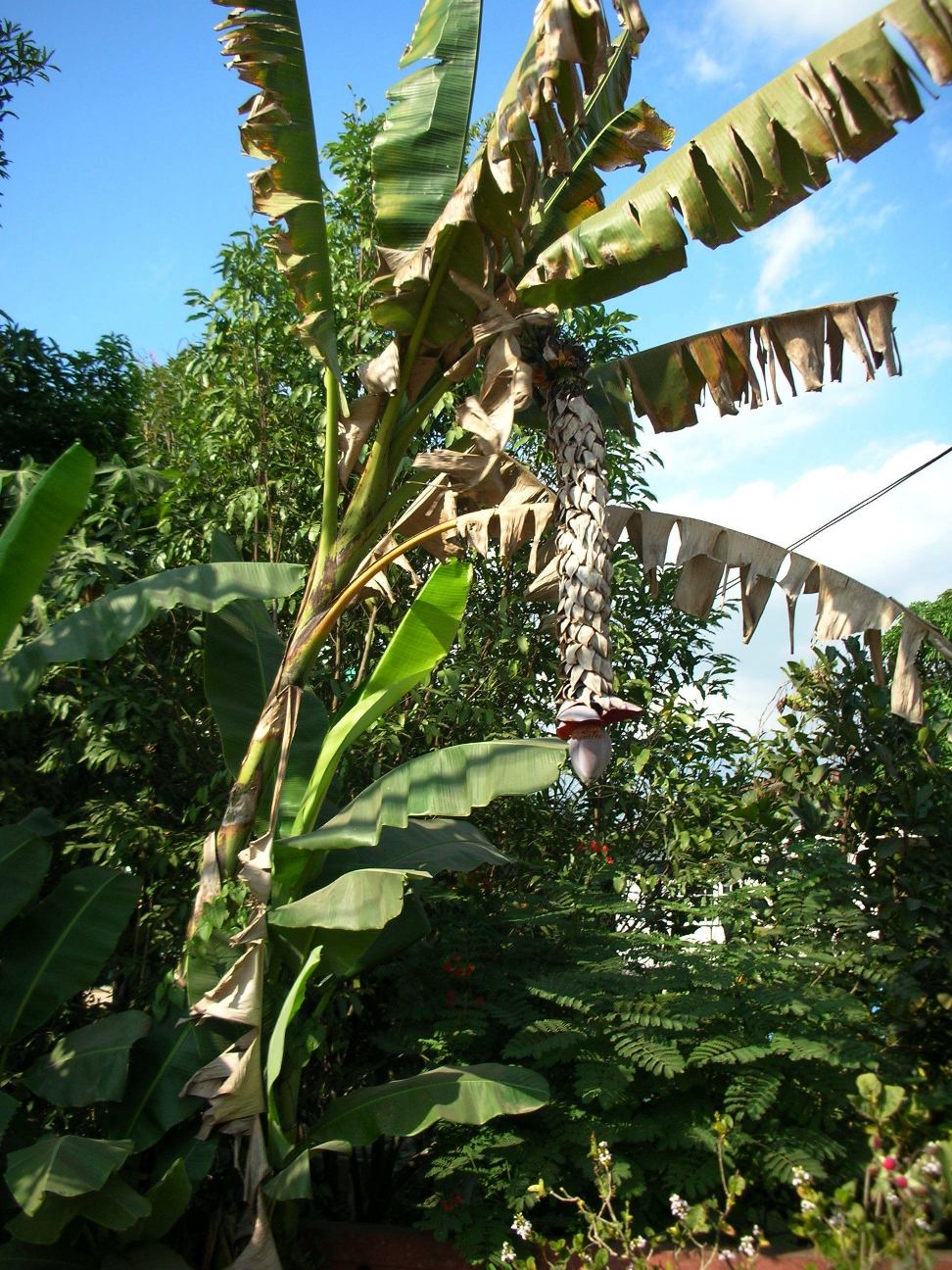
A female spirit said to inhabit wild banana trees in Southeast Asian folklore.Being · Protection · Luck and prosperity Living
🇹🇭 Thailand and 1 moreNang Taniนางตานี
A female spirit said to inhabit wild banana trees in Southeast Asian folklore.Being · Protection · Luck and prosperity Living
Related elsewhere
All being 🇮🇶 Iraq and 4 moreAstrology
A system of divination that links human affairs to the positions of celestial bodiesTradition · Seeing and foretelling · Luck and prosperity Living
🇮🇶 Iraq and 4 moreAstrology
A system of divination that links human affairs to the positions of celestial bodiesTradition · Seeing and foretelling · Luck and prosperity Living
 🇨🇳 China and 5 moreHorseshoe
A curved plate fixed to a horse's hoof for protection, also kept as a charm for fortune.Charm · Protection · Luck and prosperity Living
🇨🇳 China and 5 moreHorseshoe
A curved plate fixed to a horse's hoof for protection, also kept as a charm for fortune.Charm · Protection · Luck and prosperity Living
 🇫🇷 FranceHoly GrailSaint Graal
A cup or stone from Arthurian legend with miraculous powersFigure · Healing · Luck and prosperity Legendary
🇫🇷 FranceHoly GrailSaint Graal
A cup or stone from Arthurian legend with miraculous powersFigure · Healing · Luck and prosperity Legendary
 🇮🇳 India and 3 morePalmistry
A divination practice that reads the lines and shapes of the hand to predict fate or characterOracle · Seeing and foretelling · Luck and prosperity Living
🇮🇳 India and 3 morePalmistry
A divination practice that reads the lines and shapes of the hand to predict fate or characterOracle · Seeing and foretelling · Luck and prosperity Living