Mien shiang
In its own language: 面相
from Chinese miànxiàng, meaning face reading
A Chinese practice of reading character and fate through facial features
Mien shiang is a traditional Chinese method of assessing personality, health, and destiny by examining the face. It relies on the five phases theory to interpret physical traits as signs of future events or inner nature.
- Uses five phases to link facial traits to personality and fate
- Divides face into three parts representing youth, adulthood, old age
- Historical use by figures like Fan Li and Wang Anshi
- Includes twelve houses mapping facial zones to life areas
- Ten face shapes named after Chinese characters
What it is
Mien shiang is a Chinese practice that reads a person’s character, health, and future by studying their face. Practitioners believe facial shapes and features reflect inner qualities and life paths. The system uses the five phases, wood, fire, earth, metal, and water, as metaphors for how everything in the universe interacts. These elements help interpreters map physical traits to personality types and potential outcomes. It is often linked with traditional Chinese medicine, where facial signs are seen as indicators of internal balance or imbalance. The practice does not claim scientific proof but operates within a cultural framework of symbolic correspondence between body and fate.
Where it comes from
Early written records of mien shiang appear in classical texts like the Book of Rites, which links gaze direction to arrogance or worry. Historical figures such as Fan Li used face reading to predict loyalty and danger, notably regarding Gou Jian of Yue. Another example involves Wang Anshi of the Song Dynasty, whose ox-like eyes and tiger-shaped head were said to indicate good fortune if he could stare at the sun. These stories show that face reading was embedded in political and social decision-making centuries ago. The practice likely evolved from ancient philosophical observations about human behavior and appearance, later formalized into structured systems of interpretation.
How it is done
Readings divide the face into three parts: upper (youth), middle (adulthood), and lower (later years). Each section corresponds to different life stages. Ten face shapes are recognized, each named after Chinese characters resembling specific contours. Twelve houses on the face represent areas like wealth, marriage, health, and career. Features such as wrinkles, moles, and scars are also analyzed. Movements, sounds, and even bone structure may be considered alongside surface features. Interpreters combine these observations to form a holistic view of a person’s nature and trajectory.
Tools and materials
The primary tool is the face itself, examined for shape, symmetry, and markings. The five phases serve as a conceptual framework rather than a physical object. Specific terms like nei shiang (internal body aspects) and gu shiang (bone reading) extend the scope beyond visible features. Moles, scars, and wrinkles are noted as significant markers. The twelve houses provide a map for associating facial zones with life domains. No external instruments are required; the reader relies on visual assessment and established symbolic meanings.
Mien shiang, drawn and placed
- Living
- Revived
- Fading
- Historical
- Legendary
- Performed
- Lineage
- traditional Chinese medicine
What it is for
People consult mien shiang to understand their character, anticipate health issues, or gauge luck in career and relationships. It is used to assess compatibility, identify strengths, and warn of potential hardships. In historical contexts, rulers and advisors relied on it to judge loyalty and suitability for office. Today, it remains a cultural reference point for self-reflection and interpersonal insight. While not a medical diagnosis, it is sometimes viewed as complementary to traditional wellness practices, offering symbolic guidance rather than clinical treatment.
Who does it
Practitioners are typically diviners trained in interpreting facial patterns according to classical texts. Knowledge is passed down through study of historical examples and standardized categories like the twelve houses and ten face shapes. Some readers may also incorporate body posture, voice, and movement into their assessments. Training emphasizes memorization of symbolic correspondences and application of the five phases theory.
Peoples and places
Mien shiang originates in China and is deeply tied to Chinese cultural and philosophical traditions. It appears in classical literature and historical narratives involving prominent figures. The practice reflects broader East Asian views on harmony between body, mind, and cosmos. While primarily associated with Han Chinese culture, its influence extends to neighboring regions through shared philosophical concepts. Modern interest persists among those seeking traditional insights into personal development and destiny.
At a glance: who, where and when
What people believe
The worldview behind mien shiang holds that outward appearance mirrors inner reality and future events. The five phases theory provides a dynamic model of change, linking physical traits to elemental energies. Facial features are not random but meaningful signs shaped by destiny and moral character. This perspective assumes a connected universe where microcosms (the face) reflect macrocosms (life and nature). Interpretations are guided by established rules rather than intuition alone, creating a systematic approach to reading fate.
When it is done
No specific festivals or seasonal timings are mentioned for mien shiang readings. Consultations occur based on personal need rather than calendar events. Life stages marked by the three facial sections align with age ranges, but no ritual timing is prescribed. The practice is available whenever someone seeks insight, without dependence on lunar cycles or holy days.
How scholars and sceptics see it
Anthropologists and historians view mien shiang as part of China’s intellectual heritage, reflecting early attempts to systematize human observation. Scholars note its connection to traditional medicine and philosophical frameworks like yin-yang and the five phases. Skeptics regard it as unscientific, attributing accuracy to confirmation bias or vague generalizations. Researchers in psychology may analyze why people find value in such readings, focusing on cognitive patterns rather than factual validity. The practice is studied more for its cultural role than empirical truth.
Cautions and what is closed
The practice is described as a cultural tradition rather than a regulated profession. Outsiders may find the symbolic language complex, requiring study to interpret correctly. There is no indication of closed knowledge or initiation requirements. Readers rely on publicly available texts and historical examples, making the system accessible to those willing to learn.
Compare and confuse
Mien shiang is related to other forms of physiognomy, such as metoposcopy (forehead reading) and phrenology (skull shape analysis), though it focuses specifically on facial features. Unlike Western phrenology, which claimed scientific basis, mien shiang remains rooted in symbolic and philosophical traditions. It shares similarities with Indian palmistry or Arabic face reading in using physical traits to infer character, but its terminology and framework are distinctively Chinese. The term 'physiognomy' is often used broadly to describe such practices across cultures.
Questions people ask about Mien shiang
What is mien shiang?
It is a Chinese practice of reading character, health, and destiny by analyzing facial features, using the five phases as a symbolic framework.
Where does it come from?
It originates in ancient China, with early references in texts like the Book of Rites and historical accounts involving scholars and rulers.
How is the face divided?
The face is split into three parts: upper (ages 10–20), middle (20–40), and lower (after 40), each representing different life stages.
What do the twelve houses mean?
They are facial zones linked to aspects like wealth, marriage, health, and career, helping readers interpret life domains through physical traits.
Is it scientifically proven?
No. It is a cultural tradition based on symbolic correspondence, not empirical science, valued for insight rather than factual prediction.
Good reading and sources
The facts on this page come from the Wikipedia article "Mien Shiang", written by its contributors and used under the CC BY-SA 4.0 licence, and from its Wikidata record (CC0). EveryJaadu rewrote the text in its own words, with AI assistance, and compares every page with the article to make sure no passage is copied. It may be reused under the same CC BY-SA 4.0 licence with a link back.
It may contain mistakes. Names and customs differ from one community to the next, and some knowledge is closed to outsiders and left out here. This page describes belief and practice. It does not say that any of it works, it is not a how-to, and it is not medical advice. If something is wrong, tell us. Last refreshed 2026-10-10.
More from China
All the entries from China 🇨🇳 ChinaChinese alchemy煉丹術
A Taoist pursuit of longevity through elixirs and internal cultivationTradition · Healing · Speaking with spirits and the dead Historical
🇨🇳 ChinaChinese alchemy煉丹術
A Taoist pursuit of longevity through elixirs and internal cultivationTradition · Healing · Speaking with spirits and the dead Historical
 🇨🇳 China and 5 moreGhost FestivalZhongyuan Festival; Yulanpen Festival
A festival to feed wandering spirits and guide them home during the seventh lunar month.Tradition · Speaking with spirits and the dead · Protection Living
🇨🇳 China and 5 moreGhost FestivalZhongyuan Festival; Yulanpen Festival
A festival to feed wandering spirits and guide them home during the seventh lunar month.Tradition · Speaking with spirits and the dead · Protection Living
 🇲🇳 Mongolia and 1 moreTsagaan SarЦагаан сар
A Mongol lunisolar new year marked by white clothes and dairy feastsTradition · Luck and prosperity · Speaking with spirits and the dead Living
🇲🇳 Mongolia and 1 moreTsagaan SarЦагаан сар
A Mongol lunisolar new year marked by white clothes and dairy feastsTradition · Luck and prosperity · Speaking with spirits and the dead Living
 🇨🇳 China and 1 moreAncestor veneration in China中國傳統宗法性宗教
Rites for dead kin who are thought to watch over the familyTradition · Protection · Speaking with spirits and the dead Living
🇨🇳 China and 1 moreAncestor veneration in China中國傳統宗法性宗教
Rites for dead kin who are thought to watch over the familyTradition · Protection · Speaking with spirits and the dead Living
Related elsewhere
All belief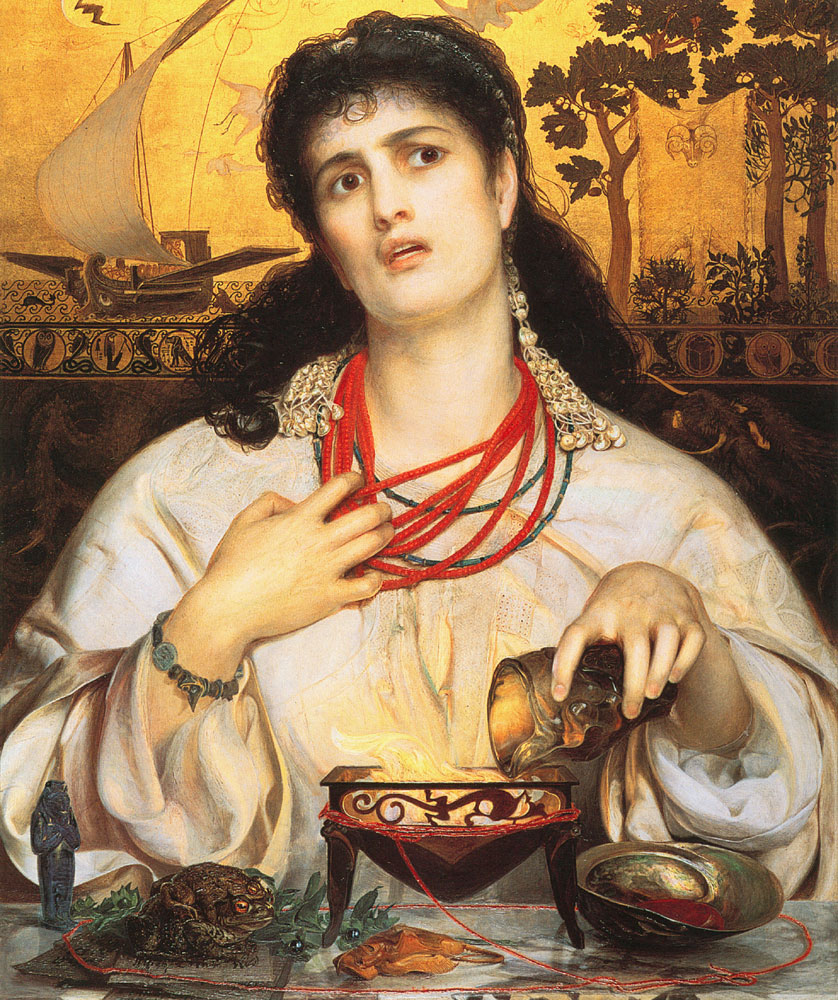 🇬🇷 GreeceMedeaΜήδεια
A sorceress and princess of Colchis who aids Jason and uses magic for revenge.Figure · Cursing and harm · Healing Legendary
🇬🇷 GreeceMedeaΜήδεια
A sorceress and princess of Colchis who aids Jason and uses magic for revenge.Figure · Cursing and harm · Healing Legendary
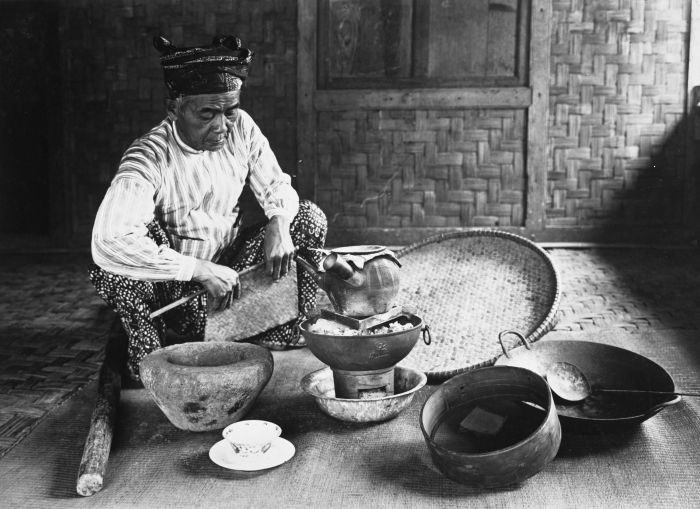 🇮🇩 Indonesia and 2 moreDukun
A traditional healer and spirit medium in Indonesian folk practiceTradition · Healing · Seeing and foretelling Living
🇮🇩 Indonesia and 2 moreDukun
A traditional healer and spirit medium in Indonesian folk practiceTradition · Healing · Seeing and foretelling Living
 🇺🇸 United StatesKahuna
A Hawaiian expert or priest, keeper of hidden knowledge in craft and spiritTradition · Healing · Seeing and foretelling Living
🇺🇸 United StatesKahuna
A Hawaiian expert or priest, keeper of hidden knowledge in craft and spiritTradition · Healing · Seeing and foretelling Living