
Khodiyar
In its own language: ખોડીયાર
A limping Hindu folk goddess who rides a crocodile and shields royal clans
Khodiyar is a folk goddess within Hinduism, revered chiefly throughout Gujarat and Rajasthan. Originating in bardic legends as the lame youngest sister among seven daughters, she is worshipped as a protective clan deity who aids rulers, parts waters, and turns away epidemic disease.
- A folk goddess revered in Gujarat and Rajasthan, riding a crocodile and carrying a trident.
- Considered the kuldevi of the Chudasama and Gohil royal dynasties of Saurashtra.
- Legends describe her dividing the waters of the Rann of Kachh to allow an army to pass.
- Animal offerings at her shrines were replaced by vegetarian gifts after a 1971 ban.
What it is
Khodiyar is a Hindu folk goddess worshipped across the western Indian states of Gujarat and Rajasthan. Classified in devotional traditions as a manifestation of Devi and Shakti, she is widely revered as a kuldevi, or protective clan deity. Sculptures and iconography depict her holding a trident and mounted upon a crocodile. In narrative lore, she is celebrated as the youngest of seven miraculous sisters born to a royal bard. Though physically disabled by a limp, she is held to wield the foremost divine authority among her siblings. Royal houses, pastoral groups, and village households maintain veneration for her across Saurashtra and surrounding regions.
Where it comes from
Legends place her origins in the eighth century within the Maitraka realm near the capital of Vallabhi. Her father, a Charan bard named Mamadiya Gadhvi, suffered banishment from court because courtiers declared that viewing a childless man brought misfortune. He retreated to a forest shrine of Shiva, where eight days of intense prayer were rewarded with eight children: seven daughters and one son. As the siblings grew, their miraculous appetite for buffaloes alarmed the local monarch. When the sisters departed their homestead, the youngest trailed behind due to a crippled foot. After beseeching the divine mother Jagdamba, heavenly voices revealed that her disability carried sacred intent and endowed her with supreme power.
How it is done
Devotional custom historically centred on village shrines where people petitioned the goddess during community crises. When contagious illnesses swept rural settlements, villagers made offerings of animal flesh and blood to appease her fierce temperament. Following royal encounters, shrines were founded near natural water springs, identified by painting the symbol of a hand in red upon the rock. In the modern era, rituals have transformed significantly. Offerings at her temples have become non-violent, replacing older blood rites with vegetarian devotional practices.
Tools and materials
Traditional representations of the goddess feature a trident, a three-pronged weapon carried in her hand. Her divine vehicle is the crocodile, upon which she is seen standing when manifesting before devotees. At sacred sanctuaries, especially sites near hillside springs, her presence is designated by the sign of a hand rendered in red colour.
Khodiyar, drawn and placed
- Living
- Revived
- Fading
- Historical
- Legendary
- Performed
- Lineage
- Hindu Shaktism and western Indian folk religion
- Timing
- during illness outbreaks and royal milestones
What it is for
Supplicants historically sought Khodiyar's intervention for fertility, dynastic succession, and protection from lethal pestilence. Childless rulers and bards turned to her to secure heirs, while monarchs relied on her favour to triumph over rivals and claim sovereign power. Legend recounts how she revealed buried riches in a dream to equip an army, and separated the waters of the Rann of Kachh so troops could cross into Sindh. In village life, rural communities petitioned her to drive away disease outbreaks.
Who does it
Veneration of Khodiyar connects closely with the Charan community, a traditional class of bards who compose and sing verses celebrating her deeds. Members of the Ahir pastoral caste also feature prominently in her legends as loyal guardians of royal heirs devoted to her service. Rulers of Saurashtra, including kings of the Chudasama and Gohil lines, established her worship across their kingdoms and oversaw the construction of dedicated temples. Ordinary villagers and temple priests continue her daily devotional rites.
Peoples and places
Reverence for Khodiyar is concentrated in Gujarat and Rajasthan, particularly within the Saurashtra region. She is honoured by diverse social strata, ranging from local pastoralists to royal clans. The Chudasama dynasty of Junagadh adopted her as their tutelary guardian after she aided the ascension of King Navghan. Similarly, the Gohil rulers of Sihor embraced her as their dynastic protector after their leader experienced a direct vision of her at her birthplace.
At a glance: who, where and when
Belief worlds
What people believe
Belief holds that Khodiyar is an earthly incarnation of divine feminine energy, closely identified with Ambika-Bhavani. Although born human, she possessed extraordinary gifts that surpassed mortal limits, including the ability to alter natural geography and appear in dreams. Tradition asserts that her physical lameness was not a defect, but a sacred marker of immense spiritual strength. She is thought to wander the mortal realm in disguise, alternating between the figure of an elderly crone and a youthful maiden carrying a trident.
How scholars and sceptics see it
In 1875, the British scholar Monier Williams documented an encounter with a Khodiyar shrine located in rural Gujarat. He observed that when epidemic sickness threatened the population, residents sought the goddess's favour through substantial propitiations, specifically sacrificing animals to offer her meat and blood. Later historical and cultural accounts chart her evolution from a fierce local divinity demanding animal sacrifice into a benign, vegetarian guardian deity worshipped across western India.
Law and persecution
Ritual customs surrounding the goddess were directly affected by statutory law in western India. In 1971, the government of Gujarat enacted a formal ban prohibiting animal sacrifice throughout the state. This legislative measure ended the historical practice of offering livestock meat and blood at her shrines, prompting devotees and temples to adopt purely vegetarian forms of worship.
Today
In recent times, Khodiyar has undergone a theological transition shared by several western Indian goddesses, shifting from a fearsome local protector into a gentler, vegetarian divinity. Temples across Gujarat continue to draw pilgrims, while older blood offerings have been entirely abandoned in favor of non-meat gifts. Her image remains an enduring cultural emblem in the regional folklore and religious life of Gujarat.
Questions people ask about Khodiyar
Who is Khodiyar?
Khodiyar is a Hindu folk goddess worshipped primarily in Gujarat and Rajasthan. Regarded as a manifestation of Shakti, she is known as a clan deity who rides a crocodile, carries a trident, and watches over royal dynasties and local communities.
Where does the story of Khodiyar originate?
Tradition traces her origin to the eighth-century Maitraka kingdom near Vallabhi in Gujarat. She was born as the youngest of seven daughters to a bard named Mamadiya Gadhvi, after he prayed to the god Shiva for children.
Why is she depicted with a limp?
According to legend, she was lame and fell behind her sisters when leaving home. When she prayed to the goddess Jagdamba, heavenly voices assured her that her limp held a divine purpose, granting her supreme spiritual power above her siblings.
How have offerings to Khodiyar changed over time?
Historically, villagers propitiated her with animal blood and meat to avert disease outbreaks. After Gujarat prohibited animal sacrifice in 1971, her shrines transitioned into vegetarian spaces, reflecting a gentler character.
Good reading and sources
- Khodiyar on WikipediaEncyclopedia
- More photos on Wikimedia CommonsPhotos and video
- Wikidata recordOpen data
The facts on this page come from the Wikipedia article "Khodiyar", written by its contributors and used under the CC BY-SA 4.0 licence, and from its Wikidata record (CC0). EveryJaadu rewrote the text in its own words, with AI assistance, and compares every page with the article to make sure no passage is copied. It may be reused under the same CC BY-SA 4.0 licence with a link back.
It may contain mistakes. Names and customs differ from one community to the next, and some knowledge is closed to outsiders and left out here. This page describes belief and practice. It does not say that any of it works, it is not a how-to, and it is not medical advice. If something is wrong, tell us. Last refreshed 2026-10-22.
More from India
All the entries from India 🇮🇳 IndiaChakraचक्र
Meditation points in the subtle body used in Hindu and Buddhist yogaTradition · Speaking with spirits and the dead · Change and initiation Living
 🇮🇳 IndiaParashuramaपरशुराम (Paraśurāma)
The warrior sage of Hinduism who wields a divine axe to restore cosmic balance.Being · Power and authority · Cursing and harm Legendary
🇮🇳 IndiaMuhurtamuhūrta
A Hindu unit of time used to select auspicious moments for rituals and daily practiceBelief · Power and authority · Speaking with spirits and the dead Living
 🇮🇳 IndiaKamakhya Templekamakhya mondir
A Hindu temple in Assam known for its yoni shrine and the Ambubachi Mela festivalTradition · Protection · Healing Living
Related elsewhere
All being 🇿🇦 South AfricaSympathetic magic
A magical principle based on imitation and contact to influence the worldTradition · Protection · Healing Historical
 🇪🇬 Egypt and 5 moreSacred dance
Movement used in worship to honour deities, heal communities, or connect with the spirit world.Tradition · Protection · Healing Living
 🇮🇶 Iraq and 5 moreGrimoire
A textbook containing instructions for spells, rituals, and the creation of magical objects.Text · Protection · Healing Historical
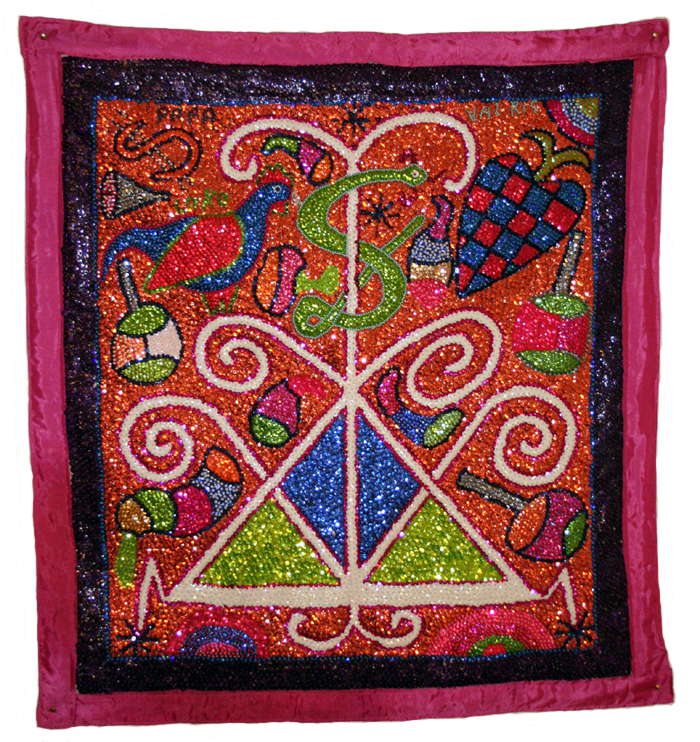 🇭🇹 Haiti and 2 moreHaitian VodouVodou
An Afro-Haitian religion blending West African traditions with Catholicism and FreemasonryTradition · Protection · Healing Living