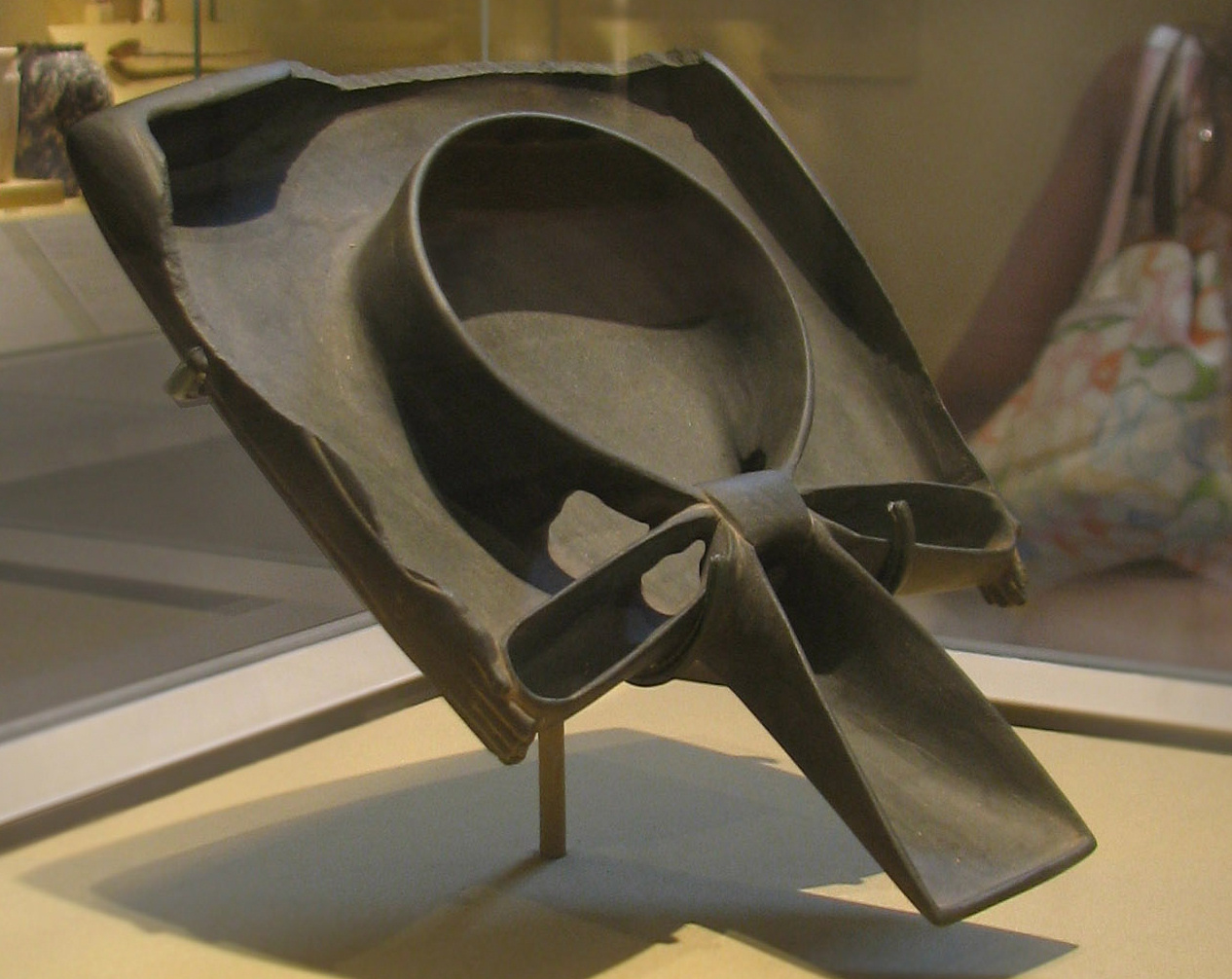
Ankh
from Egyptian ꜥ-n-ḫ, meaning life or live
Ancient Egyptian hieroglyph for life and the amulet that carries its meaning
The ankh is a T-shaped symbol topped by a loop, used in ancient Egypt to represent the word for life and the concept itself. It appears in art as a sign of divine power to sustain life and revive souls, later adapted by Copts into the crux ansata.
- T-shaped symbol with a loop representing life
- Used as a triliteral sign for three consonants
- Deities held it to give breath and soul revival
- Amulets made of gold or blue-green faience
- Adapted by Copts into the crux ansata
What it is
The ankh is a T-shaped symbol with a droplet loop at the top. In ancient Egypt it stood for the word life and the idea of life itself. Deities often held the sign to show their power to keep people alive and bring souls back after death. The shape also represented air and water, which were seen as gifts from the gods. Over time the symbol spread beyond Egypt. Neighbouring groups in Syria and Canaan used it in their art. Later, Christians in Egypt changed the loop to a circle and called the result the crux ansata. Today scholars study it as a key part of Egyptian writing and belief.
Where it comes from
Early examples appear in the First Dynasty around the thirtieth century BC. Experts disagree on what object inspired the shape. Some think it started as a knot made of cloth or reeds. Others suggest it came from a sandal strap found on coffins. A few writers have proposed sexual meanings or links to bull anatomy. One theory connects the ankh to the djed pillar and was sceptre, seeing them all as parts of a bull’s body connected to semen and life force. No single origin story is accepted by everyone.
How it is done
Artists painted the ankh in blue or black on temple walls and shrines. Amulets were worn in daily life and placed in tombs to protect the dead. Gods were shown holding the sign above kings to give them breath or life. In purification scenes chains of ankhs replaced zigzag lines for water. Mirrors and floral bouquets were sometimes shaped like the sign because the same consonants spelled those words. The symbol appeared alongside the djed and was to mean stability and power together.
Tools and materials
Amulets were carved from gold, electrum, or faience. Faience was usually blue or green to match ideas of regeneration. Paintings used blue or black pigment. The sign also appeared on mirrors, mirror cases, libation vessels, and sistra. Decorative friezes in temples combined the ankh with other signs to create larger meanings about cosmic order and divine authority.
Ankh, drawn and placed
- Living
- Revived
- Fading
- Historical
- Legendary
- Performed
- Lineage
- ancient Egyptian religion
What it is for
People used the ankh to ask for health and long life. Pharaohs received honorific phrases meaning alive sound and healthy. Oaths began with forms of the word for life. Amulets were meant to give wearers the qualities of the symbol. In tombs they helped ensure well-being after death. Gods gave the sign to rulers to show they sustained the whole nation. Air and water symbols linked the ankh to physical survival and spiritual renewal.
Who does it
Priests and artisans created the objects and images. Scribes wrote the hieroglyphs in texts and letters. Scholars today study the symbol to understand Egyptian language and religion. Early twentieth century experts like Alan Gardiner analyzed its place in writing systems. Modern researchers look at how it moved through different cultures and religions over thousands of years.
Peoples and places
Egyptians used the ankh most widely in writing and art. Syrians and Canaanites adopted it during the Middle Bronze Age. Minoan artists on Crete mixed it with double axe emblems. The Meroitic Kingdom south of Egypt featured it in pottery and temples. Israel kept using the sign into the Iron Age, as seen on King Hezekiah’s seal. Copts later transformed it into a Christian variant.
At a glance: who, where and when


What people believe
Life was a force that moved through the world and returned with the sun. Gods maintained this cycle and could renew individual lives after death. The ankh showed their control over these processes. Semen was linked to life and power in some texts. The symbol thus carried deep connections between body, spirit, and cosmic order. It was not just a picture but a active sign of sustaining energy.
Cautions and what is closed
The symbol itself does not carry warnings in the provided text. Its use was largely decorative and religious within ancient contexts.
Compare and confuse
The ankh is often confused with the Christian cross due to its shape. The crux ansata has a circular loop instead of a teardrop one. The staurogram also resembles a cross with a loop but dates earlier than Christian adoption of the ankh. Other signs like the djed and was often appear together to form compound meanings about stability and dominion.
Questions people ask about Ankh
What does the ankh symbol mean?
It represents the word for life and the concept of life itself. Deities held it to show power over sustaining life and reviving souls in the afterlife.
Where did the ankh originate?
It comes from ancient Egypt, appearing in the First Dynasty. Scholars debate if it started as a knot, sandal strap, or part of bull anatomy.
How was the ankh used in daily life?
It appeared in writing, art, and as amulets. People wore them for protection and placed them in tombs to help the deceased survive the afterlife.
Good reading and sources
- Ankh on WikipediaEncyclopedia
- More photos on Wikimedia CommonsPhotos and video
- Wikidata recordOpen data
The facts on this page come from the Wikipedia article "Ankh", written by its contributors and used under the CC BY-SA 4.0 licence, and from its Wikidata record (CC0). EveryJaadu rewrote the text in its own words, with AI assistance, and compares every page with the article to make sure no passage is copied. It may be reused under the same CC BY-SA 4.0 licence with a link back.
It may contain mistakes. Names and customs differ from one community to the next, and some knowledge is closed to outsiders and left out here. This page describes belief and practice. It does not say that any of it works, it is not a how-to, and it is not medical advice. If something is wrong, tell us. Last refreshed 2026-10-05.
More from Egypt
All the entries from Egypt 🇪🇬 Egypt and 5 moreHamsaخمسة
A palm-shaped amulet used across North Africa and the Middle East to ward off harm.Charm · Protection · Luck and prosperity Living
🇪🇬 Egypt and 5 moreHamsaخمسة
A palm-shaped amulet used across North Africa and the Middle East to ward off harm.Charm · Protection · Luck and prosperity Living
 🇪🇬 EgyptScarab
A carved beetle amulet and seal used in ancient Egypt for protection, identity, and ritual.Charm · Protection · Luck and prosperity Historical
🇪🇬 EgyptScarab
A carved beetle amulet and seal used in ancient Egypt for protection, identity, and ritual.Charm · Protection · Luck and prosperity Historical
 🇪🇬 Egypt and 1 moreDendera zodiac
A carved Egyptian sky map now held in a Paris museumText · Seeing and foretelling · Power and authority Historical
🇪🇬 Egypt and 1 moreDendera zodiac
A carved Egyptian sky map now held in a Paris museumText · Seeing and foretelling · Power and authority Historical
 🇪🇬 Egypt and 1 moreEbers Papyrus
An ancient Egyptian medical scroll detailing herbal remedies and bodily theories from around 1550 BCE.Text · Healing Historical
🇪🇬 Egypt and 1 moreEbers Papyrus
An ancient Egyptian medical scroll detailing herbal remedies and bodily theories from around 1550 BCE.Text · Healing Historical
Related elsewhere
All charm 🇸🇳 Senegal and 5 moreMaraboutmurābiṭ
A Muslim religious leader and teacher in West Africa, often linked to Sufi brotherhoods.Tradition · Protection · Speaking with spirits and the dead Living
🇸🇳 Senegal and 5 moreMaraboutmurābiṭ
A Muslim religious leader and teacher in West Africa, often linked to Sufi brotherhoods.Tradition · Protection · Speaking with spirits and the dead Living
 🇮🇶 Iraq and 5 moreGrimoire
A textbook containing instructions for spells, rituals, and the creation of magical objects.Text · Protection · Healing Historical
🇮🇶 Iraq and 5 moreGrimoire
A textbook containing instructions for spells, rituals, and the creation of magical objects.Text · Protection · Healing Historical
 🇮🇳 India and 2 moreHomaहोम
A fire ritual found across Asian religions where offerings are burned as a votive exchange with the divine.Rite · Protection · Speaking with spirits and the dead Living
🇮🇳 India and 2 moreHomaहोम
A fire ritual found across Asian religions where offerings are burned as a votive exchange with the divine.Rite · Protection · Speaking with spirits and the dead Living
 🇪🇬 Egypt and 4 moreAnimal sacrifice
The ritual killing of livestock or wild animals as an offering to deitiesRite · Speaking with spirits and the dead · Power and authority Historical
🇪🇬 Egypt and 4 moreAnimal sacrifice
The ritual killing of livestock or wild animals as an offering to deitiesRite · Speaking with spirits and the dead · Power and authority Historical