
Shen ring
from the ancient Egyptian word for "encircling"
An ancient Egyptian symbol of eternal protection, shaped like a rope looped around a stick.
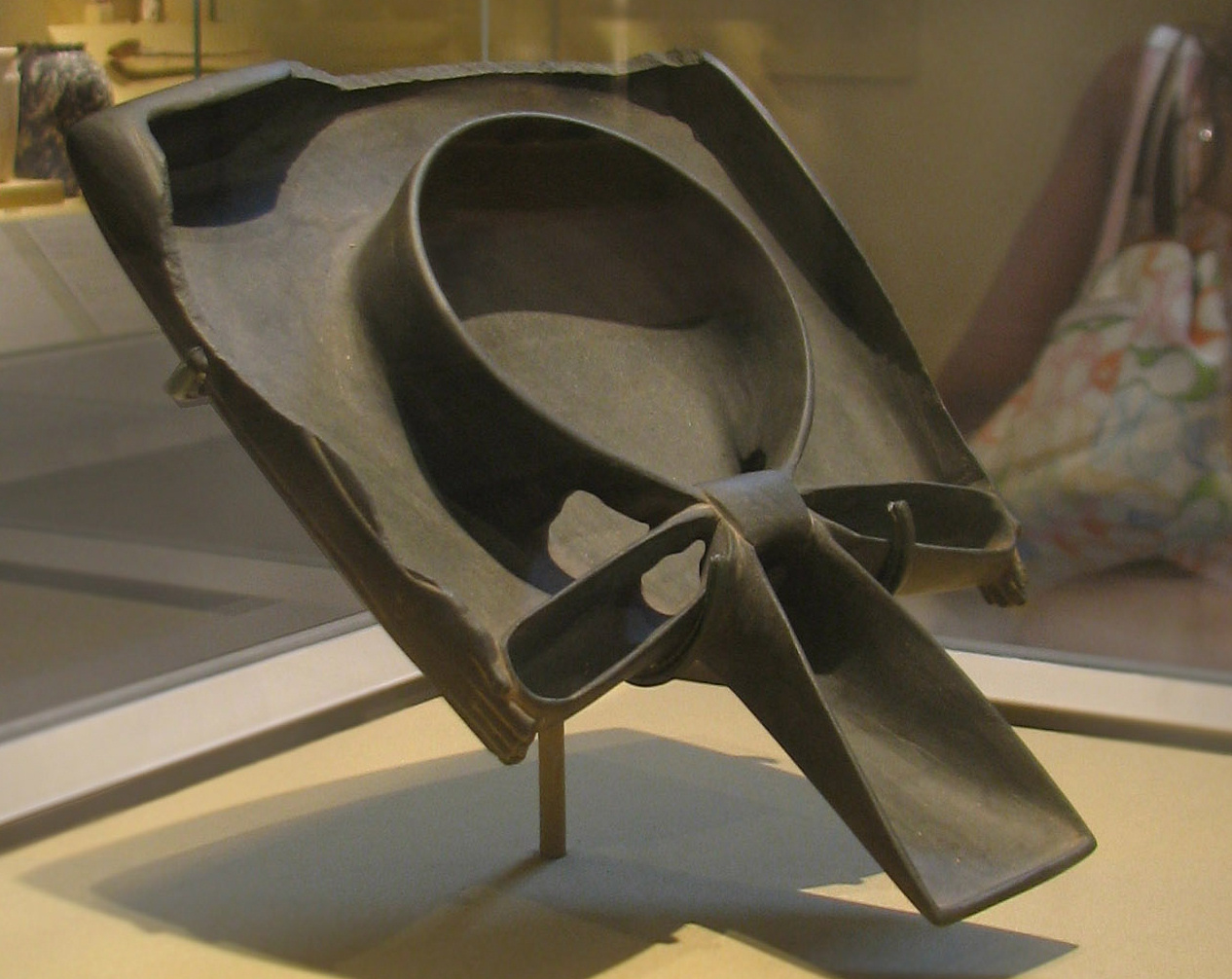
The shen ring is an ancient Egyptian emblem representing eternal protection. It appears as a circle with a tangent line, often held by deities or enclosing royal names in its elongated cartouche form.
- Represents eternal protection in ancient Egypt
- Seen in the clutches of the god Horus
- Elongated form creates the royal cartouche
- Found at the Cancho Roano site in Spain
- Used as early as the Third Dynasty
What it is
The shen ring is a circular symbol from ancient Egypt, depicted as a stylized loop of rope bound to a stick. In hieroglyphic writing, it serves as sign V9 in Gardiner's list. The shape signifies encircling and is believed to offer eternal protection to whatever it surrounds. Its most famous variation is the cartouche, an elongated version that encloses the name of a pharaoh or deity, ensuring their lasting safety and existence.
Where it comes from
The symbol dates back to at least the Third Dynasty of Egypt. Early examples appear in the reliefs of Djoser's Step Pyramid complex. The design likely evolved from practical tools used by builders and architects, transforming into a potent religious emblem over time. Its enduring presence in art marks it as a key component of ancient Egyptian visual language.
How it is done
The shen ring functions as a protective frame within iconography. Deities are shown holding the symbol in their hands or talons, effectively shielding the viewer or the scene below. When stretched into a cartouche, it encircles royal names. In ritual contexts, objects like the renpit, a prepared palm rib, are placed atop the ring to symbolize eternity under divine guardianship.
Tools and materials
The primary visual components are a circular loop and a straight line representing a stick. It is frequently attached to staffs of authority to denote eternal power. The renpit, a palm rib with leaflets removed, is another associated element. The symbol itself acts as a container, holding names or sacred objects within its protective boundary.
Shen ring, drawn and placed
- Living
- Revived
- Fading
- Historical
- Legendary
- Performed
- Lineage
- ancient Egyptian religion
What it is for
Its main purpose is to provide eternal protection. By encircling a name or object, the shen ring ensures that the subject remains safe and preserved through time.
Who does it
The symbol is studied by scholars of ancient history and Egyptology. In its original context, it was utilized by priests and artisans who created temple reliefs and royal artifacts. It appears in the work of master builders who designed pyramids and monuments, embedding the symbol into the very structure of sacred spaces.
Peoples and places
The shen ring is central to ancient Egyptian culture and religion. It is found throughout Egypt in temples and tombs. A notable example exists outside Egypt at the Tartessian site of Cancho Roano in southern Spain, where a shen ring-shaped altar has been discovered, indicating the symbol's reach or influence beyond its origin.
At a glance: who, where and when

What people believe
In ancient Egyptian belief, the shen ring represents the concept of eternity and divine safeguarding. Gods such as Horus and Nekhbet are depicted carrying it, showing their role as protectors. The act of encircling a name was believed to grant that name immortality, preventing it from being forgotten or destroyed.
How scholars and sceptics see it
Scholars identify the shen ring as a fundamental hieroglyphic sign. Research places its early use in the Third Dynasty, particularly in the architecture of Djoser. Experts note its evolution into the cartouche for royal names. The symbol's presence in distant sites like Spain is analyzed to understand cultural exchange or symbolic adoption in the ancient Mediterranean world.
Compare and confuse
The shen ring is related to the rod and ring symbol and the two whips with shen ring. It is distinct from other circles but forms the basis of the cartouche. While similar symbols exist elsewhere, its specific association with eternal protection and royal naming is unique to Egyptian tradition.
Questions people ask about Shen ring
What does the shen ring symbolize?
It symbolizes eternal protection. The shape represents encircling, which was believed to safeguard names, objects, or people from harm forever.
Where did the shen ring originate?
It originated in ancient Egypt, with evidence dating back to the Third Dynasty and the Step Pyramid complex of Djoser.
How is the shen ring different from a cartouche?
A cartouche is simply an elongated shen ring. Both share the same protective meaning, but the cartouche specifically encloses royal names.
Which gods are associated with the shen ring?
It is commonly carried by the falcon god Horus and the vulture goddess Nekhbet, often shown in their talons or hands.
Good reading and sources
- Shen ring on WikipediaEncyclopedia
- More photos on Wikimedia CommonsPhotos and video
- Wikidata recordOpen data
The facts on this page come from the Wikipedia article "Shen ring", written by its contributors and used under the CC BY-SA 4.0 licence, and from its Wikidata record (CC0). EveryJaadu rewrote the text in its own words, with AI assistance, and compares every page with the article to make sure no passage is copied. It may be reused under the same CC BY-SA 4.0 licence with a link back.
It may contain mistakes. Names and customs differ from one community to the next, and some knowledge is closed to outsiders and left out here. This page describes belief and practice. It does not say that any of it works, it is not a how-to, and it is not medical advice. If something is wrong, tell us. Last refreshed 2026-10-05.
More from Egypt
All the entries from Egypt 🇪🇬 EgyptDjedḏd
An ancient Egyptian pillar symbol representing stability and resurrectionCharm · Protection · Power and authority Historical
🇪🇬 EgyptDjedḏd
An ancient Egyptian pillar symbol representing stability and resurrectionCharm · Protection · Power and authority Historical
 🇪🇬 EgyptScarab
A carved beetle amulet and seal used in ancient Egypt for protection, identity, and ritual.Charm · Protection · Luck and prosperity Historical
🇪🇬 EgyptScarab
A carved beetle amulet and seal used in ancient Egypt for protection, identity, and ritual.Charm · Protection · Luck and prosperity Historical
 🇪🇬 Egypt and 5 moreHamsaخمسة
A palm-shaped amulet used across North Africa and the Middle East to ward off harm.Charm · Protection · Luck and prosperity Living
🇪🇬 Egypt and 5 moreHamsaخمسة
A palm-shaped amulet used across North Africa and the Middle East to ward off harm.Charm · Protection · Luck and prosperity Living
 🇪🇬 Egypt and 2 moreAnkh
Ancient Egyptian hieroglyph for life and the amulet that carries its meaningCharm · Protection · Power and authority Historical
🇪🇬 Egypt and 2 moreAnkh
Ancient Egyptian hieroglyph for life and the amulet that carries its meaningCharm · Protection · Power and authority Historical
Related elsewhere
All charm 🇪🇬 Egypt and 1 moreSphinx
A mythical hybrid with a human head and lion body, serving as guardian or riddler in Egyptian and Greek traditions.Being · Protection · Wonder and entertainment Legendary
🇪🇬 Egypt and 1 moreSphinx
A mythical hybrid with a human head and lion body, serving as guardian or riddler in Egyptian and Greek traditions.Being · Protection · Wonder and entertainment Legendary
 🇧🇪 Belgium and 2 moreHorseshoe
A metal shoe for a horse's hoof and a talisman of good fortuneCharm · Protection · Luck and prosperity Living
🇧🇪 Belgium and 2 moreHorseshoe
A metal shoe for a horse's hoof and a talisman of good fortuneCharm · Protection · Luck and prosperity Living
 🇪🇬 Egypt and 3 moreAmulet
A portable object worn or carried to ward off harm and invite fortuneCharm · Protection · Luck and prosperity Living
🇪🇬 Egypt and 3 moreAmulet
A portable object worn or carried to ward off harm and invite fortuneCharm · Protection · Luck and prosperity Living
 🇹🇷 Turkey and 5 moreEvil eye
A curse believed to be cast by a jealous glare and the charms used to stop itBelief · Protection Living
🇹🇷 Turkey and 5 moreEvil eye
A curse believed to be cast by a jealous glare and the charms used to stop itBelief · Protection Living