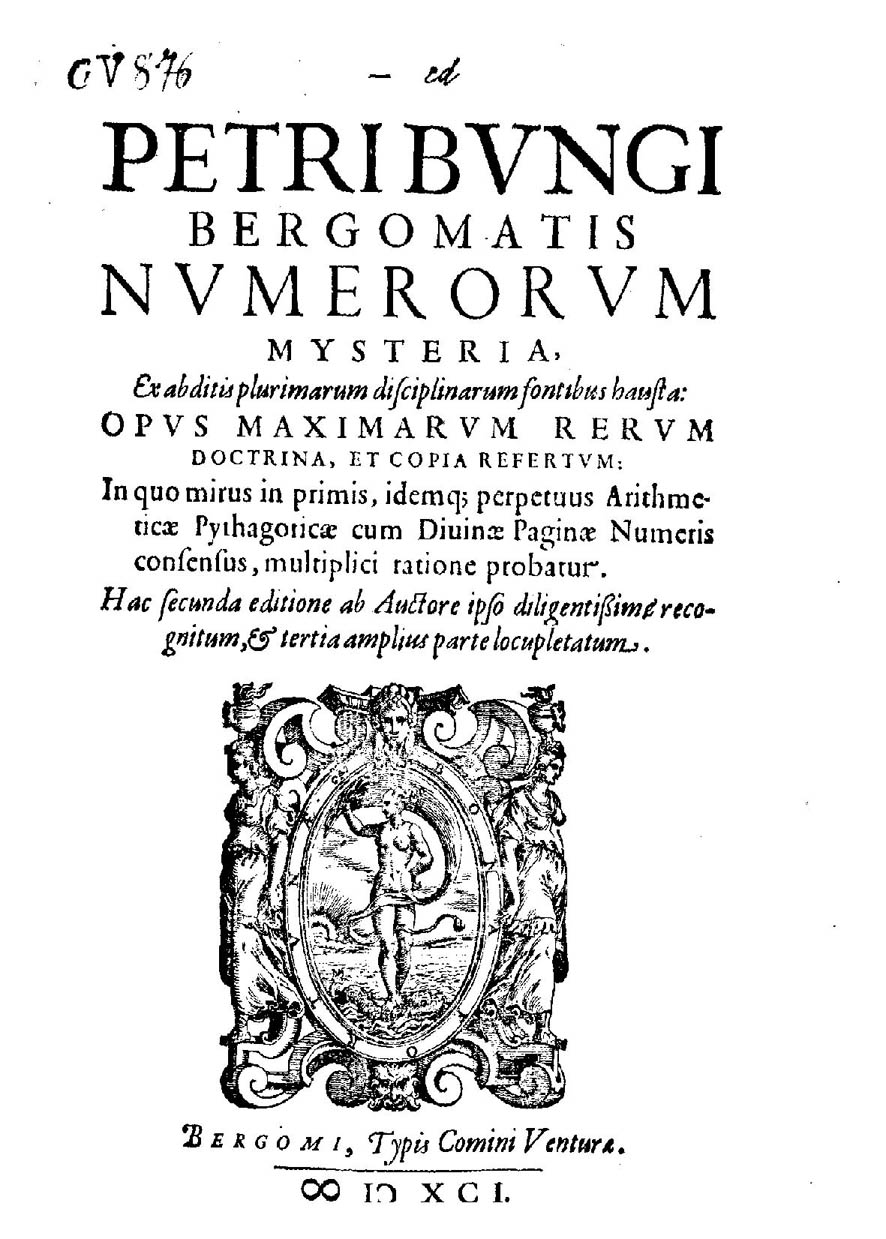
Numerology
from Greek arithmos (number) and manteia (divination)
The belief that numbers hold hidden meanings and influence human events.
Practitioners use alphanumeric systems to assign meaning to names, dates, and words, often viewing these patterns as guides for life or signs of cosmic order.
- Derived from Greek words for number and divination
- Pythagoras linked numbers to cosmic harmony
- Jewish gematria assigns value to Hebrew letters
- Doreen Virtue popularized angel numbers in 2004
- Scientists use term to critique non-empirical theories
What it is
Numerology is a system of thought that assigns specific meanings to numbers. It operates on the premise that numerical values are not merely quantitative but carry qualitative significance. This practice involves calculating the numerical essence of names, dates, or phrases using various alphabetic codes. Historically, it has been linked with astrology and other divinatory arts to interpret human character and predict future trends. The field encompasses several distinct methods, ranging from ancient Hebrew gematria to modern Western adaptations. While some view it as a spiritual tool for self-discovery, others regard it as a pseudoscientific framework for finding pattern in randomness.
Where it comes from
The roots of numerology stretch back to antiquity, with early examples found in Assyrian inscriptions from the eighth century BC. These texts reveal kings aligning architectural measurements with the numerical value of their names. In Greece, Pythagoras established a tradition linking numbers to cosmic harmony. The Milesian system developed in Miletus provided an early method for converting letters to numbers. This approach spread through the Hellenistic world and was later adopted in Egypt under Ptolemy II. Jewish scholars refined these techniques into gematria, while Arabic alchemists like Jabir ibn Hayyan integrated numerical symbolism into their experiments. The term 'numerology' itself emerged only in the early twentieth century, replacing older terms like arithmancy.
How it is done
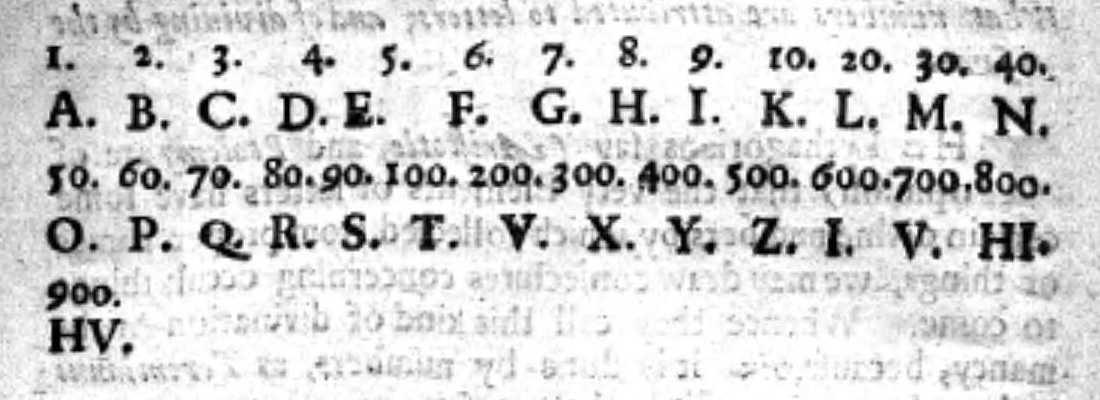
Practitioners convert letters into numbers using established alphabetic systems. Common methods include the Pythagorean chart, which maps Latin letters to values one through nine, and the Agrippan system used in occult philosophy. Calculations typically involve reducing multi-digit sums to a single digit or interpreting complex combinations. Some traditions analyze the structural properties of numbers, such as prime values or geometric patterns like the quincunx. Modern variations include the analysis of repeating digit sequences known as angel numbers. Scholars and skeptics note that these methods rely on subjective interpretation rather than empirical verification, often highlighting confirmation bias in how results are read.
Tools and materials
The primary tools are alphanumeric tables and calculation charts. These reference guides map characters from specific alphabets to numerical equivalents. Users may employ simple arithmetic to reduce names or dates to core values. Historical texts, such as the Book of the Zodiac for Mandaeans or Crowley's Liber Trigrammaton, provide specialized frameworks. Some practitioners use visual aids like the Tree of Life to map letter correspondences. The process requires no physical instruments beyond paper and writing implements, relying entirely on the symbolic association between script and number.
Numerology, drawn and placed
- Living
- Revived
- Fading
- Historical
- Legendary
- Performed
- Lineage
- Hermeticism
- Timing
- at birth or during personal transitions
What it is for
People consult numerology to understand personal traits, identify life cycles, or seek guidance for decisions. It is often used to find meaning in coincidences or to validate choices through perceived numerical alignment. Celebrities and public figures have occasionally altered names or dates based on these beliefs to attract favorable outcomes. The practice serves as a framework for introspection, allowing individuals to project aspirations onto numerical patterns. Conversely, scientists sometimes use the term pejoratively to dismiss theories they consider lacking empirical basis, citing Dirac's large number coincidences as an example of questionable reasoning.
Who does it
Historically, philosophers like Pythagoras and religious scholars such as Rabbis engaged with numerical symbolism. In the Islamic world, alchemists incorporated these studies into experimental work. Today, the practice is maintained by esoteric writers, spiritual authors, and hobbyists. Notable modern proponents included Doreen Virtue, who popularized angel numbers before renouncing the concept. Academic interest focuses on the history of ideas, examining how numerology influenced literature, art, and scientific theory development. Skeptics and psychologists analyze the cognitive mechanisms behind why people find these patterns compelling.
Peoples and places
Numerology appears across diverse cultures, though its forms vary significantly. Ancient Greeks developed isopsephy, while Hebrews created gematria. Arabic traditions utilized Abjad numerals for alchemical purposes. In Russia, the date of the 2008 war sparked conspiracy theories due to the repeating digits in the calendar. Australian politicians have also been reported to adjust personal details based on numerological advice. These examples illustrate how the practice adapts to local languages and cultural contexts, yet retains a core focus on the power of numerical sequences.
At a glance: who, where and when
Who does it
Belief worlds
Occasions
What people believe
The underlying worldview posits that the universe is structured according to mathematical principles. Numbers are seen as fundamental building blocks of reality, carrying inherent spiritual or metaphysical qualities. This perspective connects numerology to sacred geometry and cosmology, suggesting that earthly events mirror celestial mathematics. Believers hold that understanding these numerical relationships can reveal hidden truths about destiny and character. Critics argue that this view stems from apophenia, the human tendency to perceive meaningful connections in random data. The belief system often overlaps with mysticism, offering a sense of order in an unpredictable world.
When it is done
Numerological calculations are frequently applied to birth dates, anniversaries, and significant historical moments. Practitioners may track personal cycles, such as nine-year periods associated with transformation. Dates with repeating digits, like August 8, 2008, are often scrutinized for symbolic significance. The practice does not adhere to a fixed liturgical calendar but responds to individual life events and contemporary occurrences. Followers might choose auspicious dates for starting projects or changing names based on these calculations.
How scholars and sceptics see it
Anthropologists and historians trace numerology's evolution from ancient religious practices to modern esotericism. Scholars note its influence on literary works, such as Sir Thomas Browne's The Garden of Cyrus. Scientists often criticize numerological reasoning, particularly when applied to physics or astronomy. Figures like I.J. Good have acknowledged that some numerological intuitions preceded major scientific discoveries, though the methods themselves lack rigorous validation. Psychologists attribute the practice's appeal to cognitive biases, including the frequency illusion and confirmation bias. Sceptics emphasize that numerical patterns are infinite, making any specific correlation statistically probable by chance.
Cautions and what is closed
While numerology itself poses no physical danger, reliance on it for major life decisions can lead to poor judgment. Some practitioners have faced criticism for promoting unverified claims about health or finance. The commercialization of numerology, including paid readings and books, raises concerns about exploitation. Additionally, the misuse of numerical symbolism in political or social contexts can foster division or conspiracy thinking. Individuals are advised to approach these systems with critical awareness, recognizing them as cultural artifacts rather than factual sciences.
Compare and confuse
Numerology is often confused with astrology, as both seek to derive meaning from abstract systems. However, astrology focuses on celestial bodies, while numerology centers on numbers. It shares similarities with gematria and isopsephy, which are specific cultural implementations of the same principle. The term is also used metaphorically in science to describe theories based on numerical coincidence rather than observation. Unlike statistics, which uses data for prediction, numerology assigns intrinsic meaning to the numbers themselves.
Questions people ask about Numerology
What is numerology?
It calculates the numerical value of names and dates to reveal insights about personality and destiny. Practitioners view numbers as having inherent spiritual significance.
Where did numerology originate?
Numerology has ancient roots in Greece, Judea, and Mesopotamia. Pythagoras developed early theories linking numbers to the cosmos. Jewish scholars created gematria, while Arabic alchemists used numerical codes in their experiments.
How are numbers calculated?
Letters are converted to numbers using alphabetic systems like Pythagorean or Agrippan charts. Names and dates are reduced to single digits or interpreted through complex mappings. Different cultures use different alphabets and corresponding values.
Is numerology scientifically valid?
No. Scientists consider numerology a pseudoscience. It relies on subjective interpretation and confirmation bias. While some historical figures were fascinated by numerical coincidences, these patterns lack empirical proof.
What are angel numbers?
Angel numbers are repeating digit sequences like 111 or 444. Popularized in the 2000s, they are believed to carry spiritual messages. One creator later renounced the concept, calling it regrettable.
Good reading and sources
- Numerology on WikipediaEncyclopedia
- More photos on Wikimedia CommonsPhotos and video
- Wikidata recordOpen data
The facts on this page come from the Wikipedia article "Numerology", written by its contributors and used under the CC BY-SA 4.0 licence, and from its Wikidata record (CC0). EveryJaadu rewrote the text in its own words, with AI assistance, and compares every page with the article to make sure no passage is copied. It may be reused under the same CC BY-SA 4.0 licence with a link back.
It may contain mistakes. Names and customs differ from one community to the next, and some knowledge is closed to outsiders and left out here. This page describes belief and practice. It does not say that any of it works, it is not a how-to, and it is not medical advice. If something is wrong, tell us. Last refreshed 2026-10-05.
More from Greece
All the entries from Greece 🇹🇷 Turkey and 5 moreEvil eye
A curse believed to be cast by a jealous glare and the charms used to stop itBelief · Protection Living
🇹🇷 Turkey and 5 moreEvil eye
A curse believed to be cast by a jealous glare and the charms used to stop itBelief · Protection Living
 🇬🇷 GreeceOrphismὈρφικά
A Greek mystery tradition based on the myth of Dionysus and the soul's journeyTradition Historical
🇬🇷 GreeceOrphismὈρφικά
A Greek mystery tradition based on the myth of Dionysus and the soul's journeyTradition Historical
 🇮🇪 Ireland and 5 moreCairn
A human-made stack of stones used as a marker, memorial, or religious symbol across many cultures.Tradition · Protection · Speaking with spirits and the dead Living
🇮🇪 Ireland and 5 moreCairn
A human-made stack of stones used as a marker, memorial, or religious symbol across many cultures.Tradition · Protection · Speaking with spirits and the dead Living
 🇬🇷 Greece and 5 moreBay Laurelδάφνη
An aromatic Mediterranean plant used in cooking and as a symbol of victory and purification.Substance · Protection · Cleansing and purification Living
🇬🇷 Greece and 5 moreBay Laurelδάφνη
An aromatic Mediterranean plant used in cooking and as a symbol of victory and purification.Substance · Protection · Cleansing and purification Living
Related elsewhere
All belief 🇮🇳 India and 5 moreAstrology
A divinatory practice that reads human fate through the positions of celestial bodies.Belief · Seeing and foretelling · Luck and prosperity Living
🇮🇳 India and 5 moreAstrology
A divinatory practice that reads human fate through the positions of celestial bodies.Belief · Seeing and foretelling · Luck and prosperity Living
 🇮🇳 India and 5 moreCowrie
A sea snail shell used as currency, divination tool, and charm across many culturesSubstance · Seeing and foretelling · Luck and prosperity Living
🇮🇳 India and 5 moreCowrie
A sea snail shell used as currency, divination tool, and charm across many culturesSubstance · Seeing and foretelling · Luck and prosperity Living
 🇮🇳 IndiaHindu astrologyज्योतिष (Jyotiṣa)
A traditional Hindu system of astrology and timekeeping rooted in the VedasTradition · Seeing and foretelling · Luck and prosperity Living
🇮🇳 IndiaHindu astrologyज्योतिष (Jyotiṣa)
A traditional Hindu system of astrology and timekeeping rooted in the VedasTradition · Seeing and foretelling · Luck and prosperity Living
 🇺🇸 United States and 4 moreFortune-telling
A practice of predicting future events or personal details through various methods and tools.Rite · Seeing and foretelling · Power and authority Living
🇺🇸 United States and 4 moreFortune-telling
A practice of predicting future events or personal details through various methods and tools.Rite · Seeing and foretelling · Power and authority Living