
Agathos Daimon
In its own language: ἀγαθὸς δαίμων
from Ancient Greek agathós daímōn, meaning noble spirit
A noble spirit and serpent deity of Greek and Egyptian tradition
The Agathos Daimon is a lesser deity from ancient Greece and Egypt, known as a noble spirit. He served as a household protector in early Greece and later as a civic guardian of Alexandria.
- Name means noble spirit in Ancient Greek
- Served as a household god in classical Greece
- Protected the city of Alexandria in Egypt
- Often depicted as a serpent in late antiquity
- Honored with wine libations after meals
What it is
The Agathos Daimon is a figure from classical mythology, identified as a daemon or lesser deity. The name translates to noble spirit. In early Greek practice, he was a household god honored with wine after eating. Later, in Ptolemaic Egypt, the concept split into two roles. One role was a major civic god protecting the city of Alexandria. The other was a class of household spirits guarding individual homes. He is often linked to fertility, grain, and health.
Where it comes from
Scholars debate his origins in Alexandria. Some view him as a Greek import merged with Egyptian gods like Serapis and Shai. Others see him as a native Egyptian god that adopted Greek traits. Evidence suggests the Egyptian god Shai had deep roots dating back to Akhenaten's time. The Oracle of the Potter mentions Agathos Daimon leaving Alexandria for Memphis during times of chaos.
How it is done
In ancient Greece, people poured unmixed wine as a libation to honor him after finishing a meal. This act acknowledged his presence in the home. In art, he might appear as a young man holding a bowl, poppy, or ear of grain. He could also be shown as a serpent, especially in Egyptian contexts where serpentine forms were common for protective deities.
Tools and materials
He is associated with the cornucopia, or horn of plenty, symbolizing abundance. Symbols include the thyrsus and caduceus. Unmixed wine was the primary offering used in rituals. Serpents represented his form in many depictions, particularly in Alexandria.
Agathos Daimon, drawn and placed
- Living
- Revived
- Fading
- Historical
- Legendary
- Performed
- Lineage
- Graeco-Egyptian religion
- Timing
- after meals
What it is for
He was believed to protect households and bring good fortune. As a civic god, he guarded the city of Alexandria. His connection to grain and fertility suggested he ensured prosperity and health for those who honored him.
Who does it
Households in ancient Greece and Egypt worshipped him. He was part of daily domestic life, receiving offerings at mealtimes. In Alexandria, he held a prominent public status as a city protector.
Peoples and places
The Greeks practiced early domestic rites involving him. Egyptians in Alexandria integrated him into their syncretic religious landscape. He was identified with local figures like Shai and Zeus Meilichios, showing how different cultures blended their beliefs about protective spirits.
At a glance: who, where and when


What people believe
He was viewed as a benevolent force rather than a malevolent one. Unlike the Cacodaemon, which represented evil spirits, the Agathos Daimon brought security. He was sometimes seen as the companion of Tyche Agathe, or Good Fortune. His nature was numinous, bridging the gap between human homes and divine protection.
Compare and confuse
He is distinct from the Cacodaemon, which represents harmful spirits. He is related to the concept of Eudaemon, focusing on happiness and well-being. In Egypt, he shares traits with Shai, the god of fate, and Kneph, another serpent deity.
Questions people ask about Agathos Daimon
What does the name Agathos Daimon mean?
The name comes from Ancient Greek and translates directly to noble spirit. It refers to a lesser deity or daemon in classical mythology.
Where did this deity originate?
He originated in ancient Greece as a household god. Later, in Ptolemaic Egypt, he became a major civic protector for Alexandria, blending with local Egyptian traditions.
How was he honored in ancient times?
People honored him by pouring out unmixed wine after a meal. This ritual acknowledged his presence and sought his continued protection over the household.
What animal represents him?
He is frequently represented as a serpent, especially in Egyptian contexts. In Greek art, he might also appear as a young man holding symbols of abundance.
Good reading and sources
- Agathodaemon on WikipediaEncyclopedia
- More photos on Wikimedia CommonsPhotos and video
- Wikidata recordOpen data
The facts on this page come from the Wikipedia article "Agathodaemon", written by its contributors and used under the CC BY-SA 4.0 licence, and from its Wikidata record (CC0). EveryJaadu rewrote the text in its own words, with AI assistance, and compares every page with the article to make sure no passage is copied. It may be reused under the same CC BY-SA 4.0 licence with a link back.
It may contain mistakes. Names and customs differ from one community to the next, and some knowledge is closed to outsiders and left out here. This page describes belief and practice. It does not say that any of it works, it is not a how-to, and it is not medical advice. If something is wrong, tell us. Last refreshed 2026-10-07.
More from Egypt
All the entries from Egypt 🇪🇬 Egypt and 1 moreSphinx
A mythical hybrid with a human head and lion body, serving as guardian or riddler in Egyptian and Greek traditions.Being · Protection · Wonder and entertainment Legendary
🇪🇬 Egypt and 1 moreSphinx
A mythical hybrid with a human head and lion body, serving as guardian or riddler in Egyptian and Greek traditions.Being · Protection · Wonder and entertainment Legendary
 🇮🇱 Israel and 2 moreLeviathanלִוְיָתָן (Livyaṯān)
A primordial sea monster from ancient Near Eastern myth and biblical textBeing · Cursing and harm · Power and authority Historical
🇮🇱 Israel and 2 moreBelialבְּלִיַּעַל
A Hebrew term for worthlessness that evolved into a demon of darkness in Jewish and Christian texts.Being · Cursing and harm Historical
🇮🇱 Israel and 2 moreLeviathanלִוְיָתָן (Livyaṯān)
A primordial sea monster from ancient Near Eastern myth and biblical textBeing · Cursing and harm · Power and authority Historical
🇮🇱 Israel and 2 moreBelialבְּלִיַּעַל
A Hebrew term for worthlessness that evolved into a demon of darkness in Jewish and Christian texts.Being · Cursing and harm Historical
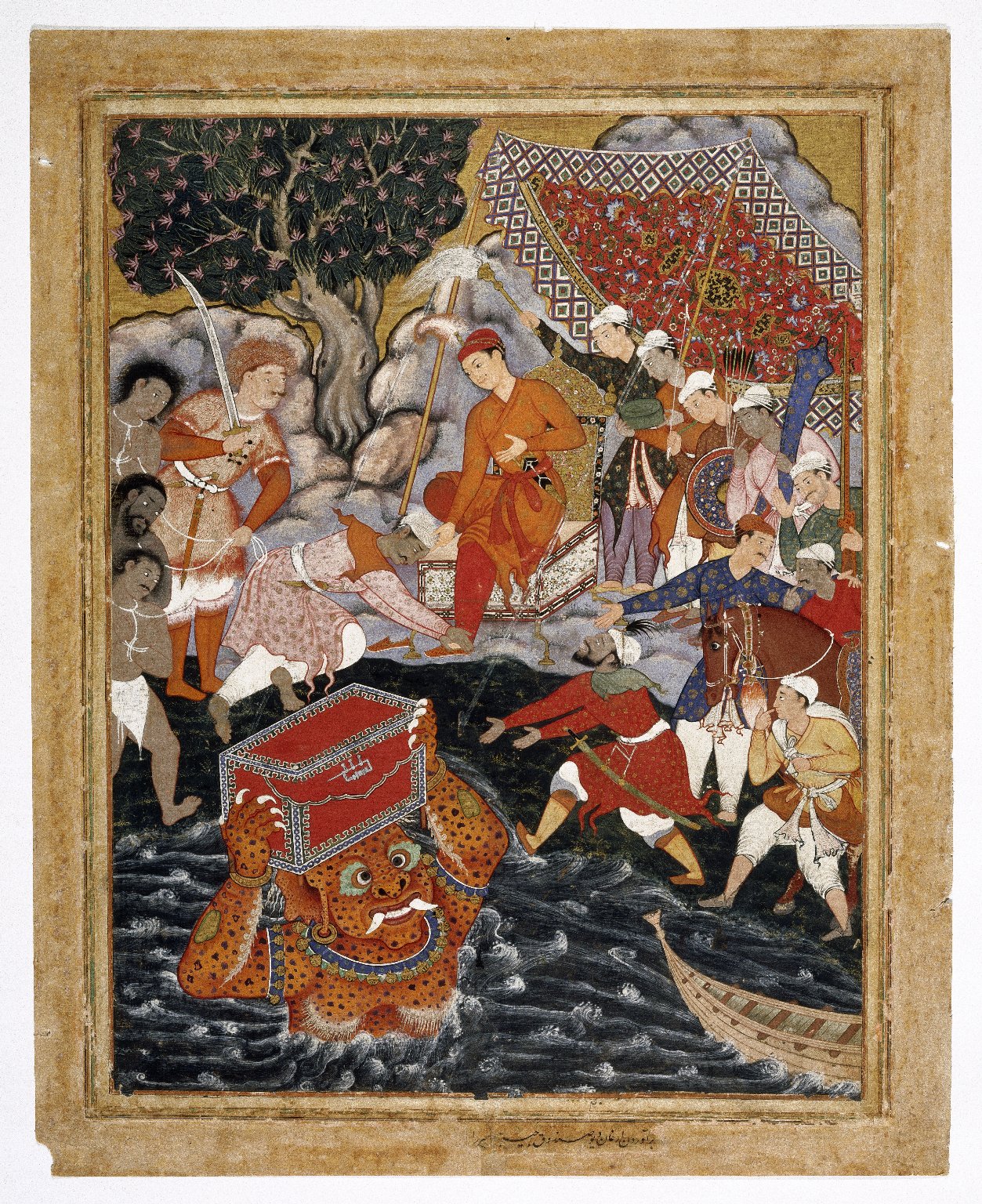 🇪🇬 Egypt and 3 moreIfritعفريت
A class of powerful chthonic spirits in Islamic tradition and folkloreBeing · Cursing and harm · Power and authority Historical
🇪🇬 Egypt and 3 moreIfritعفريت
A class of powerful chthonic spirits in Islamic tradition and folkloreBeing · Cursing and harm · Power and authority Historical
Related elsewhere
All being 🇧🇪 Belgium and 2 moreHorseshoe
A metal shoe for a horse's hoof and a talisman of good fortuneCharm · Protection · Luck and prosperity Living
🇧🇪 Belgium and 2 moreHorseshoe
A metal shoe for a horse's hoof and a talisman of good fortuneCharm · Protection · Luck and prosperity Living
 🇨🇳 China and 3 moreChinese dragon龍
A legendary water deity and imperial symbol in East Asian cultureBeing · Protection · Luck and prosperity Historical
🇨🇳 China and 3 moreChinese dragon龍
A legendary water deity and imperial symbol in East Asian cultureBeing · Protection · Luck and prosperity Historical
 🇫🇷 France and 5 moreYule log
A large wooden log burned in the hearth during winter festivals across Europe and North America.Tradition · Protection · Luck and prosperity Living
🇫🇷 France and 5 moreYule log
A large wooden log burned in the hearth during winter festivals across Europe and North America.Tradition · Protection · Luck and prosperity Living
 🇮🇳 India and 5 moreKolamகோலம்
A daily geometric floor drawing made with rice flour at the home entrance in South IndiaTradition · Protection · Luck and prosperity Living
🇮🇳 India and 5 moreKolamகோலம்
A daily geometric floor drawing made with rice flour at the home entrance in South IndiaTradition · Protection · Luck and prosperity Living