Protection
Warding off the evil eye, spirits, illness and bad luck: amulets, wards and thresholds.
Protection is the most widespread aim of magic. People hang, wear, bury, burn and recite things to keep out the evil eye, harmful spirits, illness and bad luck. The blue nazar, the hamsa, the horseshoe, the red thread, the Japanese omamori and the Ethiopian protective scroll all serve it. This page covers what is guarded, who is thought to need guarding, and how different societies see the practice. It is a good place to start with the subject.
What is guarded
The most guarded are the vulnerable and the valued: newborns, brides, pregnant women, livestock, new houses and travellers. Doorways, windows and crossroads get special care, since they are where inside meets outside. Practices include hanging a lemon and chillies in India, a horseshoe in Britain and Ireland, an eye-bead in Turkey, a mezuzah on Jewish doorposts and a spirit house in Thailand. Beyond doors, people protect journeys, wells, boats and herds, and the guarded thing is usually whatever the family can least afford to lose.
Against what
The danger named varies. In the Middle East and Mediterranean it is the evil eye, a harm said to come from envy or praise. In sub-Saharan Africa it is often witchcraft or a rival's sorcery. In Europe it was witches, fairies and the devil, and in East Asia hungry ghosts and ill-fortune. Protective practice therefore tells a researcher what a community fears and who it suspects. Some marks are drawn in chalk, paint or henna and renewed each year, and others are made once and left to fade.
Faith and the objects
Religions deal with protective objects in different ways. Many Muslim scholars accept verses of the Quran recited for protection and disapprove of beads or knots believed to work by themselves. Catholic Christians use blessed medals, holy water and the sign of the cross. Sikhism rejects talismans, while Buddhist monks bless protective threads and tattoos in Thailand and Cambodia. Official teaching often differs from practice in the village, where one household may wear a charm quietly and say a prayer at the same time.
Scholars and the market
Psychologists suggest protective objects ease anxiety and give a sense of control. Sceptics note that no test has shown them to prevent harm. Commerce is large: charms are mass-produced, and some sellers charge heavily for items promised to ward off disaster. Anyone in real danger or illness should turn to practical help first. Believers usually say the protection is a matter of trust and care, and many say the object matters less than the intention and the community that stands behind it.
Protection on EveryJaadu
The entries written up so far, best known first.
 🇳🇴 Norway and 1 moreHuldra
A seductive forest spirit of Scandinavian folklore with a hidden animal tail.Being · Protection Legendary
🇳🇴 Norway and 1 moreHuldra
A seductive forest spirit of Scandinavian folklore with a hidden animal tail.Being · Protection Legendary
 🇬🇷 Greece and 3 moreHellhound
A mythological canine that guards the underworld or serves demonic forces across global folkloreBeing · Protection · Cursing and harm Legendary
🇬🇷 Greece and 3 moreHellhound
A mythological canine that guards the underworld or serves demonic forces across global folkloreBeing · Protection · Cursing and harm Legendary
 🇮🇪 IrelandPúca
A shape-shifting spirit of Celtic folklore that brings fortune or mischiefBeing · Luck and prosperity · Cursing and harm Legendary
🇮🇪 IrelandPúca
A shape-shifting spirit of Celtic folklore that brings fortune or mischiefBeing · Luck and prosperity · Cursing and harm Legendary
 🇬🇧 United KingdomBrowniebrùnaidh
A nocturnal household spirit from Scottish folklore that performs chores in exchange for offerings.Being · Protection · Luck and prosperity Legendary
🇬🇧 United KingdomBrowniebrùnaidh
A nocturnal household spirit from Scottish folklore that performs chores in exchange for offerings.Being · Protection · Luck and prosperity Legendary
 🇷🇺 Russia and 3 moreLeshyлеший
A forest spirit from Slavic folklore who guards the woods and misleads travelers.Being · Protection · Cursing and harm Legendary
🇷🇺 Russia and 3 moreLeshyлеший
A forest spirit from Slavic folklore who guards the woods and misleads travelers.Being · Protection · Cursing and harm Legendary
 🇯🇵 JapanTengu天狗
Japanese mountain spirits that evolved from ominous birds into protective forest guardians.Being · Cursing and harm · Protection Legendary
🇯🇵 JapanTengu天狗
Japanese mountain spirits that evolved from ominous birds into protective forest guardians.Being · Cursing and harm · Protection Legendary
 🇨🇳 China and 2 moreXiezhi獬豸
A one-horned beast from East Asia that separates the guilty from the innocentBeing · Cursing and harm · Protection Legendary
🇬🇧 United KingdomGlaistig
A Scottish shape-shifting spirit linked to cattle, deer, and haunted castles.Being · Protection · Cursing and harm Legendary
🇷🇴 RomaniaZână
A Romanian woodland spirit linked to Diana that guides travelers and blesses children.Being · Protection · Luck and prosperity Legendary
🇸🇪 SwedenAskafroa
A Scandinavian tree spirit believed to guard the ash and demand appeasement.Being · Cursing and harm · Protection Legendary
🇨🇳 China and 2 moreXiezhi獬豸
A one-horned beast from East Asia that separates the guilty from the innocentBeing · Cursing and harm · Protection Legendary
🇬🇧 United KingdomGlaistig
A Scottish shape-shifting spirit linked to cattle, deer, and haunted castles.Being · Protection · Cursing and harm Legendary
🇷🇴 RomaniaZână
A Romanian woodland spirit linked to Diana that guides travelers and blesses children.Being · Protection · Luck and prosperity Legendary
🇸🇪 SwedenAskafroa
A Scandinavian tree spirit believed to guard the ash and demand appeasement.Being · Cursing and harm · Protection Legendary
 🇷🇺 Russia and 2 moreSupernatural beings in Slavic religion
Mythic entities of nature, death, and fate in Slavic folklore and belief.Being · Protection · Cursing and harm Legendary
🇷🇺 Russia and 2 moreSupernatural beings in Slavic religion
Mythic entities of nature, death, and fate in Slavic folklore and belief.Being · Protection · Cursing and harm Legendary
 🇨🇳 ChinaAo鰲
A colossal sea turtle of Chinese myth whose legs support the skyBeing · Protection · Wonder and entertainment Legendary
🇨🇳 ChinaAo鰲
A colossal sea turtle of Chinese myth whose legs support the skyBeing · Protection · Wonder and entertainment Legendary
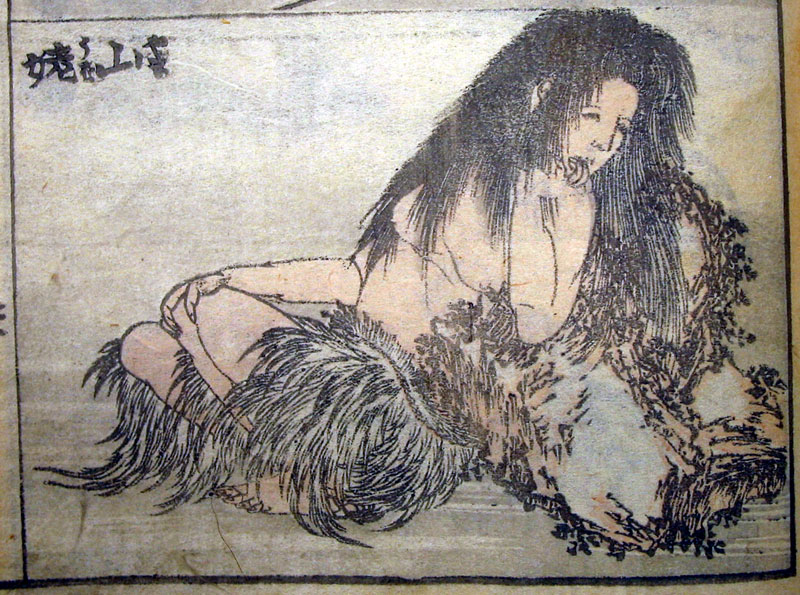 🇯🇵 JapanYama-uba山姥
A Japanese mountain spirit depicted as either a cannibalistic monster or a benevolent guardian.Being · Cursing and harm · Luck and prosperity Legendary
🇸🇪 SwedenSjörå
A Swedish lake spirit that rewards kindness and drowns the disrespectfulBeing · Protection · Luck and prosperity Legendary
🇹🇹 Trinidad and Tobago and 2 moreMama D'Leau
A river spirit of the Caribbean islands who protects aquatic life and heals people.Being · Healing · Protection Legendary
🇫🇷 France and 1 moreDames Blanches
Spectral women in French folklore who demand dances or warn of dangerBeing · Cursing and harm · Protection Legendary
🇷🇴 RomaniaMuma Pădurii
A forest spirit in Romania who protects nature and punishes those who harm itBeing · Protection · Cursing and harm Legendary
🇺🇸 United StatesWoman in Black
A spectral figure from Appalachian folklore said to punish men for moral failingsBeing · Cursing and harm · Protection Legendary
🇯🇵 JapanYama-uba山姥
A Japanese mountain spirit depicted as either a cannibalistic monster or a benevolent guardian.Being · Cursing and harm · Luck and prosperity Legendary
🇸🇪 SwedenSjörå
A Swedish lake spirit that rewards kindness and drowns the disrespectfulBeing · Protection · Luck and prosperity Legendary
🇹🇹 Trinidad and Tobago and 2 moreMama D'Leau
A river spirit of the Caribbean islands who protects aquatic life and heals people.Being · Healing · Protection Legendary
🇫🇷 France and 1 moreDames Blanches
Spectral women in French folklore who demand dances or warn of dangerBeing · Cursing and harm · Protection Legendary
🇷🇴 RomaniaMuma Pădurii
A forest spirit in Romania who protects nature and punishes those who harm itBeing · Protection · Cursing and harm Legendary
🇺🇸 United StatesWoman in Black
A spectral figure from Appalachian folklore said to punish men for moral failingsBeing · Cursing and harm · Protection Legendary
Photo credits on this page
The small pictures above come from Wikimedia Commons under free licences. Some are cropped to fit.
- Supernatural beings in Slavic religion: Bartolomeo Giuliano, CC BY-SA 3.0, source
- Huldra: Bernard Evans Ward, Public domain, source
- Ao: David Jackson, CC BY-SA 2.0 uk, source
- Curse: Katsushika Hokusai, Public domain, source
- Hellhound: Louis Le Breton, Public domain, source
- Púca: Wirt Sikes, Public domain, source
- Brownie: Unknown author, CC BY-SA 2.5, source
- Leshy: Γραφέας, CC BY-SA 4.0, source
- Yama-uba: Unknown author, Public domain, source
- Xiezhi: Carty239 at English Wikipedia, Public domain, source