🇵🇱 Magic in Poland
56 entries from Poland, best known first, across 19 places of magic.
The provided records focus on the scholarly documentation of Polish folk traditions rather than detailing specific magical practices or spiritual beliefs. Nineteenth century academics gathered oral tales and rural customs to support national identity. Later institutions continued cataloguing regional variations and social group traditions without describing the rituals themselves.
- Hugo Kołłątaj created the first Polish folklore research program in 1802.
- Key nineteenth century collectors included Oskar Kolberg and Zygmunt Gloger.
- The Institute of Archaeology and Ethnography publishes Etnografia Polska since 1958.
- Interwar scholars added workers folklore to traditional peasant studies.
Overview
This account covers the history of scholarly collection rather than the beliefs themselves. Early nineteenth century scholars began gathering oral tales and rural customs to strengthen national identity during periods of foreign partition. Researchers like Oskar Kolberg and Zygmunt Gloger compiled extensive archives of regional stories and seasonal habits. Later studies added urban working class traditions and local village customs. Academic journals and university institutes now preserve these records. The text does not describe specific charms, spirit beings, healing methods, or ceremonial calendars.
The facts in this overview come from the Wikipedia article "Folklore of Poland", written by its contributors and used under the CC BY-SA 4.0 licence. EveryJaadu rewrote the text in its own words, with AI assistance, and compares every page with the article to make sure no passage is copied. It may be reused under the same CC BY-SA 4.0 licence with a link back.
 🇪🇬 Egypt and 2 moreCurse of the pharaohs
A belief that disturbing ancient Egyptian tombs brings bad luck or deathBelief · Cursing and harm Historical
 🇷🇺 Russia and 4 moreLady MiddayPoludnitsa
A Slavic noon spirit who watches over fields and punishes those who work during the hottest hours.Being · Cursing and harm · Protection Historical
 🇷🇺 Russia and 12 moreSlavic Native FaithРодноверие
A modern polytheistic movement drawing on Slavic folklore, romanticism, and global spiritual traditions.Tradition · Speaking with spirits and the dead · Power and authority Living
 🇪🇸 Spain and 6 moreBurning of Judas
An Easter rite where an effigy of the betrayer is destroyed by fire or other meansRite · Cursing and harm · Cleansing and purification Living
 🇪🇪 Estonia and 5 moreFern flower
A mythical bloom said to bring fortune and unlock secrets, found only on midsummer night.Belief · Luck and prosperity · Love and attraction Living
 🇬🇧 United Kingdom and 7 moreSaint Andrew's Day
A Christian feast day marked by national holidays in Scotland and Romania, and folk divination across Europe.Rite · Seeing and foretelling · Luck and prosperity Living
🇵🇱 Poland and 4 moreWitch trials in Poland
A historical record of sorcery prosecutions and executions in Poland from the 15th to the 19th century.Belief · Cursing and harm Historical
🇷🇺 Russia and 4 moreIriyВырай
A mythical Slavic realm where souls and birds gather for the winterBelief · Speaking with spirits and the dead Legendary
 🇬🇧 United Kingdom and 5 moreWedding superstitions
Folk beliefs and omens tied to marriage customs across many culturesBelief · Protection · Luck and prosperity Living
 🇮🇳 India and 5 moreLock of hair
A piece of human hair kept for symbolic, sentimental, or superstitious reasons.Substance · Protection · Luck and prosperity Living
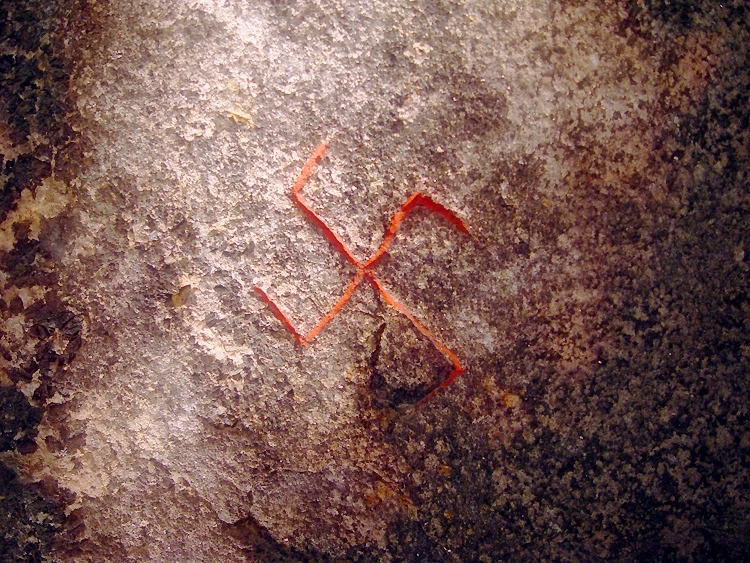 🇸🇪 Sweden and 4 moreSwastika (Germanic Iron Age)
A four-armed symbol found on Germanic artefacts from the Migration to Viking periods.Belief · Power and authority Historical
🇺🇸 United States and 3 more11:11
A clock time believed to signal spiritual alignment or synchronicity in numerology and New Age thoughtBelief · Wonder and entertainment · Power and authority Living
 🇵🇹 Portugal and 5 moreWilgefortisVilgeforte
A bearded female martyr folk saint known for relieving women from unwanted marriages and tribulationsFigure · Protection · Cursing and harm Historical
 🇬🇧 United Kingdom and 1 moreFairy-locks
Knots in the hair of sleepers and horses, blamed on fairies at playBelief · Cursing and harm Legendary
🇵🇱 PolandPłanetnik
A Slavic storm spirit said to herd clouds and hail, and to shelter the sudden deadBeing · Protection · Cursing and harm Legendary
 🇵🇱 PolandFrankenstein town gravediggers scandal
A 1606 witchcraft trial in Silesia that may have inspired Mary Shelley's novelBelief · Cursing and harm Historical
🇧🇬 Bulgaria and 5 moreApocryphal prayer
A folk prayer text blending church forms with apocrypha and incantations for protection and healingText · Protection · Healing Living
Photo credits on this page
The small pictures above come from Wikimedia Commons under free licences. Some are cropped to fit.
- Burning of Judas: Unknown author, Public domain, source
- Saint Andrew's Day: Henryk Siemiradzki, Public domain, source
- Fairy-locks: Tsaag Valren, CC BY-SA 4.0, source
- Wedding superstitions: Anonymous Unknown author, Public domain, source
- Frankenstein town gravediggers scandal: Jacek Halicki, CC BY-SA 3.0 pl, source
- Curse of the pharaohs: Jerzy Strzelecki, CC BY-SA 3.0, source
- Lady Midday: Віщун, CC BY-SA 4.0, source
- Slavic Native Faith: Union of Slavic Rodnover Communities (Союз Славянских Общин Славянской, CC BY-SA 4.0, source
- Swastika (Germanic Iron Age): No machine-readable author provided. Bloodofox~commonswiki assumed (ba, Public domain, source
- Wilgefortis: Hieronymus Bosch, Public domain, source
- Lock of hair: Unknown author, CC0, source
- Fern flower: Antoni Piotrowski, Public domain, source
The weekly digest
Every Monday: seven entries you may not know, what is on the calendar this week, and one rite drawn step by step.