🇬🇷 Magic in Greece
179 entries from Greece, best known first, across 80 places of magic.
Ancient Greek folklore rests on oral storytelling, musical performance, and communal ceremonies aimed at honoring the divine. These traditions ran alongside formal state religion, blending myth, legend, and everyday tales into a shared cultural fabric. Scholars note that these beliefs included ghost lore and urban narratives that have largely faded from modern circulation.
- Ancient Greeks shared many oral narrative genres with Roman neighbors.
- The aulos is a double-reed wind instrument used in folk music.
- Massilia practiced an annual rite expelling a chosen scapegoat.
- Classical scholars historically paid little attention to folklore studies.
- Ghost stories and urban legends circulated widely in ancient texts.
Overview
The folk traditions of ancient Greece wove together myth, legend, and everyday tales into a living oral culture. Storytellers passed down ghost accounts, urban legends, and fairy narratives that kept community memory alive. These customs operated alongside formal temple worship, offering a more personal way to engage with the unseen world. Musical performance formed a core part of this practice, appearing in work chants, drinking verses, and sacred hymns. The Greeks shared many narrative forms with their Roman neighbors, creating a broad Mediterranean tradition of oral belief. Academic study of these customs lagged behind classical scholarship, leaving much of the material to be reconstructed from scattered historical records.
Practices and beliefs
Daily life incorporated music as both entertainment and spiritual support. Communities used string instruments like the lyre and kithara, alongside the aulos, which is a double-reed wind tool. Songs accompanied labor, celebrations, and sleep routines. People also held beliefs about spirits of the dead, recording numerous ghost stories that blended fear with social commentary. These narratives functioned as early urban legends, warning listeners about moral boundaries and unexplained events. The oral nature of these practices meant they shifted with each telling, adapting to local needs without fixed written rules.
Rites and charms
Ceremonies centered on establishing contact with deities through structured offerings and public gatherings. Communities organized festivals and processions to show respect and seek favor. Animal sacrifices were standard, often involving carefully selected creatures deemed worthy of divine attention. Some city-states practiced a unique rite where a marginalized person was dressed in fine clothes and treated as important for a full year before being driven from the settlement. This expulsion ritual served as a communal cleansing act, redirecting potential misfortune away from the population.
Regions and communities
Folk customs varied across different settlements, reflecting local priorities and available resources. While most areas followed similar patterns of song and seasonal ceremony, certain cities developed distinct procedures. The coastal polis of Massilia stands out for its annual expulsion rite, which differed sharply from standard sacrificial methods found elsewhere. Neighboring cultures adopted many of these narrative forms, showing how trade and migration spread oral traditions across the Mediterranean. Regional differences mainly appeared in the selection of ritual participants and the specific instruments favored for local performances.
The facts in this overview come from the Wikipedia article "Ancient Greek folklore", written by its contributors and used under the CC BY-SA 4.0 licence. EveryJaadu rewrote the text in its own words, with AI assistance, and compares every page with the article to make sure no passage is copied. It may be reused under the same CC BY-SA 4.0 licence with a link back.
Places of magic in Greece
 🇬🇷 Greece and 1 moreHecateἙκάτη
A Greek goddess of magic, crossroads, and the moon, often shown in three forms.Being · Protection · Power and authority Historical
 🇬🇷 Greece and 2 moreCurse tabletκατάδεσμος
A lead sheet inscribed with a binding curse in the Greco-Roman worldCharm · Cursing and harm · Love and attraction Historical
 🇬🇷 Greece and 1 moreCapnomancy
Divination by reading the shapes and movements of smoke from fires or incenseOracle · Seeing and foretelling · Protection Historical
 🇬🇷 GreeceKykeonκυκεών
A mixed barley drink of ancient Greece, drunk by peasants and at the Mysteries of EleusisSubstance · Speaking with spirits and the dead · Healing Historical
 🇪🇬 Egypt and 2 moreIsisꜣst (Egyptian)
Egyptian goddess of magic, mourning and kingship, mother of HorusBeing · Protection · Healing Historical
 🇮🇹 Italy and 3 moreSaturnalia
An ancient Roman winter festival of role reversal and feasting in honor of SaturnTradition · Luck and prosperity · Wonder and entertainment Historical
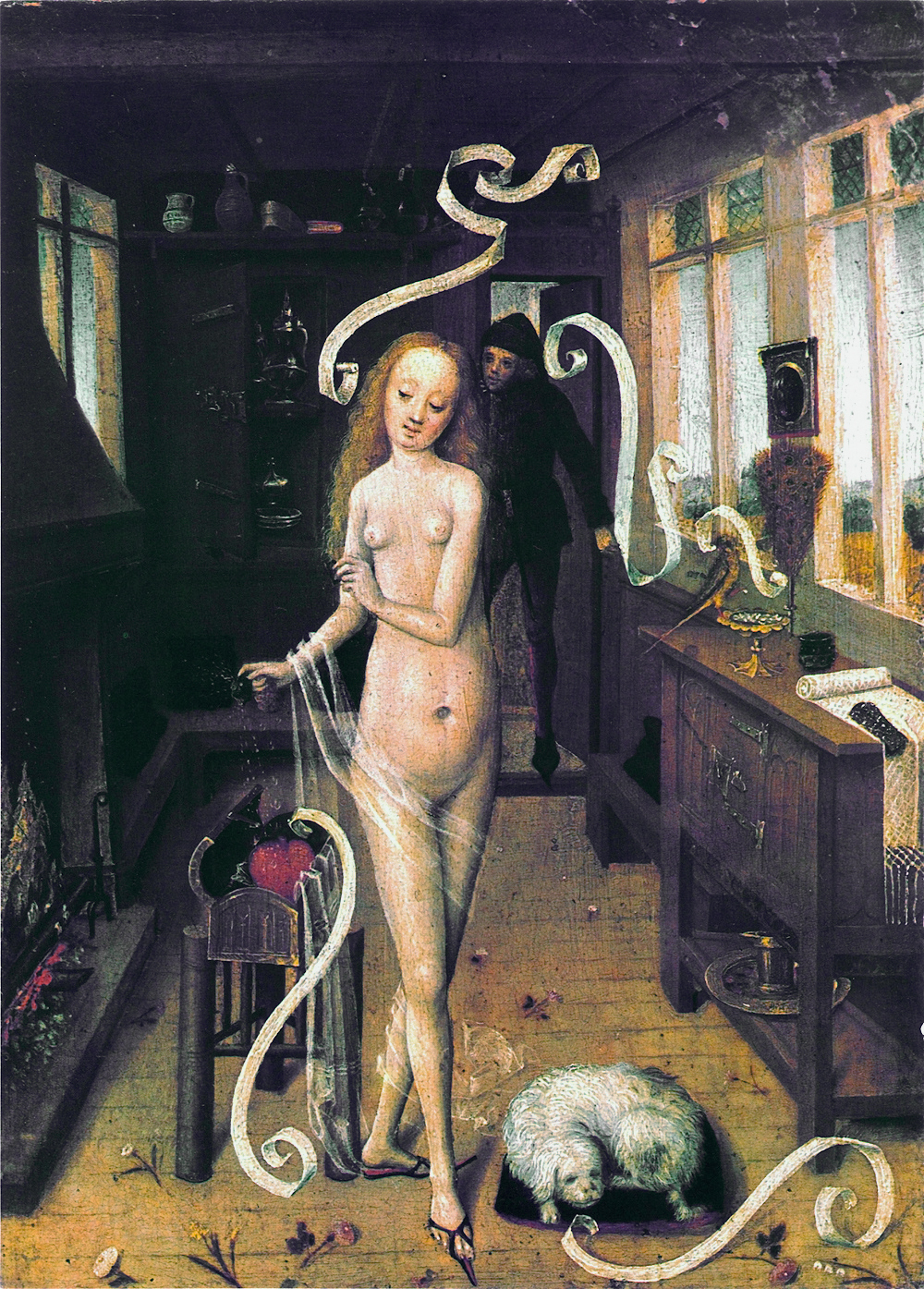 🇮🇶 Iraq and 5 moreLove magic
Rituals and spells used to attract, preserve, or end romantic relationships across many cultures.Tradition · Love and attraction · Cursing and harm Historical
 🇬🇷 Greece and 4 moreKallikantzarosκαλικάντζαρος
A malevolent goblin that dwells underground and surfaces during the twelve days of Christmas.Being · Cursing and harm · Luck and prosperity Historical
🇮🇹 Italy and 1 moreKollyra curse tablet
An ancient Greek tablet cursing a thief to suffocation until stolen goods are returned.Text · Protection · Cursing and harm Historical
 🇵🇱 Poland and 3 moreStrzyga
A female demon in Polish folklore, linked to owls and vampiric traitsBeing · Cursing and harm · Protection Historical
 🇬🇷 GreeceGelloΓελλώ
A Greek demon of infancy and a class of beings blamed for infant death.Being · Cursing and harm · Protection Historical
 🇬🇷 GreeceMeilichiosΜειλίχιος
An ancient Greek chthonic spirit linked to Zeus and appeased through fire offerings.Being · Protection · Cursing and harm Historical
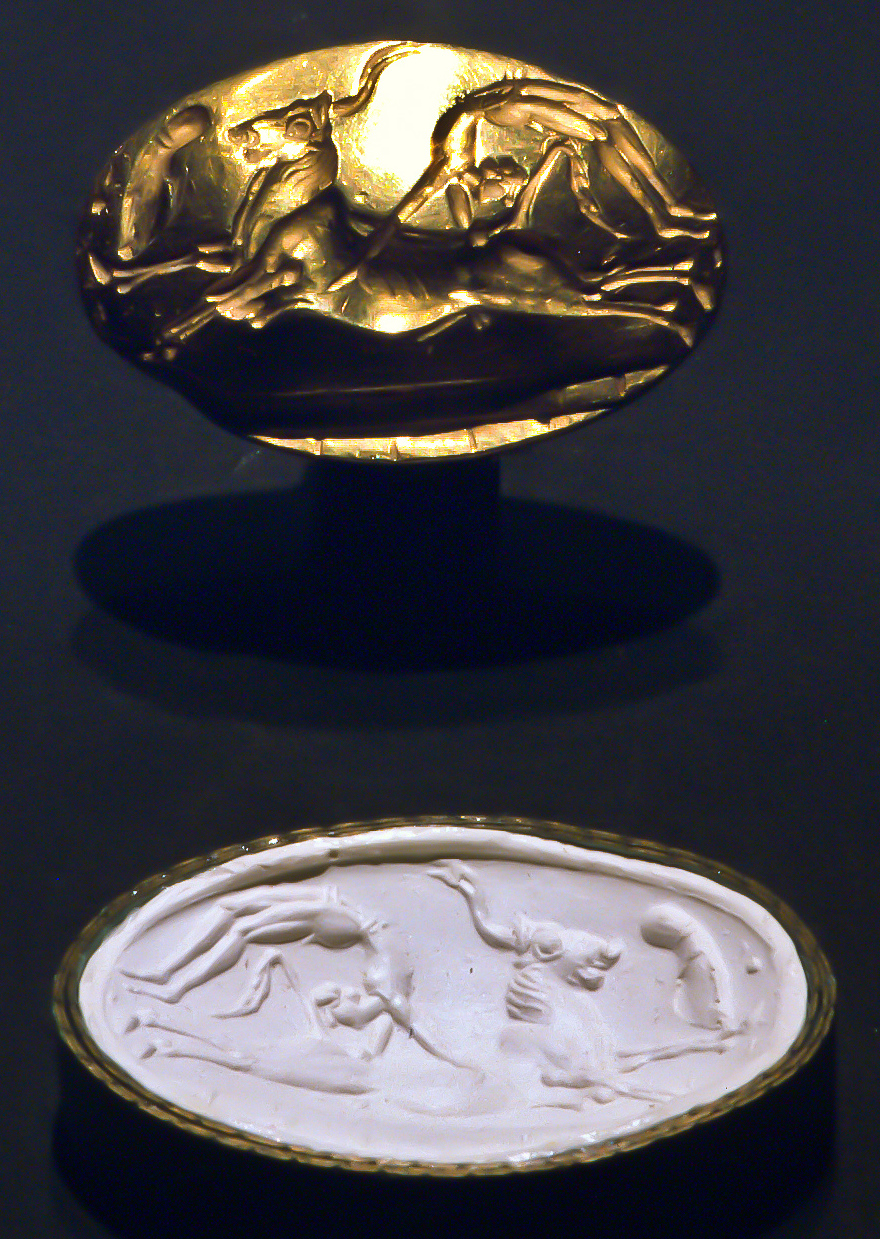 🇬🇷 GreeceMinoan sealstones
Carved gemstones and amulets from Bronze Age Crete used for identification and ritualCharm · Protection · Power and authority Historical
 🇬🇷 GreeceNymphνύμφη
A nature spirit from Greek myth, tied to specific places like springs or trees, often seen as a maiden.Being · Healing · Seeing and foretelling Historical
 🇬🇷 GreeceAmulet MS 5236
A stamped gold amulet from ancient Greece invoking ApolloCharm · Protection · Cursing and harm Historical
 🇪🇬 Egypt and 1 moreAgathos Daimonἀγαθὸς δαίμων
A noble spirit and serpent deity of Greek and Egyptian traditionBeing · Protection · Luck and prosperity Historical
 🇬🇷 GreeceNympholepsy
An ancient Greek belief in being possessed by nymphs, later redefined as a wild passion.Belief · Speaking with spirits and the dead Historical
Photo credits on this page
The small pictures above come from Wikimedia Commons under free licences. Some are cropped to fit.
- Nympholepsy: Jebulon, CC0, source
- Love magic: Kölner Meister [ 1 ] The artist is an unknown lower Rhenish artist. [, Public domain, source
- Minoan sealstones: Andree Stephan, CC BY 3.0, source
- Isis: Ägyptischer Maler um 1360 v. Chr., Public domain, source
- Saturnalia: Themadchopper, Antoine-François Callet, CC0, source
- Nymph: Unknown author, Public domain, source
- Hecate: Henryk Siemiradzki, Public domain, source
- Strzyga: Filip Gutowski, CC BY-SA 4.0, source
- Capnomancy: Tigerzeng, CC BY-SA 4.0, source
- Kallikantzaros: Katolophyromai, CC BY-SA 4.0, source
- Gello: Filippino Lippi, Public domain, source
- Curse tablet: Unknown artist, Public domain, source
- Amulet MS 5236: Martin Schøyen, CC BY-SA 3.0, source
- Kykeon: Marsyas, CC BY-SA 2.5, source
- Agathos Daimon: Carole Raddato, CC BY-SA 2.0, source
- Meilichios: Mark Landon, CC BY 4.0, source
The weekly digest
Every Monday: seven entries you may not know, what is on the calendar this week, and one rite drawn step by step.