🇨🇺 Magic in Cuba
8 entries from Cuba, best known first, across 2 places of magic.
Santería weaves together West African spiritual traditions, Roman Catholic rituals, and Spiritist ideas into a single living faith. Practitioners honor a supreme creator while working closely with nature spirits called oricha through offerings, divination, and healing arts. The tradition operates alongside mainstream Christianity without a central governing body, allowing wide variation across communities.
- Olodumare serves as the distant creator deity who does not receive direct offerings.
- Practitioners equate African deities with Roman Catholic saints to merge two spiritual systems.
- The toque de santo ceremony uses drums and dance to invite spirit possession.
- Ifá divination employs cowrie shells and carved tools to reveal personal destiny.
- Initial membership requires formal initiation, separating casual believers from temple leaders.
Overview
This Afro-Cuban faith emerged during the nineteenth century when enslaved Yoruba people blended their ancestral worship with Spanish Catholicism and French Spiritism. The result is a flexible system without a single holy book or controlling institution. Believers view the universe as filled with a vital energy called aché, which flows through all things and can be guided through careful ceremony. The tradition shares deep roots with Haitian Vodou and Brazilian Candomblé, forming part of a broader Orisha network across the Americas. Local variations absorb elements from Chinese migrants and modern spiritual movements, keeping the practice adaptable to changing times.
Practices and beliefs
Followers maintain household shrines and temple spaces dedicated to deities known as oricha. These spirits govern natural forces, human traits, and daily events. Diviners use cowrie shells and carved sticks to read destiny and offer guidance. Healers prepare plant mixtures and craft protective amulets to balance personal fortune. Offerings of fruit, wine, flowers, and animal sacrifices sustain the relationship between humans and the divine realm. Each spirit prefers specific colors, numbers, and rhythms, guiding how devotees arrange their altars and select ritual items.
Rites and charms
Central gatherings involve drumming, singing, and dancing until a participant enters a trance state believed to allow a spirit to speak through them. Ceremonies always begin by asking permission from Eleguá, the guardian of thresholds. Initiation marks the transition from casual follower to full member, granting access to deeper teachings and temple duties. Participants sweep homes and lay down salt to clear negative energy before major events. Healing sessions combine prayer, herbal applications, and rhythmic chanting to restore physical and spiritual balance.
Who practises
Casual attendees are called aleyo, meaning strangers, while initiated members carry titles like santero or santera. Leaders who run community temples answer to babaloricha or iyaloricha. Selection depends on spiritual calling rather than formal education, often confirmed through dream visions or prolonged illness. Many followers also identify as Catholics or Spiritists, holding multiple religious labels simultaneously. Diviners and healers serve larger networks of seekers who visit for advice, protection, or recovery, though exact membership numbers remain unclear due to this overlapping participation.
Regions and communities
The strongest concentrations appear in western provinces like La Habana and Matanzas, where early temples first formed. Urban centers host diverse house-temple networks that adapt to city life, while rural areas preserve older ceremonial patterns. Outside Cuba, communities have taken root in North America and Mexico, carrying the tradition into new social environments. These overseas groups sometimes emphasize stricter adherence to African roots, distancing themselves from Catholic blending. Regional differences reflect local history, migration waves, and varying degrees of cultural preservation.
Law and the state
Colonial authorities once allowed only Catholic worship, forcing African traditions underground. After independence in eighteen ninety-eight, constitutional guarantees protected religious freedom, yet elite Catholic circles continued labeling the practice as witchcraft. Modern legal frameworks recognize it as a legitimate faith, though social stigma persists in some conservative neighborhoods. Government policies generally permit public ceremonies and temple construction, while occasional tensions arise over animal sacrifice regulations and urban noise ordinances.
Today
Migration since the nineteen sixties spread the faith across borders, creating vibrant diaspora networks. Contemporary followers blend traditional methods with New Age concepts and cross-cultural exchanges. Some groups actively remove Catholic symbols to align closer with historical African models. The tradition continues to grow through family transmission and public cultural festivals, maintaining its role as a living community practice rather than a historical relic.
The facts in this overview come from the Wikipedia article "Santería", written by its contributors and used under the CC BY-SA 4.0 licence. EveryJaadu rewrote the text in its own words, with AI assistance, and compares every page with the article to make sure no passage is copied. It may be reused under the same CC BY-SA 4.0 licence with a link back.
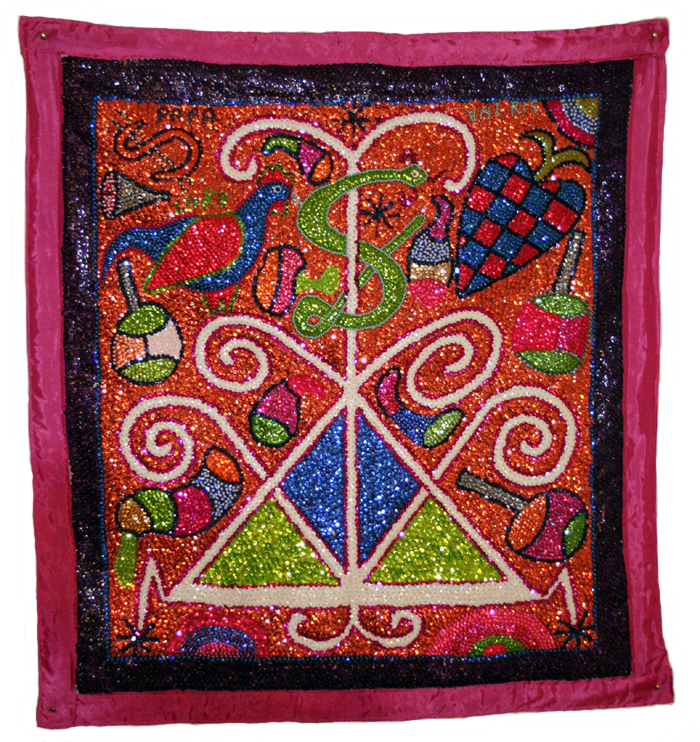 🇭🇹 Haiti and 2 moreHaitian VodouVodou
An Afro-Haitian religion blending West African traditions with Catholicism and FreemasonryTradition · Protection · Healing Living
🇭🇹 Haiti and 2 moreHaitian VodouVodou
An Afro-Haitian religion blending West African traditions with Catholicism and FreemasonryTradition · Protection · Healing Living
 🇨🇺 Cuba and 2 moreSanteríaRegla de Ocha
An Afro-Cuban religion blending Yoruba beliefs with Catholicism and SpiritismTradition · Protection · Healing Living
🇨🇺 Cuba and 2 moreSanteríaRegla de Ocha
An Afro-Cuban religion blending Yoruba beliefs with Catholicism and SpiritismTradition · Protection · Healing Living
 🇲🇽 Mexico and 5 moreWitchcraft in Latin AmericaBrujería
A syncretic blend of Indigenous, African, and European magical practices across Latin AmericaTradition · Protection · Healing Living
🇲🇽 Mexico and 5 moreWitchcraft in Latin AmericaBrujería
A syncretic blend of Indigenous, African, and European magical practices across Latin AmericaTradition · Protection · Healing Living
 🇳🇬 Nigeria and 5 moreIfá
A Yoruba divination system using palm nuts to access spiritual guidanceTradition · Seeing and foretelling · Speaking with spirits and the dead Living
🇳🇬 Nigeria and 5 moreIfá
A Yoruba divination system using palm nuts to access spiritual guidanceTradition · Seeing and foretelling · Speaking with spirits and the dead Living
 🇳🇬 Nigeria and 4 moreOrishaÒrìṣà
Divine spirits of the Yoruba religion and their diasporic descendants in the Americas.Being · Protection · Healing Living
🇳🇬 Nigeria and 4 moreOrishaÒrìṣà
Divine spirits of the Yoruba religion and their diasporic descendants in the Americas.Being · Protection · Healing Living
Photo credits on this page
The small pictures above come from Wikimedia Commons under free licences. Some are cropped to fit.
- Haitian Vodou: Sam Fentress, CC BY-SA 2.0, source
- Witchcraft in Latin America: Unknown author, CC BY 4.0, source
- Ifá: Toluaye, Public domain, source
- Orisha: Turismo Bahia, CC BY-SA 2.0, source
The weekly digest
Every Monday: seven entries you may not know, what is on the calendar this week, and one rite drawn step by step.