
Opon Ifá
In its own language: Ọpọ́n Ifá
from Yoruba ọpọn meaning 'to flatter', referring to the tray's decorative praise of the diviner
A carved wooden tray used by Yoruba diviners to read signs and consult spirits.
An ọpọ́n Ifá is a carved wooden tray used in Yoruba divination and the broader Ifá system. Practitioners believe it connects the diviner to spirits and reveals answers to questions through patterns drawn in powder.
- The word ọpọn means 'to flatter,' honoring the diviner's skill.
- Carvers trace their lineage to master artisans in Oyo, Nigeria.
- The tray features nine sections named after ancient diviners.
- Esu is carved on the tray as the messenger between Ifá and humans.
- Cuban Santería versions may lack Esu and use bright colors.
What it is
The ọpọ́n Ifá serves as a central instrument within Yoruba divination practices and the wider Ifá system. This carved wooden board allows a babalawo to interact with spiritual forces and uncover guidance for clients. Practitioners view the tray not merely as a surface for casting marks, but as a conduit that bridges the human realm with the divine knowledge held by Ifá. The object facilitates the reading of archetypal verses that address personal and communal challenges.
Where it comes from
The term ọpọn translates to 'to flatter,' reflecting the elaborate artistry intended to honor the skill of the diviner. Historical carving traditions trace back to master artisans in Oyo, present-day Nigeria, such as Are Lagbayi. These carvers developed distinct aesthetic styles that spread across West Africa and later influenced designs in the African diaspora. The craft remains a specialized role within communities where Ifá is practiced.
How it is done
During a session, the babalawo positions the tray with its base facing west and its top toward the east, ensuring light illuminates the surface without casting shadows. The diviner strikes the wood rhythmically using an iroke Ifá tapper to summon spiritual presence. Next, sixteen ikin Ifá palm nuts are tossed onto the board, or an opele Ifá chain is employed. The resulting patterns guide the practitioner to draw specific odu verses into a layer of iyerosun powder scattered across the tray.
Tools and materials
The tray itself features a raised perimeter divided into nine symbolic sections dedicated to ancient diviners. The upper portion, known as the oju opon, typically displays a carving of Esu, while the lower base is called the ese opon. Additional instruments include the iroke Ifá for drumming, the ikin Ifá consisting of sacred nuts, the opele Ifá divination chain, and iyerosun powder used to inscribe readings. Peripheral carvings often depict animals like snakes or birds, which practitioners believe enhance the tray's spiritual potency.
Opon Ifá, drawn and placed
- Living
- Revived
- Fading
- Historical
- Legendary
- Performed
- Lineage
- Ifá divination system
- Timing
- during divination consultations
What it is for
Clients seek the ọpọ́n Ifá to identify the root causes of difficulties and discover solutions embedded in traditional stories. The divination process aims to restore balance between the individual and the spirit world. By revealing the correct odu, the babalawo provides counsel that addresses specific predicaments, offering clarity on fate and future actions based on the archetypal narratives associated with each sign.
Who does it
The primary user is the babalawo, a male diviner trained to interpret the complex verses generated during consultation. These specialists rely on skilled woodcarvers to produce trays that meet their aesthetic and functional requirements. Carvers often work independently or follow requests from patrons, drawing inspiration from mythological fables and previous generations of artisans. The status of a babalawo can be reflected in the intricacy of their specific tray.
Peoples and places
The practice originates among the Yoruba people of Nigeria and extends to the Kingdom of Dahomey in Benin, where variations like the Fá board exist. In the diaspora, particularly within Cuban Santería, the tray appears with modifications such as broad color palettes or the omission of Esu figures. Regional differences persist even within single towns, showcasing diverse interpretations of shape, facial depictions, and geometric arrangements by local artists.
At a glance: who, where and when
Who does it
Belief worlds
Occasions

What people believe
Central to the usage is the relationship between Ifá and Esu, the latter acting as a messenger between the diviner and the oracle. Yoruba mythology recounts a test involving a monkey that established Esu's role as Ifá's companion and voice. The tray embodies this dynamic, with Esu's image acknowledging his function in facilitating communication. The 256 possible odu verses represent predestined fates and supernatural abilities attributed to various divinities within the Yoruba pantheon.
How scholars and sceptics see it
Researchers have examined the etymology of Ifá, debating whether it refers strictly to a deity or functions primarily as a consulting oracle without divine attributes. Anthropologists study the carvings as markers of status and cultural identity, noting how aesthetic choices convey authority. Scholars also analyze the structural variations across regions to understand the evolution of the divination system and its adaptation within different communities over time.
Compare and confuse
The ọpọ́n Ifá shares functional similarities with the Fá divination board used in the Kingdom of Dahomey, though the latter incorporates distinct rectangular and circular layouts. While both serve as surfaces for casting lots, the Yoruba tray emphasizes specific peripheral sections and animal carvings tied to local mythology. Diasporic adaptations in Cuba further differentiate the object through color usage and the removal of certain spiritual figures.
Today
The ọpọ́n Ifá continues to be produced and utilized by Yoruba communities and diasporic groups maintaining Ifá traditions. Artisans in Nigeria and beyond still craft these trays, preserving techniques passed down through lineages. The object remains a vital component of religious life, adapting to new contexts while retaining its core function as a medium for spiritual inquiry and ancestral connection.
Questions people ask about Opon Ifá
What is an Opon Ifá?
It is a carved wooden tray used by Yoruba diviners to perform Ifá readings and consult spirits.
How does a babalawo use the tray?
The diviner drums on the wood, casts nuts or a chain, and draws patterns in powder to reveal verses.
Who creates these trays?
Specialized Yoruba woodcarvers make them, often following requests from diviners or using their own designs.
Why is Esu depicted on the tray?
Esu acts as a messenger between the diviner and Ifá, so his image acknowledges his role in the consultation.
Where did this tradition originate?
The practice began among the Yoruba people in West Africa, particularly in the region of Oyo.
Good reading and sources
The facts on this page come from the Wikipedia article "Opon Ifá", written by its contributors and used under the CC BY-SA 4.0 licence, and from its Wikidata record (CC0). EveryJaadu rewrote the text in its own words, with AI assistance, and compares every page with the article to make sure no passage is copied. It may be reused under the same CC BY-SA 4.0 licence with a link back.
It may contain mistakes. Names and customs differ from one community to the next, and some knowledge is closed to outsiders and left out here. This page describes belief and practice. It does not say that any of it works, it is not a how-to, and it is not medical advice. If something is wrong, tell us. Last refreshed 2026-10-05.
More from Nigeria
All the entries from Nigeria 🇳🇬 NigeriaOrunmilaỌ̀rúnmìlà
Yoruba deity of wisdom and the creator of the Ifá divination systemBeing · Seeing and foretelling · Speaking with spirits and the dead Living
🇿🇦 South Africa and 5 moreMurder for body parts
The killing of people to harvest body parts for traditional medicine or the illegal organ trade.Belief · Cursing and harm · Power and authority Living
🇳🇬 NigeriaOrunmilaỌ̀rúnmìlà
Yoruba deity of wisdom and the creator of the Ifá divination systemBeing · Seeing and foretelling · Speaking with spirits and the dead Living
🇿🇦 South Africa and 5 moreMurder for body parts
The killing of people to harvest body parts for traditional medicine or the illegal organ trade.Belief · Cursing and harm · Power and authority Living
 🇳🇬 Nigeria and 5 moreIfá
A Yoruba divination system using palm nuts to access spiritual guidanceTradition · Seeing and foretelling · Speaking with spirits and the dead Living
🇳🇬 Nigeria and 5 moreIfá
A Yoruba divination system using palm nuts to access spiritual guidanceTradition · Seeing and foretelling · Speaking with spirits and the dead Living
 🇳🇬 Nigeria and 1 moreBoriBòòríí
A traditional Hausa spirit possession system and healing practice in West AfricaTradition · Healing · Luck and prosperity Living
🇳🇬 Nigeria and 1 moreBoriBòòríí
A traditional Hausa spirit possession system and healing practice in West AfricaTradition · Healing · Luck and prosperity Living
Related elsewhere
All charm 🇮🇹 ItalyEtruscan religion
The polytheistic beliefs and divination practices of the ancient Etruscans of ItalyTradition · Seeing and foretelling · Speaking with spirits and the dead Historical
🇮🇹 ItalyEtruscan religion
The polytheistic beliefs and divination practices of the ancient Etruscans of ItalyTradition · Seeing and foretelling · Speaking with spirits and the dead Historical
 🇮🇹 ItalyCumaean SibylSibylla Cumana
The priestess of the Apollonian oracle at Cumae, famous in Roman legend for her prophetic books and underworld guidance.Figure · Seeing and foretelling · Speaking with spirits and the dead Legendary
🇮🇹 ItalyCumaean SibylSibylla Cumana
The priestess of the Apollonian oracle at Cumae, famous in Roman legend for her prophetic books and underworld guidance.Figure · Seeing and foretelling · Speaking with spirits and the dead Legendary
 🇨🇳 China and 3 moreTang-ki童乩 (tóngjī); 乩童 (jītóng)
A Chinese folk-religion medium whose body a deity is held to take overTradition · Speaking with spirits and the dead · Seeing and foretelling Living
🇨🇳 China and 3 moreTang-ki童乩 (tóngjī); 乩童 (jītóng)
A Chinese folk-religion medium whose body a deity is held to take overTradition · Speaking with spirits and the dead · Seeing and foretelling Living
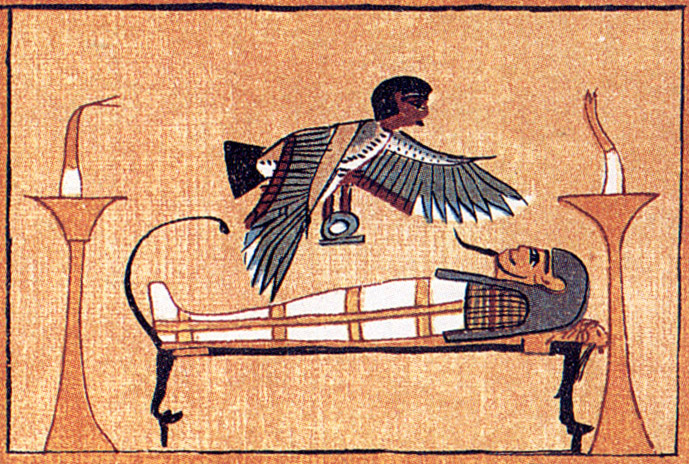 🇸🇪 Sweden and 1 moreSoul flight
A trance practice where the spirit leaves the body to visit other realmsRite · Healing · Seeing and foretelling Historical
🇸🇪 Sweden and 1 moreSoul flight
A trance practice where the spirit leaves the body to visit other realmsRite · Healing · Seeing and foretelling Historical