African and Afro-diasporic: magic in this belief world
Vodou, Santeria, Candomblé, Obeah, Hoodoo and the African religions they grew from.
African and Afro-diasporic religions include Ifa and Orisha worship in West Africa, Vodou in Haiti, Santeria or Regla de Ocha in Cuba, Candomblé and Umbanda in Brazil, Obeah in Jamaica and the Caribbean, Hoodoo and conjure in the American South, and Palo and Kongo-derived practices. They were created by enslaved Africans and their descendants and are living religions. This page uses the communities' own names, and explains why outsiders' words did harm. They are among the largest religious families of the Americas, with millions of practitioners.
Origins and forms
These religions grew from the beliefs of Yoruba, Fon, Kongo and other peoples carried by the Atlantic slave trade. They honour spirits or gods, such as orisha, lwa and nkisi, as well as ancestors, and use initiation, drumming, offerings and possession. Under slavery, many took the faces of Catholic saints. Hoodoo is a set of folk practices and not an organised church. Ifa in Yoruba land and in Cuba is a system of verses and divination, and its priests, the babalawo, are trained for years.
Naming and stereotype
Voodoo, as a horror film and doll image, is a distortion of Vodou. Missionary and colonial writers called these religions fetishism, witchcraft and devil worship. Practitioners prefer Vodou, Santeria or Lucumi, and Candomblé. The stereotype of the voodoo doll comes largely from European folk magic and fiction, and has little to do with Vodou practice. Initiation brings a new name, a guiding orisha or lwa, and a place in a religious family, and many initiations include seclusion, dressing in white and the learning of songs and rules.
Persecution and recognition
Slave owners and later governments banned or raided these religions. Haiti's Vodou was prosecuted under anti-superstition campaigns in the 1940s and recognised as a religion in 2003. Brazil's Candomblé houses were once raided by police. The US Supreme Court in Church of the Lukumi Babalu Aye v. Hialeah (1993) protected Santeria animal sacrifice as religious practice, which sacrifice remains controversial to some. Animal sacrifice is part of some of these religions, as in many others around the world, and is performed according to rules of its own and by trained people, with the food shared among the community.
Today and the market
Practice has spread through migration to New York, Miami, London and Paris, and many Black practitioners see the religions as a return to heritage. They face commercial use of sacred names, appropriation by outsiders, and ongoing prejudice from some churches. Some initiatory knowledge is closed, and entries here stay with what communities openly share. Recent years have brought scholarship, museums and festivals that celebrate the religions, as well as new tensions with evangelical churches that call them demonic and have attacked temples in parts of Brazil.
African and Afro-diasporic on EveryJaadu
The entries written up so far, best known first.
 🇳🇬 Nigeria and 4 moreOrishaÒrìṣà
Divine spirits of the Yoruba religion and their diasporic descendants in the Americas.Being · Protection · Healing Living
🇧🇯 Benin and 2 morePapa Legba
A loa who stands at the crossroads and opens the gate between people and spiritsBeing · Speaking with spirits and the dead · Power and authority Living
🇳🇬 Nigeria and 4 moreOrishaÒrìṣà
Divine spirits of the Yoruba religion and their diasporic descendants in the Americas.Being · Protection · Healing Living
🇧🇯 Benin and 2 morePapa Legba
A loa who stands at the crossroads and opens the gate between people and spiritsBeing · Speaking with spirits and the dead · Power and authority Living
 🇧🇷 Brazil and 2 moreCandomblé
An Afro-Brazilian religion blending West African spirits with Catholic imageryTradition · Speaking with spirits and the dead · Healing Living
🇧🇷 Brazil and 2 moreCandomblé
An Afro-Brazilian religion blending West African spirits with Catholic imageryTradition · Speaking with spirits and the dead · Healing Living
 🇳🇬 Nigeria and 5 moreEleguaÈṣù-Ẹlẹ́gbára
A Yoruba deity of crossroads and messenger who opens all spiritual pathsBeing · Protection · Speaking with spirits and the dead Living
🇳🇬 Nigeria and 5 moreEleguaÈṣù-Ẹlẹ́gbára
A Yoruba deity of crossroads and messenger who opens all spiritual pathsBeing · Protection · Speaking with spirits and the dead Living
 🇭🇹 Haiti and 2 moreManbo
A female priestess in Haitian Vodou who leads rituals and healing workTradition · Healing · Speaking with spirits and the dead Living
🇭🇹 Haiti and 2 moreManbo
A female priestess in Haitian Vodou who leads rituals and healing workTradition · Healing · Speaking with spirits and the dead Living
 🇭🇹 Haiti and 1 moreOungan
A male priest in Haitian Vodou who leads rituals and serves as a medium for spirits.Tradition · Speaking with spirits and the dead · Healing Living
🇭🇹 Haiti and 1 moreOungan
A male priest in Haitian Vodou who leads rituals and serves as a medium for spirits.Tradition · Speaking with spirits and the dead · Healing Living
 🇺🇸 United States and 1 moreMarie Laveau
A New Orleans priestess and herbalist who led Louisiana Voodoo in the nineteenth centuryTradition · Healing · Protection Historical
🇺🇸 United States and 1 moreMarie Laveau
A New Orleans priestess and herbalist who led Louisiana Voodoo in the nineteenth centuryTradition · Healing · Protection Historical
 🇧🇷 Brazil and 5 moreSanto Daime
A Brazilian syncretic religion using ayahuasca for spiritual work and healingTradition · Healing · Speaking with spirits and the dead Living
🇭🇹 HaitiVodou veve (sample)Vèvè
Ground drawings that call the lwa.Tradition · Speaking with spirits and the dead Living
🇧🇷 Brazil and 5 moreSanto Daime
A Brazilian syncretic religion using ayahuasca for spiritual work and healingTradition · Healing · Speaking with spirits and the dead Living
🇭🇹 HaitiVodou veve (sample)Vèvè
Ground drawings that call the lwa.Tradition · Speaking with spirits and the dead Living
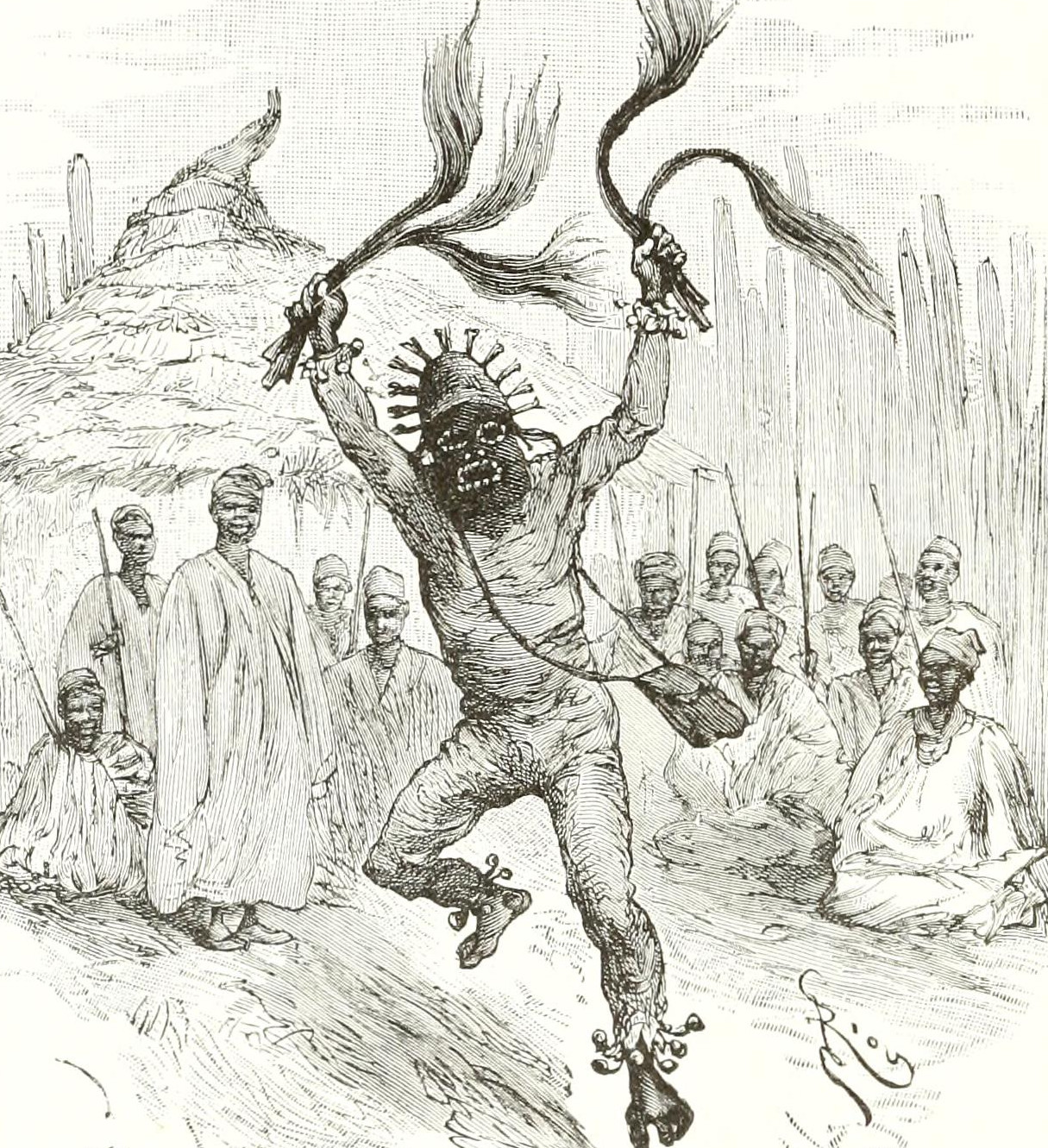 🇹🇹 Trinidad and Tobago and 1 moreTrinidadian Vodunu
A West African Vodun tradition practiced in Trinidad and Tobago with Catholic elementsTradition · Speaking with spirits and the dead · Power and authority Living
🇭🇹 Haiti and 3 moreNago lwa
A Haitian Vodou nation of masculine spirits rooted in Yoruba traditionsBeing · Power and authority · Speaking with spirits and the dead Living
🇹🇹 Trinidad and Tobago and 1 moreTrinidadian Vodunu
A West African Vodun tradition practiced in Trinidad and Tobago with Catholic elementsTradition · Speaking with spirits and the dead · Power and authority Living
🇭🇹 Haiti and 3 moreNago lwa
A Haitian Vodou nation of masculine spirits rooted in Yoruba traditionsBeing · Power and authority · Speaking with spirits and the dead Living
 🇭🇹 Haiti and 1 moreHaitian Vodou and homosexuality
The place of LGBTQ people in Hait Vodou practice and beliefTradition · Speaking with spirits and the dead Living
🇭🇹 HaitiRada lwa
A family of cool-tempered spirits in Haitian VodouBeing · Speaking with spirits and the dead Living
🇭🇹 Haiti and 1 moreHaitian Vodou and homosexuality
The place of LGBTQ people in Hait Vodou practice and beliefTradition · Speaking with spirits and the dead Living
🇭🇹 HaitiRada lwa
A family of cool-tempered spirits in Haitian VodouBeing · Speaking with spirits and the dead Living
Photo credits on this page
The small pictures above come from Wikimedia Commons under free licences. Some are cropped to fit.
- Louisiana Voodoo: I cropped, original authors are Ridpath, John Clark, CC BY-SA 4.0, source
- Candomblé: André Koehne, CC BY-SA 3.0, source
- Elegua: Sailko, CC BY 3.0, source
- Manbo: Aliceba, CC BY-SA 4.0, source
- Oungan: Anthony Karen, CC BY 4.0, source
- Folk Catholicism: Calvin Hennick, for WBUR Boston, CC BY 3.0, source
- Orisha: Turismo Bahia, CC BY-SA 2.0, source
- Santo Daime: Tonelada, CC BY-SA 3.0, source
- Marie Laveau: E. W. Kemble, Public domain, source