
Yule log
from the word Yule, referring to the winter festival and the returning sun
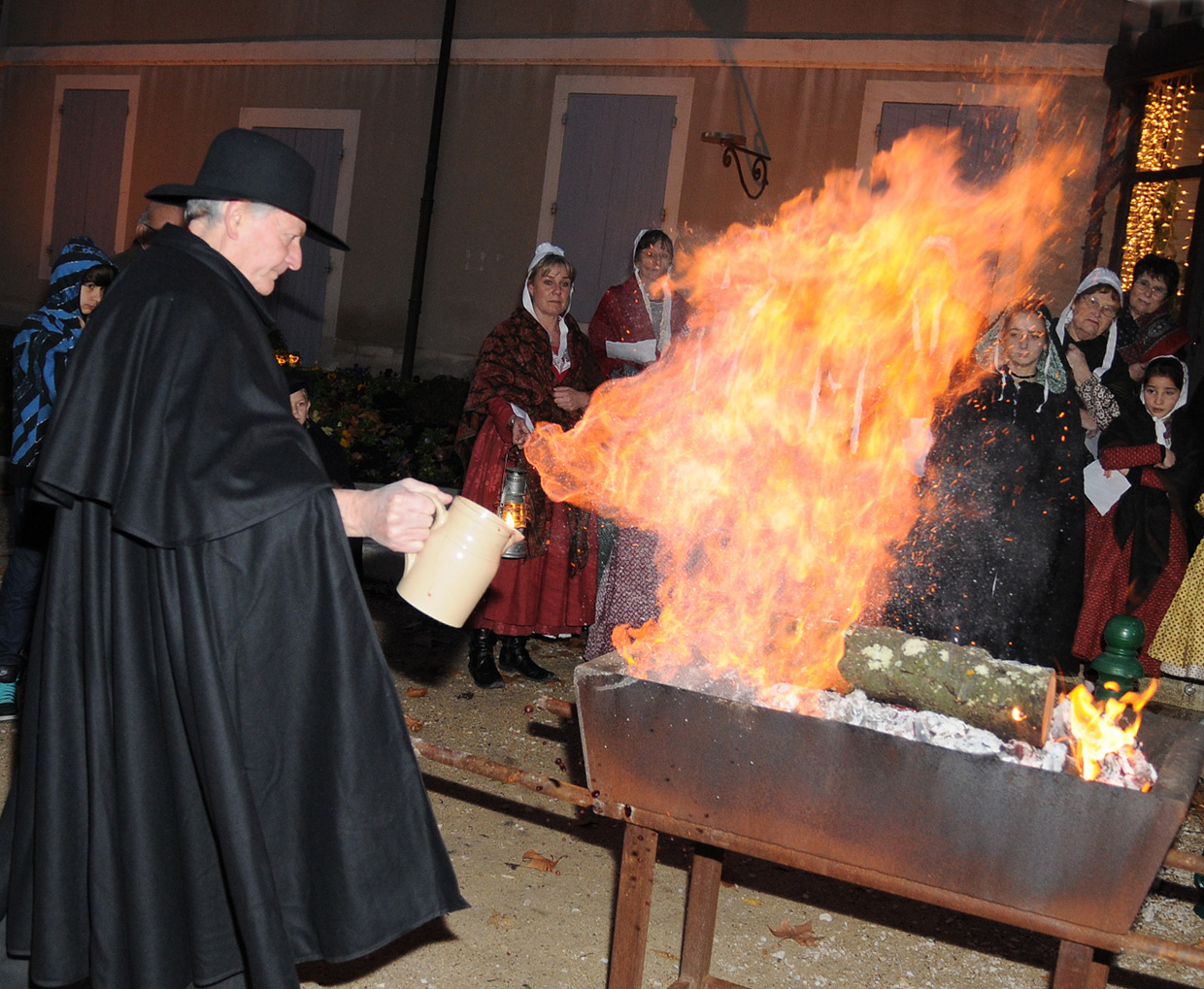
A large wooden log burned in the hearth during winter festivals across Europe and North America.
The Yule log is a winter custom where a specially chosen tree trunk is set ablaze on a fireplace. It originated in medieval Europe and spread to North America, celebrated by Christians and modern pagans around Christmas or Yule. The practice involves burning the log over several days to bring luck and protection to the household.
- First recorded evidence dates to a German manuscript in 1184 CE.
- The term Yule log appeared in English writings between 1650 and 1687.
- Ships brought logs to Dubrovnik counts in 1272 for reward.
- Henry Bourne linked the log to Saxon pagan sun rituals in 1725.
- Martin of Braga described pouring wine on a stump in the 6th century.
What it is
The Yule log is a festive tradition involving the burning of a substantial piece of wood in a home hearth. This custom appears throughout European history and has been adopted in North America. It serves as a central element of winter celebrations, particularly for those observing Christmas or the pagan festival of Yule. The ritual transforms a simple tree into a symbol of warmth and community light during the darkest time of the year.
Where it comes from
The earliest written record dates to 1184 CE in Germany, noting a legal obligation to provide a tree for a Christmas Eve fire. Another early account from 1272 in Dubrovnik describes sailors bringing a log to the city count. Scholars have debated its roots, with some linking it to ancient Germanic or Saxon paganism. Henry Bourne suggested in the 18th century that it represented the returning sun. However, other theories point to Roman Kalends traditions, such as pouring wine over a stump, which may have evolved into the Christian custom.
How it is done
Families select a large log and place it on the hearth on Christmas Eve. In many regions, the log burns continuously until Twelfth Night. Practitioners often save a piece of the charred wood to ignite the following year’s log. Some customs involve lighting candles from the main fire while making silent wishes. Others include placing the remaining embers under beds for protection against lightning and fire. The ritual emphasizes continuity and the preservation of the flame's energy.
Tools and materials
The primary tool is a thick tree trunk, often oak or ash. In some Italian and Croatian traditions, the log is decorated with juniper branches and laurel leaves. Wine and fruits are sometimes poured over the wood as an offering. The hearth itself is essential, serving as the sacred space for the fire. In historical contexts, legal charters regulated who could collect the necessary wood from private forests.
Yule log, drawn and placed
- Living
- Revived
- Fading
- Historical
- Legendary
- Performed
- Lineage
- European winter folk custom
- Timing
- on Christmas Eve and through Twelfth Night
What it is for
The burning is believed to bring prosperity and good fortune to the household for the coming year. It also serves a protective function, warding off evil spirits, lightning strikes, and accidental fires. Counting sparks was thought to predict future wealth. The ritual marks the end of fasting periods and celebrates the upcoming feasts. It reinforces social bonds by sharing warmth and food with neighbors and family members.
Who does it
The practice is primarily conducted by households and families. Historically, specific individuals like shipmasters or tenants fulfilled legal duties to provide the log. In modern times, any member of the household can participate. Children often play a role in lighting secondary candles from the main fire. The tradition requires no specialized training, relying instead on familial transmission of customs.
Peoples and places
The custom is widespread across Europe, with distinct variations in France, Italy, Spain, and the United Kingdom. In England, folklore archives document regional differences in how the log is lit and treated. Iceland preserves accounts of large hall fires associated with Yule. Southern European traditions often incorporate religious elements, blending Christian and older pagan symbols. The diaspora has carried these practices to North America, where they persist among various communities.
At a glance: who, where and when
Who does it
Belief worlds


What people believe
The ritual is rooted in beliefs about natural forces and spiritual protection. Ancient sources suggest it honored deities of fire or the sun. Later interpretations viewed the log as a vessel for luck and divine favor. The act of saving ashes or embers reflects a belief in their ongoing magical potency. Some scholars link the practice to Roman festivals that fused pagan and Christian symbolism, viewing the fire as a bridge between worlds.
When it is done
The tradition begins on Christmas Eve and continues through Twelfth Night, January 6. It coincides with the winter solstice period, marking the shortest days of the year. Some accounts connect it to the Kalends of January, a Roman festival. The timing aligns with religious observances of Christmas and secular winter holidays. The duration of the burn varies, but the goal is often to let it consume fully over several nights.
How scholars and sceptics see it
Historians analyze legal documents and poetry to trace the custom's evolution. John Aubrey noted the name change from Christmas log to Yule log in the 17th century. Modern researchers debate whether the practice stems directly from pagan rituals or evolved independently. Some argue that references to pouring wine on stumps indicate a continuous tradition, while others see it as a separate folk adaptation. Anthropologists study the social functions of shared warmth and communal storytelling.
Cautions and what is closed
Historical records indicate that collecting wood required legal permission, as forests were privately owned. Unauthorized gathering could result in penalties. The tradition does not involve harm to people or animals. There are no known health risks associated with the custom itself. The focus remains on cultural heritage and domestic celebration rather than dangerous rites.
Compare and confuse
The Yule log is often confused with general Christmas decorations. It differs from the Advent wreath, which uses smaller candles. Similar fire rituals exist in other cultures, such as bonfires for midsummer. The practice shares themes with the Roman Kalends, where wine and offerings were made. In some regions, it is indistinguishable from general Christmas Eve festivities.
Questions people ask about Yule log
What is the Yule log?
It is a large wooden log burned in a hearth during winter festivals. The tradition originates in medieval Europe and is practiced by Christians and pagans around Christmas or Yule to bring luck and protection.
Where did the Yule log tradition start?
The earliest records come from 1184 CE in Germany and 1272 CE in Dubrovnik. Scholars debate whether it began as a Germanic pagan ritual honoring the sun or evolved from Roman Kalends customs involving fire and wine.
How long does the Yule log burn?
In many traditions, the log is lit on Christmas Eve and allowed to burn continuously until Twelfth Night, January 6. Families often save a piece of the charred wood to light the next year's log.
Why do people burn a Yule log?
Practitioners believe the fire brings prosperity and protects the home from lightning and evil spirits. It also marks the end of fasting periods and celebrates the return of light during the winter solstice.
Good reading and sources
- Yule log on WikipediaEncyclopedia
- More photos on Wikimedia CommonsPhotos and video
- Wikidata recordOpen data
The facts on this page come from the Wikipedia article "Yule log", written by its contributors and used under the CC BY-SA 4.0 licence, and from its Wikidata record (CC0). EveryJaadu rewrote the text in its own words, with AI assistance, and compares every page with the article to make sure no passage is copied. It may be reused under the same CC BY-SA 4.0 licence with a link back.
It may contain mistakes. Names and customs differ from one community to the next, and some knowledge is closed to outsiders and left out here. This page describes belief and practice. It does not say that any of it works, it is not a how-to, and it is not medical advice. If something is wrong, tell us. Last refreshed 2026-10-06.
More from France
All the entries from France 🇬🇧 United Kingdom and 5 moreAleister Crowley
English occultist and founder of the religion of ThelemaText · Power and authority · Change and initiation Living
🇬🇧 United Kingdom and 5 moreAleister Crowley
English occultist and founder of the religion of ThelemaText · Power and authority · Change and initiation Living
 🇮🇹 Italy and 5 moreTarottarocchi
A set of playing cards used for games and divinationTradition · Seeing and foretelling · Luck and prosperity Living
🇮🇹 Italy and 5 moreTarottarocchi
A set of playing cards used for games and divinationTradition · Seeing and foretelling · Luck and prosperity Living
 🇮🇪 Ireland and 4 moreTrial by combat
A medieval legal practice where two disputants fought to settle a caseRite · Cursing and harm Historical
🇮🇪 Ireland and 4 moreTrial by combat
A medieval legal practice where two disputants fought to settle a caseRite · Cursing and harm Historical
 🇫🇷 France and 2 moreÉliphas Lévi
A French writer who shaped modern occult thought and ceremonial magic.Text · Power and authority · Speaking with spirits and the dead Historical
🇫🇷 France and 2 moreÉliphas Lévi
A French writer who shaped modern occult thought and ceremonial magic.Text · Power and authority · Speaking with spirits and the dead Historical
Related elsewhere
All tradition 🇨🇳 China and 3 moreChinese dragon龍
A legendary water deity and imperial symbol in East Asian cultureBeing · Protection · Luck and prosperity Historical
🇨🇳 China and 3 moreChinese dragon龍
A legendary water deity and imperial symbol in East Asian cultureBeing · Protection · Luck and prosperity Historical
 🇰🇭 Cambodia and 3 moreSak Yantសាក់យ័ន្ត
A Southeast Asian tattoo tradition using sacred geometry for protection and powerTradition · Protection · Luck and prosperity Living
🇰🇭 Cambodia and 3 moreSak Yantសាក់យ័ន្ត
A Southeast Asian tattoo tradition using sacred geometry for protection and powerTradition · Protection · Luck and prosperity Living
 🇨🇳 China and 2 moreEight Immortals八仙
Eight legendary Taoist figures of China, each with a power and a vesselFigure · Protection · Healing Living
🇨🇳 China and 2 moreEight Immortals八仙
Eight legendary Taoist figures of China, each with a power and a vesselFigure · Protection · Healing Living
 🇮🇷 Iran and 5 moreTurquoise
An opaque blue-green gemstone prized for its color since ancient timesSubstance · Protection · Luck and prosperity Living
🇮🇷 Iran and 5 moreTurquoise
An opaque blue-green gemstone prized for its color since ancient timesSubstance · Protection · Luck and prosperity Living