
Tjurunga
from Arrernte Tywerenge, meaning sacred or precious
Sacred objects of the Arrernte people, embodying ancestral power and clan identity.
A tjurunga is a sacred stone or wooden object held by Central Australian Aboriginal groups like the Arrernte. It represents ancestral beings and serves as a vessel for clan knowledge, chants, and ceremonial authority.
- Derived from Arrernte Tywerenge meaning sacred.
- Only initiated men could view or touch them.
- Initiation involved tearing off thumbnails with bones.
- Papunya art symbols originated from tjurunga designs.
- Repatriation efforts return objects to traditional owners.
What it is
A tjurunga is a physical object of deep religious importance to the Arrernte and related groups in Central Australia. These items are typically oblong pieces of polished stone or wood. They serve as tangible links to ancestral beings from the Dreaming. Each object carries a specific totem that identifies the owning clan. The items hold immense spiritual weight, often considered so holy that only initiated men may view them. Publishing images of these objects is viewed as sacrilegious by many communities.
Where it comes from
The word comes from the Arrernte term Tywerenge, translating to sacred or precious. Early scholars offered different interpretations. Carl Strehlow suggested it meant secret and personal, derived from words for hidden and self. Others argued it signifies great power rather than individual ownership. Myths state ancestors created these objects and stored them as treasured possessions. Stone versions were believed to be made directly by ancestral spirits during creation times.
How it is done
Initiation involves rigorous trials to gain access to tjurunga knowledge. Young men undergo long probation periods after initial steps. A key rite includes severe pain tests using sharp tools. An elder might drive a kangaroo bone under a thumbnail or tear the nail off with an opossum tooth while chanting. This ordeal proves worthiness. Successful candidates receive chants and symbols linked to their totem. Knowledge accumulates over decades, leading to senior status.
Tools and materials
Objects are usually carved from wood or shaped from stone. Some feature hair or string threaded through holes, known as bullroarers. Incised designs on boards and stones depict secret clan symbols. These marks include concentric circles, U shapes, and wavy lines. The materials themselves hold power. Rubbing the object on the body was believed to confer sacredness or heal wounds. The physical form embodies the ancestor's enduring presence.
Tjurunga, drawn and placed
- Living
- Revived
- Fading
- Historical
- Legendary
- Performed
- Lineage
- Australian Aboriginal mythology
- Timing
- during initiation ceremonies
What it is for
Tjurunga represent the fertility and essence of ancestral totems. They protect the clan's collective fate and spiritual standing. Possession grants authority over ceremonies and land rights. They act as vessels for storing vital chants and legends. Elders use them to teach younger generations about law and tradition. The objects ensure continuity between the living community and the creator ancestors. They validate the holder's place within the social and spiritual hierarchy.
Who does it
Only initiated adult males could handle or see most tjurunga. Women and uninitiated boys were restricted from viewing them closely. Ownership followed patrilineal descent tied to conception sites. Senior Lawmen acted as trustees for ancient traditions. Training required years of observation and endurance. Elders monitored conduct, demanding respect and silence. Those who proved worthy eventually inherited full ceremonial rights and associated objects.
Peoples and places
The practice belongs to Central Australian Aboriginal nations. Key groups include the Arrernte, Luritja, Kaitish, Unmatjera, and Illpirra. Customs varied slightly between these clans. All shared the belief in ancestral origins and strict secrecy rules. European contact disrupted transmission. Elders withheld important chants from young men working for settlers unless generous gifts were given. This led to loss of knowledge when elders died.
At a glance: who, where and when
Who does it
Belief worlds
Occasions
What people believe
Ancestors are said to have used these objects and hid them away. They represent portions of the ancestor's own being. Legends warn against theft, promising fierce vengeance for robbers. The items hold life-holding magical properties. They embody the transmutation of ancestral bodies into enduring forms. Stone tjurunga reflect eternal spirit, while wooden ones symbolize the elusive originals. The totemic image on each item connects the group to its mythic source.
When it is done
Access depends on age and initiation stages. A young man might be twenty-five when receiving his first object. Full ceremonial knowledge often arrives by age thirty-five or forty. Acquisition follows life milestones and proven worthiness. Ceremonies occur at specific sacred grounds. These locations remain inaccessible to outsiders and uninitiated members. Timing aligns with seasonal cycles and clan gatherings.
How scholars and sceptics see it
European anthropologists studied tjurunga extensively. Émile Durkheim analyzed them in The Elementary Forms of Religious Life. He viewed them as archetypes of the sacred. T.G.H. Strehlow documented Arrernte traditions. H. Kempe and others debated linguistic meanings. Scholars examined totemic religion and property concepts. Debates focused on whether objects represented personal ownership or collective clan rights. Research highlighted the complexity of Indigenous legal systems.
Cautions and what is closed
Viewing or displaying images of sacred objects is inappropriate for Aboriginal readers from Central and Western Desert regions. Communities consider such acts disrespectful. Secrecy rules restrict knowledge to initiated men. Unauthorized exposure violates cultural law. Repatriation efforts aim to return objects from museums to traditional owners. These moves address historical removal and support cultural revival. Sensitivity regarding imagery is paramount.
Compare and confuse
Bullroarers are a type of tjurunga identified by Europeans due to attached strings. Other cultures have similar sacred tokens, but Arrernte objects link specifically to local ancestors. Papunya artists adapted tjurunga symbols into paintings. Concentric circles and lines originated in these carvings. Later artists like Clifford Possum concealed symbols behind dot veils. This evolution shows how sacred knowledge transitioned into contemporary art forms.
Questions people ask about Tjurunga
What is a tjurunga?
It is a sacred stone or wooden object held by Central Australian Aboriginal groups like the Arrernte. It embodies ancestral power and clan identity, serving as a vessel for ceremonial knowledge and spiritual authority.
Who can see a tjurunga?
Traditionally, only initiated adult males could view or handle these objects. Women and uninitiated boys were restricted from seeing them closely. Access depended on age, gender, and successful completion of rigorous initiation trials.
How are they acquired?
Acquisition requires long probation and painful ordeals. Initiates endure tests like having thumbnails torn off with kangaroo bones. Success grants access to chants and symbols linked to the clan's totem, building over decades toward senior status.
Why are they significant?
They represent the essence of ancestral beings and the clan's fertility. They store vital legends and laws. Possession validates social standing and ensures continuity between the living community and creator ancestors from the Dreaming.
Good reading and sources
The facts on this page come from the Wikipedia article "Tjurunga", written by its contributors and used under the CC BY-SA 4.0 licence, and from its Wikidata record (CC0). EveryJaadu rewrote the text in its own words, with AI assistance, and compares every page with the article to make sure no passage is copied. It may be reused under the same CC BY-SA 4.0 licence with a link back.
It may contain mistakes. Names and customs differ from one community to the next, and some knowledge is closed to outsiders and left out here. This page describes belief and practice. It does not say that any of it works, it is not a how-to, and it is not medical advice. If something is wrong, tell us. Last refreshed 2026-10-08.
More from Australia
All the entries from Australia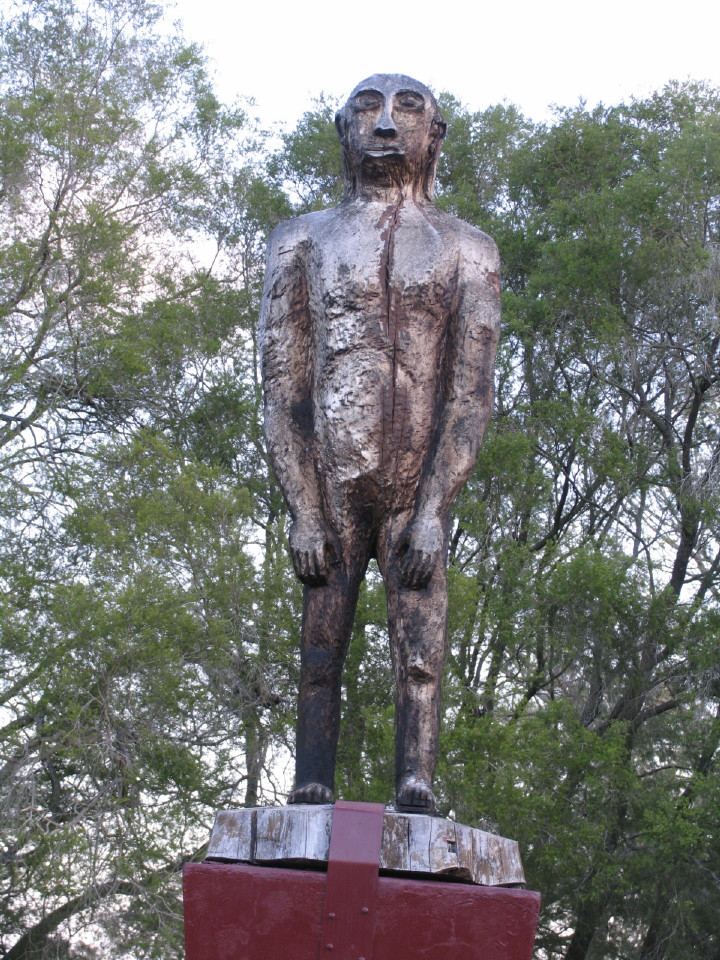 🇦🇺 AustraliaYowie
A hairy, bipedal creature of Australian folklore and cryptozoologyFigure · Wonder and entertainment Legendary
🇦🇺 AustraliaYowie
A hairy, bipedal creature of Australian folklore and cryptozoologyFigure · Wonder and entertainment Legendary
 🇦🇺 Australia and 1 moreTattoo
A permanent mark made by placing pigment under the skin to form a design.Tradition · Protection · Power and authority Living
🇦🇺 Australia and 1 moreTattoo
A permanent mark made by placing pigment under the skin to form a design.Tradition · Protection · Power and authority Living
 🇦🇺 AustraliaRainbow Serpent
A creator spirit of water and land in Aboriginal Australian mythologyBeing · Healing · Cursing and harm Living
🇦🇺 AustraliaRainbow Serpent
A creator spirit of water and land in Aboriginal Australian mythologyBeing · Healing · Cursing and harm Living
Related elsewhere
All charm 🇪🇬 Egypt and 4 moreAnimal sacrifice
The ritual killing of livestock or wild animals as an offering to deitiesRite · Speaking with spirits and the dead · Power and authority Historical
🇪🇬 Egypt and 4 moreAnimal sacrifice
The ritual killing of livestock or wild animals as an offering to deitiesRite · Speaking with spirits and the dead · Power and authority Historical
 🇮🇶 Iraq and 5 moreGrimoire
A textbook containing instructions for spells, rituals, and the creation of magical objects.Text · Protection · Healing Historical
🇮🇶 Iraq and 5 moreGrimoire
A textbook containing instructions for spells, rituals, and the creation of magical objects.Text · Protection · Healing Historical
 🇮🇳 India and 1 moreMantraमन्त्रम्
A sacred sound or phrase repeated to focus the mind and invoke spiritual powerText · Speaking with spirits and the dead · Power and authority Living
🇮🇳 India and 1 moreMantraमन्त्रम्
A sacred sound or phrase repeated to focus the mind and invoke spiritual powerText · Speaking with spirits and the dead · Power and authority Living