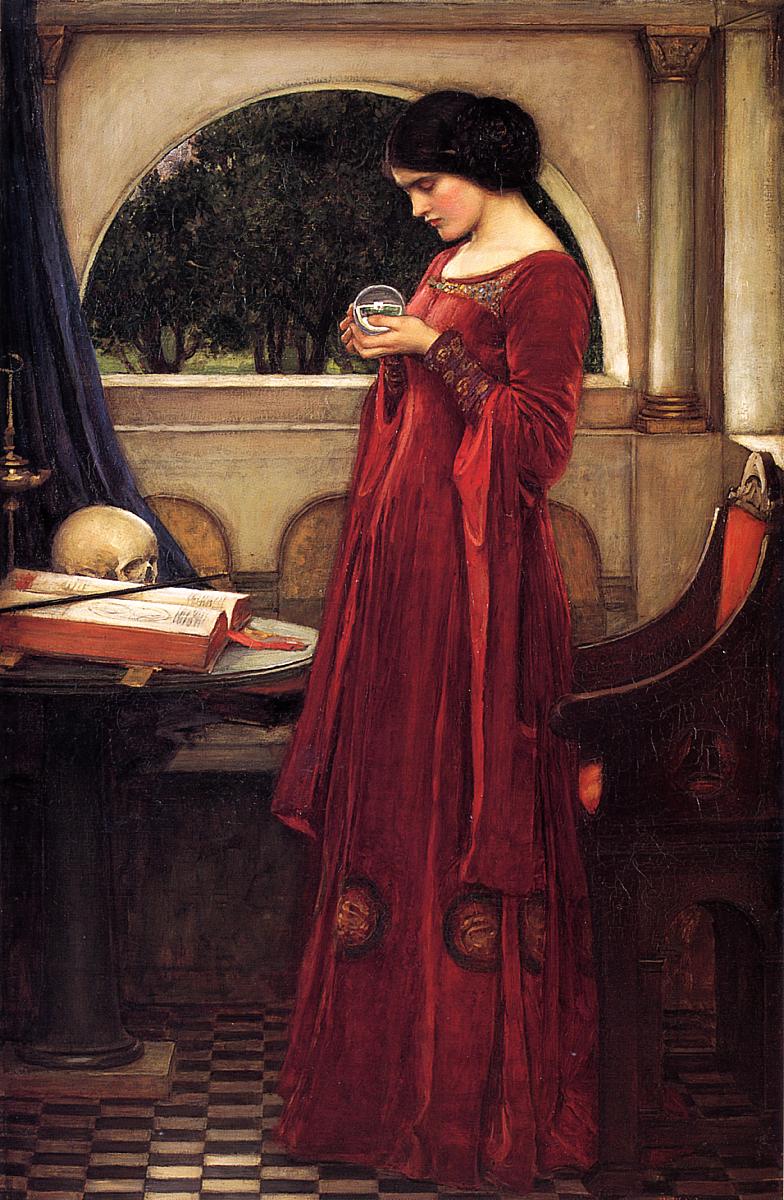
Scrying is a method of divination where practitioners gaze into reflective, refractive, or luminescent surfaces to seek visions. It is believed by some to reveal the past, present, or future through spiritual or subconscious channels.
- Scrying involves gazing into mediums like crystals, water, or mirrors.
- Terms like crystallomancy and catoptromancy describe specific methods.
- Joseph Smith used seer stones for religious revelations in the 1820s.
- Psychologist Leonard Zusne viewed scrying as hallucination or hypnagogia.
- Ancient Persians mythologically used the Cup of Jamshid for cosmic vision.
What it is
Scrying is a divinatory practice that involves staring into a specific medium to induce visions. The goal is to perceive images or messages that offer insight into personal matters, prophecy, or hidden knowledge. Unlike augury, which interprets external events like bird flights, scrying relies on impressions arising within the chosen material itself. The practice lacks a single standardized definition and overlaps with other forms of clairvoyance. Practitioners often coin specific terms for their methods based on the tool used, such as crystallomancy for crystals or hydromancy for water. The experience is generally described as entering a focused state where visual stimuli are reduced, allowing the mind to generate or interpret images.
Where it comes from
The practice has been reinvented independently across many cultures and historical periods. Ancient Persian mythology describes the Cup of Jamshid, a vessel used by kings to observe the universe. In the Hebrew Bible, Joseph of Egypt uses a silver cup for divination. The Latter Day Saint movement attributes revelations to Joseph Smith using seer stones in the early nineteenth century. Folklore traditions include mirror-gazing rituals for young women to glimpse their future husbands. Western esoteric orders, such as the Golden Dawn in the late nineteenth century, developed structured systems for spirit vision and astral travel using these techniques.
How it is done
Practitioners typically enter a self-induced trance by focusing intently on a medium. This focus reduces mental clutter and sensory input, similar to meditation or hypnosis. Once relaxed, the scryer may begin free association with any trivial images that appear. Some report hearing an internal voice affirming what they see, creating a feedback loop. The process continues until rich visual narratives emerge within the medium or the mind's eye. Modern practitioners sometimes use smartphones or other technology as focal points. The technique requires no specific ritual beyond maintaining concentration and interpreting the resulting imagery.
Tools and materials
Media can be reflective, refractive, or luminescent. Common tools include crystal balls, mirrors, bowls of water, fire, smoke, and glowing coals. Some methods involve plain shadows, darkness, or even eyelids when closed. The choice of medium varies by tradition and personal preference. Terms like anthracomancy refer to coal, while turifumy refers to smoke. The physical object serves primarily to focus attention and reduce external visual noise, facilitating the emergence of internal images.
Scrying, drawn and placed
- Living
- Revived
- Fading
- Historical
- Legendary
- Performed
What it is for
Scrying is used to foresee future events, understand the past, or gain personal guidance. Practitioners believe visions may originate from the subconscious, imagination, gods, spirits, or psychic forces. Some view it as a way to access hidden knowledge or communicate with entities. Others see it as a tool for self-reflection and psychological insight. The practice is not considered a reliable method for empirical prediction by the scientific community.
Who does it
Diviners and occultists perform scrying. Historically, figures like Nostradamus used water or mirrors for prophetic visions. Joseph Smith, founder of the Latter Day Saint movement, used seer stones for religious revelations. Members of esoteric orders like the Golden Dawn trained in systematic spirit vision techniques. Practitioners range from folk healers to serious occult scholars. Training often involves learning to maintain focus and interpret ambiguous imagery without imposing preconceived meanings.
Peoples and places
The practice appears in diverse cultural contexts. Ancient Persians used legendary cups for cosmic observation. Egyptian nobility employed cups for divination in biblical accounts. European folklore features mirror-gazing superstitions among young women. Western esoteric societies formalized the practice in the nineteenth century. The Latter Day Saint movement incorporates seer stone usage into its foundational history. There is no single ethnic group exclusively associated with scrying; it is a widespread, cross-cultural phenomenon.
At a glance: who, where and when
Who does it
Belief worlds
What people believe
Beliefs about scrying vary widely. Some practitioners attribute visions to supernatural sources like deities or spirits. Others believe the images arise from the subconscious mind or psychic energy. Skeptics and scientists view the practice as a form of pareidolia or hallucination. Psychologist Leonard Zusne suggested scrying images are hypnagogic experiences or wishful thinking. The scientific community does not support scrying as a valid method for obtaining information beyond normal perception.
When it is done
Scrying is not tied to specific festivals or calendar dates. It is performed whenever a practitioner seeks guidance or wishes to engage in the practice. Folklore traditions sometimes associate mirror-gazing with Halloween. Otherwise, the timing is determined by individual need or ritual schedule rather than seasonal cycles.
How scholars and sceptics see it
Anthropologists and historians document scrying as a recurring element in magical practices. Psychologists like Leonard Zusne analyze it as a form of anomalous cognition or hallucination. Scientific studies suggest the brain over-interprets low-level visual fluctuations in mirrors as faces or figures. Critics classify scrying as pseudoscience due to lack of empirical evidence. Researchers note that the practice relies heavily on subjective interpretation and confirmation bias.
Cautions and what is closed
However, the practice is criticized by skeptics as delusion or wishful thinking. Some practitioners warn against becoming too attached to visions or losing touch with reality. There is no risk of physical harm from the act itself, but psychological dependence on predictions is a potential concern. The practice is not recognized as a valid scientific or medical tool.
Compare and confuse
Scrying is often confused with general clairvoyance or augury. Augury interprets external signs like bird flights, while scrying focuses on internal visions within a medium. Oneiromancy deals with dreams, whereas scrying occurs while awake. Crystal gazing is a subset of scrying using specific materials. The term 'seeing' is sometimes used interchangeably, though it lacks the technical specificity of divinatory terminology.
Law and persecution
The practice is not regulated by any government or religious authority. It exists in a gray area between folk belief and occult practice. No persecution or suppression is mentioned in the provided text.
Questions people ask about Scrying
What is scrying?
Scrying is a divinatory practice where one gazes into a reflective or luminescent medium to seek visions. It is used to gain insight into the past, present, or future through perceived images.
What tools are used in scrying?
Common tools include crystal balls, mirrors, bowls of water, fire, smoke, and shadows. The medium serves to focus attention and reduce visual noise, aiding the emergence of internal images.
Is scrying scientifically proven?
No. Science does not support scrying as a method for predicting the future. Experts like psychologist Leonard Zusne attribute visions to hallucinations, hypnagogic states, or wishful thinking.
Where did scrying originate?
Scrying appears in many cultures independently. Examples include the Persian Cup of Jamshid, Egyptian divination cups in the Bible, and Joseph Smith's seer stones in the nineteenth century.
Good reading and sources
The facts on this page come from the Wikipedia article "Scrying", written by its contributors and used under the CC BY-SA 4.0 licence, and from its Wikidata record (CC0). EveryJaadu rewrote the text in its own words, with AI assistance, and compares every page with the article to make sure no passage is copied. It may be reused under the same CC BY-SA 4.0 licence with a link back.
It may contain mistakes. Names and customs differ from one community to the next, and some knowledge is closed to outsiders and left out here. This page describes belief and practice. It does not say that any of it works, it is not a how-to, and it is not medical advice. If something is wrong, tell us. Last refreshed 2026-10-05.
More from Egypt
All the entries from Egypt 🇪🇬 Egypt and 1 moreLilithלִילִית
A feminine figure from Mesopotamian and Jewish mythology, often depicted as a night demon or spirit.Being · Cursing and harm Legendary
🇪🇬 Egypt and 1 moreLilithלִילִית
A feminine figure from Mesopotamian and Jewish mythology, often depicted as a night demon or spirit.Being · Cursing and harm Legendary
 🇪🇬 EgyptCurse
A spoken wish for misfortune to befall a person or placeBelief · Cursing and harm · Luck and prosperity Historical
🇪🇬 EgyptCurse
A spoken wish for misfortune to befall a person or placeBelief · Cursing and harm · Luck and prosperity Historical
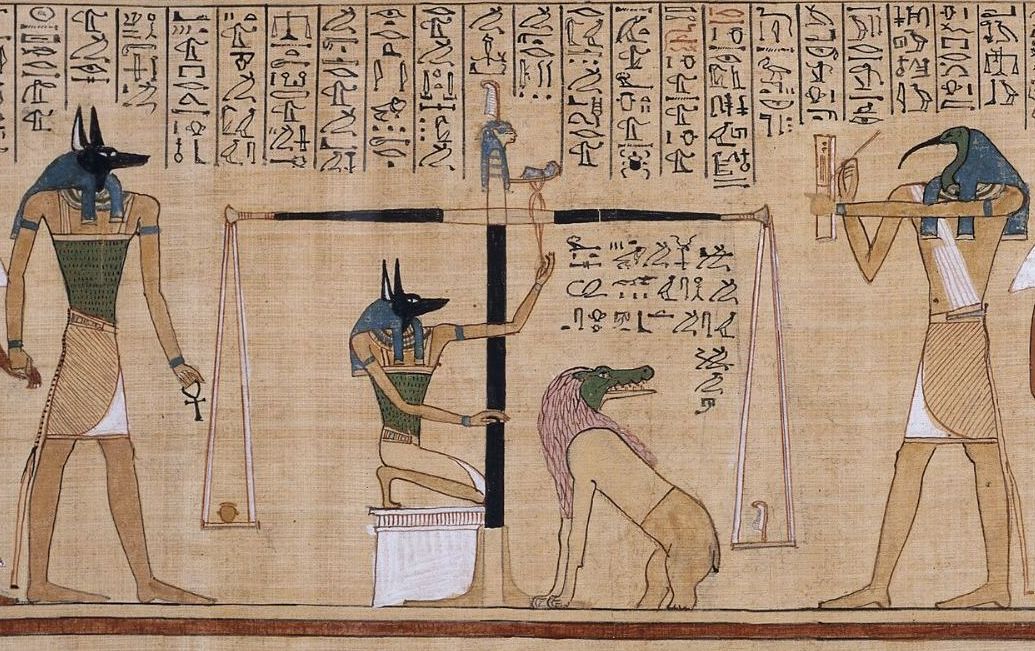 🇪🇬 EgyptAncient Egyptian afterlife beliefs
A system of rituals and texts guiding the soul through the underworld to eternal rebirthTradition · Protection · Speaking with spirits and the dead Historical
🇪🇬 EgyptAncient Egyptian afterlife beliefs
A system of rituals and texts guiding the soul through the underworld to eternal rebirthTradition · Protection · Speaking with spirits and the dead Historical
 🇪🇬 Egypt and 1 moreDendera zodiac
A carved Egyptian sky map now held in a Paris museumText · Seeing and foretelling · Power and authority Historical
🇪🇬 Egypt and 1 moreDendera zodiac
A carved Egyptian sky map now held in a Paris museumText · Seeing and foretelling · Power and authority Historical
Related elsewhere
All oracle 🇮🇹 ItalyEtruscan religion
The polytheistic beliefs and divination practices of the ancient Etruscans of ItalyTradition · Seeing and foretelling · Speaking with spirits and the dead Historical
🇮🇹 ItalyEtruscan religion
The polytheistic beliefs and divination practices of the ancient Etruscans of ItalyTradition · Seeing and foretelling · Speaking with spirits and the dead Historical
 🇮🇹 ItalyCumaean SibylSibylla Cumana
The priestess of the Apollonian oracle at Cumae, famous in Roman legend for her prophetic books and underworld guidance.Figure · Seeing and foretelling · Speaking with spirits and the dead Legendary
🇮🇹 ItalyCumaean SibylSibylla Cumana
The priestess of the Apollonian oracle at Cumae, famous in Roman legend for her prophetic books and underworld guidance.Figure · Seeing and foretelling · Speaking with spirits and the dead Legendary
 🇳🇬 NigeriaOrunmilaỌ̀rúnmìlà
Yoruba deity of wisdom and the creator of the Ifá divination systemBeing · Seeing and foretelling · Speaking with spirits and the dead Living
🇳🇬 NigeriaOrunmilaỌ̀rúnmìlà
Yoruba deity of wisdom and the creator of the Ifá divination systemBeing · Seeing and foretelling · Speaking with spirits and the dead Living
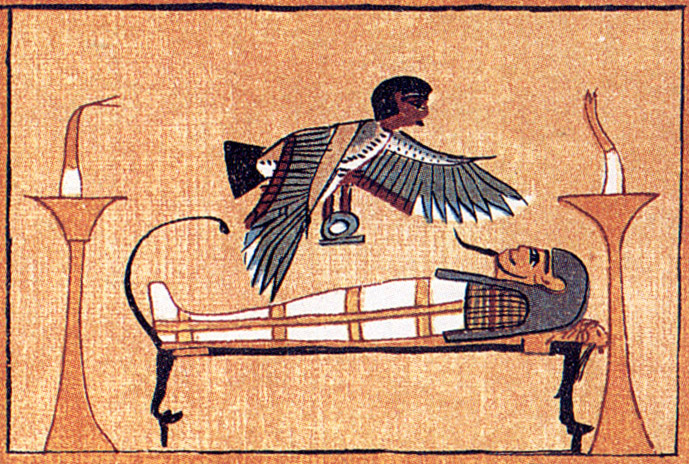 🇸🇪 Sweden and 1 moreSoul flight
A trance practice where the spirit leaves the body to visit other realmsRite · Healing · Seeing and foretelling Historical
🇸🇪 Sweden and 1 moreSoul flight
A trance practice where the spirit leaves the body to visit other realmsRite · Healing · Seeing and foretelling Historical