
Samaton
In its own language: ꯁꯃꯗꯣꯟ ꯑꯌꯥꯡꯕ (Shamadon Ayangba)
from Meitei language terms for divine horse
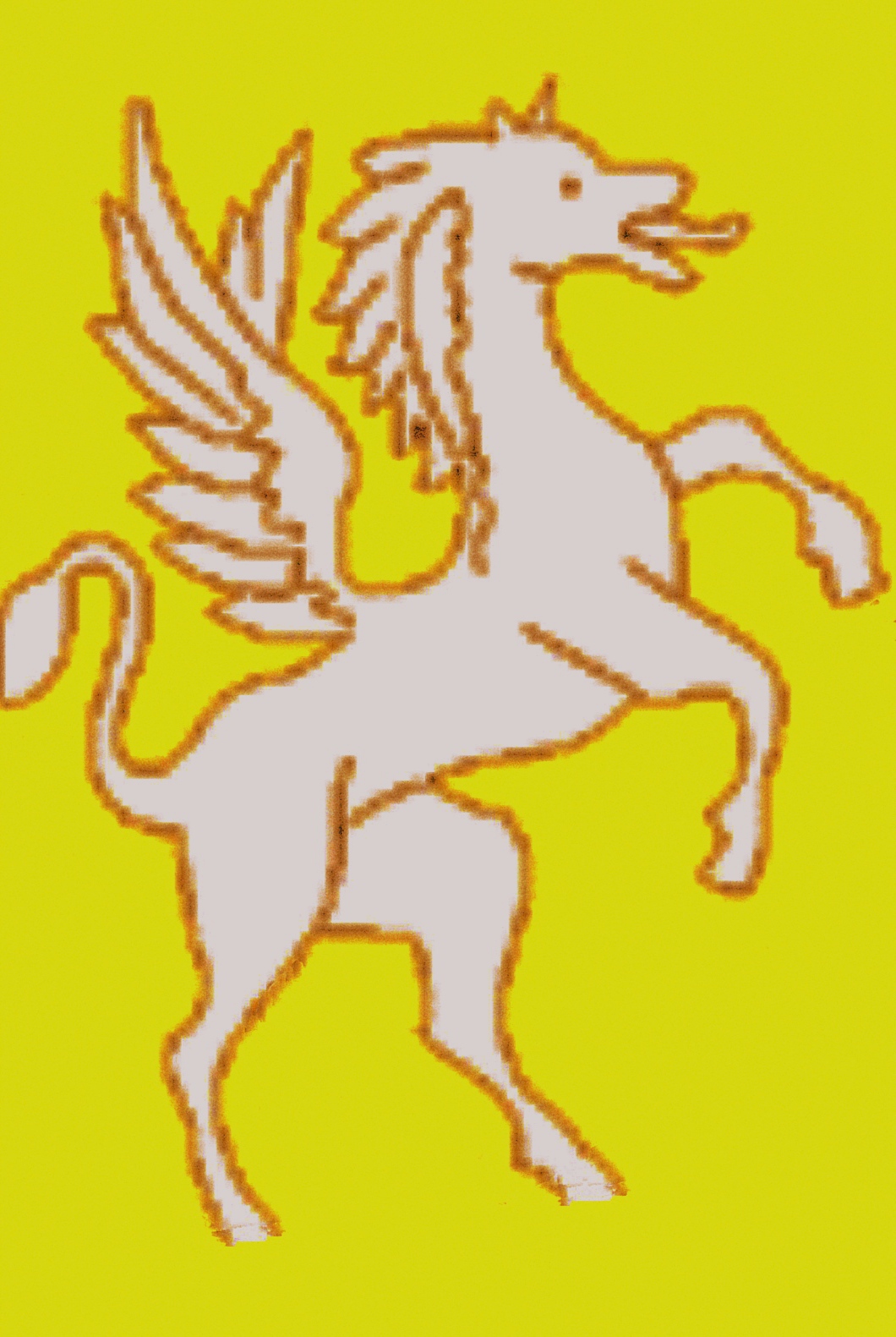
A winged divine horse from Meitei mythology and ancestor of the Manipuri pony
Samaton is a mythical winged horse in Meitei mythology and Sanamahism. He is revered as the divine ancestor of the Manipuri pony and was created by the god Sanamahi.
- Winged divine horse in Meitei mythology
- Created by god Sanamahi from his own body
- Ancestor of the Manipuri pony
- Mount of the god Marjing
- Symbol of Meitei royal insignia
What it is
Samaton is a winged divine horse in Meitei mythology. He is a central figure in Meitei folklore and is considered the primordial ancestor of the modern Manipuri pony. In the cosmology of the Meitei people, Samaton holds a sacred status because he was formed directly from the body of the creator god Sanamahi. This origin makes him more than just an animal; he is a divine being linked to the very structure of the world in traditional belief.
Where it comes from
The creature appears in the Leithak Leikharol, a text describing Meitei cosmology. According to legend, Sanamahi created Samaton to attack Pakhangba. Later, Samaton became the mount of the god Marjing. The name varies between Samadon and Shamadon due to linguistic shifts in the Meitei language. The Heingang hills are identified as his abode and a sacred centre for his cult.
Tools and materials
Samaton is associated with ritual songs called Ougri. These songs are sung during the Lai Haraoba festival to praise the divine horse. The imagery of the winged horse serves as a visual and symbolic tool in cultural performances and heraldry, representing divine power and royal authority.
Samaton, drawn and placed
- Living
- Revived
- Fading
- Historical
- Legendary
- Performed
- Lineage
- Meitei mythology and Sanamahism
- Timing
- during Lai Haraoba festival
What it is for
Samaton is worshipped as a divine ancestor and a symbol of royalty. During the deification of Meitei kings, Samaton became an insignia of their power. The rituals involving Samaton aim to honour this divine connection and maintain the spiritual link between the gods, the royal lineage, and the land.
Who does it
The practice is maintained by the Meitei community within the framework of Sanamahism. Scholars study the texts like the Leithak Leikharol to understand the role of Samaton. Folk singers perform the Ougri songs to keep the tradition alive during festivals.
Peoples and places
The subject is specific to the Meitei people of Manipur, India. It is a key part of their indigenous religion, Sanamahism. The Manipuri pony is seen as the earthly descendant of this mythic horse, linking the local fauna to the divine narrative.
At a glance: who, where and when
What people believe
Sanamahi is the creator god who formed Samaton. Marjing is another deity associated with Samaton as his rider. The belief system holds that Samaton's divine nature grants him power over the earth and sky. His creation from Sanamahi's body signifies his integral role in the cosmic order.
When it is done
The Lai Haraoba festival is the primary occasion for praising Samaton. Ritual songs are performed during this time. The Sangai festival has also been used as a platform for folk songs about Samaton, such as those by Mangka Mayanglambam.
How scholars and sceptics see it
Researchers look at the Leithak Leikharol to trace the origins of Meitei cosmology. They analyse the linguistic variations in the names Samadon and Shamadon. The connection between the mythic horse and the real Manipuri pony is studied as a cultural marker.
Compare and confuse
Samaton is often compared to Pegasus in Greek mythology due to his winged form. Both are divine horses linked to gods. However, Samaton is specifically the ancestor of a living breed of pony and a symbol of Meitei royalty, which distinguishes him from the purely mythic Greek counterpart.
Today
Samaton remains a recognised figure in Meitei culture. Folk songs about him are performed at modern events like the Manipur Polo International and the Sangai festival. The Manipuri pony continues to be celebrated as his descendant, keeping the myth relevant in contemporary life.
Questions people ask about Samaton
What is Samaton?
Samaton is a mythical winged horse in Meitei mythology. He is believed to be the divine ancestor of the Manipuri pony and a central figure in Meitei folklore.
Where does Samaton come from?
He originates from Meitei cosmology and the Sanamahism religion. He was created by the god Sanamahi to attack Pakhangba and later became the mount of Marjing.
Why is Samaton important?
He is considered important because he was formed from the body of Sanamahi. He became a symbol of royalty and divine power for the Meitei kings.
How is Samaton honoured today?
He is praised through ritual songs called Ougri during the Lai Haraoba festival. Folk songs about him are also performed at cultural events like the Sangai festival.
Good reading and sources
- Samaton on WikipediaEncyclopedia
- More photos on Wikimedia CommonsPhotos and video
- Wikidata recordOpen data
The facts on this page come from the Wikipedia article "Samaton", written by its contributors and used under the CC BY-SA 4.0 licence, and from its Wikidata record (CC0). EveryJaadu rewrote the text in its own words, with AI assistance, and compares every page with the article to make sure no passage is copied. It may be reused under the same CC BY-SA 4.0 licence with a link back.
It may contain mistakes. Names and customs differ from one community to the next, and some knowledge is closed to outsiders and left out here. This page describes belief and practice. It does not say that any of it works, it is not a how-to, and it is not medical advice. If something is wrong, tell us. Last refreshed 2026-10-06.
More from India
All the entries from India 🇮🇳 India and 5 morePretaप्रेत
A suffering spirit of insatiable hunger found in Asian religious traditionsBeing · Speaking with spirits and the dead Living
🇮🇳 IndiaAlakshmiदेवी अलक्ष्मी
A Hindu goddess of misfortune and the shadow opposite to LakshmiBeing · Cursing and harm Living
🇮🇳 India and 5 morePretaप्रेत
A suffering spirit of insatiable hunger found in Asian religious traditionsBeing · Speaking with spirits and the dead Living
🇮🇳 IndiaAlakshmiदेवी अलक्ष्मी
A Hindu goddess of misfortune and the shadow opposite to LakshmiBeing · Cursing and harm Living
 🇮🇳 IndiaTaraतारा (Sanskrit), তারা (Bengali)
A fierce Hindu goddess of protection and wisdom, central to the Mahavidya tradition.Being · Protection · Power and authority Living
🇮🇳 IndiaTaraतारा (Sanskrit), তারা (Bengali)
A fierce Hindu goddess of protection and wisdom, central to the Mahavidya tradition.Being · Protection · Power and authority Living
 🇮🇳 India and 1 moreLakshmiलक्ष्मी
A Hindu goddess of wealth, prosperity, and beauty, worshipped as the consort of Vishnu.Being · Luck and prosperity · Power and authority Living
🇮🇳 India and 1 moreLakshmiलक्ष्मी
A Hindu goddess of wealth, prosperity, and beauty, worshipped as the consort of Vishnu.Being · Luck and prosperity · Power and authority Living
Related elsewhere
All being 🇮🇳 India and 5 moreAstrology
A divinatory practice that reads human fate through the positions of celestial bodies.Belief · Seeing and foretelling · Luck and prosperity Living
🇮🇳 India and 5 moreAstrology
A divinatory practice that reads human fate through the positions of celestial bodies.Belief · Seeing and foretelling · Luck and prosperity Living
 🇬🇧 United Kingdom and 2 moreKing ArthurBrenin Arthur
A legendary British king and folk hero of medieval literature and Welsh mythologyFigure · Power and authority · Wonder and entertainment Legendary
🇬🇧 United Kingdom and 2 moreKing ArthurBrenin Arthur
A legendary British king and folk hero of medieval literature and Welsh mythologyFigure · Power and authority · Wonder and entertainment Legendary
 🇫🇷 FranceHoly GrailSaint Graal
A cup or stone from Arthurian tales that grants healing and eternal lifeFigure · Healing · Luck and prosperity Legendary
🇫🇷 FranceHoly GrailSaint Graal
A cup or stone from Arthurian tales that grants healing and eternal lifeFigure · Healing · Luck and prosperity Legendary
 🇨🇳 China and 3 moreChinese dragon龍
A legendary water deity and imperial symbol in East Asian cultureBeing · Protection · Luck and prosperity Historical
🇨🇳 China and 3 moreChinese dragon龍
A legendary water deity and imperial symbol in East Asian cultureBeing · Protection · Luck and prosperity Historical