
Rougarou
from French loup-garou, meaning wolf-man
A lycanthrope legend from French-speaking communities in North America
The Rougarou is a shapeshifter rooted in the oral traditions of Cajun, Creole, and Métis peoples. It is a variant of the French loup-garou, often described as a wolf-headed beast that punishes moral failings or spreads a blood-borne curse.
- Name derives from French loup-garou meaning wolf-man
- Curse lasts 101 days before transferring via blood
- Thirteen objects at a door keep the beast away
- Breaking Lent for seven years causes transformation
- Trickster figure in Métis and Cajun oral traditions
What it is
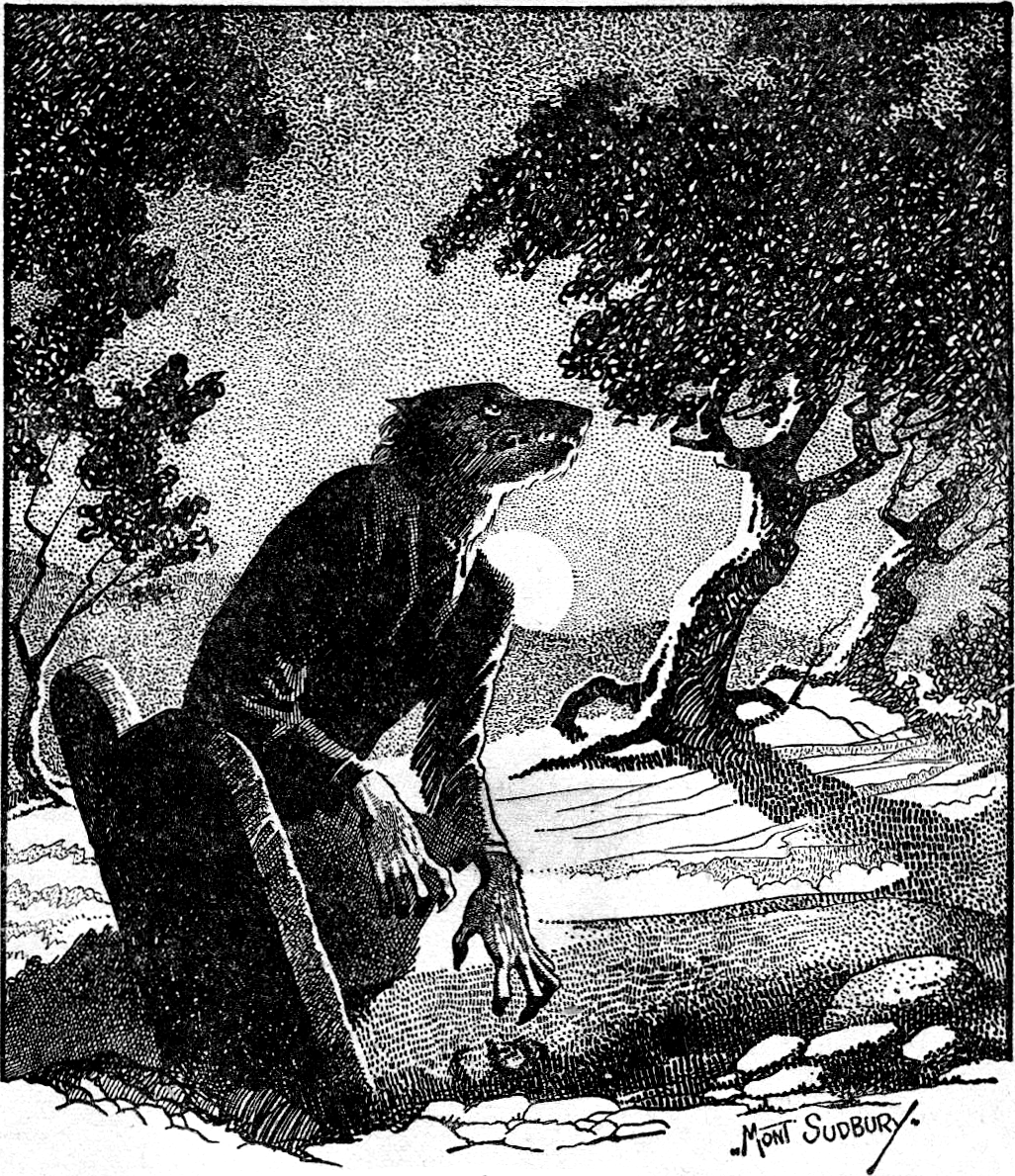
The Rougarou is a legendary creature found in the stories of French-speaking groups across North America. It serves as a trickster figure in the oral traditions of Métis and Francophone communities. The name represents a local pronunciation of the French term loup-garou. This entity is closely linked to traditional ideas of the werewolf. In many tales, it acts as a punisher of those who break social or religious codes. The creature is often depicted with the body of a human and the head of a wolf or dog. Some versions describe it as a rabbit or a spirit causing psychic disruption. It remains a central figure in the mythic landscape of these cultures.
Where it comes from
The legend traces back to French settlers who brought the concept of the loup-garou to Louisiana and Canada. The word garou comes from the Frankish warulf, related to the English werewolf. In some accounts, the Ojibwe term rugaru may be a corruption of this French phrase introduced by trappers. The stories evolved over centuries through direct transmission and immigrant movements. Different regions developed unique variations of the beast. Some link its origin to witchcraft, where only a witch can create such a being. The legend persists as a shared cultural memory among diaspora communities.
How it is done
Stories describe the creature prowling swamps, sugar cane fields, and woodlands. A common belief holds that a person becomes a Rougarou by breaking Lent for seven consecutive years. Another version says the curse lasts one hundred and one days. During this time, the beast hunts humans. If it draws blood from another person, the curse transfers to them. The victim returns to human form but must hide their condition. To stop the beast at a door, one might place thirteen small items there. The creature is said to be unable to count past twelve.
Tools and materials
The primary tool mentioned is the use of thirteen small objects placed at a doorway. These items act as a barrier against the creature. The beast’s inability to count beyond twelve makes this number significant. No other physical tools are consistently described in the legends. The focus remains on the creature’s own actions and the consequences of human behavior rather than external implements.
Rougarou, drawn and placed
- Living
- Revived
- Fading
- Historical
- Legendary
- Performed
- Lineage
- Francophone folklore
- Timing
- during Lent or when breaking rules
What it is for
Elders use the Rougarou story to inspire fear and obedience in children. It serves as a warning against breaking religious rules, particularly during Lent. The legend also explains misfortune or illness as the result of a cursed bloodline. It functions as a moral guardian in community storytelling. The creature targets those who ignore social norms or commit specific sins. It reinforces community standards through tales of supernatural punishment.
Who does it
The Rougarou is not practiced by living ritual specialists. It exists within the realm of folklore and oral history. Scholars study the variations of the legend across different Francophone groups. Elders in communities pass down the stories to younger generations. The creature itself is the subject of the tales, not an object of worship or ritual service.
Peoples and places
The legend is strongest among Cajun and Creole populations in southern Louisiana. It appears in the oral traditions of Métis communities in Canada. The Ojibwe people have their own version called rugaru. French Canadian immigrants helped spread the tale to new regions. Each group adds local details to the core werewolf narrative. The creature adapts to the specific fears and values of each community.
At a glance: who, where and when
Belief worlds
What people believe
Believers hold that the Rougarou is a real threat to those who violate sacred times. Breaking Lent is seen as a direct path to transformation. The curse operates through blood transfer, creating a chain of victims. Spirits or witches may initiate the change in some variations. The creature is viewed as simple-minded yet deadly. It embodies the consequences of sin and disobedience in a supernatural framework.
When it is done
The legend is most active during the season of Lent. Breaking the rules of this period is cited as a cause for transformation. Stories are told year-round to maintain cultural continuity. There are no specific festivals dedicated to the Rougarou. The timing of the curse, lasting one hundred and one days, marks a cycle of suffering and potential release.
How scholars and sceptics see it
Academics like Barry Jean Ancelet document the legend’s presence in Louisiana folklore. Researchers note the interchangeable use of rougarou and loup-garou in southern regions. Studies highlight the role of storytelling in enforcing social order. Anthropologists examine how the myth adapts to different indigenous and settler contexts. The Ojibwe connection suggests cross-cultural exchange of terms.
Cautions and what is closed
The Rougarou is a fictional entity from folklore. It poses no actual physical danger to people. Modern references appear in sports teams and entertainment media. The legend does not involve real-world rituals or harmful practices. It remains a part of cultural heritage and storytelling traditions.
Compare and confuse
The Rougarou is similar to the European werewolf and the Haitian Loup-garou. It shares traits with other shapeshifters in global mythology. The Ojibwe rugaru may relate to Bigfoot sightings in some narratives. Unlike the Polkaroo or Soucouyant, it retains a distinctly French linguistic root. The name varies slightly across regions but keeps the core identity.
Questions people ask about Rougarou
What is a Rougarou?
It is a legendary shapeshifter from Cajun, Creole, and Métis folklore. The name comes from the French loup-garou, meaning wolf-man. It is often described as a human with a wolf's head.
How does one become a Rougarou?
Legends say breaking Lent for seven years turns a person into the beast. Another version claims a curse lasts 101 days and spreads if the creature draws blood from another human.
Where does the Rougarou legend come from?
It originates in French-speaking communities in North America. Settlers brought the loup-garou myth to Louisiana and Canada, where it evolved into local variations.
How can you stop a Rougarou?
Placing thirteen small objects by a door is said to block the creature. It is believed the beast cannot count past twelve, so it stops to count the items.
Good reading and sources
The facts on this page come from the Wikipedia article "Rougarou", written by its contributors and used under the CC BY-SA 4.0 licence, and from its Wikidata record (CC0). EveryJaadu rewrote the text in its own words, with AI assistance, and compares every page with the article to make sure no passage is copied. It may be reused under the same CC BY-SA 4.0 licence with a link back.
It may contain mistakes. Names and customs differ from one community to the next, and some knowledge is closed to outsiders and left out here. This page describes belief and practice. It does not say that any of it works, it is not a how-to, and it is not medical advice. If something is wrong, tell us. Last refreshed 2026-10-06.
More from the United States
All the entries from the United States 🇺🇸 United States and 5 moreNight hag
A supernatural being believed to sit on sleepers and cause paralysisBeing · Cursing and harm Legendary
🇺🇸 United States and 5 moreNight hag
A supernatural being believed to sit on sleepers and cause paralysisBeing · Cursing and harm Legendary
 🇺🇸 United StatesJersey Devil
A legendary creature from South Jersey folklore said to inhabit the Pine Barrens.Being · Wonder and entertainment Legendary
🇺🇸 United StatesJersey Devil
A legendary creature from South Jersey folklore said to inhabit the Pine Barrens.Being · Wonder and entertainment Legendary
 🇺🇸 United StatesThe Gray Man
A coastal ghost from South Carolina said to warn of hurricanesBeing · Protection Living
🇺🇸 United StatesThe Gray Man
A coastal ghost from South Carolina said to warn of hurricanesBeing · Protection Living
Related elsewhere
All being 🇷🇸 Serbia and 5 moreVampire
An undead creature from folklore that feeds on the blood or life force of the livingBeing · Cursing and harm · Luck and prosperity Legendary
🇷🇸 Serbia and 5 moreVampire
An undead creature from folklore that feeds on the blood or life force of the livingBeing · Cursing and harm · Luck and prosperity Legendary
 🇫🇷 France and 5 moreWerewolf
A mythical shapeshifter that turns into a wolf, central to European witch-hunts and Gothic horror.Being · Cursing and harm · Wonder and entertainment Legendary
🇫🇷 France and 5 moreWerewolf
A mythical shapeshifter that turns into a wolf, central to European witch-hunts and Gothic horror.Being · Cursing and harm · Wonder and entertainment Legendary
 🇪🇬 Egypt and 1 moreLilithלִילִית
A feminine figure from Mesopotamian and Jewish mythology, often depicted as a night demon or spirit.Being · Cursing and harm Legendary
🇪🇬 Egypt and 1 moreLilithלִילִית
A feminine figure from Mesopotamian and Jewish mythology, often depicted as a night demon or spirit.Being · Cursing and harm Legendary
 🇪🇬 EgyptCurse
A spoken wish for misfortune to befall a person or placeBelief · Cursing and harm · Luck and prosperity Historical
🇪🇬 EgyptCurse
A spoken wish for misfortune to befall a person or placeBelief · Cursing and harm · Luck and prosperity Historical