
Pied Piper of Hamelin
In its own language: der Rattenfänger von Hameln
from German 'pied', meaning multicoloured clothing
A medieval legend about a piper who leads children away from the town of Hamelin
The Pied Piper is a figure from a German legend about a musician who lures rats and then children away with his pipe. The story originated in Hamelin, Lower Saxony, and has become a metaphor for charismatic leaders.
- 130 children disappeared on Saint John and Paul's day
- Earliest record is a 1300 stained-glass window
- Rats were added to the story in 1559
- Phrase means a charismatic leader
- Music forbidden on Bungelosenstrasse
What it is
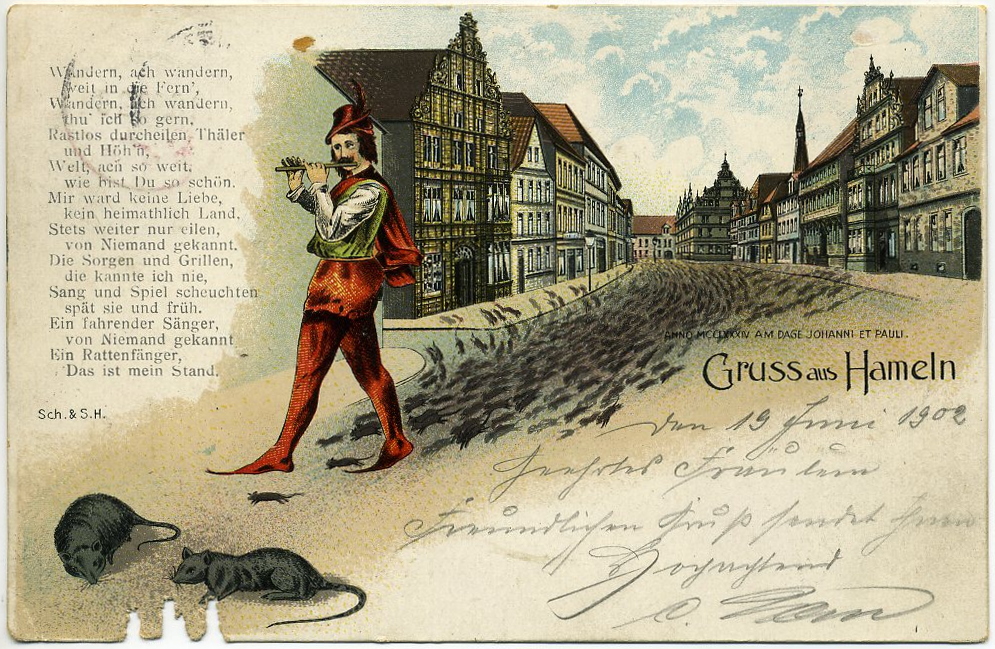
The Pied Piper of Hamelin is a legendary character from Germany. He is described as a rat-catcher dressed in multicoloured clothes. He uses a magic pipe to lure rats into a river. When the town refuses to pay him, he uses the same music to lead their children away. The phrase now describes someone who attracts followers through charm or false promises.
Where it comes from
The earliest reference is a stained-glass window in Hamelin church around 1300. It was destroyed in 1660. A Latin verse from 1284 mentions 130 children leaving the town on Saint John and Paul's day. The rats were added to the story later, around 1559. Historians believe the window commemorated a real tragedy for the town.
How it is done
The piper plays a silver pipe to attract the rats. They follow him into the Weser River and drown. Later, he plays again while adults are in church. The children follow him out of the town gate. They disappear into a mountain cave or head towards Transylvania. Three children remain behind because they are lame, deaf, or blind.
Tools and materials
The piper wears multicoloured clothing. He carries a silver pipe that produces magical music. The rats and children are drawn by the sound. The street where the children were last seen is named Bungelosenstrasse. Music and dancing are forbidden there today.
Pied Piper of Hamelin, drawn and placed
- Living
- Revived
- Fading
- Historical
- Legendary
- Performed
- Lineage
- German folklore
- Timing
- on Saint John and Paul's day
What it is for
The piper is hired to remove a rat infestation. He demands payment for his work. When denied, he seeks revenge on the town. The legend serves as a warning about broken promises. It also symbolizes hope during plague times by removing disease carriers.
Who does it
Scholars study the various historical accounts of the legend. Writers like Goethe and Robert Browning have retold the story. The burgermeister of Hamelin is the official who breaks the contract with the piper. Researchers examine town records and manuscripts to find the truth.
Peoples and places
The legend belongs to the people of Hamelin in Lower Saxony. It spread through German folklore and literature. Versions exist in other cultures, but the core story is German. The children are said to have settled in Transylvania or Eastern Europe in some theories.
At a glance: who, where and when
Peoples


What people believe
Some view the piper as a symbol of Death. Others see him as a pagan figure leading children to ritual sites. The emigration theory suggests recruiters lured children to settle new lands. The natural causes theory proposes disease or starvation took the children.
When it is done
The event happened on Saint John and Paul's day. This is when the adults were in church. The piper returned at this time to take his revenge. The date marks the disappearance of the 130 children.
How scholars and sceptics see it
Historians have debated the origin for centuries. No single explanation is universally accepted. Theories include disease, emigration, and natural disasters. The Lüneburg manuscript provides an early German account. Hans Dobbertin reconstructed the lost stained-glass window.
Cautions and what is closed
The legend involves the disappearance of children. It serves as a cautionary tale about greed and broken contracts. The three remaining children tell the townsfolk what happened. Their disabilities prevented them from following the music.
Compare and confuse
The Dance of Death is a similar medieval theme. Both involve death taking the young. The Piper is sometimes compared to Orpheus. However, his role is punitive rather than redemptive.
Questions people ask about Pied Piper of Hamelin
Who is the Pied Piper?
He is a legendary rat-catcher from Hamelin, Germany. He wears multicoloured clothes and plays a magic pipe. He lures rats away but also leads children astray when unpaid.
Where does the legend come from?
It originates in Hamelin, Lower Saxony, Germany. The earliest mention is a church window from around 1300. The story spread through German folklore and literature.
What happens to the children?
They follow the piper out of town on Saint John and Paul's day. They disappear into a cave or head toward Transylvania. Three remain behind due to disability.
Why is the phrase used today?
It describes a person who attracts a following through charisma. It can also mean someone who leads others with false promises.
Good reading and sources
- Encyclopaedia BritannicaArticle
- National GeographicNational Geographic, Article
- The grim truth behind the Pied PiperBBC, Article
- Pied Piper of Hamelin on WikipediaEncyclopedia
- More photos on Wikimedia CommonsPhotos and video
- Wikidata recordOpen data
The facts on this page come from the Wikipedia article "Pied Piper of Hamelin", written by its contributors and used under the CC BY-SA 4.0 licence, and from its Wikidata record (CC0). EveryJaadu rewrote the text in its own words, with AI assistance, and compares every page with the article to make sure no passage is copied. It may be reused under the same CC BY-SA 4.0 licence with a link back.
It may contain mistakes. Names and customs differ from one community to the next, and some knowledge is closed to outsiders and left out here. This page describes belief and practice. It does not say that any of it works, it is not a how-to, and it is not medical advice. If something is wrong, tell us. Last refreshed 2026-10-05.
More from Germany
All the entries from Germany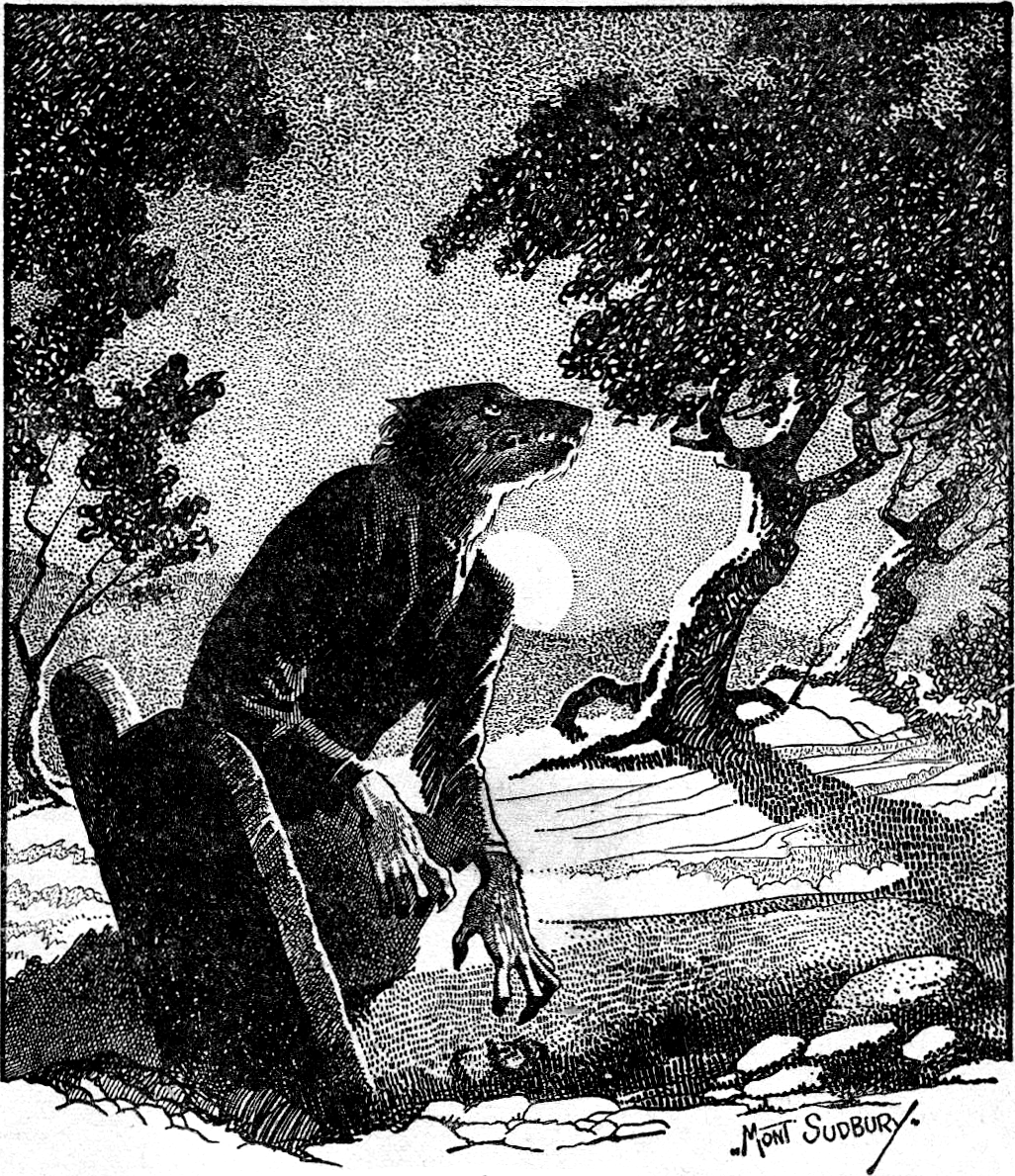 🇫🇷 France and 5 moreWerewolf
A mythical shapeshifter that turns into a wolf, central to European witch-hunts and Gothic horror.Being · Cursing and harm · Wonder and entertainment Legendary
🇫🇷 France and 5 moreWerewolf
A mythical shapeshifter that turns into a wolf, central to European witch-hunts and Gothic horror.Being · Cursing and harm · Wonder and entertainment Legendary
 🇩🇪 Germany and 5 moreWitch trials in the Holy Roman Empire
A wave of executions across Central Europe between the fifteenth and eighteenth centuries.Belief · Cursing and harm Historical
🇩🇪 GermanyJohannes Junius
Mayor of Bamberg executed in the witch trials, known for a letter to his daughterFigure Historical
🇩🇪 Germany and 5 moreWitch trials in the Holy Roman Empire
A wave of executions across Central Europe between the fifteenth and eighteenth centuries.Belief · Cursing and harm Historical
🇩🇪 GermanyJohannes Junius
Mayor of Bamberg executed in the witch trials, known for a letter to his daughterFigure Historical
 🇧🇷 Brazil and 5 moreWhite Lady
A female ghost in white clothing linked to tragedy and omens across many culturesFigure · Cursing and harm · Seeing and foretelling Legendary
🇧🇷 Brazil and 5 moreWhite Lady
A female ghost in white clothing linked to tragedy and omens across many culturesFigure · Cursing and harm · Seeing and foretelling Legendary
Related elsewhere
All figure 🇪🇬 EgyptCurse
A spoken wish for misfortune to befall a person or placeBelief · Cursing and harm · Luck and prosperity Historical
🇪🇬 EgyptCurse
A spoken wish for misfortune to befall a person or placeBelief · Cursing and harm · Luck and prosperity Historical
 🇮🇳 India and 1 moreNavagrahaनवग्रह
A group of nine celestial deities in Hinduism that govern fate and astrologyTradition · Protection · Luck and prosperity Living
🇧🇷 Brazil and 1 moreQuimbanda
An Afro-Brazilian religion focused on male and female street spirits for worldly mattersTradition · Protection · Luck and prosperity Living
🇲🇾 Malaysia and 1 moreBomohبوموه
A Malay shaman and traditional healer who works with spirits, herbs, and geomancy.Tradition · Healing · Seeing and foretelling Living
🇮🇳 India and 1 moreNavagrahaनवग्रह
A group of nine celestial deities in Hinduism that govern fate and astrologyTradition · Protection · Luck and prosperity Living
🇧🇷 Brazil and 1 moreQuimbanda
An Afro-Brazilian religion focused on male and female street spirits for worldly mattersTradition · Protection · Luck and prosperity Living
🇲🇾 Malaysia and 1 moreBomohبوموه
A Malay shaman and traditional healer who works with spirits, herbs, and geomancy.Tradition · Healing · Seeing and foretelling Living