
Native Ukrainian National Faith
In its own language: Рідна Українська Національна Віра
from Ukrainian Rídna Ukrayíns'ka Natsionál'na Víra, meaning Native Ukrainian National Faith
A monotheistic Slavic religion founded by Lev Sylenko among the diaspora in North America.
The Native Ukrainian National Faith is a Rodnover tradition established in the mid-twentieth century by Lev Sylenko within the Ukrainian diaspora. It teaches solar monotheism through the supreme deity Dazhboh and claims direct descent from the ancient Oriians of the Cucuteni-Trypillia culture.
- Founded by Lev Sylenko in North America during the 1960s.
- Teaches absolute monotheism through the god Dazhboh.
- Claims descent from the ancient Cucuteni-Trypillia culture.
- Sacred text is the Maha Vira, published in 1979.
- Priests wear a blue, yellow, black, and red sviadana ribbon.
What it is
The Native Ukrainian National Faith, often called Sylenkoism, is a modern religious movement rooted in Slavic heritage. It emerged in the 1960s among Ukrainians living outside their homeland. The group identifies as part of Rodnovery, the broader category of Slavic native faiths. However, it stands apart by rejecting polytheism in favor of absolute monotheism. Followers believe in one supreme god, Dazhboh, who represents the sun and cosmic energy. This structure differs significantly from other pagan groups that worship multiple deities. The movement centers on the teachings of its founder, Lev Sylenko, who claimed to receive divine revelation directly from his ancestors.
Where it comes from
Lev Sylenko founded this tradition while living in North America during the mid-twentieth century. He was previously involved with an earlier anti-Soviet spiritual group led by Volodymyr Shaian. After separating from Shaian’s circle, Sylenko developed his own systematic theology. He published his sacred text, the Maha Vira, in 1979 after extensive travels across Europe and Asia. The religion entered Ukraine shortly after the country regained independence in 1991. Today, communities exist in Russia, Belarus, Western Europe, and Oceania, alongside the original diaspora hubs in Canada and the United States.
How it is done
Communities are guided by male and female priests known as RUNtatos and RUNmamas. These leaders teach daily application of religious tenets and provide counsel on personal matters. Rituals follow a calendar derived partly from Ukrainian village folklore and partly from new creations. Priests wear a distinctive long ribbon called a sviadana around their necks. The color scheme includes blue, yellow, black, and red bands. Male clergy often pair traditional embroidered shirts with formal suits. Services include blessings for newborns, weddings, and funerals. The community also observes specific days dedicated to historical figures and environmental causes.
Tools and materials
The central object of study is the Maha Vira, a massive book containing theological doctrines and ritual instructions. It blends Sanskrit and Ukrainian linguistic elements. Practitioners use shrines featuring depictions of the progenitor figures Or and Lel. The sviadana ribbon serves as a visual marker of priestly status. Embroidered shirts are common attire for male clergy. The community also utilizes music composed by Zhyvosyl Liutyi, which honors various deities despite the official monotheistic stance. Sacred texts guide the interpretation of history and cosmology.
Native Ukrainian National Faith, drawn and placed
- Living
- Revived
- Fading
- Historical
- Legendary
- Performed
- Lineage
- Rodnovery
- Timing
- lifecycle events and annual holidays
What it is for
Followers seek to reconnect with what they view as the original understanding of God held by early Slavs. The religion aims to unify the Ukrainian ethnos through a shared coherent doctrine. It positions Ukraine as a spiritual leader destined to guide Europe toward higher development. Adherents believe this path offers protection against cultural fragmentation. The faith also emphasizes animal protection and national sovereignty. Some members participate in broader Rodnover activities that involve polytheistic worship, showing flexibility in practice.
Who does it
Leadership consists of ordained priests and priestesses. During Sylenko’s lifetime, he personally conferred ordination upon candidates who submitted applications and recommendation letters. Male priests outnumber women significantly. A good priest must demonstrate self-control, nobility, and soft speech. They are forbidden from judging or intimidating others. The role involves teaching congregants how to live according to religious principles. Modern branches may vary in terminology, with some using generic terms like 'priests' instead of the specific RUN titles.
Peoples and places
The primary community comprises ethnic Ukrainians, particularly those in the diaspora. The theology claims that Ukrainians are the direct descendants of the ancient Oriians. This lineage is traced back to the Cucuteni-Trypillia culture. Other groups mentioned include Russians and Scythians, who are seen as secondary branches. The movement has spread to Belarus and Russia, though it faces criticism from other Ukrainian Rodnover groups. Critics argue that Sylenkoism is not authentically native due to its monotheistic structure.
At a glance: who, where and when
Peoples
Belief worlds
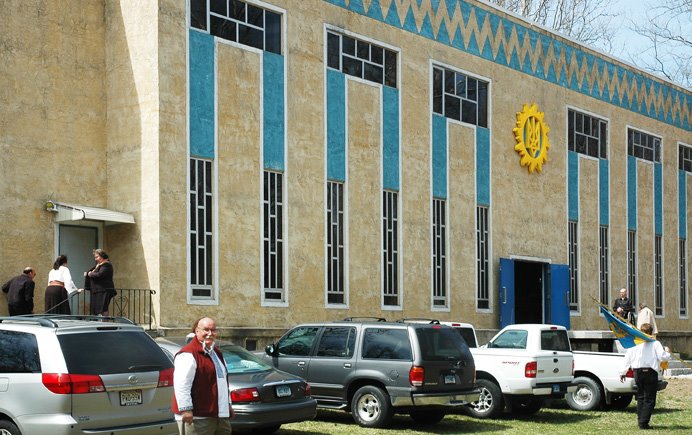
What people believe
The core belief is solar monotheism centered on Dazhboh, the Giving God. Sylenko taught that Dazhboh contains all things and exists within everything. This view aligns with pantheistic or panentheistic concepts. The cosmos is divided into three worlds: Prav (natural law), Yav (visible world), and Nav (spiritual realm). The religion posits that monotheism represents a higher stage of spiritual evolution than polytheism. It rejects the idea of intermediary deities. The founders claim that humanity originated from Father Or and Mother Lel, linking biological ancestry to spiritual identity.
When it is done
The liturgical year begins eleven thousand years ago according to the Maha Vira chronology. Key dates include April 14, the Great Day of Dazhboh's Light, which coincides with Easter celebrations. September 27 marks the birthday of Lev Sylenko and the Day of the Holy Maha Vira. November 5 is observed as the Day of the People's Anger, focusing on resistance against oppression. April 28 is designated as the Day of Animal Protection. Holidays also honor historical warriors like Sviatoslav I and poet Taras Shevchenko, who promoted ancestral faith over Christianity.
Questions people ask about Native Ukrainian National Faith
What is the Native Ukrainian National Faith?
It is a modern Slavic religious movement founded by Lev Sylenko in North America. It combines elements of Rodnovery with strict solar monotheism. Followers believe in one supreme deity, Dazhboh, and trace their origins to ancient Ukrainian cultures.
Who is Dazhboh in this tradition?
Dazhboh is the supreme god, identified as the Sun God or Giving God. Sylenkoites believe he embodies all cosmic energy and exists within every aspect of creation. He is viewed as the ultimate source of life and natural law.
How does this faith differ from other pagan groups?
Unlike many Rodnover groups that worship multiple gods, Sylenkoism insists on absolute monotheism. It views monotheism as a higher spiritual evolution. This stance has caused tension with other Ukrainian pagan movements who consider it inauthentic.
Where did this religion originate?
It began in the mid-twentieth century among Ukrainian immigrants in Canada and the United States. Lev Sylenko established the doctrine while in exile. It was later introduced to independent Ukraine in 1991 and spread to other regions.
Good reading and sources
- Native Ukrainian National Faith on WikipediaEncyclopedia
- More photos on Wikimedia CommonsPhotos and video
- Wikidata recordOpen data
The facts on this page come from the Wikipedia article "Native Ukrainian National Faith", written by its contributors and used under the CC BY-SA 4.0 licence, and from its Wikidata record (CC0). EveryJaadu rewrote the text in its own words, with AI assistance, and compares every page with the article to make sure no passage is copied. It may be reused under the same CC BY-SA 4.0 licence with a link back.
It may contain mistakes. Names and customs differ from one community to the next, and some knowledge is closed to outsiders and left out here. This page describes belief and practice. It does not say that any of it works, it is not a how-to, and it is not medical advice. If something is wrong, tell us. Last refreshed 2026-11-27.
More from Ukraine
All the entries from Ukraine 🇷🇺 Russia and 4 moreFolk Orthodoxyнародное православие
A blend of Eastern Orthodox doctrine and pre-Christian pagan beliefs in Slavic communitiesTradition · Protection · Luck and prosperity Living
 🇷🇺 Russia and 5 moreSlavic religion
The pre-Christian beliefs of the Slavic peoples before their conversion to Christianity.Tradition · Protection · Healing Revived
 🇺🇦 Ukraine and 1 moreUkrainian folklore
The folk traditions of Ukraine and its ethnic communitiesTradition · Speaking with spirits and the dead · Luck and prosperity Living
 🇷🇺 Russia and 12 moreSlavic Native FaithРодноверие
A modern polytheistic movement drawing on Slavic folklore, romanticism, and global spiritual traditions.Tradition · Speaking with spirits and the dead · Power and authority Living
Related elsewhere
All tradition 🇳🇵 Nepal and 1 moreMani stone
Carved stones bearing Buddhist mantras, placed as devotional offerings along paths and rivers.Charm · Protection · Speaking with spirits and the dead Living
 🇺🇸 United StatesGhost DanceNanissaanah
A circular movement seeking spiritual renewal and reunion with ancestorsRite · Speaking with spirits and the dead · Change and initiation Living
 🇪🇬 Egypt and 5 moreSacred dance
Movement used in worship to honour deities, heal communities, or connect with the spirit world.Tradition · Protection · Healing Living
 🇱🇰 Sri Lanka and 1 moreKataragama templeකතරගම / கதிர்காமம் முருகன் கோயில்
A Sri Lankan shrine shared by Buddhists, Hindus, Muslims and VeddasTradition · Protection · Speaking with spirits and the dead Living