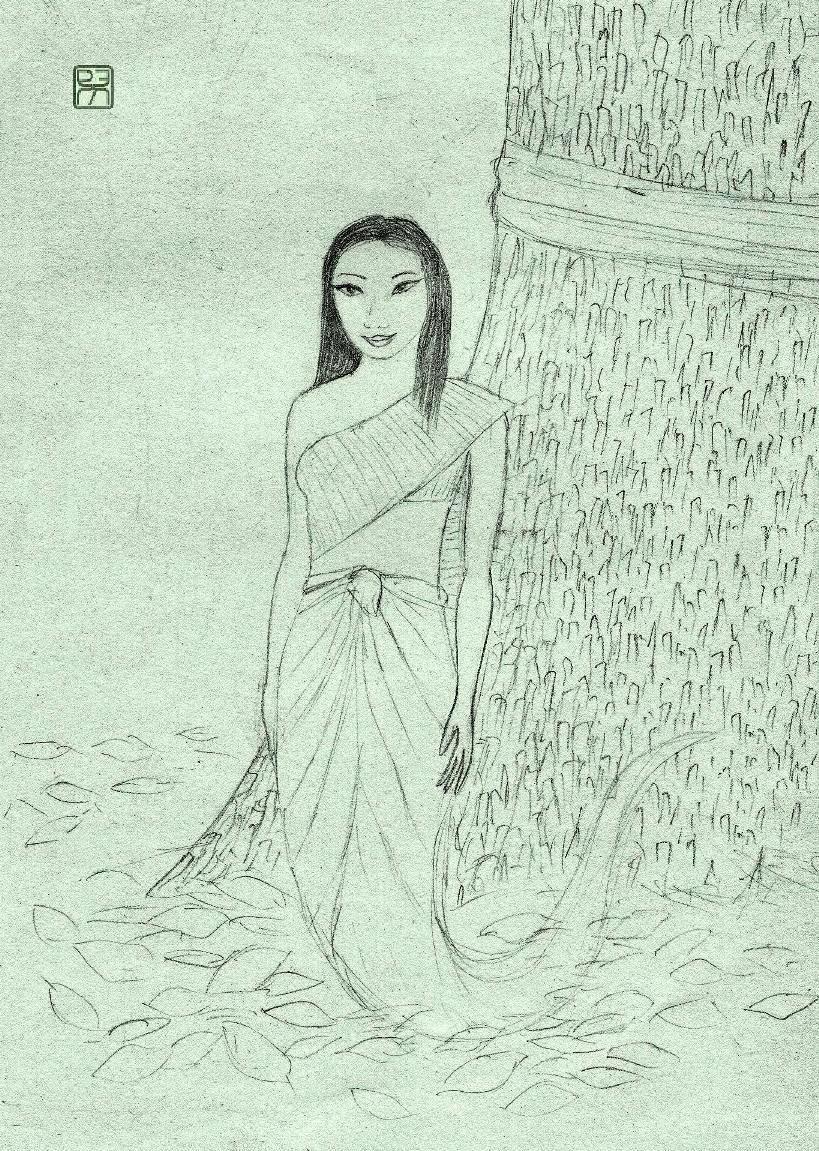
Nang Ta-khian
In its own language: นางตะเคียน
from Thai nang, lady, and ta-khian, the tree she inhabits
A Thai tree spirit said to dwell in the ta-khian tree
A female spirit in Thai folklore, said to make her home in the ta-khian tree, a very tall species that can stand for centuries. She is counted among the Nang Mai, the tree ladies, and is honoured at shrines with cloth and silk, often in the hope of a lottery win.
- She is one of the Nang Mai, the tree ladies of Thai folklore
- Ta-khian is the Thai name for Hopea odorata, a very large, long-lived tree
- Monks' merit is held to make her harmless, so her wood is used in monasteries
- Pilgrims tie coloured silk to trees, logs, beams and boat keels where she may dwell
- Films about her appeared in 2003 and 2010, with a television lakhon in 2025
What it is
Nang Ta-khian is a female spirit in Thai folklore, one of a group of tree beings the tradition calls Nang Mai, or tree ladies. She is tied to Hopea odorata, a very big tree that Thai speakers call ta-khian and that can live for hundreds of years. Story tellers describe her as a young woman in traditional Thai dress, most often in reddish or brownish shades. She is not a remote figure. People treat her as a local guardian of place, and as a spirit who may be asked for favours.
Where it comes from
Her story lives in Thai oral tradition, so it is passed on by telling rather than fixed in one written form. In that tradition she is counted among the Nang Mai, the spirits attached to particular trees, and she is understood to make one ta-khian tree her home. Legend gives her a settled appearance: a beautiful young woman in Thai clothing, in red or brown tones. The ta-khian itself is a forest tree, tall with a wide-spreading root system, so she is a woodland being rather than a household one, though she can follow her wood indoors.
How it is done
Custom gathers around her tree. Strips of coloured satin are wound round the trunk of a ta-khian where she is thought to live, and pilgrims knot coloured silk on a log, a beam, or the keel of a wooden boat if they believe she has settled there. Offerings are left at modest shrines, and much present-day petitioning is aimed at a lottery result. When a tree had to come down, a ceremony was held first to ask her leave. Monks have wrapped cloth on old trees to keep them standing.
Tools and materials
The main offering is cloth: lengths of coloured satin around a standing trunk, and coloured silk where she is thought to dwell in a beam, a log or a boat's keel. The ta-khian wood itself is the spirit's place, and pieces of it inside a house, worked as beams, stilts or pillars, are treated as her possible home. Red and brown are the colours legend gives her clothing, which sets her apart from the green linked to Nang Tani.
Nang Ta-khian, drawn and placed
- Living
- Revived
- Fading
- Historical
- Legendary
- Performed
- Lineage
- Thai folk mythology; one of the Nang Mai, the tree ladies
What it is for
People approach her for fortune, above all for a winning lottery number, and shrines credit her with miracles. She is also a guardian of place. Those who come near her tree with good intentions are said to have nothing to fear, while someone cruel or dishonest may be harmed. The cloth tied to old trees has a practical side too: monks used it to mark venerable trees and hold loggers back, so a petition to the spirit doubles as a plea for the forest.
Who does it
Day to day she is served by ordinary people, villagers and pilgrims, who leave cloth and make requests at her shrines. Buddhist monks carry a larger role. Their merit is thought to make her harmless, which is why ta-khian timber is used in monastery building, and monks have tied satin on old trees and presided over the ceremony of asking leave before a felling. The bigger shrines stand inside temple grounds, so devotion to the spirit and monastic life overlap.
Peoples and places
The spirit belongs to Thailand, and shrines to her are found in different parts of the country. Most are small, standing near a grove or a road, but larger ones exist, among them a shrine in Amphawa District, Samut Songkhram Province, and another in Sao Hai District, Saraburi Province. In some places the shrine forms one part of a wider temple compound. The people who petition her are Thai, and the customs around her sit inside Thai folk belief as much as inside local Buddhist practice.
At a glance: who, where and when
Peoples
Belief worlds


What people believe
She is a sylvan spirit, meaning she belongs to woodland rather than to people, and her power is bound up with one tree. The rules said to govern her are moral ones: she may injure someone wicked or immoral who comes close, while a righteous person has nothing to fear from her. If her tree is cut she is believed to grow furious and to travel with the timber. That is why her wood is feared in ordinary building and accepted in a monastery, where the monks' merit is held to calm her.
Cautions and what is closed
Cutting a ta-khian without first obtaining the spirit's consent is said to endanger the person doing it, and that belief has long held loggers back. Even so, some very old trees are now felled for their wood whatever the custom says. She is described as able to hurt people she judges wicked, though not the upright. Her shrines are public places, visited by pilgrims who bring cloth and leave it tied in place.
Compare and confuse
Nang Ta-khian is one of the Nang Mai, the tree ladies of Thai folklore, and is easily mixed up with Nang Tani, another Thai tree spirit. Dress is the usual way to tell them apart: Nang Tani is shown mostly in green, Nang Ta-khian in red or brown. Beyond Thailand, the nearest parallel is the dryad of Greek myth, a nymph bound to a single tree.
Today
She is still propitiated, most visibly by people hoping for a lottery win, and her shrines continue to draw pilgrims. The spirit has moved into entertainment as well. A 2003 Thai film, Ta-khian, known in English as The Haunted Tree, stars Sorapong Chatree; a 2010 film, Nang Ta-khian, followed; a 2025 Channel 8 lakhon (a Thai dramatic form) called Love Across Lifetimes (พิศวาสข้ามภพ) took her up; and she has a part in the animated film Nak.
Questions people ask about Nang Ta-khian
What is Nang Ta-khian?
A female spirit in Thai folklore, counted among the Nang Mai or tree ladies. She is said to make her home in a ta-khian tree, Hopea odorata, and to appear as a young woman in Thai dress, usually in red or brown.
Where does the belief come from?
It belongs to Thai oral tradition, passed on by telling rather than in a single book. The spirit is one of several tree beings in Thai folk belief, and her shrines and stories are found around Thailand, with larger shrines in Samut Songkhram and Saraburi provinces.
Why is ta-khian wood avoided?
Cutting her tree is said to enrage the spirit, who then follows the timber. For that reason the tree is rarely logged, and its wood is used mainly in Buddhist monasteries, where the merit of the monks is believed to keep her from doing harm.
What do people offer her?
Lengths of coloured satin tied around living trunks, and coloured silk knotted on logs, beams or boat keels where she is thought to dwell. Petitioners usually ask for luck in the lottery, and her shrines are credited with miracles.
How does she differ from Nang Tani?
Both are Thai tree spirits, but they are told apart by dress. Nang Ta-khian is shown in reddish or brownish colours, while Nang Tani is mostly pictured in green.
Good reading and sources
- Nang Ta-khian on WikipediaEncyclopedia
- More photos on Wikimedia CommonsPhotos and video
- Wikidata recordOpen data
The facts on this page come from the Wikipedia article "Nang Ta-khian", written by its contributors and used under the CC BY-SA 4.0 licence, and from its Wikidata record (CC0). EveryJaadu rewrote the text in its own words, with AI assistance, and compares every page with the article to make sure no passage is copied. It may be reused under the same CC BY-SA 4.0 licence with a link back.
It may contain mistakes. Names and customs differ from one community to the next, and some knowledge is closed to outsiders and left out here. This page describes belief and practice. It does not say that any of it works, it is not a how-to, and it is not medical advice. If something is wrong, tell us. Last refreshed 2026-10-21.
More from Thailand
All the entries from Thailand 🇲🇾 Malaysia and 5 morePenanggalan
A floating head with trailing organs from Malay folklore, said to hunt pregnant women and newborns.Being · Cursing and harm Legendary
🇮🇩 Indonesia and 3 moreToyoltuyul
An undead infant spirit in Southeast Asian folklore, invoked for theft and fortune.Being · Luck and prosperity · Cursing and harm Living
 🇹🇭 Thailand and 5 moreKrasueกระสือ
A floating head with trailing organs from Southeast Asian folkloreBeing · Cursing and harm Living
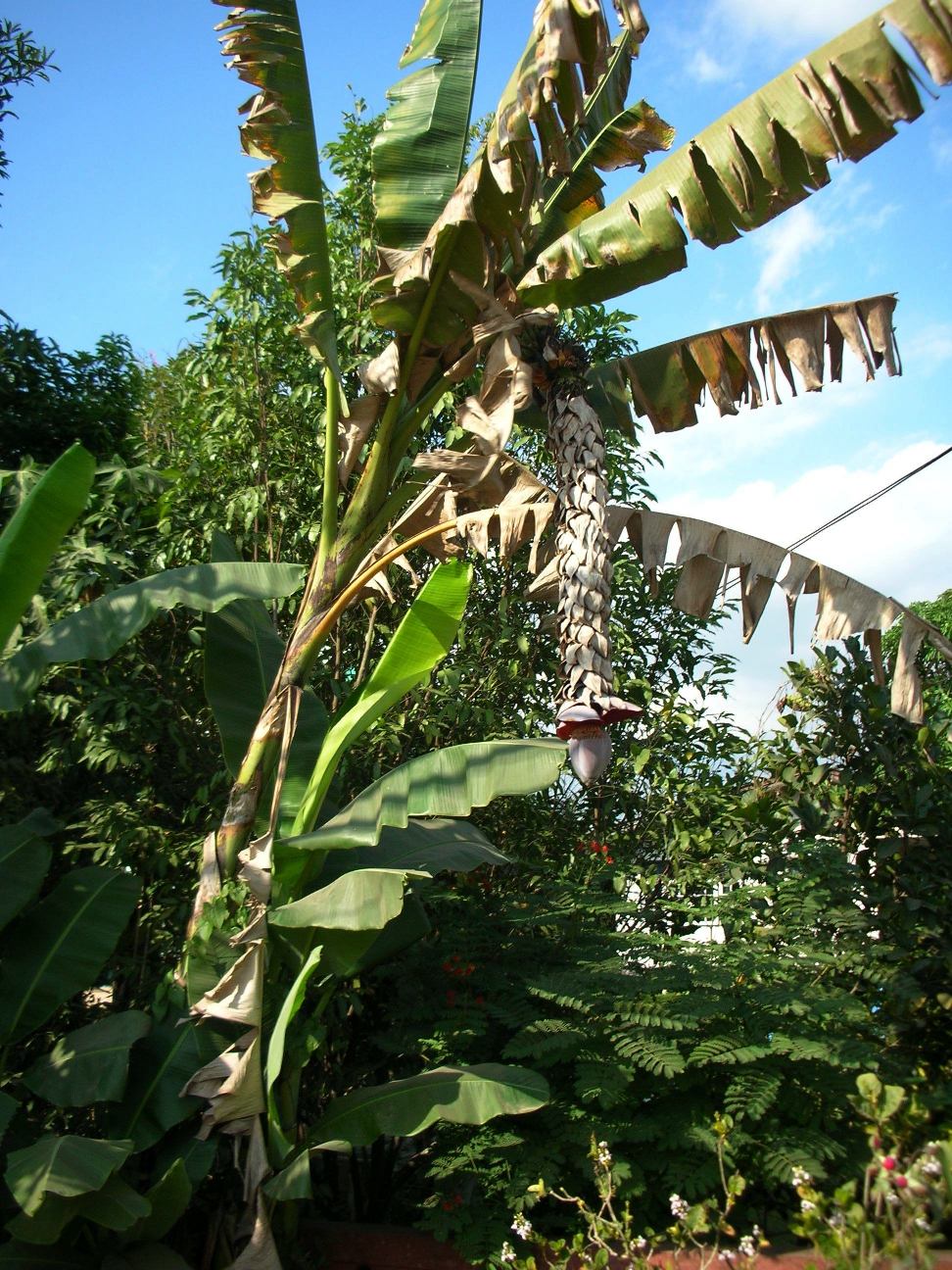 🇹🇭 Thailand and 1 moreNang Taniนางตานี
A female spirit said to inhabit wild banana trees in Southeast Asian folklore.Being · Protection · Luck and prosperity Living
Related elsewhere
All being 🇮🇳 India and 5 moreHoliहोली
A Hindu spring festival marked by coloured powders and bonfires to celebrate love and virtue.Tradition · Love and attraction · Cursing and harm Living
 🇮🇪 IrelandPúca
A shape-shifting spirit of Celtic folklore that brings fortune or mischiefBeing · Luck and prosperity · Cursing and harm Legendary
 🇬🇷 Greece and 1 moreShell game
A street swindle using covered containers to hide a marker while taking betsIllusion · Cursing and harm · Luck and prosperity Living
 🇯🇵 JapanOni鬼(おに)
A horned demon of Japanese folklore known for strength and evil deedsBeing · Cursing and harm · Luck and prosperity Legendary