
Mummers' play
Likely from German words meaning disguised person, though Greek origins are also suggested.
A folk drama featuring a fight and a resurrection, performed by amateur troupes in the British Isles.
Amateur troupes perform these seasonal folk dramas across Britain and Ireland. The plot centers on a combat between two characters, followed by a doctor restoring the loser to life. Performers visit homes and pubs to collect money or gifts for their community.
- Plays feature a fight and a doctor bringing the loser back to life.
- Earliest complete texts date from the mid-eighteenth century.
- Performers visit houses and pubs to collect money or gifts.
- Irish versions include historical figures like Brian Boru.
- The tradition was revived in the twentieth century by folk enthusiasts.
What it is
These are folk dramas enacted by local groups of performers known as mummers or guisers. The standard format involves a staged battle where one participant falls, only to be brought back to health by a quack doctor character. This structure serves as a vehicle for comic dialogue and seasonal celebration. While often linked to sword dancing, the plays stand alone as distinct theatrical events. They represent a form of community entertainment that blends storytelling with ritualistic performance elements.
Where it comes from
The practice emerged clearly in the eighteenth century, though the term 'mummer' dates back to the Middle Ages. Early references describe masked visitors rather than structured plays. By the late seventeenth and early eighteenth centuries, written records show the specific combat-and-resurrection plot taking shape. Scholars once linked these performances to ancient fertility rites, but modern historians view them as later developments in folk theatre. The tradition spread from the British Isles to colonies such as Newfoundland and Saint Kitts and Nevis.
How it is done
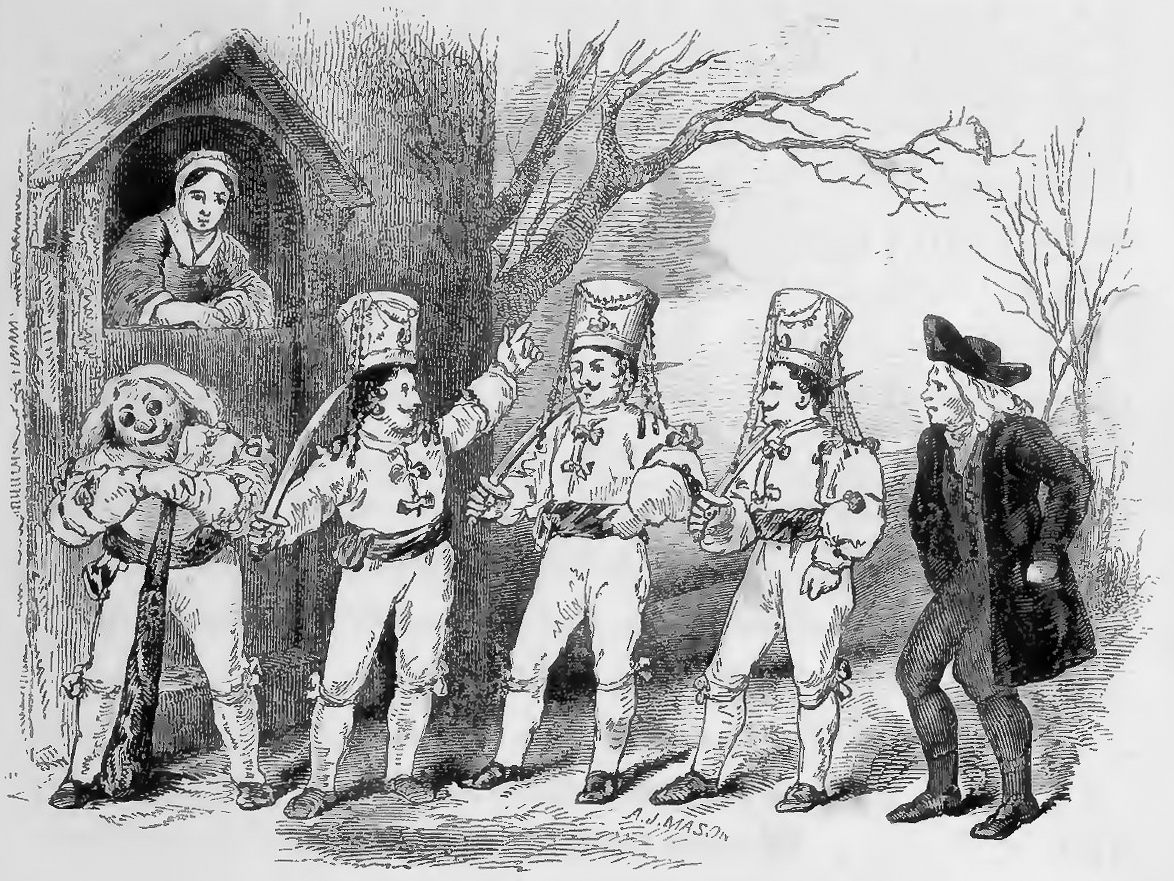
Troupes travel door-to-door through villages and towns during specific holiday periods. They enter homes or public houses and present a short script involving stock characters like a hero, a villain, and a doctor. The action includes a mock fight and a comedic healing scene. At the end, a character often requests food or money, sometimes using a prop like a doll family to solicit donations. The performance is informal and relies on rhyming couplets and direct audience interaction.
Tools and materials
Performers wear costumes and masks to disguise themselves. Props vary by region but frequently include wooden swords, hobby horses made from skulls or carved wood, and simple puppets. In some versions, a model house or picture represents a family. The doctor carries a bottle of magic potion. These items help visualize the characters and support the narrative of death and revival without requiring complex stagecraft.
Mummers' play, drawn and placed
- Living
- Revived
- Fading
- Historical
- Legendary
- Performed
- Lineage
- Folk drama tradition of the British Isles
- Timing
- Seasonal visits during winter festivals and new year celebrations.
What it is for
The plays serve to bring festive cheer and raise funds for the performing group. Historically, they acted as a means of community support during the winter months. The ritualized begging ensures that participants receive sustenance or coin in exchange for their entertainment. Beyond economics, the performances reinforce local traditions and provide a shared cultural experience for the communities that host them.
Who does it
Groups consist of amateur actors, traditionally men, who take on roles based on local custom. Younger members often play specific parts like Johnny Jack. Training occurs through oral transmission within the troupe. In Ireland, historical figures like Brian Boru appear alongside standard archetypes. Modern revivals involve enthusiasts who study old texts and scripts to reconstruct the performances accurately.
Peoples and places
The tradition is strongest in England and Ireland, with regional variations in character names and plot details. English versions often feature Saint George and a Turkish Knight. Irish scripts incorporate national heroes and use English language with local flavor. Scottish variants sometimes focus more on dance than dialogue. The custom also appears in former British colonies, adapting to local contexts while retaining the core resurrection theme.
At a glance: who, where and when
Who does it
Belief worlds


What people believe
Participants and audiences engage with the play as a symbolic representation of life overcoming death. The doctor's potion acts as a magical agent within the fiction of the performance. While not a religious rite, it echoes older beliefs in renewal and protection. The community accepts the supernatural elements as part of the theatrical convention, treating the revival as a moment of wonder rather than literal magic.
When it is done
Performances cluster around winter holidays. Christmas and New Year are peak times, especially Plough Monday. Some regions link the plays to Easter or All Souls' Day. The timing aligns with periods of rest and communal gathering. Groups schedule their rounds to coincide with these festivals, ensuring maximum participation from the local population.
How scholars and sceptics see it
Early researchers interpreted the plays as surviving pagan rituals. Later studies focused on textual analysis and historical documentation. Folklorists collected scripts and noted regional differences. Modern scholarship emphasizes the theatrical and social functions over mythological origins. Critics of the fertility theory argue that the evidence points to later literary influences and community entertainment needs.
Cautions and what is closed
Historical laws in London restricted mumming due to concerns about disguise and disorder. In Ireland, the Catholic Church discouraged the practice in the twentieth century, leading to arrests for street performances. Despite suppression, the tradition persisted underground or in modified forms. Today, the main risks are minor legal issues regarding public performance permits rather than serious harm.
Compare and confuse
The plays differ from mystery plays, which were more formal and religious. They share similarities with wassailing and other seasonal customs that involve visiting and collecting. The resurrection motif appears in various folk tales worldwide, but the specific combination of combat, doctor, and begging is distinct to the British Isles tradition.
Questions people ask about Mummers' play
What happens in a typical mummers' play?
Two characters fight, one falls down, and a doctor uses a magic potion to revive them. The troupe performs this sequence in homes or pubs, ending with a request for money or food.
Where did the mummers' play originate?
The tradition developed in the British Isles, particularly England and Ireland, spreading to former colonies. Written records confirm its existence by the mid-eighteenth century.
When are these plays performed?
They are usually done during winter festivals like Christmas, New Year, or Plough Monday. Some regions perform them at Easter or All Souls' Day instead.
Who performs the mummers' play?
Local amateur groups, often called sides or troupes, perform the plays. Members take on specific roles like the hero, villain, or doctor, passing the tradition down orally.
Good reading and sources
- Mummers' play on WikipediaEncyclopedia
- More photos on Wikimedia CommonsPhotos and video
- Wikidata recordOpen data
The facts on this page come from the Wikipedia article "Mummers' play", written by its contributors and used under the CC BY-SA 4.0 licence, and from its Wikidata record (CC0). EveryJaadu rewrote the text in its own words, with AI assistance, and compares every page with the article to make sure no passage is copied. It may be reused under the same CC BY-SA 4.0 licence with a link back.
It may contain mistakes. Names and customs differ from one community to the next, and some knowledge is closed to outsiders and left out here. This page describes belief and practice. It does not say that any of it works, it is not a how-to, and it is not medical advice. If something is wrong, tell us. Last refreshed 2026-10-06.
More from the United Kingdom
All the entries from the United Kingdom 🇮🇪 Ireland and 5 moreTrick-or-treating
A Halloween custom where costumed visitors ask for treats from homesTradition · Luck and prosperity · Wonder and entertainment Living
🇮🇪 Ireland and 5 moreTrick-or-treating
A Halloween custom where costumed visitors ask for treats from homesTradition · Luck and prosperity · Wonder and entertainment Living
 🇩🇪 Germany and 5 moreMaypoleMaibaum
A tall wooden pole raised for European spring festivals, accompanied by dance and celebration.Tradition · Luck and prosperity · Love and attraction Living
🇩🇪 Germany and 5 moreMaypoleMaibaum
A tall wooden pole raised for European spring festivals, accompanied by dance and celebration.Tradition · Luck and prosperity · Love and attraction Living
 🇪🇸 Spain and 5 moreSt John's Eve
A Christian vigil marked by bonfires and plant gathering on the summer solstice eveRite · Protection · Speaking with spirits and the dead Living
🇪🇸 Spain and 5 moreSt John's Eve
A Christian vigil marked by bonfires and plant gathering on the summer solstice eveRite · Protection · Speaking with spirits and the dead Living
 🇫🇷 France and 5 moreYule log
A large wooden log burned in the hearth during winter festivals across Europe and North America.Tradition · Protection · Luck and prosperity Living
🇫🇷 France and 5 moreYule log
A large wooden log burned in the hearth during winter festivals across Europe and North America.Tradition · Protection · Luck and prosperity Living
Related elsewhere
All rite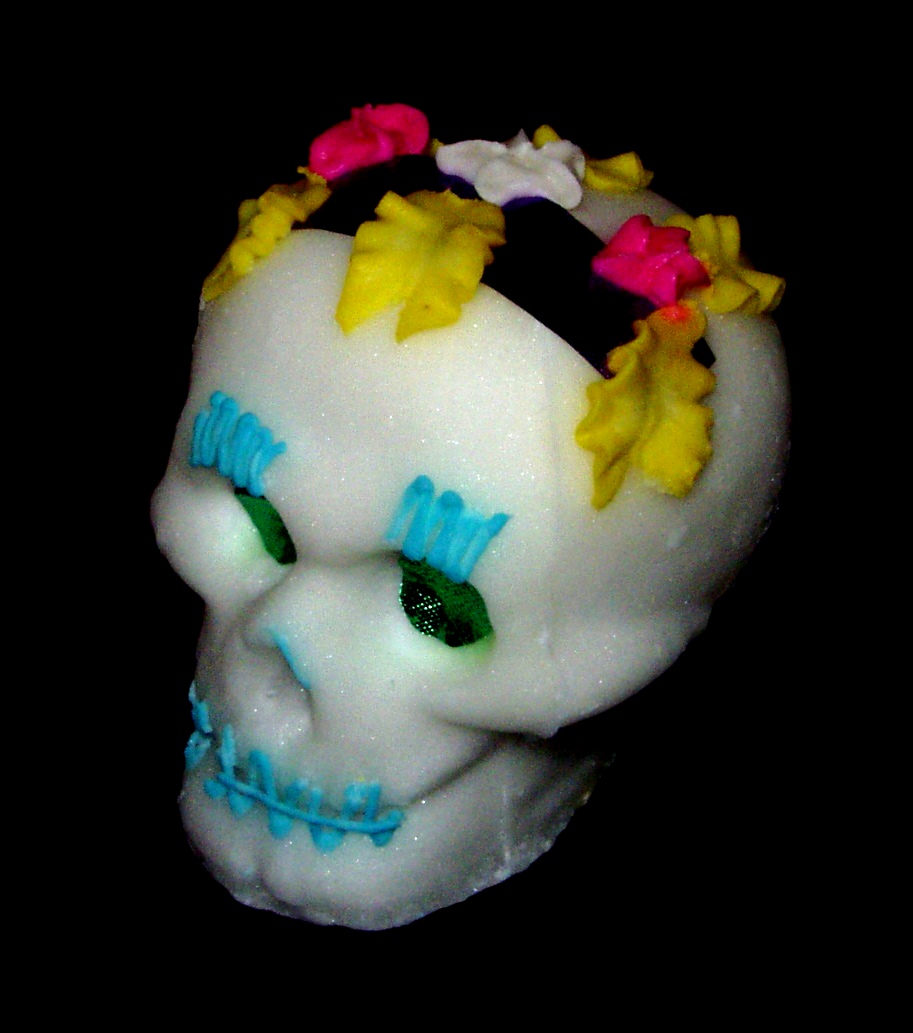 🇲🇽 MexicoCalavera
A sugar or clay skull used in Mexican Day of the Dead celebrations.Charm · Speaking with spirits and the dead · Luck and prosperity Living
🇲🇽 MexicoCalavera
A sugar or clay skull used in Mexican Day of the Dead celebrations.Charm · Speaking with spirits and the dead · Luck and prosperity Living
 🇹🇭 Thailand and 3 moreThai Buddha amuletsพระเครื่อง (phrakhrueang)
Sacred Buddhist images and relics worn for protection, merit, and fortune in Thailand.Charm · Protection · Luck and prosperity Living
🇹🇭 Thailand and 3 moreThai Buddha amuletsพระเครื่อง (phrakhrueang)
Sacred Buddhist images and relics worn for protection, merit, and fortune in Thailand.Charm · Protection · Luck and prosperity Living