
Beating the bounds
from the physical act of striking boundary stones with green boughs during the ceremony
A ceremonial walk along parish or town borders to reaffirm boundaries and community memory.
Beating the bounds is an ancient custom in England, Wales, and parts of the United States where communities walk their geographic limits. Participants beat boundary markers with branches to ensure residents remember the precise locations of these lines, maintaining shared civic knowledge across generations.
- Boys beat boundary stones with birch or willow branches to remember locations.
- The rite is traditionally performed on Ascension Day or during Rogation week.
- In Bodmin, Cornwall, the ceremony ends with a game of Cornish hurling.
- Vermont and New Hampshire attorneys general meet every seven years to reaffirm their border.
- The custom dates to Anglo-Saxon times and may derive from the Roman Terminalia.
What it is
Beating the bounds is a traditional rite performed by local communities to reaffirm the geographic limits of their parish or town. It involves a formal walk along the boundary line, where participants strike boundary stones or markers with branches. This practice serves as a living map, ensuring that the community retains a shared mental understanding of where their jurisdiction begins and ends. It transforms abstract legal lines into physical, remembered reality through collective action.
Where it comes from
The custom dates back to Anglo-Saxon England, appearing in the laws of Alfred the Great and Æthelstan. Scholars suggest it may have roots in the Roman festival of Terminalia, which honored Terminus, the god of landmarks. Norsemen also brought similar pagan practices to the region. Originally, these walks were essential for maintaining order in a time when written maps were rare and land disputes were common.
How it is done
A group of prominent citizens, often led by a priest and churchwardens, walks the perimeter of the locality. Boys typically accompany the procession and are instructed to beat the boundary stones with green boughs, usually made of birch or willow. In some historical instances, boys were whipped or bumped against the stones to help them memorize the location. The route may be walked on foot or, if the boundary follows a shoreline, by boat.
Tools and materials
Green boughs from trees like birch or willow are the primary tools used to strike the markers. In Bodmin, Cornwall, a silver ball known as the 'hurl' is thrown into a pool to start a game that concludes the ceremony. Bells, whistles, and shouts are also used to create noise, particularly in coastal ceremonies where the water is blessed and reclaimed.
Beating the bounds, drawn and placed
- Living
- Revived
- Fading
- Historical
- Legendary
- Performed
- Lineage
- Anglo-Saxon and Roman folk tradition
- Timing
- every seven years or during Rogation week
What it is for
The primary intent is to prevent encroachment and resolve disputes over land ownership by embedding boundary knowledge into oral tradition. It ensures that future generations know the exact limits of their parish, which determines rights such as burial in the churchyard or liability for church repairs. It also strengthens community bonds and provides a sense of place.
Who does it
Historically, the rite was led by clergy, churchwardens, and parochial officials, followed by a crowd of boys. Today, it is carried out by civic leaders, selectmen, and local residents. In New England, town boards of selectmen have a statutory duty to perambulate borders. The involvement of children was specifically intended to create long-term witnesses who would remember the boundaries well into adulthood.
Peoples and places
The custom is deeply rooted in English culture, observed in parishes across England and Wales. It was carried to New England by settlers, where it remains a legal requirement in states like Massachusetts, New Hampshire, and Maine. Similar practices exist in Germany, known as Grenzgang, and in Scotland as common riding. Each region adapts the rite to its local civic structure and landscape.
At a glance: who, where and when
Who does it
Peoples
Belief worlds
Occasions


What people believe
The ritual blends Christian prayer with older folk beliefs. Clergy recited Psalms and prayers for protection and harvest blessings while walking. A curse was often pronounced against anyone who transgressed the neighbor's bounds. The inclusion of boys was believed to extend the lifespan of the witnesses, ensuring the memory of the boundaries survived as long as possible.
When it is done
Traditionally, the perambulation occurred on Ascension Day or during Rogation week, a period dedicated to processions and prayers for the harvest. In modern times, many English parishes perform the rite every seven years, though some, like Bodmin, do so every five years. Legal requirements in the US vary, with some states mandating walks every seven or ten years.
How scholars and sceptics see it
Anthropologists view beating the bounds as a mechanism for social cohesion and the maintenance of communal identity. Historians note its evolution from a religious rite to a secular civic duty following the English Reformation. The practice demonstrates how pre-literate societies used physical performance to preserve legal and geographical information without relying on written documents.
Cautions and what is closed
In the past, the revelry associated with the ceremony sometimes attracted condemnation from religious authorities who viewed it as excessive. Modern iterations are generally safe, civic events. However, the historical context includes periods where the religious aspects were suppressed, and the rite was redefined as a quasi-secular function to preserve evidence of boundaries.
Compare and confuse
Beating the bounds is similar to 'riding the marches' in Scotland, where boundaries are patrolled on horseback. It shares features with other European boundary rituals that involve processions and the marking of territorial limits. Unlike surveying, which uses technical instruments, this rite relies on physical interaction with the landscape and communal memory.
Law and persecution
In New England, perambulation is often a legal requirement for town officials. Vermont and New Hampshire require their attorneys general to meet every seven years to reaffirm the state boundary. Connecticut’s Department of Transportation perambulates its borders every ten years. Failure to comply may not always carry a penalty, but the practice remains codified in state statutes.
Today
The custom survives as a vibrant part of local heritage in many English towns and American states. While modern surveying has rendered the legal necessity obsolete, the rite persists as a way to strengthen community ties. Revivals occur in places like Leyton Marshes, and new traditions, such as the Cornish hurling game in Bodmin, keep the practice alive for contemporary audiences.
Questions people ask about Beating the bounds
What is beating the bounds?
It is an ancient custom where communities walk their geographic boundaries and strike markers with branches to ensure residents remember the precise locations of their parish or town limits.
Where does this tradition come from?
It originates in Anglo-Saxon England, with possible roots in the Roman festival of Terminalia. It was brought to New England by settlers and exists in similar forms in Germany and Scotland.
Why are boys involved in the ceremony?
Taking boys along was believed to ensure that witnesses to the boundaries would survive as long as possible, embedding the knowledge of the limits into the next generation's memory.
When is the ceremony performed?
Traditionally, it occurs on Ascension Day or during Rogation week. Modern observances often happen every seven years, though some towns follow different schedules.
Is it still practiced today?
Yes, it remains active in parts of England, Wales, and the United States. Many parishes use it as a civic ceremony to strengthen community bonds, even though modern surveying makes it legally less critical.
Good reading and sources
- Beating the bounds on WikipediaEncyclopedia
- More photos on Wikimedia CommonsPhotos and video
- Wikidata recordOpen data
The facts on this page come from the Wikipedia article "Beating the bounds", written by its contributors and used under the CC BY-SA 4.0 licence, and from its Wikidata record (CC0). EveryJaadu rewrote the text in its own words, with AI assistance, and compares every page with the article to make sure no passage is copied. It may be reused under the same CC BY-SA 4.0 licence with a link back.
It may contain mistakes. Names and customs differ from one community to the next, and some knowledge is closed to outsiders and left out here. This page describes belief and practice. It does not say that any of it works, it is not a how-to, and it is not medical advice. If something is wrong, tell us. Last refreshed 2026-10-05.
More from the United Kingdom
All the entries from the United Kingdom 🇬🇧 United KingdomDeath knell
A church bell rung to announce a person's death and mark the funeral.Rite · Speaking with spirits and the dead Fading
🇬🇧 United Kingdom and 4 moreTelling the bees
A Western European custom of informing bees about major household eventsRite · Protection · Speaking with spirits and the dead Living
🇬🇧 United KingdomDeath knell
A church bell rung to announce a person's death and mark the funeral.Rite · Speaking with spirits and the dead Fading
🇬🇧 United Kingdom and 4 moreTelling the bees
A Western European custom of informing bees about major household eventsRite · Protection · Speaking with spirits and the dead Living
 🇬🇧 United KingdomPricking
A method used to locate a witch's mark during early modern European witch trialsRite · Cursing and harm Historical
🇬🇧 United KingdomPricking
A method used to locate a witch's mark during early modern European witch trialsRite · Cursing and harm Historical
 🇪🇸 Spain and 5 moreSt John's Eve
A Christian vigil marked by bonfires and plant gathering on the summer solstice eveRite · Protection · Speaking with spirits and the dead Living
🇪🇸 Spain and 5 moreSt John's Eve
A Christian vigil marked by bonfires and plant gathering on the summer solstice eveRite · Protection · Speaking with spirits and the dead Living
Related elsewhere
All rite 🇮🇳 India and 2 moreHomaहोम
A fire ritual found across Asian religions where offerings are burned as a votive exchange with the divine.Rite · Protection · Speaking with spirits and the dead Living
🇮🇳 India and 2 moreHomaहोम
A fire ritual found across Asian religions where offerings are burned as a votive exchange with the divine.Rite · Protection · Speaking with spirits and the dead Living
 🇲🇦 Morocco and 5 moreWild rueاسپند
A desert plant whose seeds hold psychoactive alkaloids and serve as incense in the Middle East.Substance · Protection · Speaking with spirits and the dead Living
🇲🇦 Morocco and 5 moreWild rueاسپند
A desert plant whose seeds hold psychoactive alkaloids and serve as incense in the Middle East.Substance · Protection · Speaking with spirits and the dead Living
 🇨🇳 China and 1 moreAncestor veneration in China中國傳統宗法性宗教
Rites for dead kin who are thought to watch over the familyTradition · Protection · Speaking with spirits and the dead Living
🇨🇳 China and 1 moreAncestor veneration in China中國傳統宗法性宗教
Rites for dead kin who are thought to watch over the familyTradition · Protection · Speaking with spirits and the dead Living
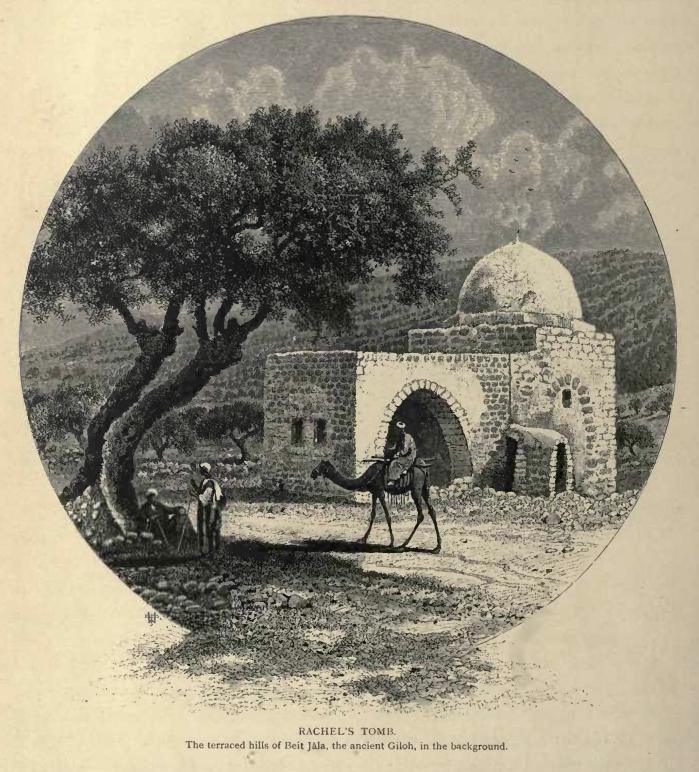 🇵🇸 Palestine and 1 moreRachel's TombQever Raḥel; Qabr Rāḥīl
A shared holy site near Bethlehem revered by Jews, Christians, and MuslimsTradition · Speaking with spirits and the dead · Protection Living
🇵🇸 Palestine and 1 moreRachel's TombQever Raḥel; Qabr Rāḥīl
A shared holy site near Bethlehem revered by Jews, Christians, and MuslimsTradition · Speaking with spirits and the dead · Protection Living