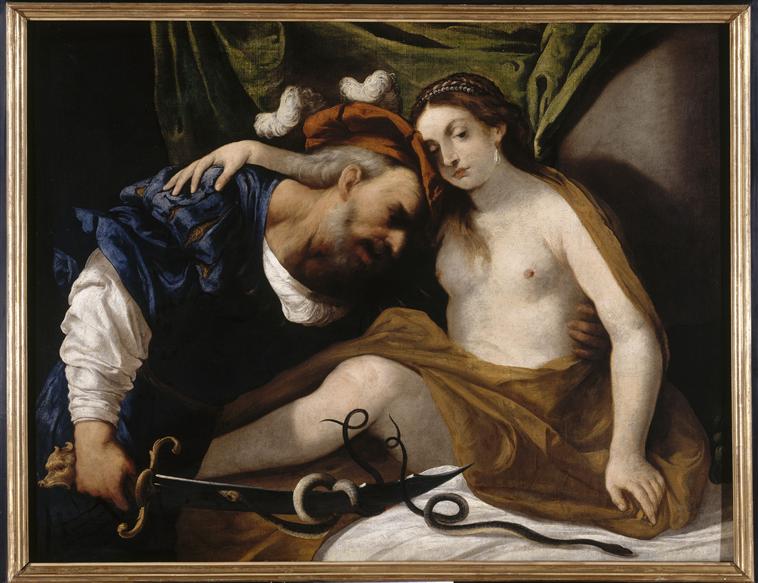
Tiresias
In its own language: Τειρεσίας
A blind Greek seer who lived as both man and woman and spoke to the dead.
In Greek myth, Tiresias was a prophet of Apollo from Thebes known for his foresight and a seven-year transformation into a woman. He mediated between gods and humans, offering cryptic truths that shaped legendary tragedies and epic journeys.
- Transformed into a woman for seven years after striking mating snakes.
- Blinded by Athena but granted the gift of prophecy and long life.
- Summoned by Odysseus in the underworld to guide his journey home.
- Key figure in Sophocles' Oedipus Rex and Antigone.
- Mediated between Zeus and Hera regarding the pleasures of love.
What it is
Tiresias stands as a central figure in Greek legend, serving as a bridge between the mortal world and the divine. He is defined by his role as a seer who possessed absolute truth in his predictions, yet often withheld details out of reluctance. His existence defied normal human boundaries, as he experienced life as both male and female. This dual nature allowed him to offer unique insights into the experiences of women, which became a key part of his authority. He is remembered not just for seeing the future, but for navigating the complex rules of gods and humans alike.
Where it comes from
He was born to Everes, a shepherd, and Chariclo, a nymph. His early life began in Thebes, where he served as an advisor to Cadmus, the city's founder. Over seven generations, he remained a constant presence in the city's history. His origins are tied to specific myths about how he gained his powers. One story involves striking mating snakes on Mount Cyllene, which caused him to change sex. Another account describes a conflict with Athena that resulted in his blindness but granted him prophetic gifts. These stories explain his transition from a mortal youth to an immortal-seeming oracle.
How it is done
Prophecies were delivered through various means depending on the context. He could interpret bird songs, a practice called augury. He also examined smoke patterns from burnt offerings or read signs in entrails. In some accounts, he received direct visions. His most famous method involved communicating with spirits in the underworld. By performing sacrifices, he could summon the dead to answer questions. He did not always volunteer information; often, he had to be prompted or forced to reveal what he saw, preferring to speak in short, cryptic statements.
Tools and materials
His primary tool was a staff made from cornel wood, which helped him navigate after losing his sight. He relied on observing natural signs, particularly birds and their songs, to understand divine will. Snakes played a crucial role in his transformation, acting as catalysts for his change in gender. In the underworld, black blood from sacrificed animals was necessary for spirits to regain consciousness, though Tiresias could see without it. His knowledge itself was his main instrument, derived from his unique perspective on life and death.
Tiresias, drawn and placed
- Living
- Revived
- Fading
- Historical
- Legendary
- Performed
- Lineage
- Greek mythology
What it is for
People sought him out to understand impending disasters, such as plagues or wars. Kings like Oedipus and Creon consulted him to resolve political and religious crises in Thebes. Odysseus needed his guidance to survive his journey home. He was asked to predict the fate of individuals, like the boy Narcissus. His purpose was to provide clarity in chaotic times, offering warnings that could save cities or doom them. He served as a moral compass, pointing out crimes and violations of divine law that others ignored.
Who does it
As a legendary figure, he was not trained in a formal school but was chosen by fate and divine intervention. His status as a seer made him highly respected, even when his messages were unwelcome. He held a unique position because he had lived as both genders, giving him authority over matters of love and gender roles. His age and longevity, granted by Zeus, added to his credibility. He was seen as a mediator who understood the inner workings of both men and gods, making him indispensable to leaders and heroes.
Peoples and places
He is deeply rooted in Greek culture, specifically associated with Thebes. His stories appear in major tragedies by Sophocles and Euripides, showing his importance in Athenian theater. Roman writers like Ovid and Hyginus adapted his myths, spreading his fame throughout the classical world. Different versions of his origin exist across various texts, reflecting how different regions interpreted his character. Despite these variations, his core identity as a blind prophet remains consistent across Greek literature and later Western arts.
At a glance: who, where and when
Peoples
Belief worlds


What people believe
His worldview centers on the idea that truth is often painful and hidden. The gods demanded respect for their secrets, and revealing them could lead to punishment, as seen in his blinding. He believed in a structured cosmos where actions had inevitable consequences, whether for kings or commoners. His ability to see the future was linked to his connection with the underworld, suggesting that wisdom comes from understanding death. He represented the liminal space between opposites: sight and blindness, life and death, male and female.
When it is done
He participated in the Dionysian rites in Thebes, linking him to seasonal festivals of wine and ecstasy. His consultations often occurred during times of crisis, such as plagues or sieges. His death is associated with a tainted spring, marking a specific moment in his lifecycle. His influence persists in literary works rather than a fixed calendar of rituals.
How scholars and sceptics see it
Scholars view Tiresias as a symbol of complexity and mediation. He is analyzed as a figure who bridges gaps between human and divine realms. His gender transformation is studied as a metaphor for flexibility and understanding of opposing viewpoints. Historians note his role in reinforcing social norms through his prophecies, while also challenging them through his unique experience. His cryptic speech patterns are examined as a literary device to convey divine mystery. Modern interpretations often focus on his psychological depth and his representation of marginalized perspectives.
Cautions and what is closed
His prophecies often carried heavy burdens, warning of doom if laws were broken. Ignoring his advice led to tragedy, as seen with Creon and Oedipus. His blinding serves as a caution against violating divine privacy. The story of Narcissus warns against self-absorption. His interactions with gods highlight the dangers of angering deities, whether through accidental sight or argumentative hubris. His legacy reminds listeners that truth can be destructive if not handled with care.
Compare and confuse
He is sometimes compared to other seers in mythology who possess foresight. Some theories link him to Baba Yaga, a Slavic figure, due to shared themes of transformation and wisdom. Unlike many oracles who speak for a specific god, Tiresias often speaks from his own accumulated experience. He differs from typical prophets by his physical condition and gender fluidity, which set him apart as a unique mediator. His role in the underworld distinguishes him from living seers who rely on omens rather than direct contact with spirits.
Questions people ask about Tiresias
Who was Tiresias?
Tiresias was a blind prophet in Greek mythology from Thebes, known for his accurate predictions and unique life experiences.
Why was Tiresias blind?
Myths vary, but he was blinded either by Athena for seeing her naked or by the gods for revealing their secrets to humans.
How did Tiresias become a woman?
He struck two mating snakes with his stick on Mount Cyllene, which transformed him into a woman for seven years.
What was Tiresias's role in the underworld?
He retained his prophetic powers after death, allowing him to communicate with the living and guide figures like Odysseus.
Why was Tiresias respected by kings?
He provided crucial advice during crises, such as plagues and wars, and his predictions were never wrong, only cryptic.
Good reading and sources
- Tiresias on WikipediaEncyclopedia
- More photos on Wikimedia CommonsPhotos and video
- Wikidata recordOpen data
The facts on this page come from the Wikipedia article "Tiresias", written by its contributors and used under the CC BY-SA 4.0 licence, and from its Wikidata record (CC0). EveryJaadu rewrote the text in its own words, with AI assistance, and compares every page with the article to make sure no passage is copied. It may be reused under the same CC BY-SA 4.0 licence with a link back.
It may contain mistakes. Names and customs differ from one community to the next, and some knowledge is closed to outsiders and left out here. This page describes belief and practice. It does not say that any of it works, it is not a how-to, and it is not medical advice. If something is wrong, tell us. Last refreshed 2026-10-05.
More from Greece
All the entries from Greece 🇷🇸 Serbia and 5 moreVampire
An undead creature from folklore that feeds on the blood or life force of the livingBeing · Cursing and harm · Luck and prosperity Legendary
🇷🇸 Serbia and 5 moreVampire
An undead creature from folklore that feeds on the blood or life force of the livingBeing · Cursing and harm · Luck and prosperity Legendary
 🇮🇹 Italy and 1 morePietro d'Abano
A medieval physician and astrologer accused of heresy and magic.Text · Healing · Wonder and entertainment Historical
🇮🇹 Italy and 1 morePietro d'Abano
A medieval physician and astrologer accused of heresy and magic.Text · Healing · Wonder and entertainment Historical
 🇬🇷 GreeceCassandraΚασσάνδρα
A Trojan priestess cursed to speak truth that no one acceptsFigure · Seeing and foretelling Legendary
🇬🇷 GreeceCassandraΚασσάνδρα
A Trojan priestess cursed to speak truth that no one acceptsFigure · Seeing and foretelling Legendary
 🇬🇷 GreeceOrpheusὈρφεύς
A Thracian bard whose music charms nature and who journeys to the underworldFigure · Wonder and entertainment Legendary
🇬🇷 GreeceOrpheusὈρφεύς
A Thracian bard whose music charms nature and who journeys to the underworldFigure · Wonder and entertainment Legendary
Related elsewhere
All figure 🇨🇺 Cuba and 2 moreSanteríaRegla de Ocha
An Afro-Cuban religion blending Yoruba beliefs with Catholicism and SpiritismTradition · Protection · Healing Living
🇨🇺 Cuba and 2 moreSanteríaRegla de Ocha
An Afro-Cuban religion blending Yoruba beliefs with Catholicism and SpiritismTradition · Protection · Healing Living
 🇳🇬 Nigeria and 5 moreIfá
A Yoruba divination system using palm nuts to access spiritual guidanceTradition · Seeing and foretelling · Speaking with spirits and the dead Living
🇳🇬 Nigeria and 5 moreIfá
A Yoruba divination system using palm nuts to access spiritual guidanceTradition · Seeing and foretelling · Speaking with spirits and the dead Living
 🇳🇬 NigeriaOrunmilaỌ̀rúnmìlà
Yoruba deity of wisdom and the creator of the Ifá divination systemBeing · Seeing and foretelling · Speaking with spirits and the dead Living
🇳🇬 NigeriaOrunmilaỌ̀rúnmìlà
Yoruba deity of wisdom and the creator of the Ifá divination systemBeing · Seeing and foretelling · Speaking with spirits and the dead Living
 🇺🇸 United StatesKahuna
A Hawaiian expert or priest, keeper of hidden knowledge in craft and spiritTradition · Healing · Seeing and foretelling Living
🇺🇸 United StatesKahuna
A Hawaiian expert or priest, keeper of hidden knowledge in craft and spiritTradition · Healing · Seeing and foretelling Living