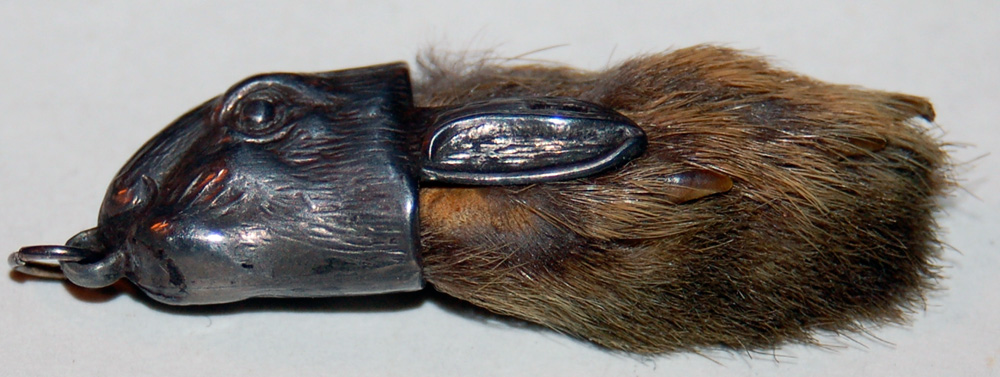
A rabbit's foot is an amulet believed to bring good fortune. The belief spans Europe, Africa, Australia, and the Americas. Strict folk rules dictate how the foot must be taken, often involving cemeteries or specific lunar phases.
- Often requires the left hind foot taken in a cemetery
- May need capture during a full or new moon
- Linked to the Hand of Glory by some scholars
- Used by US presidents like Theodore Roosevelt
- Associated with warding off hoodoo in folk songs
What it is
A rabbit's foot serves as a talisman for fortune in various global traditions. It functions as a portable charm intended to attract positive outcomes. The object is widely recognized across multiple continents. Its power is derived from specific conditions surrounding its removal. These conditions vary by region but generally involve ritualistic steps. The charm relies on the belief that the animal's essence carries luck.
Where it comes from
The practice likely connects to older European customs like the Hand of Glory. This historical parallel involves using body parts from executed criminals for magical purposes. Folklorist Newbell Niles Puckett noted a link between criminal remains and charm efficacy. He suggested that wickedness increased the object's power. This theory explains the association with graveyards and outlaws.
How it is done
Traditional rules require precise methods for obtaining the foot. The left hind foot is often specified. The rabbit may need to be captured in a cemetery. Some accounts demand capture during a full or new moon. Others require a Friday, particularly Friday the thirteenth. A silver bullet is sometimes cited as the killing tool. In some versions, the foot is removed while the animal lives.
Tools and materials
Graveyard dust is frequently used alongside the foot. This material symbolizes the appropriation of corpse parts. It acts as a relic within sympathetic magic frameworks. The combination of the foot and dust reinforces the connection to death and rebirth. Silver bullets serve as specialized tools in certain narratives.
Rabbit's foot, drawn and placed
- Living
- Revived
- Fading
- Historical
- Legendary
- Performed
What it is for
Carriers use the foot to secure good luck. It is believed to ward off negative forces like hoodoo. The charm offers protection and prosperity. People seek it for general fortune rather than specific outcomes. Its presence is meant to influence daily events positively.
Who does it
Ordinary households carry the charm in pockets or bags. No formal training is required for possession. The user simply needs to acquire the item according to folk rules. Status does not restrict ownership, though historical figures were documented users.
Peoples and places
The custom appears in North America, Europe, Africa, and Australia. In the United States, it became deeply embedded in folklore. Historical anecdotes link it to American presidents and politicians. Austrian diplomats were also recorded carrying such items. The tradition transcends specific ethnic groups in its modern form.
At a glance: who, where and when
Who does it
Belief worlds
What people believe
The underlying worldview links luck to death and transgression. Sympathetic magic suggests that proximity to the dead transfers power. Wickedness is viewed as a source of strength for the charm. The ritualistic nature of the capture validates the object's potency. Believers hold that breaking the rules renders the foot useless.
When it is done
Specific times govern the collection process. Full moons and new moons are preferred windows. Fridays, especially the thirteenth, are considered potent days. Rainy Fridays add another layer of requirement. These temporal markers ensure the charm meets traditional standards.
How scholars and sceptics see it
Folklorists analyze the charm through historical and psychological lenses. Benjamin Radford compares it to the Hand of Glory. Scholars note the shift from strict ritual to casual superstition. Modern observers recognize the symbolic value over literal efficacy. The practice reflects broader cultural attitudes toward luck and death.
Cautions and what is closed
Some traditional methods involve harming animals alive. This aspect raises ethical concerns for contemporary practitioners. Many modern versions avoid these practices entirely. The charm is largely symbolic today. Legal issues rarely arise, but animal welfare standards have changed.
Compare and confuse
It shares traits with other lucky symbols like horseshoes and four-leaf clovers. Unlike plants or metal objects, it involves biological material. The British ritual of saying 'rabbit rabbit' differs from carrying the physical foot. Both aim to secure monthly luck but use different mechanisms.
Questions people ask about Rabbit's foot
What makes a rabbit's foot lucky?
Believers hold that specific conditions grant the foot power. It must often be the left hind foot. Capture in a cemetery or during a specific moon phase is required. These strict rules validate the charm's effectiveness.
Where did this superstition come from?
The practice likely stems from European traditions involving body parts. Scholars link it to the Hand of Glory. Folklorists note connections to criminal remains and graveyards. It spread globally through cultural exchange.
Do I need to follow strict rules to use it?
Historically, yes. Rules dictated the foot's origin and removal method. Today, most users ignore these details. The charm works through belief rather than rigid procedure in modern contexts.
Good reading and sources
- Rabbit's foot on WikipediaEncyclopedia
- More photos on Wikimedia CommonsPhotos and video
- Wikidata recordOpen data
The facts on this page come from the Wikipedia article "Rabbit's foot", written by its contributors and used under the CC BY-SA 4.0 licence, and from its Wikidata record (CC0). EveryJaadu rewrote the text in its own words, with AI assistance, and compares every page with the article to make sure no passage is copied. It may be reused under the same CC BY-SA 4.0 licence with a link back.
It may contain mistakes. Names and customs differ from one community to the next, and some knowledge is closed to outsiders and left out here. This page describes belief and practice. It does not say that any of it works, it is not a how-to, and it is not medical advice. If something is wrong, tell us. Last refreshed 2026-10-05.
More from the United States
All the entries from the United States 🇮🇪 Ireland and 2 moreJack-o'-lantern
A hollowed vegetable carved with a face and lit from within, worn as a Halloween symbolCharm · Protection · Wonder and entertainment Living
🇮🇪 Ireland and 2 moreJack-o'-lantern
A hollowed vegetable carved with a face and lit from within, worn as a Halloween symbolCharm · Protection · Wonder and entertainment Living
 🇺🇸 United States and 5 moreMojo bag
A cloth pouch holding charms for protection, luck, or love in the Hoodoo tradition.Charm · Protection · Healing Living
🇺🇸 United States and 5 moreMojo bag
A cloth pouch holding charms for protection, luck, or love in the Hoodoo tradition.Charm · Protection · Healing Living
 🇺🇸 United StatesFolk healer
An unlicensed community member who provides healing care using local plants and traditional knowledge.Tradition · Healing · Protection Historical
🇺🇸 United StatesFolk healer
An unlicensed community member who provides healing care using local plants and traditional knowledge.Tradition · Healing · Protection Historical
 🇺🇸 United States and 4 moreRainmaking
Efforts to induce rain through technology, ritual, or prayer.Tradition · Protection · Healing Living
🇺🇸 United States and 4 moreRainmaking
Efforts to induce rain through technology, ritual, or prayer.Tradition · Protection · Healing Living
Related elsewhere
All charm 🇮🇳 India and 5 moreAstrology
A divinatory practice that reads human fate through the positions of celestial bodies.Belief · Seeing and foretelling · Luck and prosperity Living
🇮🇳 India and 5 moreAstrology
A divinatory practice that reads human fate through the positions of celestial bodies.Belief · Seeing and foretelling · Luck and prosperity Living
 🇷🇸 Serbia and 5 moreVampire
An undead creature from folklore that feeds on the blood or life force of the livingBeing · Cursing and harm · Luck and prosperity Legendary
🇷🇸 Serbia and 5 moreVampire
An undead creature from folklore that feeds on the blood or life force of the livingBeing · Cursing and harm · Luck and prosperity Legendary
 🇪🇬 EgyptCurse
A spoken wish for misfortune to befall a person or placeBelief · Cursing and harm · Luck and prosperity Historical
🇪🇬 EgyptCurse
A spoken wish for misfortune to befall a person or placeBelief · Cursing and harm · Luck and prosperity Historical
 🇧🇪 Belgium and 2 moreHorseshoe
A metal shoe for a horse's hoof and a talisman of good fortuneCharm · Protection · Luck and prosperity Living
🇧🇪 Belgium and 2 moreHorseshoe
A metal shoe for a horse's hoof and a talisman of good fortuneCharm · Protection · Luck and prosperity Living