
Kvinneby amulet
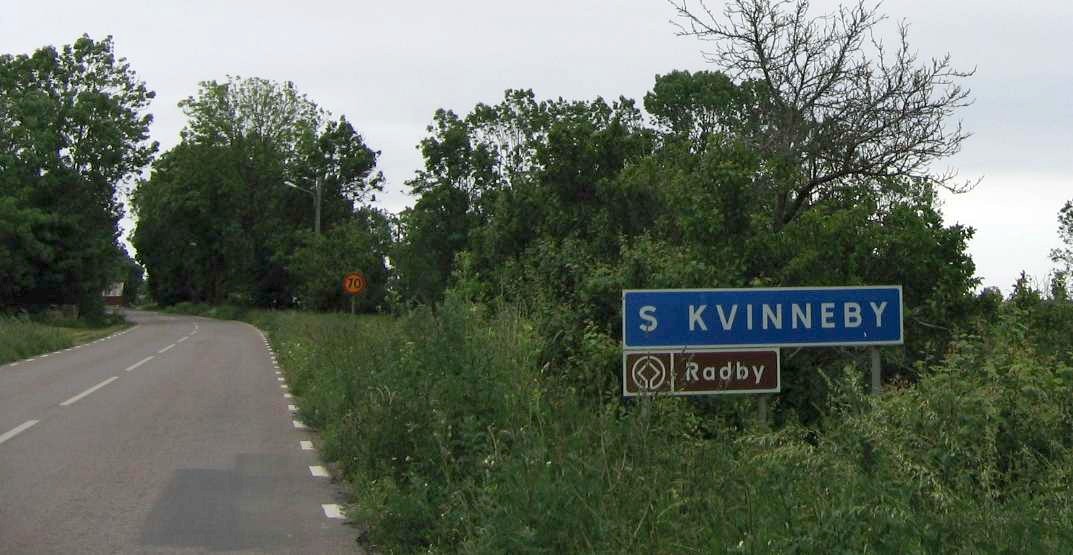
Named for the village of Södra Kvinneby on the island of Öland
An 11th-century Swedish copper plate with a long runic inscription seeking protection
The Kvinneby amulet is an 11th-century square copper plate found in Södra Kvinneby, Sweden. It bears one of the longest preserved Old Norse runic inscriptions, which invokes the god Thor to ward off evil and sickness from a person named Bófi.
- Found in Södra Kvinneby, Sweden, in the mid-1950s
- Square copper plate measuring 5 cm per side
- Contains 143 runes written in boustrophedon style
- Invokes Thor to protect a man named Bófi
- Dated to approximately 1050–1130 CE
What it is
The Kvinneby amulet is a small square copper plate measuring approximately five centimeters on each side. It was discovered buried in the mid-1950s in the village of Södra Kvinneby on the island of Öland in Sweden. The object features a small hole near one edge, suggesting it was worn around the neck as a protective charm. The plate is covered with about 143 runes written in boustrophedon style, meaning the text direction alternates line by line. An engraving of a fish accompanies the text, though its specific relevance remains unclear. Scholars date the artifact to roughly 1050–1130 CE. It stands out because it contains one of the longest and best-preserved runic inscriptions from its era, yet its complex language has made interpretation difficult for researchers.
Where it comes from
The amulet originates from medieval Sweden, specifically the island of Öland. Its creation is linked to Norse pagan traditions that persisted or evolved during the early Christianization period. The inscription mentions Thor, a major deity in the Norse pantheon, indicating a connection to heathen beliefs. Some scholars suggest the wearer may have been a baptized Christian who still relied on older magical practices. The text addresses a person named Bófi, seeking divine intervention against evil forces. The exact circumstances of its burial are unknown, but it was found intact in the ground, preserving the delicate copper surface and the carved runes for modern study.
How it is done
The amulet functions as a physical talisman intended to be worn close to the body. The inscription serves as a verbal spell or prayer carved into the metal. Texts like this were believed to hold power through the act of writing and the invocation of deities. The carver explicitly states they are creating protection for the recipient. The use of bind runes at the beginning of the text adds complexity, with some interpreters viewing them as encryption or decorative elements meant to obscure the meaning from unauthorized readers. The inclusion of a fish drawing might symbolize a journey or danger from the sea, aligning with interpretations that view the charm as protection for travelers.
Tools and materials
The primary tool is a square copper plate, chosen for its durability and ability to hold fine engravings. Copper was a common material for Viking-age artifacts. The runes themselves are the central component, carved deeply enough to remain legible over centuries. The fish engraving adds a visual element to the textual spell. Runologists analyze the shape and order of the characters to reconstruct the original Old Norse words. The alternating writing direction, known as boustrophedon, requires careful reading to follow the sequence correctly. These physical features combine to create a portable object designed for personal spiritual defense.
Kvinneby amulet, drawn and placed
- Living
- Revived
- Fading
- Historical
- Legendary
- Performed
- Lineage
- Norse paganism
What it is for
The amulet is designed to protect a specific individual named Bófi from harm. The text invokes Thor, the thunder god, to keep evil away using his hammer. It seeks to ward off sickness demons, identified by some scholars as Ámr, and general malevolent forces. The inscription commands evil to flee and declares that it cannot affect Bófi. It also asserts that gods are both under and over him, suggesting comprehensive divine coverage. This type of charm was likely used during times of crisis or vulnerability, such as travel or illness. The wearer would carry it as a constant reminder of divine protection and a conduit for magical aid.
Who does it
The amulet was created by a rune carver, whose identity is not recorded in the text. Modern interpretation relies heavily on runologists and historians who specialize in Old Norse epigraphy. Scholars like Bruce E. Nilsson, Ivar Lindquist, Börje Westlund, Ottar Grønvik, Jonna Louis-Jensen, and Sofia Pereswetoff-Morath have offered various decipherments over decades. Each researcher brings different linguistic expertise and theoretical frameworks to the task. The debate centers on how to read the ambiguous bind runes and interpret references to deities and demons. No living tradition claims direct knowledge of the amulet's original use, making academic analysis the primary method of understanding its function.
Peoples and places
The Kvinneby amulet is associated with the Swedish population of the Viking Age and early medieval period. It reflects the cultural and religious landscape of Scandinavia during a time of transition between paganism and Christianity. The use of Old Norse language and Norse mythology places it firmly within the Nordic world. Similar runic charms exist across Scandinavia, but this one is notable for its length and detailed invocation. The name Bófi appears in other contexts, linking it to broader Germanic naming conventions. The artifact provides insight into how ordinary people in Sweden sought spiritual protection during a turbulent historical era.
At a glance: who, where and when


What people believe
The amulet operates within a worldview where gods and demons actively influence human life. Thor is called upon as a protector who can defeat evil forces, including serpents and sickness demons. The text assumes that spoken or written words have inherent power to command these entities. Evil is portrayed as an active force that must be repelled rather than merely avoided. The belief system includes a hierarchy of divine beings, with gods positioned above and below the wearer for total coverage. Some interpretations suggest a syncretic blend of Christian and pagan beliefs, where old gods are respected even by those who have converted. The charm embodies the conviction that spiritual help is accessible through ritual objects.
When it is done
Its use appears tied to personal need rather than seasonal cycles. Protection charms were often employed during life events involving risk, such as journeys or health crises. The absence of fixed dates suggests it was a private devotion rather than a public ceremony. The timing of its creation likely coincided with a specific threat faced by Bófi or his family.
How scholars and sceptics see it
Runologists have debated the meaning of the Kvinneby inscription for nearly fifty years. Early attempts by Bruce E. Nilsson focused on invoking Thor and interpreting the fish as a code. Later scholars like Ivar Lindquist proposed prayers to Earth goddesses and sickness demons. Börje Westlund argued for a simpler reading, rejecting complex theological interpretations in favor of standard protective formulas. More recent work by Sofia Pereswetoff-Morath treats the bind runes as encryption. These differing views highlight the difficulty of translating ancient magical texts. Academic consensus remains elusive, with each new study offering fresh perspectives based on linguistic advances and comparative evidence from other runic finds.
Cautions and what is closed
The amulet is a historical artifact housed in a museum setting. There are no current risks associated with its display or study. In the past, similar objects might have been viewed with suspicion during periods of religious persecution. Today, scholars approach it with respect for its cultural significance. The text does not contain instructions for harmful rituals but rather defensive prayers. Researchers must handle the fragile copper plate with care to prevent damage. The ambiguity of the translation means that any interpretation should be presented as scholarly hypothesis rather than definitive fact. Misreading the runes could lead to incorrect conclusions about Norse religious practices.
Compare and confuse
The Kvinneby amulet is similar to other Viking-age runic plates like the Sigtuna amulet I and the Solberga plates. These objects share the purpose of providing protection through inscribed spells. Unlike many shorter charms, the Kvinneby plate offers a more extensive narrative. It differs from the Ribe skull fragment, which uses bone instead of metal. The invocation of Thor links it to broader Norse mythological themes found in literary sources like the Poetic Edda. However, unlike those texts, the amulet reflects personal devotion rather than epic storytelling. Its bilingual nature, combining text and image, distinguishes it from purely textual runic records.
Questions people ask about Kvinneby amulet
What is the Kvinneby amulet?
It is an 11th-century square copper plate found in Sweden. It bears a long runic inscription that invokes the god Thor to protect a person named Bófi from evil and sickness.
Where was the amulet discovered?
The amulet was buried in the village of Södra Kvinneby on the island of Öland in Sweden. It was unearthed during archaeological excavations in the mid-1950s.
What does the inscription say?
Scholars interpret the text as a plea for protection. It asks Thor to keep evil away using his hammer and commands malicious forces to flee. It asserts that gods surround the wearer for safety.
Why is the amulet significant?
It contains one of the longest preserved runic inscriptions from its time. The complex language and mix of pagan imagery make it a key object for understanding Norse magical practices and linguistic evolution.
Who is Bófi?
Bófi is the individual named in the inscription who is the intended recipient of the protection. His identity beyond the name is unknown, but he was likely a contemporary of the amulet's creator.
Good reading and sources
- Kvinneby amulet on WikipediaEncyclopedia
- More photos on Wikimedia CommonsPhotos and video
- Wikidata recordOpen data
The facts on this page come from the Wikipedia article "Kvinneby amulet", written by its contributors and used under the CC BY-SA 4.0 licence, and from its Wikidata record (CC0). EveryJaadu rewrote the text in its own words, with AI assistance, and compares every page with the article to make sure no passage is copied. It may be reused under the same CC BY-SA 4.0 licence with a link back.
It may contain mistakes. Names and customs differ from one community to the next, and some knowledge is closed to outsiders and left out here. This page describes belief and practice. It does not say that any of it works, it is not a how-to, and it is not medical advice. If something is wrong, tell us. Last refreshed 2026-10-06.
More from Sweden
All the entries from Sweden 🇸🇪 Sweden and 3 moreSilver bullet
A folk weapon for monsters and a metaphor for simple solutionsCharm · Cursing and harm Historical
🇸🇪 Sweden and 3 moreSilver bullet
A folk weapon for monsters and a metaphor for simple solutionsCharm · Cursing and harm Historical
 🇮🇸 Iceland and 2 moreBrísingamen
The enchanted necklace of the Norse goddess FreyjaCharm · Power and authority Legendary
🇮🇸 Iceland and 2 moreBrísingamen
The enchanted necklace of the Norse goddess FreyjaCharm · Power and authority Legendary
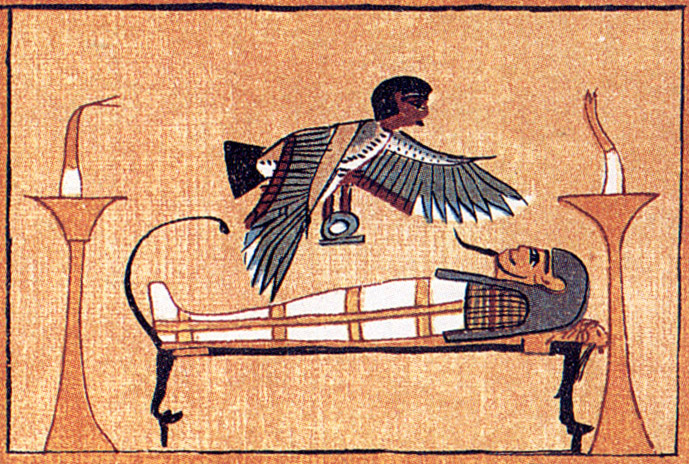 🇸🇪 Sweden and 1 moreSoul flight
A trance practice where the spirit leaves the body to visit other realmsRite · Healing · Seeing and foretelling Historical
🇸🇪 Sweden and 1 moreSoul flight
A trance practice where the spirit leaves the body to visit other realmsRite · Healing · Seeing and foretelling Historical
 🇳🇴 Norway and 1 moreHuldra
A seductive forest spirit of Scandinavian folklore with a hidden animal tail.Being · Protection Legendary
🇳🇴 Norway and 1 moreHuldra
A seductive forest spirit of Scandinavian folklore with a hidden animal tail.Being · Protection Legendary
Related elsewhere
All charm 🇪🇬 Egypt and 1 moreSphinx
A mythical hybrid with a human head and lion body, serving as guardian or riddler in Egyptian and Greek traditions.Being · Protection · Wonder and entertainment Legendary
🇪🇬 Egypt and 1 moreSphinx
A mythical hybrid with a human head and lion body, serving as guardian or riddler in Egyptian and Greek traditions.Being · Protection · Wonder and entertainment Legendary
 🇪🇬 Egypt and 3 moreAmulet
A portable object worn or carried to ward off harm and invite fortuneCharm · Protection · Luck and prosperity Living
🇪🇬 Egypt and 3 moreAmulet
A portable object worn or carried to ward off harm and invite fortuneCharm · Protection · Luck and prosperity Living
 🇨🇳 China and 3 moreChinese dragon龍
A legendary water deity and imperial symbol in East Asian cultureBeing · Protection · Luck and prosperity Historical
🇨🇳 China and 3 moreChinese dragon龍
A legendary water deity and imperial symbol in East Asian cultureBeing · Protection · Luck and prosperity Historical
 🇮🇳 India and 2 moreHomaहोम
A fire ritual found across Asian religions where offerings are burned as a votive exchange with the divine.Rite · Protection · Speaking with spirits and the dead Living
🇮🇳 India and 2 moreHomaहोम
A fire ritual found across Asian religions where offerings are burned as a votive exchange with the divine.Rite · Protection · Speaking with spirits and the dead Living