
Hybrid beasts in folklore
Creatures made of animal and human parts found in myths and ancient art
Hybrid beasts are legendary figures composed of body parts from different species. They appear in the folklore and religious art of many cultures around the world.
- Archaeologists found joined animal skeletons in burial sites as possible offerings.
- Upper Paleolithic cave paintings may depict shamans acquiring beast attributes.
- Egyptian gods like Anubis and Sekhmet had animal heads and human bodies.
- Hindu deity Ganesha is a prominent elephant-headed hybrid figure.
- Assyrian winged genies influenced the image of Christian angels.
What it is
Hybrid beasts are creatures formed by joining parts from different animals or humans. These beings appear across many mythologies as legendary figures. They often start as animal gods that later gain human features. Some combine two non-human species, like the griffin. Others mix human and animal traits, such as centaurs or mermaids. These forms represent a blend of physical and spiritual qualities. Scholars see them as symbols of power or divine nature. The images serve to capture aspects of both worlds at once.
Where it comes from
The practice of creating hybrid-like remains dates back to burial sites where archaeologists found joined animal skeletons. Ancient peoples may have made these offerings to their gods. In art, partly human hybrids appear in Upper Paleolithic cave paintings. Ethnologist Ivar Lissner suggested these depicted shamans acquiring beast attributes. Religious historian Mircea Eliade noted that beliefs about animal transformation are widespread. The motifs likely originated from zoomorphic deities evolving over time.
Tools and materials
Artists used visual motifs to create these figures. Egyptian iconography featured jackal-headed Anubis and lion-headed Sekhmet. These deities had purely animal and human aspects too. Non-human hybrids included Ammit, which combined a crocodile, lion, and hippopotamus. Assyrian art popularized winged genies and mermaids. Hindu art portrays Ganesha with an elephant head. Vishnu’s incarnations include Matsya with a fish body and Narasimha with a lion head. Kamadhenu is shown as a cow with a human head and bird wings.
Hybrid beasts in folklore, drawn and placed
- Living
- Revived
- Fading
- Historical
- Legendary
- Performed
What it is for
These beings served various roles in belief systems. Guardian spirits like the urmahlullu protected specific places. Harpies were used for torture in myths, punishing victims like Phineus. Deities with hybrid forms captured divine power. The Gundestrup cauldron and Pashupati figure feature stag antlers, linking to horned gods. Christian iconography adopted winged man motifs for angels. Horned figures in Christianity sometimes resulted from text mistranslations rather than original intent.
Who does it
Scholars study these figures through anthropology and history. Researchers analyze how people view human-animal imagery. Studies show that preschool children judge these hybrids based on body parts. Historians trace the evolution of motifs from Mesopotamia to Greece. Artists and priests created these images for religious contexts. The figures reflect cultural views on identity and transformation. No single group practices them today; they remain part of historical and mythological record.
Peoples and places
Egyptian, Greek, Luwian, Assyrian, and Hindu cultures all feature hybrid beasts. Egyptian pantheons included theriocephalic gods like Horus and Sekhmet. Greek mythology adopted motifs during the Orientalizing period, creating monsters like the chimera. Assyrian art influenced Biblical seraphim and Christian angels. Hinduism presents Ganesha and Vishnu’s avatars as prominent examples. Swiss finds like the Artio sculpture show bear-woman juxtapositions. These cultures used hybrids to express divine or spiritual concepts.
At a glance: who, where and when
Belief worlds


What people believe
Beliefs center on the connection between human and animal natures. Shamans were thought to acquire spiritual attributes of beasts. Deities often had both zoomorphic and anthropomorphic aspects. This duality allowed gods to embody multiple powers. Transformation into animals was a widespread belief. Horned figures linked to goat or bull hybrids. The concept of a horned god appears in various traditions. Hybrid forms symbolize the blending of worlds and identities.
How scholars and sceptics see it
Anthropologists and historians examine these figures as cultural artifacts. Ivar Lissner theorized cave paintings showed shamanic states. Mircea Eliade observed beliefs in animal identity. Psychologist H. Nash studied how people judge hybrid figures. Research indicates that perceptions vary by age and culture. Scholars note that some Christian images stem from translation errors. The multidimensional structure of these figures is analyzed in academic journals. Studies focus on the psychological impact of human-animal imagery.
Compare and confuse
Hybrid beasts are confused with simple monsters or demons. The harpy motif evolved from beautiful to hideous over time. Christian angels share origins with Assyrian winged genies. Moses’ horns resulted from Jerome’s mistranslation, not original myth. Pan and the Devil link to goat hybrids, while Minotaur links to bulls. These comparisons show how motifs travel and change across religions and regions.
Today
These figures live on in art, literature, and popular culture. Museums display artifacts like the Burney Relief and Gundestrup cauldron. Academic studies continue to explore their meanings. The motifs influence modern fantasy and mythology. People still find them in religious iconography and historical texts. They serve as reminders of ancient artistic and spiritual expressions.
Questions people ask about Hybrid beasts in folklore
What are hybrid beasts?
They are legendary creatures made of parts from different animals or humans. They appear in folklore and religious art worldwide as symbols of power or divine nature.
Where do they come from?
They originate from ancient myths, zoo-morphic deities, and shamanistic beliefs. Early cave paintings and burial offerings show their long history across cultures.
Why did people create them?
They were used to represent gods with multiple powers. They also symbolized the connection between human and animal spirits in religious and mythological contexts.
Are they real animals?
No, they are mythical figures. However, archaeologists have found joined animal skeletons, suggesting ritual practices inspired these legends.
Good reading and sources
- Hybrid beasts in folklore on WikipediaEncyclopedia
- More photos on Wikimedia CommonsPhotos and video
- Wikidata recordOpen data
The facts on this page come from the Wikipedia article "Hybrid beasts in folklore", written by its contributors and used under the CC BY-SA 4.0 licence, and from its Wikidata record (CC0). EveryJaadu rewrote the text in its own words, with AI assistance, and compares every page with the article to make sure no passage is copied. It may be reused under the same CC BY-SA 4.0 licence with a link back.
It may contain mistakes. Names and customs differ from one community to the next, and some knowledge is closed to outsiders and left out here. This page describes belief and practice. It does not say that any of it works, it is not a how-to, and it is not medical advice. If something is wrong, tell us. Last refreshed 2026-10-06.
More from Egypt
All the entries from Egypt 🇪🇬 Egypt and 1 moreSphinx
A mythical hybrid with a human head and lion body, serving as guardian or riddler in Egyptian and Greek traditions.Being · Protection · Wonder and entertainment Legendary
🇪🇬 Egypt and 1 moreSphinx
A mythical hybrid with a human head and lion body, serving as guardian or riddler in Egyptian and Greek traditions.Being · Protection · Wonder and entertainment Legendary
 🇮🇱 Israel and 2 moreLeviathanלִוְיָתָן (Livyaṯān)
A primordial sea monster from ancient Near Eastern myth and biblical textBeing · Cursing and harm · Power and authority Historical
🇮🇱 Israel and 2 moreBelialבְּלִיַּעַל
A Hebrew term for worthlessness that evolved into a demon of darkness in Jewish and Christian texts.Being · Cursing and harm Historical
🇮🇱 Israel and 2 moreLeviathanלִוְיָתָן (Livyaṯān)
A primordial sea monster from ancient Near Eastern myth and biblical textBeing · Cursing and harm · Power and authority Historical
🇮🇱 Israel and 2 moreBelialבְּלִיַּעַל
A Hebrew term for worthlessness that evolved into a demon of darkness in Jewish and Christian texts.Being · Cursing and harm Historical
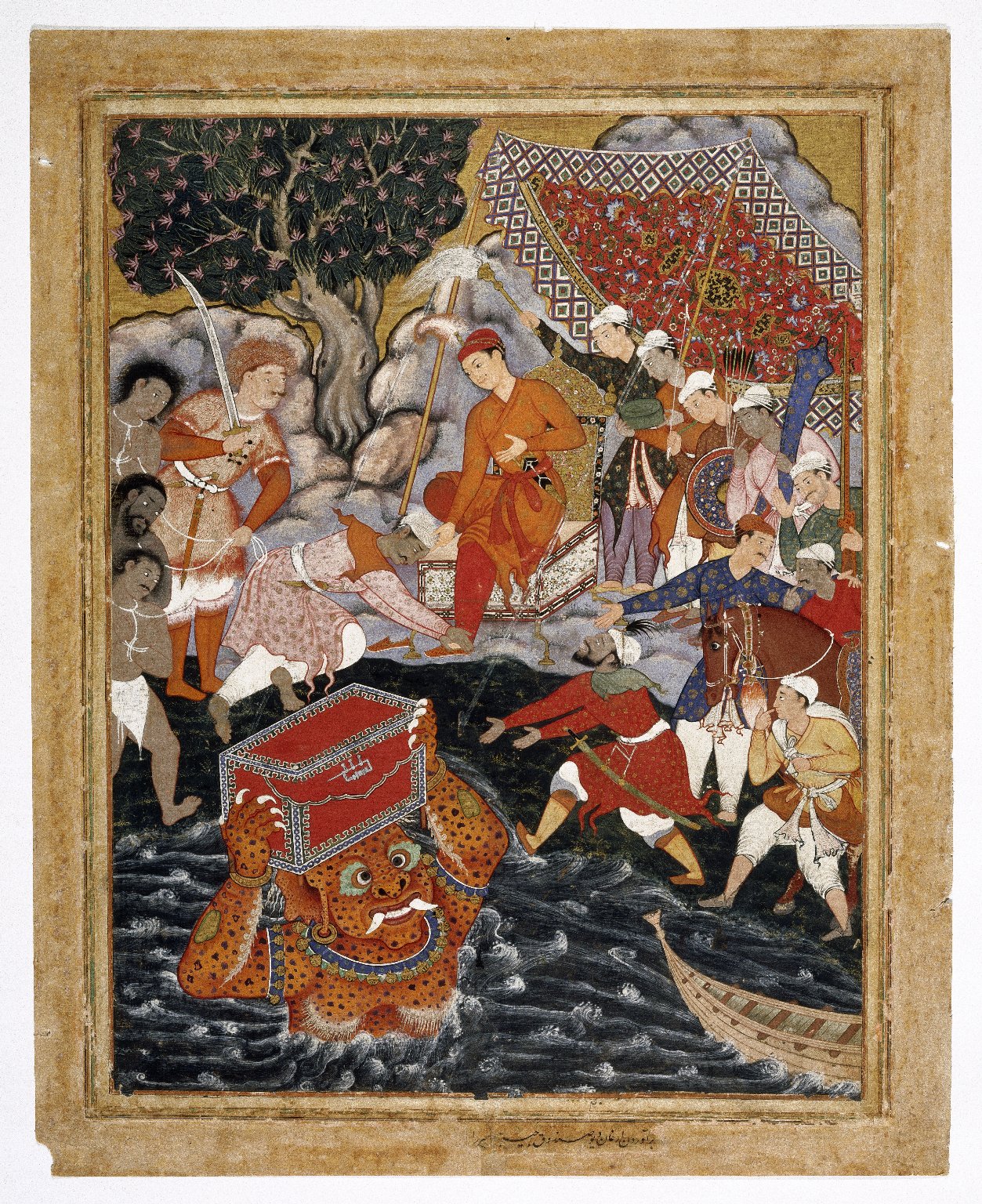 🇪🇬 Egypt and 3 moreIfritعفريت
A class of powerful chthonic spirits in Islamic tradition and folkloreBeing · Cursing and harm · Power and authority Historical
🇪🇬 Egypt and 3 moreIfritعفريت
A class of powerful chthonic spirits in Islamic tradition and folkloreBeing · Cursing and harm · Power and authority Historical
Related elsewhere
All being 🇬🇧 United Kingdom and 2 moreKing ArthurBrenin Arthur
A legendary British king and folk hero of medieval literature and Welsh mythologyFigure · Power and authority · Wonder and entertainment Legendary
🇬🇧 United Kingdom and 2 moreKing ArthurBrenin Arthur
A legendary British king and folk hero of medieval literature and Welsh mythologyFigure · Power and authority · Wonder and entertainment Legendary
 🇫🇷 FranceHoly GrailSaint Graal
A cup or stone from Arthurian tales that grants healing and eternal lifeFigure · Healing · Luck and prosperity Legendary
🇫🇷 FranceHoly GrailSaint Graal
A cup or stone from Arthurian tales that grants healing and eternal lifeFigure · Healing · Luck and prosperity Legendary
 🇮🇳 India and 2 morePalmistry
A divination method that interprets the lines and shapes of the hand to predict fate or reveal character.Oracle · Seeing and foretelling · Power and authority Living
🇮🇳 India and 2 morePalmistry
A divination method that interprets the lines and shapes of the hand to predict fate or reveal character.Oracle · Seeing and foretelling · Power and authority Living
 🇨🇳 China and 3 moreChinese dragon龍
A legendary water deity and imperial symbol in East Asian cultureBeing · Protection · Luck and prosperity Historical
🇨🇳 China and 3 moreChinese dragon龍
A legendary water deity and imperial symbol in East Asian cultureBeing · Protection · Luck and prosperity Historical