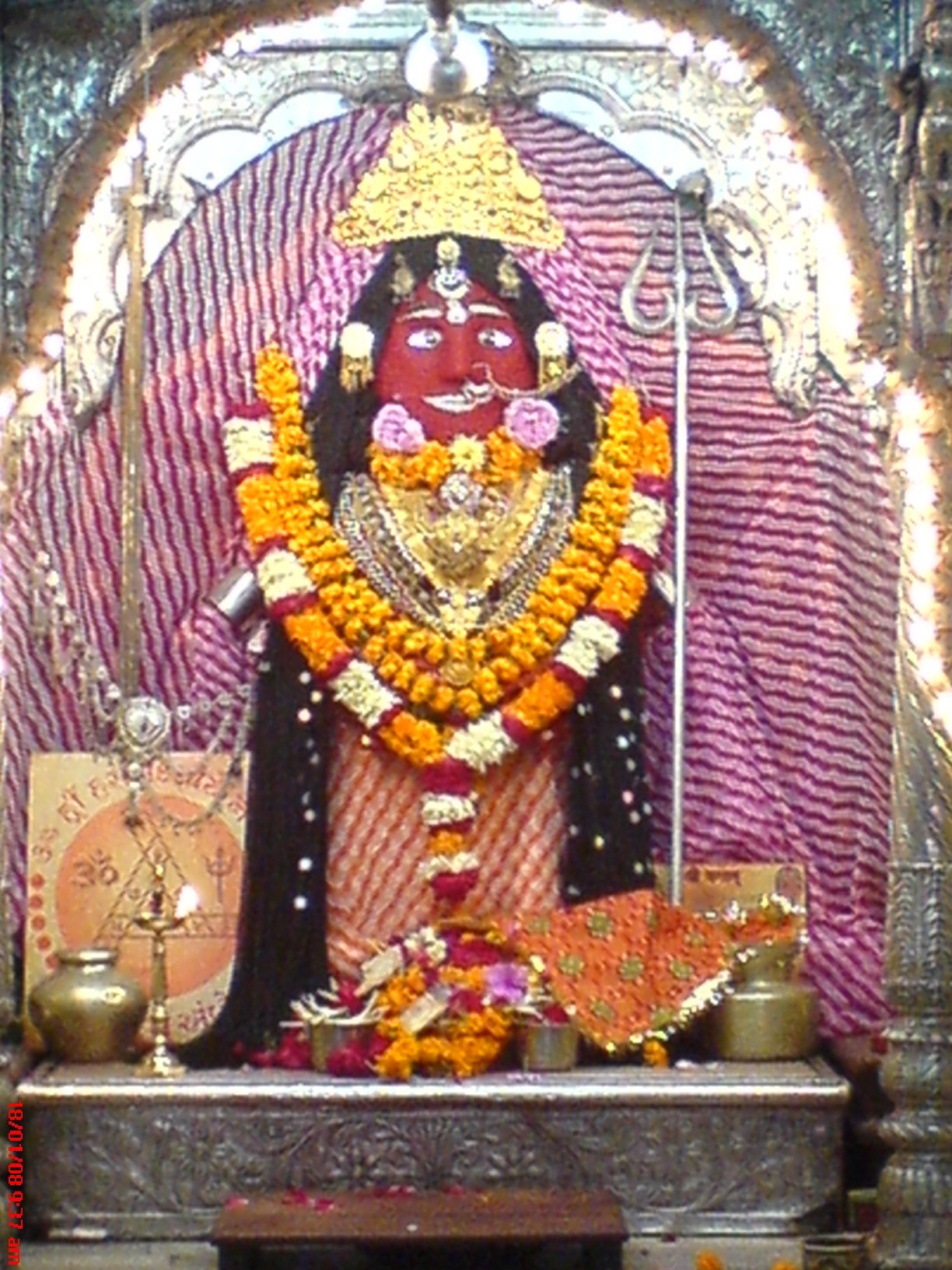
Harsidhhi is a regional Hindu goddess, counted as one of the aspects of Durga and honoured chiefly in Gujarat, Madhya Pradesh and the adjoining parts of Maharashtra. Many Kshatriya, Brahmin and Vaishya families keep her as their kuldevi, or clan goddess, and coastal communities of Gujarat hold her to guard their ships.
- A regional form of Durga honoured in Gujarat, Madhya Pradesh and Maharashtra
- Kept as kuldevi, or clan goddess, by Kshatriya, Brahmin and Vaishya families
- Coastal communities of Gujarat hold her to guard their vessels at sea
- Jagadu, a thirteenth-century merchant of Kutch, is credited with her temple
- Her Sagar temple in Bundelkhand was built by the Bundela rulers
What it is
Harsidhhi is a Hindu goddess whose following is concentrated in Gujarat, Madhya Pradesh and the districts of Maharashtra that border them, rather than spread across India as a whole. She is placed among the aspects of Durga. Many families in the Kshatriya, Brahmin and Vaishya varnas, the broad social classes of Hindu society, keep her as their kuldevi, the goddess who looks after a family or clan, and some Jains honour her too. In Kathiyawad, also called Saurashtra, she is the clan goddess of Kshatriya and Rajput houses. People who work the sea off that coast are said to regard her as the guardian of their vessels. Krishna and Chandragupta Vikramaditya are both named as her kuldevi's devotees.
Where it comes from
The temple story begins with Jagadu, a merchant of Kutch in the thirteenth century, who is credited with raising a shrine to the goddess. The present building stands at the foot of Koyal Dungar, near Miyani, an old port town close to Porbandar. A tale told about it holds that the first shrine stood on the hill above the creek and that the images were later carried down to the base. In Madhya Pradesh, Harsiddhi Devi Mandir at Sagar is known across Bundelkhand and was built by the Bundela rulers.
How it is done
Devotion is described only in outline. Families keep the goddess as their clan deity and honour her in that role, while people on the water turn to her for help. The tale of Jagadu Shah shows the expected shape of such an appeal: six of his seven ships are already gone when he prays to the Devi for a safe place to anchor, and the seventh comes in to shore. At Koyal Dungar the images are kept at the foot of the hill, not on the summit where the legend puts them first.
Tools and materials
Objects at the shrine are few. The temple at the base of Koyal Dungar holds images of the goddess, and the story of how they came down from the hilltop above the creek belongs to the character of the place. Beside her stands a statue of Jagadu Shah, the Kutch merchant credited with building the temple, placed on her right side.
Harsidhhi, drawn and placed
- Living
- Revived
- Fading
- Historical
- Legendary
- Performed
- Lineage
- an aspect of Durga in regional Hinduism
What it is for
Two kinds of need are attached to her. As a kuldevi she is asked to look after a household or a clan, and her worshippers are named by social group: Kshatriya, Brahmin and Vaishya families, Rajput houses of Saurashtra, and some Jains. As a goddess of the coast she is held to keep ships safe. The Miyani legend gives that belief its clearest shape, with Jagadu's fleet lost one vessel after another until he prays and the last ship is brought in to anchor.
Who does it
Worship is organised around family and clan rather than a single order of priests. The Kshatriya, Brahmin and Vaishya varnas, the Rajput houses of Kathiyawad or Saurashtra, Jain worshippers and communities of the Gujarat coast are the groups named as her devotees. Jagadu, a thirteenth-century merchant of Kutch, appears as a patron: tradition credits him with the temple at Koyal Dungar, where his statue is kept beside the goddess. The Bundela rulers hold a comparable place at Sagar in Madhya Pradesh, named as builders of her temple there.
Peoples and places
Her map is regional. Gujarat supplies most of the detail: the Saurashtra or Kathiyawad country, the port of Miyani near Porbandar, and the Kutch background of Jagadu. In Madhya Pradesh the Bundelkhand town of Sagar has her temple, and the neighbouring parts of Maharashtra are named alongside Gujarat and Madhya Pradesh as places where she is popular. The communities attached to her differ as well: landholding and mercantile varnas keep her as a clan goddess, Jains share in the worship, and coastal people who work the sea look to her for the safety of their boats.
At a glance: who, where and when
Who does it
Belief worlds


What people believe
Behind the worship lies the Hindu idea that a great goddess may be met in many particular forms, and Harsidhhi is placed among the aspects of Durga. The kuldevi idea gives a family or clan its own guardian goddess. Along the coast that same goddess is thought to hold power over water: the old shrine above the Miyani creek was said to be so potent that a vessel coming into its sight would go down, and Jagadu's prayer is answered only when he turns to her.
Compare and confuse
She belongs within the wide circle of Durga worship, and her name is written in more than one way: Harsidhhi in the heading used here, Harsiddhi in the name of the Sagar temple. The shrines named are Koyal Dungar near Porbandar and Harsiddhi Devi Mandir in Bundelkhand, each presented as a temple of the same goddess in a different part of India.
Questions people ask about Harsidhhi
Who is Harsidhhi?
A regional Hindu goddess seen as one of the aspects of Durga, worshipped mainly in Gujarat, Madhya Pradesh and neighbouring Maharashtra. Many families treat her as their kuldevi, or clan deity, and coastal people call on her for the safety of ships.
Where does she come from?
She is described as an aspect of Durga within Hindu goddess worship, with her following strongest in Gujarat, Madhya Pradesh and the adjoining parts of Maharashtra. Her named shrines include Koyal Dungar near Porbandar and Harsiddhi Devi Mandir at Sagar.
Why do people who work at sea worship her?
Communities along the Gujarat coast are said to hold her as a guardian of ships. A legend about the Miyani shrine tells that vessels coming within sight of the hilltop images sank, and that Jagadu Shah's prayer for safe anchoring brought his last ship to shore.
What is a kuldevi?
A kuldevi is the goddess a family or clan treats as its own guardian. Harsidhhi is named as kuldevi for many Kshatriya, Brahmin and Vaishya families, for Rajputs of Saurashtra, and for Krishna and Chandragupta Vikramaditya.
Which temples are linked to her?
The temple at the foot of Koyal Dungar, near the old port of Miyani by Porbandar, associated with the merchant Jagadu, and Harsiddhi Devi Mandir at Sagar in Madhya Pradesh, a Bundelkhand shrine built by Bundela rulers.
Good reading and sources
The facts on this page come from the Wikipedia article "Harsidhhi", written by its contributors and used under the CC BY-SA 4.0 licence, and from its Wikidata record (CC0). EveryJaadu rewrote the text in its own words, with AI assistance, and compares every page with the article to make sure no passage is copied. It may be reused under the same CC BY-SA 4.0 licence with a link back.
It may contain mistakes. Names and customs differ from one community to the next, and some knowledge is closed to outsiders and left out here. This page describes belief and practice. It does not say that any of it works, it is not a how-to, and it is not medical advice. If something is wrong, tell us. Last refreshed 2026-10-21.
More from India
All the entries from India 🇮🇳 India and 1 moreYoginiयोगिनी
A female master of yoga and tantra, or a fierce goddess aspect in Indian temples.Tradition · Power and authority · Protection Historical
 🇮🇳 IndiaParashuramaपरशुराम (Paraśurāma)
The warrior sage of Hinduism who wields a divine axe to restore cosmic balance.Being · Power and authority · Cursing and harm Legendary
 🇮🇳 India and 1 moreLakshmiलक्ष्मी
A Hindu goddess of wealth, prosperity, and beauty, worshipped as the consort of Vishnu.Being · Luck and prosperity · Power and authority Living
🇮🇳 India and 1 moreDaayanदायन
A vengeful female spirit from Indian folklore, often blamed for misfortune and witchcraft accusations.Being · Cursing and harm · Luck and prosperity Living
Related elsewhere
All being 🇪🇬 Egypt and 1 moreSphinx
A composite creature of human head and lion body found in Egyptian and Greek mythBeing · Protection Legendary
 🇪🇬 EgyptCurse
A spoken wish for harm, often backed by ritual or divine authorityBelief · Cursing and harm · Protection Historical
 🇨🇳 China and 5 moreHorseshoe
A curved plate fixed to a horse's hoof for protection, also kept as a charm for fortune.Charm · Protection · Luck and prosperity Living
 🇪🇬 Egypt and 5 moreAmulet
A portable object worn or carried to ward off harm and invite fortuneCharm · Protection · Luck and prosperity Living