
Guillotine (magic trick)
named after the historical execution device
A stage illusion where a blade passes through a neck or finger without harm
The Guillotine is a classic magic trick that creates the appearance of decapitation. It has been performed for centuries, evolving from large theatrical apparatuses to small portable versions. The act relies on misdirection and hidden mechanics to keep the performer safe while shocking the audience.
- First documented example dates to the reign of Khufu in ancient Egypt
- Reginald Scot described a method in his 1584 book The Discoverie of Witchcraft
- Lester Lake designed several modern variations including the Disecto
- Finger guillotines are sold as novelty items worldwide
- Murray Walters performed a famous version in 1927
What it is
The Guillotine is a well-known stage illusion that simulates the cutting off of a person's head. It belongs to a family of tricks focused on apparent decapitation. The most common modern version is the finger guillotine, a small prop that appears to chop off the magician's digit. These acts are designed to create shock and wonder by defying the audience's expectation of injury.
Where it comes from
Decapitation illusions have a long history, with early references dating back to ancient Egypt during the reign of Khufu. A story about a magician named Djedi decapitating birds is often cited, though it is likely fictional. Written records of the trick appear in Reginald Scot's 1584 book, The Discoverie of Witchcraft. Later performers like Jacob Philadelphia showcased similar feats in the eighteenth century.
Tools and materials
The main tool is a mechanical apparatus resembling an execution device. It typically includes two uprights, a stock to restrain the neck, and a blade that moves along tracks. Some designs feature a bench for the victim to lie on. Smaller versions, like the finger chopper, are handheld devices four to six inches tall. Clear plastic stocks are used in some recent models to enhance the visual effect.
Guillotine (magic trick), drawn and placed
- Living
- Revived
- Fading
- Historical
- Legendary
- Performed
- Lineage
- decapitation illusions
What it is for
Performers use this illusion to entertain audiences with a display of danger and survival. It is a form of stage magic intended to provoke awe and surprise. The act does not serve a spiritual or ritual purpose but exists purely as entertainment. Magicians may present it as an escape challenge, adding tension to the performance.
Who does it
Professional magicians and escape artists perform this trick. It requires training to master the mechanics and timing of the illusion. Performers must ensure their safety while maintaining the appearance of risk. Notable designers like Lester Lake created many modern variations sold to magic suppliers. The skill lies in presenting the impossible without revealing the method.
Peoples and places
The tradition spans various cultures and eras, with documented examples from Europe and North America. Early accounts link the theme to ancient Egyptian lore. In the twentieth century, American magicians developed portable versions for smaller venues. The finger guillotine became a popular novelty item sold globally. References to the trick also appear in international media, such as films set in Slovakia.
At a glance: who, where and when
Who does it
What people believe
The illusion relies on the audience's belief that the blade will cause harm. Magicians exploit cognitive biases and misdirection to hide the secret mechanism. There is no supernatural element involved; the effect is purely physical and mechanical. Spectators accept the premise of danger to enjoy the spectacle of the performer emerging unharmed.
When it is done
The trick is performed at various times depending on the venue. It was historically part of grand theater shows but is now common in club magic settings. No specific festivals or calendar days are tied to its performance. It is presented whenever a magician wishes to demonstrate a high-risk illusion.
How scholars and sceptics see it
Scholars of magic study the evolution of these illusions as part of performance history. They analyze how techniques changed from large theatrical props to portable novelties. Researchers examine the psychological impact of perceived danger on audiences. The transition from stage to club magic reflects broader changes in entertainment culture.
Cautions and what is closed
Performers face inherent risks if the mechanism fails or is set up incorrectly. Accidents can occur if the blade is not properly aligned or if the performer moves unexpectedly. Safety protocols are essential to prevent injury. The trick should never be attempted without proper training and equipment. Novelty finger guillotines are generally safe but can still cause minor harm if misused.
Compare and confuse
The Guillotine is related to other decapitation illusions that simulate cutting off heads. It differs from escape acts that focus on freeing oneself from restraints. Finger guillotines are distinct as they target a single digit rather than the whole body. The trick is often confused with actual execution methods due to its name and appearance.
Questions people ask about Guillotine (magic trick)
What is the Guillotine magic trick?
It is a stage illusion where a blade appears to cut through a person's neck or finger without causing harm. The performer uses hidden mechanics to survive the drop safely.
Where did the Guillotine illusion originate?
The theme of decapitation illusions dates back to ancient Egypt. Written descriptions appear in European texts from the sixteenth century, with later developments in America.
How does the finger guillotine work?
It is a small prop where a finger is inserted into a stock. A blade then activates, creating the appearance of chopping the digit. It is often sold as a novelty item.
Who designed modern versions of the trick?
Cincinnati magician Lester Lake, known as Marvelo, designed many modern variations. He sold these designs to magic companies like Abbott's Magic Co.
Good reading and sources
The facts on this page come from the Wikipedia article "Guillotine (magic trick)", written by its contributors and used under the CC BY-SA 4.0 licence, and from its Wikidata record (CC0). EveryJaadu rewrote the text in its own words, with AI assistance, and compares every page with the article to make sure no passage is copied. It may be reused under the same CC BY-SA 4.0 licence with a link back.
It may contain mistakes. Names and customs differ from one community to the next, and some knowledge is closed to outsiders and left out here. This page describes belief and practice. It does not say that any of it works, it is not a how-to, and it is not medical advice. If something is wrong, tell us. Last refreshed 2026-10-06.
More from Egypt
All the entries from Egypt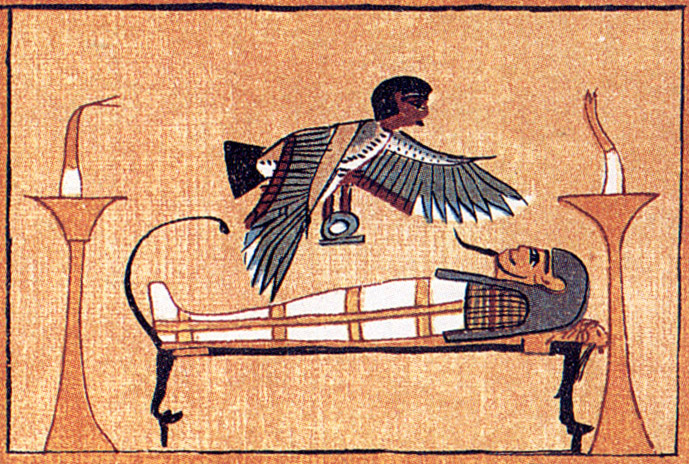 🇸🇪 Sweden and 1 moreSoul flight
A trance practice where the spirit leaves the body to visit other realmsRite · Healing · Seeing and foretelling Historical
🇸🇪 Sweden and 1 moreSoul flight
A trance practice where the spirit leaves the body to visit other realmsRite · Healing · Seeing and foretelling Historical
 🇪🇬 Egypt and 2 moreLibation
The ritual pouring of liquid as an offering to spirits or the deadRite · Speaking with spirits and the dead · Protection Living
🇪🇬 Egypt and 2 moreLibation
The ritual pouring of liquid as an offering to spirits or the deadRite · Speaking with spirits and the dead · Protection Living
 🇬🇧 United Kingdom and 5 moreAleister Crowley
English occultist and founder of the religion of ThelemaText · Power and authority · Change and initiation Living
🇬🇧 United Kingdom and 5 moreAleister Crowley
English occultist and founder of the religion of ThelemaText · Power and authority · Change and initiation Living
 🇪🇪 Estonia and 5 moreSoul dualism
A belief that a person contains two or more distinct kinds of soulsBelief · Healing · Speaking with spirits and the dead Historical
🇪🇪 Estonia and 5 moreSoul dualism
A belief that a person contains two or more distinct kinds of soulsBelief · Healing · Speaking with spirits and the dead Historical
Related elsewhere
All illusion 🇪🇬 Egypt and 1 moreSphinx
A mythical hybrid with a human head and lion body, serving as guardian or riddler in Egyptian and Greek traditions.Being · Protection · Wonder and entertainment Legendary
🇷🇺 Russia and 3 moreNart sagaНарты кадджытæ
A collection of epic tales from the North Caucasus about a legendary group of heroes.Text · Wonder and entertainment Historical
🇨🇱 ChileChilean mythology
The myths and legends of Chile, blending indigenous roots with colonial influences.Tradition · Wonder and entertainment Living
🇪🇬 EgyptDjedi
A fictional magician from the Westcar Papyrus who resurrects animals and foretells a king's lineage.Figure · Seeing and foretelling · Wonder and entertainment Legendary
🇪🇬 Egypt and 1 moreSphinx
A mythical hybrid with a human head and lion body, serving as guardian or riddler in Egyptian and Greek traditions.Being · Protection · Wonder and entertainment Legendary
🇷🇺 Russia and 3 moreNart sagaНарты кадджытæ
A collection of epic tales from the North Caucasus about a legendary group of heroes.Text · Wonder and entertainment Historical
🇨🇱 ChileChilean mythology
The myths and legends of Chile, blending indigenous roots with colonial influences.Tradition · Wonder and entertainment Living
🇪🇬 EgyptDjedi
A fictional magician from the Westcar Papyrus who resurrects animals and foretells a king's lineage.Figure · Seeing and foretelling · Wonder and entertainment Legendary