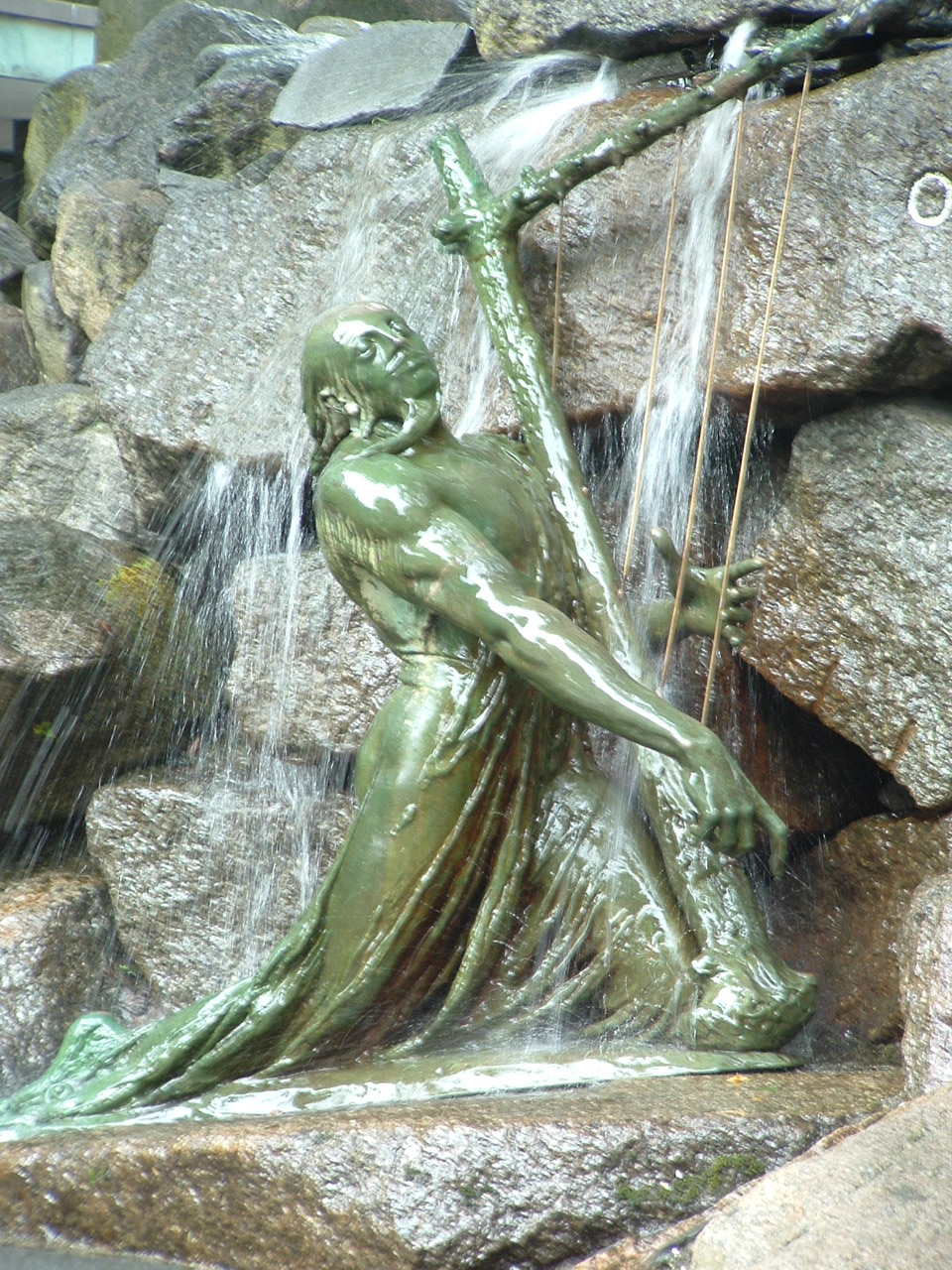
Fossegrim
from Old Norse fos, meaning waterfall, and grimr, meaning mask or secret
A Scandinavian water spirit known for teaching fiddle music in exchange for offerings
Fossegrim is a water spirit from Norwegian and Swedish folklore. He lives in streams and waterfalls and is said to teach people how to play the fiddle if they provide him with specific food offerings.
- Teaches fiddle music for food offerings
- Lives in Norwegian and Swedish waterfalls
- Requires Thursday night rituals
- Associated with famous fiddlers like Myllarguten
- Featured in modern video games and metal music
What it is
Fossegrim is a figure from Scandinavian folklore who dwells in rushing water. He appears as a man playing a fiddle near streams and waterfalls. The name comes from words meaning waterfall and mask. He is linked to other water spirits like Nokken. People believe he possesses great musical talent that can be shared with humans.
Where it comes from
The spirit belongs to Norwegian and Swedish traditions. In Sweden, he is called Strömkarlen. He is sometimes confused with Näcken. Some tales link him to mill spirits called kvernknurr. These stories show how people viewed the power of nature through supernatural beings.
How it is done
To learn music, one must make an offering on Thursday night. The gift is thrown into a north-flowing waterfall. It can be a white goat or smoked mutton. If the offering is good, the spirit teaches the tune by drawing fingers across strings until they bleed. Poor offerings result in only basic tuning lessons.
Tools and materials
The main tool is a fiddle. Offerings include a white he-goat or smoked mutton called fenalår. The goat must have its head turned away. The meat must be substantial enough to satisfy the spirit. These items are placed in flowing water at night.
Fossegrim, drawn and placed
- Living
- Revived
- Fading
- Historical
- Legendary
- Performed
- Lineage
- Scandinavian folklore
- Timing
- Thursday evening
What it is for
People seek Fossegrim to gain exceptional fiddle skills. Musicians believed famous players learned from him. The goal is to master music that moves nature itself. Trees are said to dance and torrents stand still when the best tunes are played. This skill brings status and wonder.
Who does it
Scholars study these tales as part of folklore. No living practitioners perform rituals today. The stories describe ordinary people seeking help from the spirit. Jacob Grimm recorded early versions of these myths. Modern fans enjoy the character in games and songs.
Peoples and places
Norwegians call him Fossegrim or simply Grim. Swedes know him as Strömkarlen. Both cultures share the core idea of a water musician. The Swedish version includes eleven musical variations. The final variation is reserved for night spirits and causes all living things to dance.
At a glance: who, where and when
Peoples
Belief worlds


What people believe
The spirit represents the wild power of water. He demands secrecy and specific timing for his gifts. He punishes stingy offerings by breaking instruments. His music connects the human world with natural forces. Believers saw him as a powerful teacher rather than a god.
When it is done
Offerings are made on Thursday evenings. The ritual requires a north-flowing stream. Nighttime is essential for the encounter. The final song is tied to night spirits. Seasonal changes do not affect the basic rules of engagement.
How scholars and sceptics see it
Jacob Grimm analyzed these tales in historical texts. Researchers view them as expressions of respect for nature. The stories explain sudden musical talent. Skeptics see them as cultural metaphors. Anthropologists note the link between water and creativity.
Cautions and what is closed
Stingy offerings lead to broken instruments. The spirit weeps bitterly if insulted. The ritual requires strict secrecy. Failure to follow rules results in no reward. The bleeding fingers symbolize the cost of mastery.
Compare and confuse
He is similar to the German Nix. Both are water spirits associated with music. The Swedish Näcken shares many traits. Mill spirits like kvernknurr are related figures. All represent the unpredictable nature of water.
Law and persecution
No laws govern this legendary figure. The tales are part of public domain folklore. Modern media uses the character freely. Video games and music bands adapt the story. There are no legal restrictions on telling these tales.
Questions people ask about Fossegrim
What is Fossegrim?
Fossegrim is a water spirit from Scandinavian folklore. He lives in streams and waterfalls. He is known for playing the fiddle beautifully. People believe he can teach humans this skill.
How does one learn from Fossegrim?
You must offer food on a Thursday night. Throw a white goat or smoked mutton into a north-flowing waterfall. The spirit teaches by moving your fingers on the strings until they bleed.
Where does this belief come from?
It comes from Norway and Sweden. Norwegians call him Fossegrim. Swedes call him Strömkarlen. The stories explain musical talent through supernatural means.
Is Fossegrim dangerous?
He can break your instrument if you are stingy. He demands proper offerings. The teaching process involves bleeding fingers. He is not evil but demands respect.
Good reading and sources
The facts on this page come from the Wikipedia article "Fossegrim", written by its contributors and used under the CC BY-SA 4.0 licence, and from its Wikidata record (CC0). EveryJaadu rewrote the text in its own words, with AI assistance, and compares every page with the article to make sure no passage is copied. It may be reused under the same CC BY-SA 4.0 licence with a link back.
It may contain mistakes. Names and customs differ from one community to the next, and some knowledge is closed to outsiders and left out here. This page describes belief and practice. It does not say that any of it works, it is not a how-to, and it is not medical advice. If something is wrong, tell us. Last refreshed 2026-10-05.
More from Norway
All the entries from Norway 🇸🇪 Sweden and 2 moreMjölnirMjǫllnir
The hammer of the Norse thunder god Thor, used as a weapon and for blessingsBeing · Cursing and harm · Protection Historical
🇸🇪 Sweden and 2 moreMjölnirMjǫllnir
The hammer of the Norse thunder god Thor, used as a weapon and for blessingsBeing · Cursing and harm · Protection Historical
 🇮🇸 Iceland and 3 moreDraugr
A malevolent undead revenant from Nordic folklore, often guarding buried treasure.Being · Cursing and harm · Luck and prosperity Legendary
🇮🇸 Iceland and 3 moreDraugr
A malevolent undead revenant from Nordic folklore, often guarding buried treasure.Being · Cursing and harm · Luck and prosperity Legendary
 🇳🇴 Norway and 1 moreHuldra
A seductive forest spirit of Scandinavian folklore with a hidden animal tail.Being · Protection Legendary
🇳🇴 Norway and 1 moreHuldra
A seductive forest spirit of Scandinavian folklore with a hidden animal tail.Being · Protection Legendary
 🇸🇪 Sweden and 2 moreDísdísir
Female spirits of fate and protection in Norse traditionBeing · Protection · Luck and prosperity Historical
🇸🇪 Sweden and 2 moreDísdísir
Female spirits of fate and protection in Norse traditionBeing · Protection · Luck and prosperity Historical
Related elsewhere
All being 🇮🇳 India and 5 moreAstrology
A divinatory practice that reads human fate through the positions of celestial bodies.Belief · Seeing and foretelling · Luck and prosperity Living
🇮🇳 India and 5 moreAstrology
A divinatory practice that reads human fate through the positions of celestial bodies.Belief · Seeing and foretelling · Luck and prosperity Living
 🇮🇳 India and 2 morePalmistry
A divination method that interprets the lines and shapes of the hand to predict fate or reveal character.Oracle · Seeing and foretelling · Power and authority Living
🇮🇳 India and 2 morePalmistry
A divination method that interprets the lines and shapes of the hand to predict fate or reveal character.Oracle · Seeing and foretelling · Power and authority Living
 🇨🇳 China and 3 moreChinese dragon龍
A legendary water deity and imperial symbol in East Asian cultureBeing · Protection · Luck and prosperity Historical
🇨🇳 China and 3 moreChinese dragon龍
A legendary water deity and imperial symbol in East Asian cultureBeing · Protection · Luck and prosperity Historical
 🇮🇳 India and 1 moreGarba
A Gujarati circle dance performed around a central symbol during NavaratriIllusion · Power and authority · Luck and prosperity Living
🇮🇳 India and 1 moreGarba
A Gujarati circle dance performed around a central symbol during NavaratriIllusion · Power and authority · Luck and prosperity Living