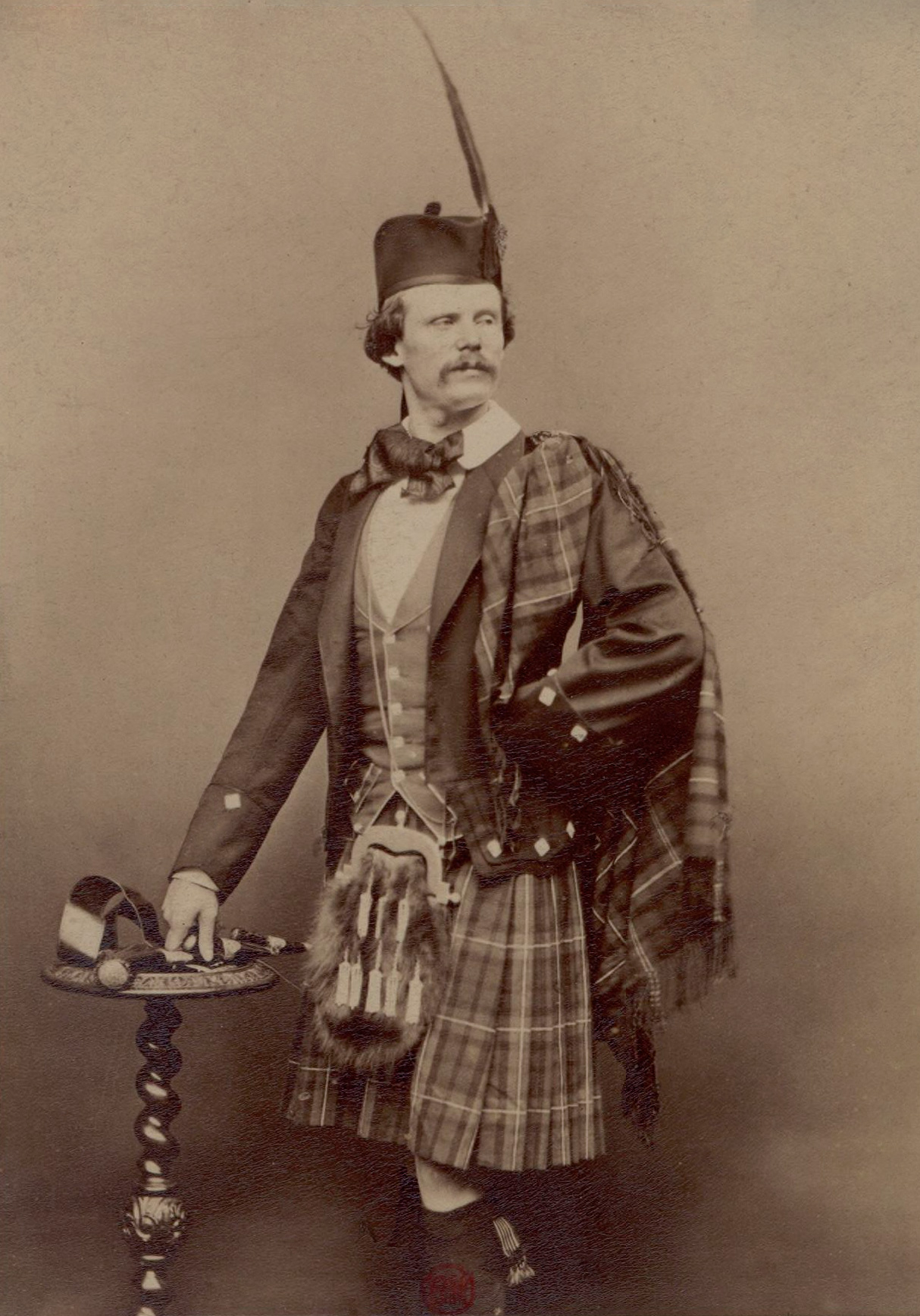
Daniel Dunglas Home
Home is a Scottish surname; he later added 'Dunglas' to reference a noble family.
A Scottish physical medium known for levitation and spirit communication during the Victorian era.
Daniel Dunglas Home was a Scottish medium active between 1851 and 1885. He gained attention for reports of levitating, moving objects without touch, and communicating with spirits. His demonstrations drew crowds of Victorians and faced both belief and sharp criticism.
- Born in Currie, Scotland, to a family with a history of second sight.
- Claimed ability to levitate several feet above the floor during séances.
- Attracted critics like Robert Browning and supporters like William Crookes.
- Performed for Napoleon III in Paris and Queen Sophia of the Netherlands.
- Died in 1886 after a career spanning over three decades.
What it is
Daniel Dunglas Home was a physical medium who worked during the Victorian era. He claimed to move objects without touching them, produce knocking sounds, and levitate. Many attendees reported seeing tables rise or heavy men sit on furniture that still moved. Others heard voices or saw lights. Home presented these events as proof that spirits could interact with the living. His reputation grew through newspapers and word of mouth, drawing both admirers and skeptics.
Where it comes from
Home was born in Currie, Scotland, in 1833. His mother, Elizabeth, was known as a seer, and her family had a history of second sight. As a child, he showed signs of unusual sensitivity, including visions and a rocking cradle. The family moved to the United States, where Home spent his youth in Connecticut and New York. Early experiences there included witnessing deaths through dreams and reacting to strange noises in his aunt's home. These events shaped his path toward spiritualism.
How it is done
Home held séances in private homes, hotels, and public rooms. He often performed in full daylight to show transparency, though some sessions occurred in dim light. Attendees would place hands on tables or sit on them while Home remained nearby. Reports describe objects lifting, bells ringing, and hands being touched. In some cases, witnesses claimed to see him rise off the ground. He never asked for payment, relying instead on donations and hospitality from wealthy patrons.
Tools and materials
The demonstrations relied on ordinary household items. Tables served as platforms for movement and levitation. Bells rang without visible strings or hands. Handkerchiefs floated or returned with knots tied. Lights appeared on walls or near participants. These simple objects allowed observers to verify that no hidden mechanisms were used, according to supporters. Critics argued that sleight of hand could explain the results.
Daniel Dunglas Home, drawn and placed
- Living
- Revived
- Fading
- Historical
- Legendary
- Performed
- Lineage
- Spiritualism
- Timing
- during séances in homes and hotels
What it is for
Participants sought proof of life after death. Many wanted to speak with deceased relatives or receive messages from beyond. Some attended hoping for healing or comfort during illness. Home viewed his work as a mission to demonstrate immortality. He treated guests as equals rather than customers, aiming to build trust through personal interaction and consistent attendance.
Who does it
Home acted as the central figure in every session. He came from a lineage of seers and developed his skills through early visions and family traditions. He dressed carefully and maintained a polite demeanor. Medical studies interrupted his career when tuberculosis forced him to travel to Europe. He refused fixed salaries, preferring gifts and lodging. His health declined over time, ending his active years.
Peoples and places
Home traveled widely across Europe and North America. He performed in Scotland, the United States, England, France, and the Netherlands. Audiences ranged from working-class neighbors to aristocrats and scientists. Each region offered different hosts and settings. Wealthy patrons hosted him in grand houses, while local communities gathered in modest rooms. His presence sparked debates in newspapers and salons wherever he stayed.
At a glance: who, where and when
Peoples
Belief worlds


What people believe
Spiritualism formed the foundation of his work. Followers believed spirits could bridge the gap between worlds using a living channel. Some viewed Home's abilities as a divine gift, while others feared demonic influence. Ministers once called him possessed, but he insisted on a holy purpose. Skeptics rejected the idea entirely, attributing phenomena to psychology or deception. The debate reflected broader cultural questions about death and evidence.
When it is done
Sessions occurred whenever patrons requested them. Home toured continuously, moving between cities and countries. There were no fixed religious dates or seasonal festivals attached to his work. Instead, gatherings aligned with social invitations and personal crises. Families invited him during mourning periods, while curious elites scheduled visits during their leisure seasons.
How scholars and sceptics see it
Critics like Robert Browning and William Makepeace Thackeray dismissed his claims as fraud. They published letters and poems mocking his abilities. Supporters such as William Crookes and Judge John Edmonds investigated closely and later endorsed his sincerity. Harry Houdini later labeled him a pioneer of deceptive mediums. Historians note the divide between scientific inquiry and spiritual conviction during this period.
Cautions and what is closed
Accusations of conjuring methods surfaced repeatedly. Witnesses described tricks that suggested hidden props or misdirection. Frank Podmore recorded accounts of fraud experienced by attendees. Home also faced health risks, suffering from tuberculosis that limited his stamina. Financial dependence on patrons created vulnerability. Social backlash threatened his reputation when critics gained influence.
Compare and confuse
Home shares traits with other physical mediums of the 19th century. Like the Fox sisters, he produced knocking sounds that drew public attention. Unlike mental mediums, he focused on tangible effects rather than trance states. His emphasis on daylight testing distinguished him from later stage magicians. Modern illusions borrow similar themes but prioritize entertainment over spiritual proof.
Law and persecution
No laws targeted Home directly, but public scrutiny functioned as informal regulation. Newspapers printed reviews that could make or break his career. Authorities did not intervene unless disturbances occurred in private homes. Social norms dictated acceptable behavior, and violations risked exile from elite circles. His status as a guest protected him from formal charges, though accusations persisted.
Questions people ask about Daniel Dunglas Home
Who was Daniel Dunglas Home?
He was a Scottish physical medium active in the mid-to-late 19th century. He became well-known for reports of levitation, moving objects, and communicating with spirits during séances.
Where did he perform his demonstrations?
Home conducted séances across Scotland, the United States, England, France, and the Netherlands. He often performed in private homes, hotels, and public rooms.
Did people believe his abilities were real?
Opinions were divided. Some prominent figures believed he was genuine, while others accused him of using conjuring tricks. Critics called his work a cheat, while supporters saw it as proof of life after death.
Good reading and sources
- Daniel Dunglas Home on WikipediaEncyclopedia
- More photos on Wikimedia CommonsPhotos and video
- Wikidata recordOpen data
The facts on this page come from the Wikipedia article "Daniel Dunglas Home", written by its contributors and used under the CC BY-SA 4.0 licence, and from its Wikidata record (CC0). EveryJaadu rewrote the text in its own words, with AI assistance, and compares every page with the article to make sure no passage is copied. It may be reused under the same CC BY-SA 4.0 licence with a link back.
It may contain mistakes. Names and customs differ from one community to the next, and some knowledge is closed to outsiders and left out here. This page describes belief and practice. It does not say that any of it works, it is not a how-to, and it is not medical advice. If something is wrong, tell us. Last refreshed 2026-10-05.
More from the United Kingdom
All the entries from the United Kingdom 🇬🇧 United Kingdom and 2 moreKing ArthurBrenin Arthur
A legendary British king and folk hero of medieval literature and Welsh mythologyFigure · Power and authority · Wonder and entertainment Legendary
🇬🇧 United Kingdom and 2 moreKing ArthurBrenin Arthur
A legendary British king and folk hero of medieval literature and Welsh mythologyFigure · Power and authority · Wonder and entertainment Legendary
 🇬🇧 United KingdomWitch trials in early modern Scotland
A period of judicial persecution where thousands were executed for alleged sorcery and diabolic pactsBelief · Cursing and harm Historical
🇬🇧 United KingdomWitch trials in early modern Scotland
A period of judicial persecution where thousands were executed for alleged sorcery and diabolic pactsBelief · Cursing and harm Historical
 🇬🇧 United KingdomSamlesbury witches
Three Lancashire women acquitted in a 1612 trial linked to anti-Catholic propagandaBelief · Cursing and harm Historical
🇬🇧 United KingdomPaisley witches
A 1697 Scottish witch trial ending in mass execution after a child's illness sparked local panic.Belief · Cursing and harm Historical
🇬🇧 United KingdomSamlesbury witches
Three Lancashire women acquitted in a 1612 trial linked to anti-Catholic propagandaBelief · Cursing and harm Historical
🇬🇧 United KingdomPaisley witches
A 1697 Scottish witch trial ending in mass execution after a child's illness sparked local panic.Belief · Cursing and harm Historical
Related elsewhere
All belief 🇮🇳 India and 2 moreYantraयन्त्र
A geometric diagram from Indian traditions used for worship and meditationTradition · Protection · Speaking with spirits and the dead Living
🇮🇳 India and 2 moreYantraयन्त्र
A geometric diagram from Indian traditions used for worship and meditationTradition · Protection · Speaking with spirits and the dead Living
 🇸🇩 Sudan and 5 moreIncense
Aromatic plant materials burned to release fragrant smoke for ritual, scent, or timekeeping.Substance · Protection · Speaking with spirits and the dead Living
🇸🇩 Sudan and 5 moreIncense
Aromatic plant materials burned to release fragrant smoke for ritual, scent, or timekeeping.Substance · Protection · Speaking with spirits and the dead Living
 🇮🇳 India and 1 moreMantraमन्त्रम्
A sacred sound or phrase repeated to focus the mind and invoke spiritual powerText · Speaking with spirits and the dead · Power and authority Living
🇮🇳 India and 1 moreMantraमन्त्रम्
A sacred sound or phrase repeated to focus the mind and invoke spiritual powerText · Speaking with spirits and the dead · Power and authority Living
 🇲🇦 Morocco and 1 moreGnawa musicڭْناوة or كْناوة
Moroccan ritual music blending West African heritage with Islamic practice for healing and tranceTradition · Healing · Speaking with spirits and the dead Living
🇲🇦 Morocco and 1 moreGnawa musicڭْناوة or كْناوة
Moroccan ritual music blending West African heritage with Islamic practice for healing and tranceTradition · Healing · Speaking with spirits and the dead Living