
Children of Lir
In its own language: Oidheadh chloinne Lir
from Irish Oidheadh chloinne Lir, meaning 'the fate or death of the children of Lir'
An Irish myth about four siblings transformed into swans by a jealous stepmother
The Children of Lir is a legend from Irish mythology that tells of four siblings cursed to live as swans for nine hundred years. The tale mixes magical metamorphosis with Christian themes of faith and redemption. It is traditionally grouped with two other sorrowful Irish tales.
- Four siblings turned into swans by jealous stepmother Aoife
- Cursed to wander Irish waters for nine hundred years
- Redeemed by Saint Patrick's follower Mochaomhóg
- Grouped as one of the Three Sorrowful Tales of Erin
- Statue in Dublin's Garden of Remembrance symbolizes national rebirth
What it is
The Children of Lir are legendary figures in Irish mythology. They are four siblings: Fionnghuala and her three brothers Aodh, Fiacra, and Conn. Their father was Lir, a figure from the Tuatha Dé Danann era. The story describes their transformation into white swans after their father remarries. Their stepmother Aoife casts a spell on them out of jealousy. They remain swans for nine hundred years across various Irish waters. The tale blends ancient pagan elements with later Christian messages. It is considered one of the most famous legends in Irish folklore.
Where it comes from
The legend originates in Ireland during the post-Christianisation period. Manuscripts containing early versions exist in libraries in Scotland, England, and Ireland. Scholars group it with two other tales as the 'Three Sorrowful Tales of Erin'. Some folklorists suggest a common author in the 14th century. Others propose it may have spread from Continental Europe. The setting marks the end of the Tuatha Dé Danann and the rise of the Milesians.
How it is done
The narrative follows a sequence of events rather than a ritual practice. Aoife transforms the children using magic in a lake. They endure centuries of wandering across different bodies of water. They face extreme cold and storms. Eventually, a holy man named Mochaomhóg finds them. He binds them with silver chains. He baptises them before they die. The story concludes with their burial.
Tools and materials
The legend features a druid's wand used by Bodb to curse Aoife. Silver chains are used by the monk Mochaomhóg to bind the swans. The swans themselves are described as white. The setting involves specific lakes and rivers in Ireland. These locations serve as stages for their long captivity.
Children of Lir, drawn and placed
- Living
- Revived
- Fading
- Historical
- Legendary
- Performed
- Lineage
- Tuatha Dé Danann cycle
What it is for
The tale serves as a foundational myth in Irish culture. It explains the origin of certain natural features and historical transitions. It conveys moral lessons about jealousy and family strife. Later versions emphasize Christian faith as a source of salvation. The story has been adapted into music, sculpture, and literature. It symbolizes endurance and rebirth for the Irish nation.
Who does it
The subject is a legendary figure, not a living practice. Scholars and folklorists study the manuscripts and variations. Writers and composers adapt the story for modern audiences. No specific practitioners perform rituals related to the children today. The tale is preserved through cultural heritage and artistic expression.
Peoples and places
The legend is central to Irish mythology. It is known throughout Ireland and among the diaspora. Variations exist in other European cultures involving swan children. The tale reflects the transition from pagan to Christian beliefs in Ireland. It remains a significant part of Irish literary and artistic identity.
At a glance: who, where and when
Peoples
Belief worlds
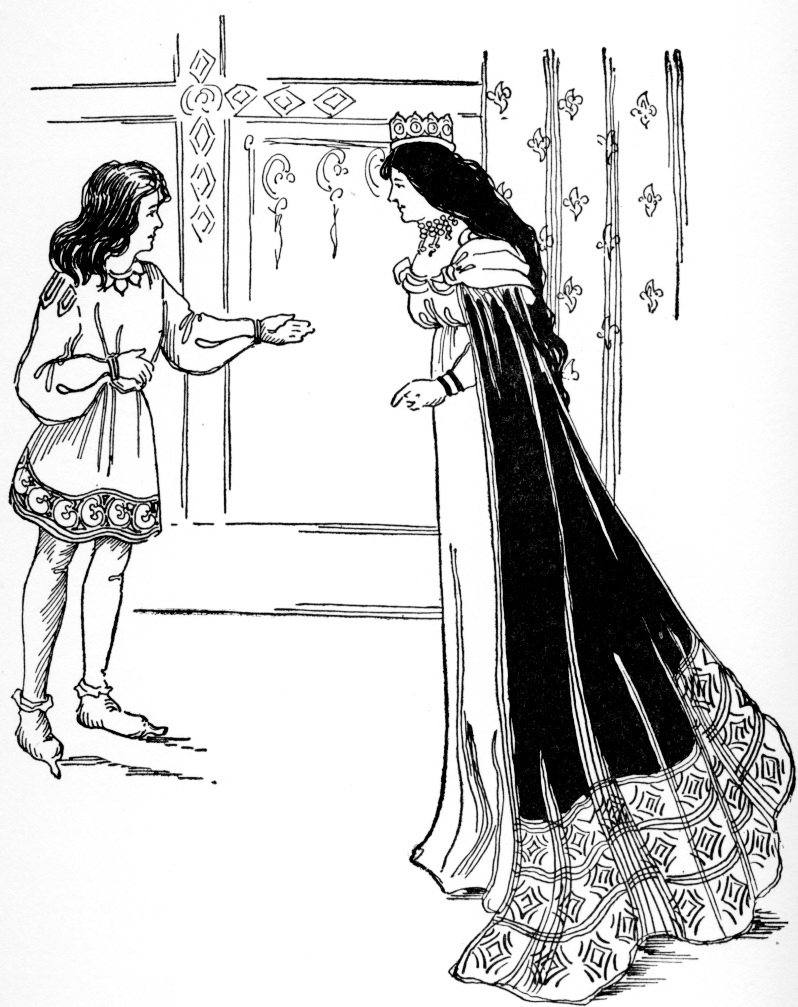
![Illustration from a collection of myths, The children of Lir [Lîr]](https://thumb.wikimedia.org/wikipedia/commons/thumb/b/b7/The_Children_of_L%C3%AEr%2C_A_Book_of_Myths.jpg/960px-The_Children_of_L%C3%AEr%2C_A_Book_of_Myths.jpg)


What people believe
The story operates within a worldview where magic and divine intervention coexist. Druids wield power over nature and human forms. Christian saints hold authority over supernatural beings. Faith is portrayed as a protective force against suffering. The swans' ability to speak and retain their humanity suggests a spiritual continuity beyond physical transformation.
When it is done
The tale does not specify a calendar date for its telling. It spans a period of nine hundred years. Key moments include the initial transformation and the final baptism. The story is often performed or referenced during cultural festivals. It is associated with the broader cycle of Irish mythological tales.
How scholars and sceptics see it
Folklorists analyze the tale using the Aarne-Thompson-Uther Index. Joseph Jacobs suggested it was an independent folktale inserted into the larger cycle. Dáithí Ó hÓgáin proposed a continental European origin. Robin Flower linked the text to 14th-century authors. Scholars examine the manuscript traditions to trace the story's evolution.
Cautions and what is closed
The legend contains no warnings for practitioners. It is a fictional narrative rather than a guide for action. The characters suffer due to magical cruelty. There are no risks associated with telling or studying the story. It is treated as a work of art and cultural heritage.
Compare and confuse
The tale is similar to other European stories about cursed siblings. It shares motifs with the Grimm Brothers' 'The Six Swans'. The international index classifies it under type ATU 451. Different cultures have their own versions of swan-children myths. The Irish version is distinct in its integration with local history.
Law and persecution
There are no legal restrictions on the legend. It is part of the public domain. Statues and artworks depicting the children are protected cultural assets. The story is freely adapted in media and education. No laws govern its performance or distribution.
Today
The Children of Lir remain popular in Irish culture. Statues stand in Dublin, Westmeath, and Antrim. Composers have written operas and songs based on the tale. Modern musicians continue to reference the legend. It serves as a symbol of Irish resilience and artistic tradition.
Questions people ask about Children of Lir
Who are the Children of Lir?
They are four siblings from Irish mythology: Fionnghuala, Aodh, Fiacra, and Conn. Their father was Lir, a Tuatha Dé Danann figure. Their stepmother Aoife cursed them to become swans.
Why were they turned into swans?
Aoife became jealous of the affection Lir showed his new wife's children. She cast a spell on them while they bathed in Loch Dairbhreach. The curse lasted for nine hundred years across different locations.
How did the curse end?
After nine hundred years, the monk Mochaomhóg found them. He bound them with silver chains and baptized them. They died shortly after, freed from their swan forms. Their souls were believed to be saved by their faith.
Where does the story take place?
The legend is set in Ireland. Key locations include Loch Dairbhreach, Sruth na Maoilé, and Inis Gluairé. The story reflects the landscape and history of ancient Ireland.
Is the Children of Lir a real event?
No, it is a legendary tale from Irish mythology. It belongs to the post-Christianisation period. Scholars view it as a work of folklore and literature, not historical fact.
Good reading and sources
- Children of Lir on WikipediaEncyclopedia
- More photos on Wikimedia CommonsPhotos and video
- Wikidata recordOpen data
The facts on this page come from the Wikipedia article "Children of Lir", written by its contributors and used under the CC BY-SA 4.0 licence, and from its Wikidata record (CC0). EveryJaadu rewrote the text in its own words, with AI assistance, and compares every page with the article to make sure no passage is copied. It may be reused under the same CC BY-SA 4.0 licence with a link back.
It may contain mistakes. Names and customs differ from one community to the next, and some knowledge is closed to outsiders and left out here. This page describes belief and practice. It does not say that any of it works, it is not a how-to, and it is not medical advice. If something is wrong, tell us. Last refreshed 2026-10-06.
More from Ireland
All the entries from Ireland 🇬🇧 United Kingdom and 2 moreKing ArthurBrenin Arthur
A legendary British king and folk hero of medieval literature and Welsh mythologyFigure · Power and authority · Wonder and entertainment Legendary
🇬🇧 United Kingdom and 2 moreKing ArthurBrenin Arthur
A legendary British king and folk hero of medieval literature and Welsh mythologyFigure · Power and authority · Wonder and entertainment Legendary
 🇬🇧 United Kingdom and 2 moreExcalibur
The mythical sword of King Arthur, symbolizing rightful sovereignty and magical power.Figure · Power and authority Legendary
🇬🇧 United Kingdom and 2 moreExcalibur
The mythical sword of King Arthur, symbolizing rightful sovereignty and magical power.Figure · Power and authority Legendary
 🇧🇷 Brazil and 5 moreWhite Lady
A female ghost in white clothing linked to tragedy and omens across many culturesFigure · Cursing and harm · Seeing and foretelling Legendary
🇧🇷 Brazil and 5 moreWhite Lady
A female ghost in white clothing linked to tragedy and omens across many culturesFigure · Cursing and harm · Seeing and foretelling Legendary
 🇬🇧 United Kingdom and 3 moreMorgause
A legendary queen of Orkney and sister to King Arthur in British mythFigure · Power and authority Legendary
🇬🇧 United Kingdom and 3 moreMorgause
A legendary queen of Orkney and sister to King Arthur in British mythFigure · Power and authority Legendary
Related elsewhere
All figure 🇪🇬 Egypt and 1 moreSphinx
A mythical hybrid with a human head and lion body, serving as guardian or riddler in Egyptian and Greek traditions.Being · Protection · Wonder and entertainment Legendary
🇪🇬 Egypt and 1 moreSphinx
A mythical hybrid with a human head and lion body, serving as guardian or riddler in Egyptian and Greek traditions.Being · Protection · Wonder and entertainment Legendary
 🇨🇳 ChinaLan Caihe藍采和
An ambiguous Taoist immortal known for a flower basket and wandering songsBeing · Wonder and entertainment Legendary
🇨🇱 ChileChilean mythology
The myths and legends of Chile, blending indigenous roots with colonial influences.Tradition · Wonder and entertainment Living
🇷🇺 Russia and 3 moreNart sagaНарты кадджытæ
A collection of epic tales from the North Caucasus about a legendary group of heroes.Text · Wonder and entertainment Historical
🇨🇳 ChinaLan Caihe藍采和
An ambiguous Taoist immortal known for a flower basket and wandering songsBeing · Wonder and entertainment Legendary
🇨🇱 ChileChilean mythology
The myths and legends of Chile, blending indigenous roots with colonial influences.Tradition · Wonder and entertainment Living
🇷🇺 Russia and 3 moreNart sagaНарты кадджытæ
A collection of epic tales from the North Caucasus about a legendary group of heroes.Text · Wonder and entertainment Historical