The Bizango are secret societies operating in Haiti. Their rituals connect closely to Haitian Vodou traditions. Members use these groups to manage community disputes and enforce local rules.
- Secret societies in Haiti linked to Vodou
- Act as arbiters in peasant social life
- Allegedly use poison to create zombis
- Believed to transform into animals at night
- Enforce social codes through fear
What it is
The Bizango function as hidden organizations within Haitian culture. They operate alongside the visible structures of Vodou. These groups hold significant power in rural areas. They act as judges for local conflicts. Their methods include severe penalties for rule-breakers.
Where it comes from
Specific founding dates are not recorded. The societies emerged from Haitian folk traditions. They developed to fill gaps in formal legal systems. Peasant communities relied on them for order. Their history is tied to resistance and self-governance.
How it is done
Members allegedly use poison to incapacitate offenders. An antidote restores the victim to a compliant state. This process creates a zombified condition. The group uses this threat to maintain authority. Nighttime activities involve shape-shifting into animals.
Tools and materials
Poisons serve as instruments of justice. Antidotes restore consciousness and obedience. Animal disguises allow secret movement. These tools enforce social codes through fear.
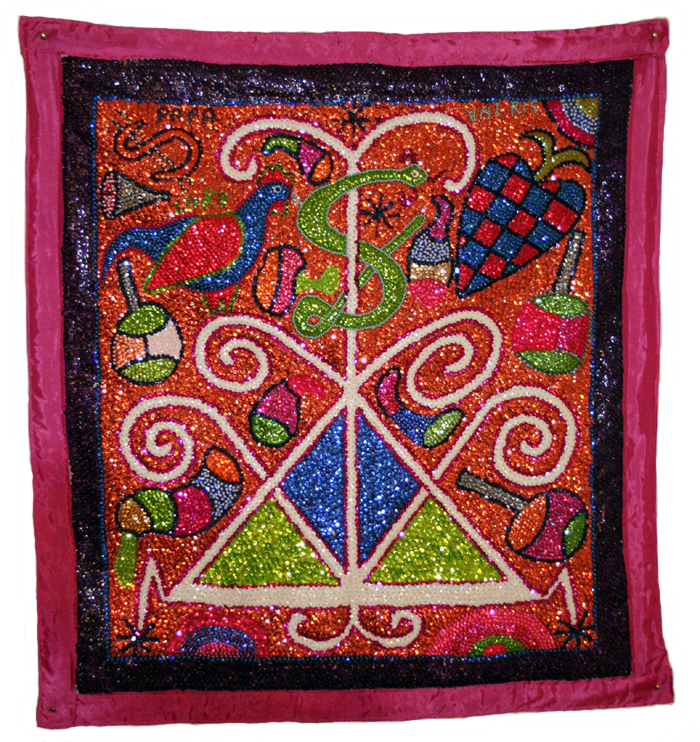
Bizango, drawn and placed
- Living
- Revived
- Fading
- Historical
- Legendary
- Performed
- Lineage
- Haitian Vodou
- Timing
- at night or during disputes
What it is for
The groups aim to settle disputes among villagers. They punish those who violate community norms. The threat of zombification deters bad behavior. Members seek to preserve local stability and hierarchy.
Who does it
Initiates undergo secret training. Leaders gain status through knowledge of poisons. Membership is restricted to trusted insiders. Roles involve both judgment and enforcement actions.
Peoples and places
The Bizango exist primarily in Haiti. They influence peasant social structures. Different regions may have distinct practices. The societies remain active in local folklore today.
At a glance: who, where and when
Who does it
Peoples
Belief worlds
Occasions
What people believe
Vodou spirits support the societies' goals. Transformation into dogs is a believed ability. This power allows members to patrol at night. The zombi state reflects total submission to the group.
When it is done
Activities occur during community crises. Disputes trigger interventions. Nighttime gatherings facilitate secret rituals. No fixed annual festivals are widely documented.
How scholars and sceptics see it
Anthropologist Wade Davis studied these groups. He linked poisoning to zombification theories. Critics view the societies as dangerous. Scholars debate the reality of shape-shifting claims.
Cautions and what is closed
Poisoning poses serious health risks. Accusations can lead to violence. Outsiders face exclusion and danger. The societies guard their secrets fiercely.
Compare and confuse
Similar groups exist in other Caribbean islands. They differ from mainstream Vodou temples. The term 'zombie' originates from these practices.
Law and persecution
Haitian law does not explicitly ban them. Authorities often ignore their activities. Social stigma affects members' public standing.
Today
The societies persist in rural Haiti. Folklore keeps their legends alive. Modern interest focuses on historical aspects.
Questions people ask about Bizango
What are the Bizango?
They are secret societies in Haiti connected to Vodou. They help resolve village disputes and enforce local rules through feared methods.
How do they enforce rules?
Practitioners believe they use poison to incapacitate offenders. An antidote then leaves the victim in a submissive, zombified state.
Can members change form?
Folklore says they turn into dogs or animals at night. This allows them to move secretly and patrol communities.
Are they part of Vodou?
Yes, their practices are deeply associated with Haitian Vodou. They represent a more secretive, authoritative strand of the tradition.
Good reading and sources
The facts on this page come from the Wikipedia article "Bizango", written by its contributors and used under the CC BY-SA 4.0 licence, and from its Wikidata record (CC0). EveryJaadu rewrote the text in its own words, with AI assistance, and compares every page with the article to make sure no passage is copied. It may be reused under the same CC BY-SA 4.0 licence with a link back.
It may contain mistakes. Names and customs differ from one community to the next, and some knowledge is closed to outsiders and left out here. This page describes belief and practice. It does not say that any of it works, it is not a how-to, and it is not medical advice. If something is wrong, tell us. Last refreshed 2026-10-06.
More from Haiti
All the entries from Haiti 🇹🇹 Trinidad and Tobago and 3 moreCaribbean folklore
The blended tales and spirits of the Caribbean islandsTradition · Wonder and entertainment Living
🇹🇹 Trinidad and Tobago and 3 moreCaribbean folklore
The blended tales and spirits of the Caribbean islandsTradition · Wonder and entertainment Living
 🇭🇹 Haiti and 2 moreManbo
A female priestess in Haitian Vodou who leads rituals and healing workTradition · Healing · Speaking with spirits and the dead Living
🇭🇹 Haiti and 2 moreManbo
A female priestess in Haitian Vodou who leads rituals and healing workTradition · Healing · Speaking with spirits and the dead Living
 🇭🇹 Haiti and 2 moreHaitian VodouVodou
An Afro-Haitian religion blending West African traditions with Catholicism and FreemasonryTradition · Protection · Healing Living
🇭🇹 Haiti and 2 moreHaitian VodouVodou
An Afro-Haitian religion blending West African traditions with Catholicism and FreemasonryTradition · Protection · Healing Living
 🇭🇹 Haiti and 2 moreBokorbòkò
A Haitian Vodou practitioner said to serve spirits for both protection and harmTradition · Protection · Cursing and harm Living
🇭🇹 Haiti and 2 moreBokorbòkò
A Haitian Vodou practitioner said to serve spirits for both protection and harmTradition · Protection · Cursing and harm Living
Related elsewhere
All tradition 🇵🇹 Portugal and 5 moreCocoCoca
A monster used to frighten children into obedience across the Iberian world and Latin America.Figure · Cursing and harm · Binding and oaths Living
🇵🇹 Portugal and 5 moreCocoCoca
A monster used to frighten children into obedience across the Iberian world and Latin America.Figure · Cursing and harm · Binding and oaths Living
 🇳🇬 Nigeria and 4 moreJuju
A West African spiritual belief system involving charms and ritualsTradition · Healing · Luck and prosperity Living
🇳🇬 Nigeria and 4 moreJuju
A West African spiritual belief system involving charms and ritualsTradition · Healing · Luck and prosperity Living
 🇨🇬 Republic of the CongoNkisi
Spirit containers and power figures from the Congo Basin used for justice and healingCharm · Protection · Healing Living
🇨🇬 Republic of the CongoNkisi
Spirit containers and power figures from the Congo Basin used for justice and healingCharm · Protection · Healing Living
 🇬🇷 Greece and 2 moreCurse tabletκατάδεσμος
A lead sheet inscribed with a binding curse in the Greco-Roman worldCharm · Cursing and harm · Love and attraction Historical
🇬🇷 Greece and 2 moreCurse tabletκατάδεσμος
A lead sheet inscribed with a binding curse in the Greco-Roman worldCharm · Cursing and harm · Love and attraction Historical