Captain Alfred Bulltop Stormalong is a legendary figure from American maritime folklore. He is depicted as a massive seafarer whose adventures are recorded in work songs and printed stories.
- Stormalong was said to be thirty feet tall
- His ship had hinged masts to avoid the moon
- He allegedly drilled the Panama Canal by accident
- Tales appeared in books from 1911 and 1933
- He fought a Kraken and won by creating a whirlpool
What it is
The legend centers on Captain Alfred Bulltop Stormalong, a colossal mariner from Massachusetts. Stories describe him as a sailor standing thirty feet high who commanded enormous clipper vessels. His name appears in various forms within nautical work songs that praise deceased captains and their capable successors. The character embodies the exaggerated spirit of early nineteenth-century sea culture.
Where it comes from
Scholars trace the character to African-American musical traditions of the eighteen-thirties and forties. Stan Hugill identified these melodies in collections of global sea shanties. Printed tall tales featuring the captain emerged later in the twentieth century. Frank Shay published an early collection in nineteen-eleven, while C.E. Brown released a pamphlet dedicated to the yarns in nineteen-thirty-three.
Tools and materials
The tales feature massive ships with names like the Courser or the Tuscarora. These vessels were so tall they required hinged masts to pass under celestial bodies. Some accounts mention Arabian horses kept on deck for travel across the vast decks. The ship's hull was sometimes greased with soap to navigate narrow waterways.
Alfred Bulltop Stormalong, drawn and placed
- Living
- Revived
- Fading
- Historical
- Legendary
- Performed
- Lineage
- American maritime folklore
What it is for
These narratives served as entertainment for working sailors. They celebrated the strength and skill of master mariners. The songs often honored dead captains by praising their sons who took command. The stories provided a sense of camaraderie and shared identity among maritime workers.
Who does it
The legends are maintained through oral tradition and literary publication. Scholars study the evolution of the shanties and the printed stories. Performers sing the work songs to preserve the musical heritage of the era. The character remains a staple of American folklore studies.
Peoples and places
The figure originates in New England, specifically Massachusetts. Tales place his birth on the coast near Cape Cod and Boston. Later stories move his activities to the Midwest and the Caribbean. The Panama Canal is mentioned as a site where he allegedly carved the channel by accident.
At a glance: who, where and when
Peoples
How scholars and sceptics see it
Researchers analyze the connection between the shanties and earlier African-American songs. They examine how the character evolved from musical lyrics to prose tall tales. Studies note the conflation of the fictional captain with historical figures like Zachary Taylor. Anthropologists view the tales as reflections of maritime hierarchy and respect.
Compare and confuse
The character shares traits with other giant folk heroes. Bowleg Bill is another figure from similar maritime lore. The tales resemble European Norse myths involving sea monsters like the Kraken. The structure mirrors other American tall tales featuring larger-than-life frontiersmen.
Today
The stories continue to appear in collections of American folklore. Musicians perform the associated shanties at festivals and gatherings. Literary scholars keep the history of the printed pamphlets alive. The character remains a recognizable icon of nautical exaggeration.
Questions people ask about Alfred Bulltop Stormalong
Who is Alfred Bulltop Stormalong?
He is a legendary giant sailor from American folklore. Stories describe him as a massive mariner from Massachusetts who commanded huge clipper ships.
Where do the stories come from?
The tales originate in sea shanties linked to African-American songs of the 1830s. Printed tall tales were published in the early twentieth century.
What did his ship look like?
His vessels were enormous, requiring hinged masts to clear the sky. Some accounts say they carried Arabian horses for crew members to travel across the deck.
How did Stormalong die?
Accounts vary. One says he died from stress after racing a steamship. Another claims he ate too much food. A third version has his ship lifted into the sky by a hurricane.
Good reading and sources
The facts on this page come from the Wikipedia article "Alfred Bulltop Stormalong", written by its contributors and used under the CC BY-SA 4.0 licence, and from its Wikidata record (CC0). EveryJaadu rewrote the text in its own words, with AI assistance, and compares every page with the article to make sure no passage is copied. It may be reused under the same CC BY-SA 4.0 licence with a link back.
It may contain mistakes. Names and customs differ from one community to the next, and some knowledge is closed to outsiders and left out here. This page describes belief and practice. It does not say that any of it works, it is not a how-to, and it is not medical advice. If something is wrong, tell us. Last refreshed 2026-10-07.
More from the United States
All the entries from the United States 🇺🇸 United States and 1 moreMarie Laveau
A New Orleans priestess and herbalist who led Louisiana Voodoo in the nineteenth centuryTradition · Healing · Protection Historical
🇺🇸 United States and 1 moreMarie Laveau
A New Orleans priestess and herbalist who led Louisiana Voodoo in the nineteenth centuryTradition · Healing · Protection Historical
 🇺🇸 United StatesCotton Mather
A Puritan minister and writer known for his role in the Salem witch trials and promotion of smallpox inoculationFigure Historical
🇺🇸 United StatesRed Ghost
A legendary red camel with a skeleton rider from Arizona frontier folkloreFigure · Wonder and entertainment Legendary
🇺🇸 United StatesCotton Mather
A Puritan minister and writer known for his role in the Salem witch trials and promotion of smallpox inoculationFigure Historical
🇺🇸 United StatesRed Ghost
A legendary red camel with a skeleton rider from Arizona frontier folkloreFigure · Wonder and entertainment Legendary
 🇺🇸 United States and 1 moreBigfoot
A large, hairy humanoid creature of North American folklore and cryptozoologyFigure · Wonder and entertainment Legendary
🇺🇸 United States and 1 moreBigfoot
A large, hairy humanoid creature of North American folklore and cryptozoologyFigure · Wonder and entertainment Legendary
Related elsewhere
All figure 🇬🇧 United Kingdom and 2 moreKing ArthurBrenin Arthur
A legendary British king and folk hero of medieval literature and Welsh mythologyFigure · Power and authority · Wonder and entertainment Legendary
🇬🇧 United Kingdom and 2 moreKing ArthurBrenin Arthur
A legendary British king and folk hero of medieval literature and Welsh mythologyFigure · Power and authority · Wonder and entertainment Legendary
 🇪🇬 Egypt and 1 moreSphinx
A mythical hybrid with a human head and lion body, serving as guardian or riddler in Egyptian and Greek traditions.Being · Protection · Wonder and entertainment Legendary
🇪🇬 Egypt and 1 moreSphinx
A mythical hybrid with a human head and lion body, serving as guardian or riddler in Egyptian and Greek traditions.Being · Protection · Wonder and entertainment Legendary
 🇫🇷 France and 5 moreWerewolf
A mythical shapeshifter that turns into a wolf, central to European witch-hunts and Gothic horror.Being · Cursing and harm · Wonder and entertainment Legendary
🇫🇷 France and 5 moreWerewolf
A mythical shapeshifter that turns into a wolf, central to European witch-hunts and Gothic horror.Being · Cursing and harm · Wonder and entertainment Legendary
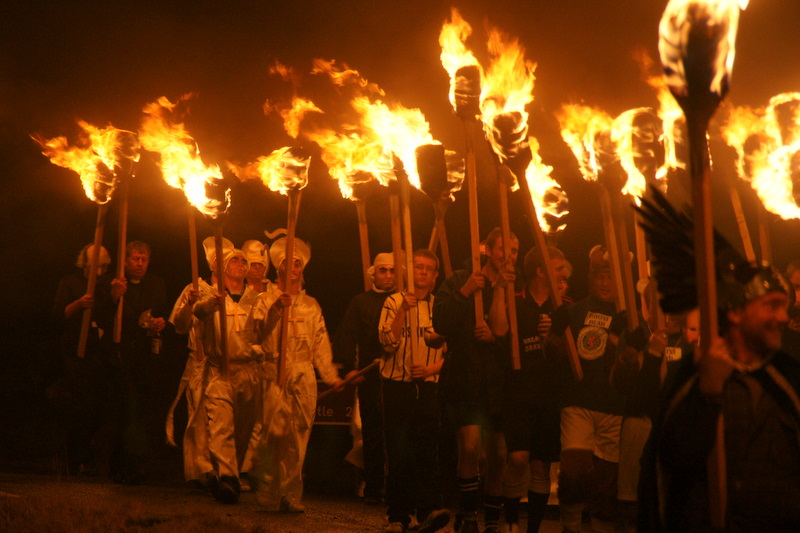 🇬🇧 United KingdomUp Helly Aa
A Shetland fire festival marking the end of Yule with a torchlit procession and burning of a Viking galleyRite · Wonder and entertainment Living
🇬🇧 United KingdomUp Helly Aa
A Shetland fire festival marking the end of Yule with a torchlit procession and burning of a Viking galleyRite · Wonder and entertainment Living