Beliefs, omens and superstitions
Luck and unluck, the evil eye, knocking on wood and the small customs people keep without asking why.
Beliefs, omens and superstitions are the small customs people keep without asking why: knocking on wood, salt over the shoulder, avoiding the number thirteen, the evil eye, a black cat crossing the road, a first visitor of the new year. They are found on every continent and are rarely tied to a priest or book. This page looks at where they come from, what the word superstition hides, and why they persist.
What they look like
Beliefs differ by place. The number four is avoided in China, Japan and Korea because it sounds like the word for death, while thirteen is avoided in much of the West. In India, a sneeze before leaving home may delay a journey, and a lemon and chillies are hung over a shop. The evil eye is feared under many names: nazar, mal de ojo, ayin hara. First-footing at new year in Scotland is said to bring luck to a house.
Whose word is superstition
The word superstition has a history. Roman writers used it for religion they disliked, and Christian writers for forbidden practice. Today it often means someone else's belief. Many religions regard some of their own customs as faith and others as superstition, and where the line falls depends on the speaker. Using the word can mark a speaker as modern and a neighbour as backward. Tests of common superstitions show that people who hold them are not less educated or less rational than others, and many hold them lightly.
Why people keep them
Psychologists find that superstition rises with uncertainty and stakes, which is why athletes, sailors, students and gamblers are known for them. Anthropologist Bronislaw Malinowski observed in the 1920s that Trobriand fishermen used rites in dangerous deep-sea fishing and not in safe lagoon fishing. Most people who follow small customs say they do so partly in jest and partly just in case. Similar customs turn up in places that have never met each other, which suggests that people everywhere respond to risk in similar ways.
When belief causes harm
Most superstitions are harmless. Some are not: beliefs about witchcraft have led to killings in parts of Africa, India and Papua New Guinea, and beliefs about albinism have led to attacks in Tanzania and Malawi. Others cost people money, as when a fee is demanded to lift a bad omen. Education, law and trusted community leaders have all been part of reducing harm. Campaigns by health workers, teachers and community radio have been effective where they listen first and explain later.
Belief on EveryJaadu
The entries written up so far, best known first.
 🇹🇷 Turkey and 5 moreRelics of Muhammad
Objects linked to Muhammad, kept and venerated for blessingCharm · Luck and prosperity · Power and authority Living
 🇨🇳 China and 1 moreMoney tree搖錢樹
A mythical tree of fortune and a Chinese New Year custom for wealthFigure · Luck and prosperity · Power and authority Living
 🇮🇸 IcelandGrásteinn
A lodestone in Iceland linked to elf habitation and safe passageBeing · Luck and prosperity · Speaking with spirits and the dead Living
 🇮🇱 IsraelMatzevahמַצֵּבָה
A standing stone used as a sacred marker or grave monument in ancient and Jewish traditionCharm · Speaking with spirits and the dead · Protection Living
🇺🇸 United StatesStamping
A childhood gesture believed to capture luck from specific animals or objectsBelief · Luck and prosperity Historical
 🇮🇱 Israel and 4 moreChaiחי
A Hebrew word and symbol meaning 'alive', used as an amulet and in Jewish culture.Charm · Protection · Luck and prosperity Living
 🇯🇵 Japan and 1 moreChain letterFukou no Tegami
A message that demands copying and forwarding to avoid bad luck or gain fortuneBelief · Luck and prosperity · Cursing and harm Historical
 🇪🇸 SpainIndalo
A Bronze Age pictograph used as a protective house charm and lucky symbol in Almería, SpainCharm · Protection · Luck and prosperity Living
 🇬🇧 United Kingdom and 5 moreWedding superstitions
Folk beliefs and omens tied to marriage customs across many culturesBelief · Protection · Luck and prosperity Living
 🇮🇳 IndiaSuperstitions in Sikh societies
Folk beliefs and rituals observed by some Sikhs despite theological prohibitions.Belief · Luck and prosperity Living
 🇮🇳 IndiaSuperstition in India
Common beliefs and rituals across India that influence daily life and major eventsBelief · Protection · Luck and prosperity Living
 🇻🇳 VietnamBà Chúa Xứ婆主處
A Mekong Delta goddess of prosperity, asked for trade, health and fertilityBeing · Protection · Luck and prosperity Living
 🇨🇳 China and 5 moreChinese numerology中国数术
A system of interpreting numbers as lucky or unlucky based on their pronunciation in Chinese dialects.Belief · Luck and prosperity Living
 🇮🇳 India and 5 moreSailors' superstitions
A global collection of omens, charms and taboos used by mariners to manage the risks of life at seaBelief · Protection · Luck and prosperity Living
 🇮🇹 ItalyTredesin de Mars
A Milanese spring celebration marked by a flower fair and a legendary stoneTradition · Luck and prosperity · Wonder and entertainment Historical
 🇻🇳 Vietnam and 3 moreWhale worshipCá Ông
A folk practice across East and Southeast Asia honoring cetaceans as divine protectors of fishermenTradition · Protection · Luck and prosperity Living
 🇦🇺 Australia and 3 moreNelson (cricket)
A cricket superstition about the score 111 and the leg-raising ritual to ward it offBelief · Luck and prosperity Living
 🇺🇸 United StatesBaseball superstition
Rituals and beliefs held by players and fans to influence game outcomesBelief · Luck and prosperity · Protection Living
 🇮🇳 India and 5 moreLock of hair
A piece of human hair kept for symbolic, sentimental, or superstitious reasons.Substance · Protection · Luck and prosperity Living
🇦🇲 Armenia and 5 moreSpilling water for luck
A folk custom of pouring water to wish a traveler or worker a smooth journeyBelief · Luck and prosperity · Protection Living
🇬🇧 United KingdomShoes on a table
A superstition that placing footwear on a table invites bad luck or disrespectBelief · Luck and prosperity Living
🇮🇷 IranFaravaharفَرَوَهَر
Zoroastrian guardian spirits: ancestor-warriors and each person's unseen twinBeing · Protection · Speaking with spirits and the dead Living
🇮🇹 ItalyIn bocca al lupo
An Italian idiom wishing good luck by invoking danger, with a response asking for the wolf's death.Belief · Luck and prosperity Living
 🇨🇳 ChinaSuperstition in China
A broad category for folk beliefs and rituals dismissed as backward by modern Chinese authoritiesBelief · Protection · Luck and prosperity Living
🇧🇩 Bangladesh and 1 moreFolk deities of Sylhet
Seven local gods and goddesses of the Sylhet region, each with its own careBeing · Protection · Love and attraction Living
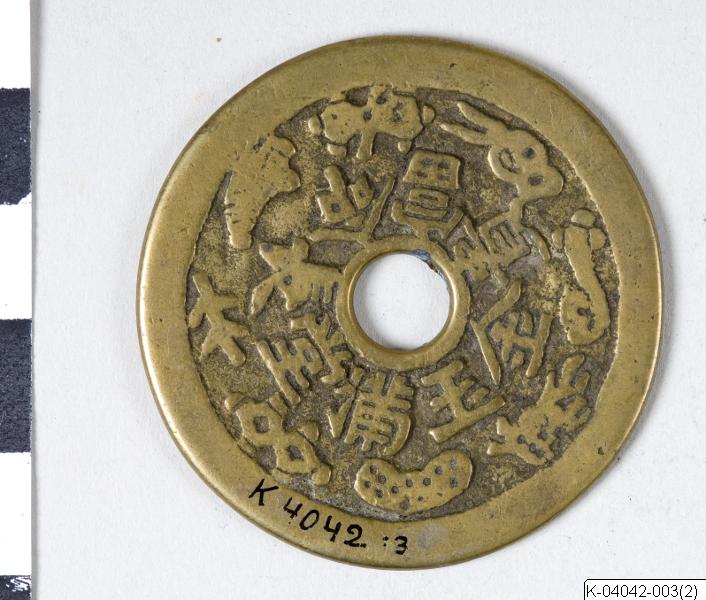 🇨🇳 ChinaEight Treasures八寶 (Bābǎo)
A set of eight symbols in Chinese art and amulets representing good fortune.Charm · Luck and prosperity · Protection Living
🇮🇹 ItalyDoñas de fuera
Sicilian fairies said to carry chosen women by night to a field at BeneventoBeing · Speaking with spirits and the dead · Luck and prosperity Historical
🇯🇵 JapanNarigama鳴釜
A Japanese yōkai and Shinto divination ritual based on the sound of a heated pot.Figure · Seeing and foretelling · Luck and prosperity Historical
🇺🇸 United StatesLaw of attraction
A New Thought belief that focused thoughts draw matching experiences into lifeBelief · Healing · Luck and prosperity Living
🇳🇴 NorwayTycho Brahe daysTycho Brahes-dage
Scandinavian folklore dates believed to be unlucky for magic and businessBelief · Luck and prosperity Historical
 🇮🇳 IndiaMomaiમોમાઈ માં
A four-armed Kutch goddess on a camel, kept as a family deityBeing · Luck and prosperity Living
Photo credits on this page
The small pictures above come from Wikimedia Commons under free licences. Some are cropped to fit.
- Chai: BASWIM, CC BY 3.0, source
- Nelson (cricket): Lemuel Francis Abbott, Public domain, source
- Tredesin de Mars: A ntv, Public domain, source
- Sailors' superstitions: Siren Painter (eponymous vase), Public domain, source
- Chinese numerology: Sarang, Public domain, source
- Bà Chúa Xứ: Phương Huy, CC BY-SA 4.0, source
- Superstition in India: Ji-Elle, CC BY-SA 4.0, source
- Superstitions in Sikh societies: jjron, CC BY-SA 3.0, source
- Wedding superstitions: Anonymous Unknown author, Public domain, source
- Relics of Muhammad: Georges Jansoone ( JoJan, CC BY 3.0, source
- Momai: Oatsjvs, CC BY-SA 4.0, source
- Money tree: Pratyeka, CC BY-SA 4.0, source
- Grásteinn: Ásgeir Helgason, Attribution, source
- Matzevah: Gilslovik, CC BY-SA 4.0, source
- Chain letter: Alpha, CC BY-SA 2.0, source
- Indalo: Ismael Olea, Public domain, source
- Whale worship: Bùi Thụy Đào Nguyên, CC BY-SA 3.0, source
- Baseball superstition: Johnmaxmena2, CC BY 4.0, source
- Lock of hair: Unknown author, CC0, source
- Superstition in China: Gary Todd, CC0, source
- Eight Treasures: Etnografiska Museet, CC BY 2.5, source