🇮🇩 Magic in Indonesia
36 entries from Indonesia, best known first, across 17 places of magic.
Kejawèn is a Javanese cultural tradition blending animism, Hinduism, Buddhism, and Islam. It emphasizes inner harmony and spiritual refinement alongside formal religious observance. This syncretic path offers a distinct ethical style for those seeking mystical connection within Indonesian society.
- Kebatinan means inwardness derived from Arabic batin
- Kyais serve as intermediaries between people and spirits
- Tapa involves ascetic trials like hanging from trees
- Abangan group mixes Islam with animistic beliefs
- Recognized as Kepercayaan under Ministry of Education
Overview
Kejawèn represents the indigenous spiritual core of Java, weaving together ancient animistic beliefs with later Hindu-Buddhist and Islamic influences. It functions less as a rigid institution and more as a way of life focused on inner peace and cosmic balance. The tradition absorbs external elements that align with local values, creating a unique blend of mysticism and daily ethics. While nominally Muslim communities often follow this undercurrent, it maintains its own distinct identity centered on self-cultivation and respect for unseen forces.
Practices and beliefs
Practitioners seek spiritual knowledge through meditation and ascetic disciplines known as tapa. These methods aim to purify the inner self and connect with a higher consciousness. Activities include silent contemplation and physical trials like hanging from trees or meditating under waterfalls. The goal is to control passions and achieve harmony with the universe. Rituals are often performed in natural settings such as caves or mountain tops rather than formal temples.
Rites and charms
Rites focus on internal purification rather than public ceremony. Followers engage in tiraka and tapabrata to refine their character and gain insight. These practices involve strict self-discipline and withdrawal from worldly comforts. Meditation serves as the primary tool for accessing inner wisdom. The rituals are personal and secretive, passed down through generations without standardized liturgies or sacred texts shared by all groups.
Who practises
Leaders include kyais who blend Islamic scholarship with pre-Islamic lore. They act as intermediaries between villagers and the supernatural realm. Membership spans various ethnicities and official religions, including some political figures. Practitioners identify as seekers of inner truth rather than adherents to a single dogma. The community includes both rural devotees and urban intellectuals interested in mystical philosophy.
Regions and communities
The tradition is strongest in Central and East Java, where historical Hindu-Buddhist kingdoms once thrived. Western Java also hosts numerous kebatinan groups. Urban centers see a mix of orthodox Islam and syncretic practices. Rural areas maintain stronger ties to animistic spirit cults and local shrine veneration. The distribution reflects historical migration patterns and colonial administrative boundaries.
The calendar
There are no universal festivals specific to Kejawèn itself. Observances align with the lunar calendar of Islam or agricultural cycles. Life events like births and deaths incorporate both Islamic rites and traditional Javanese customs. Seasonal changes influence meditation practices and retreats. The lack of fixed dates allows flexibility for individual spiritual journeys.
Law and the state
The state recognizes six official religions, leaving Kejawèn in a legal gray area. Groups often register under the category of Kepercayaan to avoid persecution. Some movements face scrutiny from orthodox Islamic authorities who view them as heterodox. Government tolerance varies, with periods of suppression followed by relative acceptance. Legal status depends on alignment with national philosophical principles.
Today
Modernization and urbanization challenge traditional folk Islam. Many young Javanese explore Kejawèn as a path to spiritual depth outside rigid orthodoxy. Migration spreads these beliefs to other islands and countries. Commercialization sometimes dilutes authentic practices for tourism. Despite pressures, the tradition persists as a vital component of Javanese cultural identity.
The facts in this overview come from the Wikipedia article "Kejawèn", written by its contributors and used under the CC BY-SA 4.0 licence. EveryJaadu rewrote the text in its own words, with AI assistance, and compares every page with the article to make sure no passage is copied. It may be reused under the same CC BY-SA 4.0 licence with a link back.
 🇮🇳 India and 5 moreKolamகோலம்
A daily geometric floor drawing made with rice flour at the home entrance in South IndiaTradition · Protection · Luck and prosperity Living
🇲🇾 Malaysia and 1 moreBomohبوموه
A Malay shaman and traditional healer who works with spirits, herbs, and geomancy.Tradition · Healing · Seeing and foretelling Living
🇮🇳 India and 5 moreKolamகோலம்
A daily geometric floor drawing made with rice flour at the home entrance in South IndiaTradition · Protection · Luck and prosperity Living
🇲🇾 Malaysia and 1 moreBomohبوموه
A Malay shaman and traditional healer who works with spirits, herbs, and geomancy.Tradition · Healing · Seeing and foretelling Living
 🇨🇳 China and 5 moreTetraphobia
The avoidance of the number four due to its similarity to the word for death in East Asian languagesBelief · Luck and prosperity Living
🇨🇳 China and 5 moreTetraphobia
The avoidance of the number four due to its similarity to the word for death in East Asian languagesBelief · Luck and prosperity Living
 🇮🇷 Iran and 5 moreKnocking on wood
A gesture of tapping wood to ward off bad luck or prevent tempting fateBelief · Protection · Luck and prosperity Living
🇮🇩 Indonesia and 3 moreToyoltuyul
An undead infant spirit in Southeast Asian folklore, invoked for theft and fortune.Being · Luck and prosperity · Cursing and harm Living
🇮🇷 Iran and 5 moreKnocking on wood
A gesture of tapping wood to ward off bad luck or prevent tempting fateBelief · Protection · Luck and prosperity Living
🇮🇩 Indonesia and 3 moreToyoltuyul
An undead infant spirit in Southeast Asian folklore, invoked for theft and fortune.Being · Luck and prosperity · Cursing and harm Living
 🇮🇩 IndonesiaPenjorᬧᬾᬜ᭄ᚚᚚᭀᬃ
A curved bamboo pole marking prosperity in Balinese Hindu ceremonyTradition · Luck and prosperity · Power and authority Living
🇮🇩 IndonesiaPenjorᬧᬾᬜ᭄ᚚᚚᭀᬃ
A curved bamboo pole marking prosperity in Balinese Hindu ceremonyTradition · Luck and prosperity · Power and authority Living
 🇬🇧 United Kingdom and 3 moreHobby horse
A costumed character made from wood or cloth used in seasonal folk customs and processions.Illusion · Luck and prosperity · Wonder and entertainment Living
🇬🇧 United Kingdom and 3 moreHobby horse
A costumed character made from wood or cloth used in seasonal folk customs and processions.Illusion · Luck and prosperity · Wonder and entertainment Living
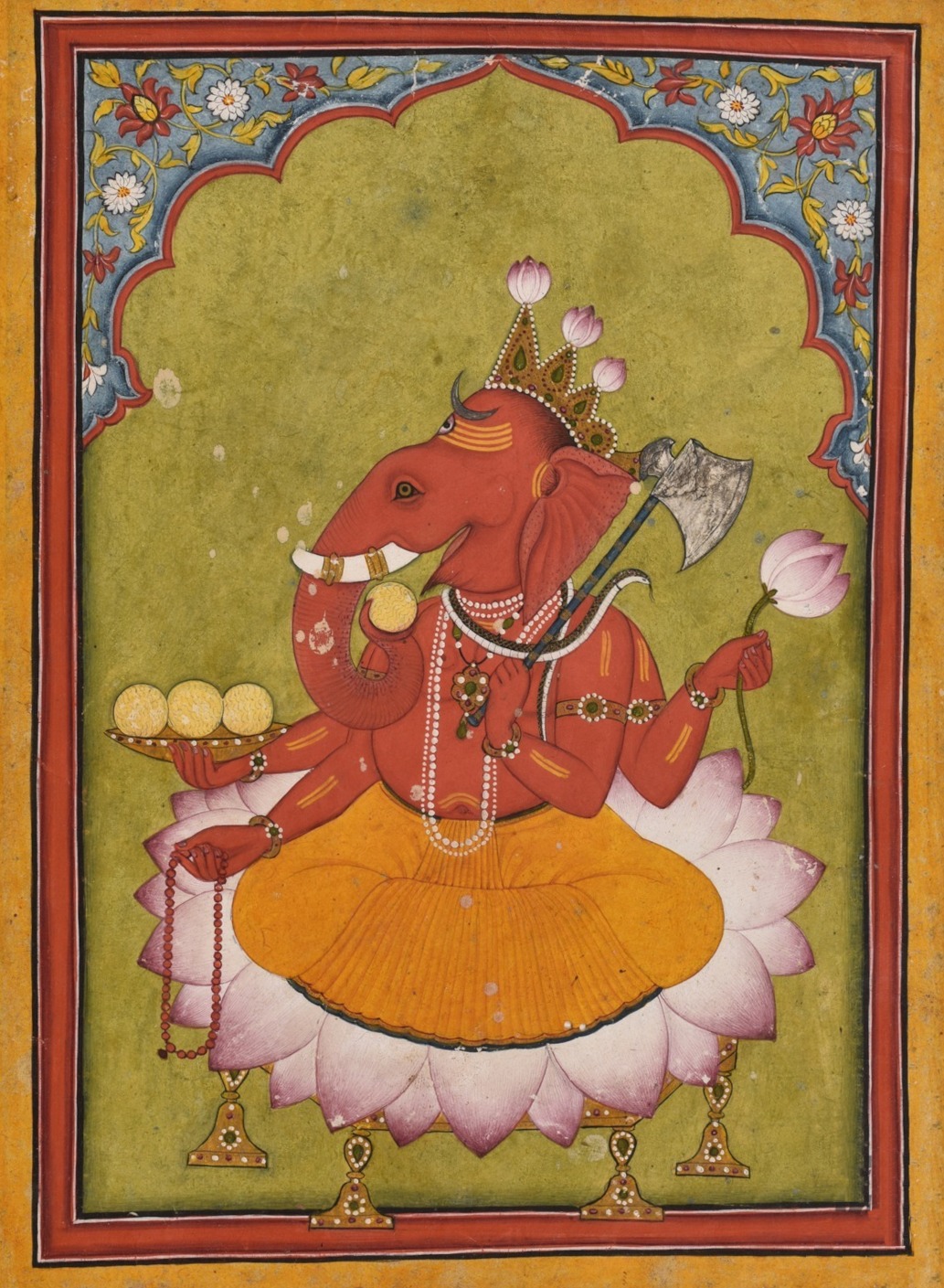 🇮🇳 India and 5 moreGaneshaगणेश (Gaṇeśa)
An elephant-headed Hindu deity worshipped as the remover of obstacles and patron of wisdom.Being · Protection · Luck and prosperity Living
🇮🇳 India and 5 moreGaneshaगणेश (Gaṇeśa)
An elephant-headed Hindu deity worshipped as the remover of obstacles and patron of wisdom.Being · Protection · Luck and prosperity Living
 🇨🇳 China and 5 moreChinese fortune telling算命 (Suànmìng)
Reading faces, palms, birth hours and places to map a person's luck through lifeTradition · Seeing and foretelling · Luck and prosperity Living
🇮🇩 IndonesiaIndonesian numismatic charmUang Gobog
Coin-like amulets from Indonesia used for protection and ritual offerings.Charm · Protection · Luck and prosperity Living
🇨🇳 China and 5 moreChinese fortune telling算命 (Suànmìng)
Reading faces, palms, birth hours and places to map a person's luck through lifeTradition · Seeing and foretelling · Luck and prosperity Living
🇮🇩 IndonesiaIndonesian numismatic charmUang Gobog
Coin-like amulets from Indonesia used for protection and ritual offerings.Charm · Protection · Luck and prosperity Living
Photo credits on this page
The small pictures above come from Wikimedia Commons under free licences. Some are cropped to fit.
- Kolam: mckaysavage, CC BY 2.0, source
- Tetraphobia: Halowand, CC BY-SA 3.0, source
- Penjor: Chainwit., CC BY-SA 4.0, source
- Hobby horse: Timkevan at English Wikipedia, Public domain, source
- Ganesha: anonymous, Public domain, source
- Knocking on wood: The White House, Public domain, source
- Chinese fortune telling: Lai Afong, Public domain, source
The weekly digest
Every Monday: seven entries you may not know, what is on the calendar this week, and one rite drawn step by step.