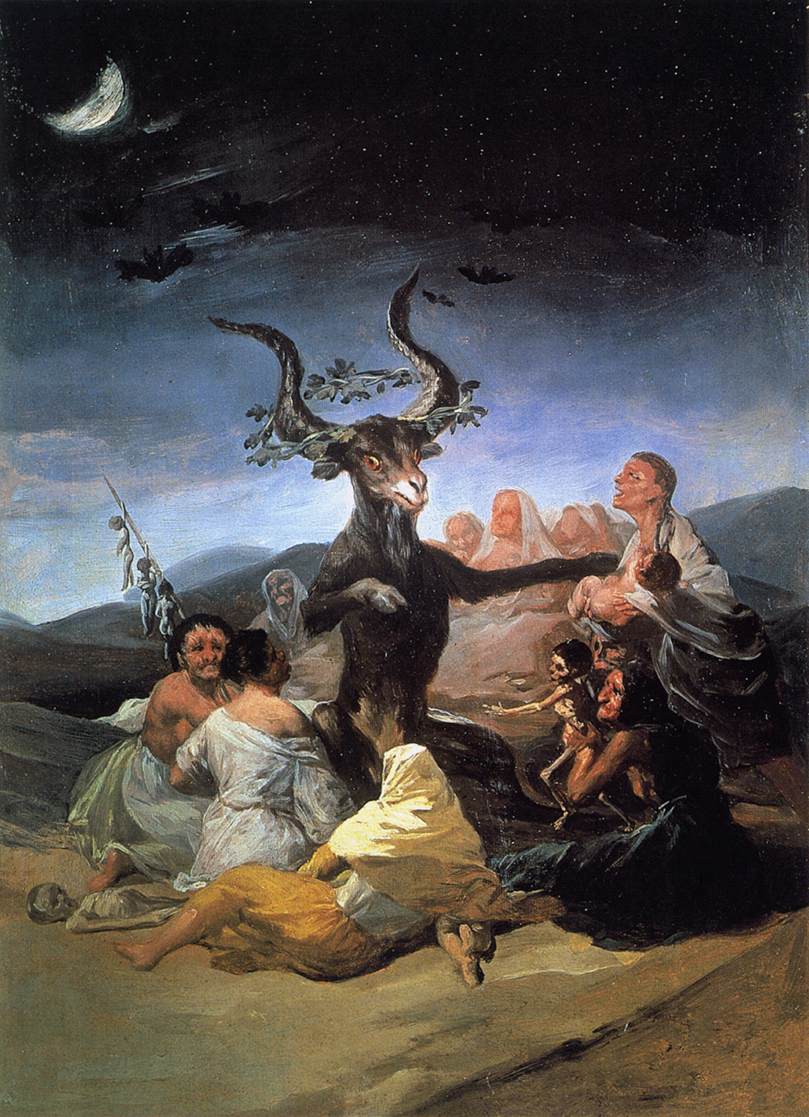
Witches' Sabbath
from Hebrew Shabbat, meaning the seventh day of rest
A legendary gathering of witches described in early modern trial records and folklore
The Witches' Sabbath is a purported assembly of practitioners of witchcraft. The concept emerged from European inquisitorial texts and trial testimonies between the fourteenth and seventeenth centuries. Scholars view it as a constructed narrative rather than a historical reality.
- The Malleus Maleficarum does not use the word sabbath.
- French writers used related terms from the twelfth century.
- Modern scholars view the sabbat as a constructed narrative.
- The term derives from Hebrew Shabbat, meaning rest.
- Testimonies were often extracted under torture.
What it is
The Witches' Sabbath describes a supposed meeting where witches gather to perform rituals. It is a central figure in the lore of European witch hunts. The concept depicts a collective conspiracy against Christianity. Modern historians agree that these gatherings did not physically exist. They are understood as products of interrogation and imagination rather than recorded events.
Where it comes from
The phrase appears rarely in medieval Latin sources. Inquisitors often used terms like synagogam or conventibus instead. French writers employed related terms more frequently starting in the twelfth century. The specific English phrase gained traction in the seventeenth century. German historians later adopted Hexensabbat to describe trial records. The term became widely popular only in the twentieth century through translations and folklore studies.
How it is done
Accounts describe witches riding flying animals and trampling crosses. Testimonies claim participants were rebaptized by the Devil. Stories include dancing back to back and kissing demonic figures. These details come from trial transcripts and inquisitorial writings. The narratives served to justify persecution and executions. They reflect the fears and expectations of the authorities conducting the trials.
Witches' Sabbath, drawn and placed
- Living
- Revived
- Fading
- Historical
- Legendary
- Performed
- Lineage
- European witch-hunt lore
What it is for
The concept was used to identify and prosecute alleged witches. Authorities believed the sabbat represented a threat to Christian society. The stories fueled paranoia about an underground conspiracy. They provided a framework for understanding social problems like famine or plague. The narratives helped spread fear across the continent.
Who does it
The accounts were created by priests, jurists, and judges. These individuals never attended the gatherings themselves. They relied on testimonies extracted during interrogations. Some historians note that torture influenced the content of these stories. Accused individuals often repeated details suggested by their interrogators.
Peoples and places
French inquisitors used related terms earlier than their German or English counterparts. Italian courts used less torture, resulting in fewer mass accusations. This led to a different cultural perception of witchcraft in Italy. The stereotype spread widely across Europe through printed books and trial records. Different regions developed variations in how they described the alleged meetings.
At a glance: who, where and when
Who does it
Belief worlds


What people believe
The concept combines older mythical components with medieval religious fears. It draws on ideas of spirit processions and spectral huntsmen. The term references the Jewish Shabbat but inverts its meaning. It portrays a diabolical counterpart to Christian worship. The beliefs reflect deep-seated anxieties about heresy and minority groups.
When it is done
Some accounts link the gatherings to Saint Walpurgis Night on May first. This date connects to pre-Christian spring traditions. The timing aligns with seasonal festivals in European folklore. Other descriptions place the meetings at night without specifying a calendar date.
How scholars and sceptics see it
Historians like Ronald Hutton view the sabbat as a modern construction. Scott E. Hendrix explains the stories as products of doctrinal shifts. Norman Cohn argues that testimonies reflected interrogator expectations. Researchers see the narratives as expressions of ignorance and religious intolerance. The accounts reveal more about the accusers than the accused.
Cautions and what is closed
The belief in the sabbat led to the execution of tens of thousands of people. Most victims were women. The accusations often included fabricated crimes like infanticide. The persecution targeted marginalized groups and religious minorities. The trauma of false accusations remains a significant part of this history.
Compare and confuse
The term is sometimes confused with the Jewish Shabbat. It shares roots with the word synagogue. In Spanish, the concept is known as aquelarre. The German term Hexensabbat is a direct translation used in historical analysis. These variations highlight the linguistic spread of the witch-hunt ideology.
Questions people ask about Witches' Sabbath
What is a Witches' Sabbath?
It is a legendary gathering of witches described in early modern European trial records. Historians consider it a fictional construct rather than a real event.
Where does the term originate?
The word comes from the Hebrew Shabbat. Inquisitors used various Latin terms before the English phrase became common in the seventeenth century.
Did witches actually meet in sabbats?
No. Modern researchers find no evidence of physical gatherings. The stories reflect the fears and interrogation methods of the time.
Why were sabbat stories so popular?
They fueled paranoia about a Christian conspiracy. The narratives justified persecution and helped spread fear across Europe.
Good reading and sources
- Witches' Sabbath on WikipediaEncyclopedia
- More photos on Wikimedia CommonsPhotos and video
- Wikidata recordOpen data
The facts on this page come from the Wikipedia article "Witches' Sabbath", written by its contributors and used under the CC BY-SA 4.0 licence, and from its Wikidata record (CC0). EveryJaadu rewrote the text in its own words, with AI assistance, and compares every page with the article to make sure no passage is copied. It may be reused under the same CC BY-SA 4.0 licence with a link back.
It may contain mistakes. Names and customs differ from one community to the next, and some knowledge is closed to outsiders and left out here. This page describes belief and practice. It does not say that any of it works, it is not a how-to, and it is not medical advice. If something is wrong, tell us. Last refreshed 2026-10-06.
More from France
All the entries from France 🇬🇧 United Kingdom and 2 moreKing ArthurBrenin Arthur
A legendary British king and folk hero of medieval literature and Welsh mythologyFigure · Power and authority · Wonder and entertainment Legendary
🇬🇧 United Kingdom and 2 moreKing ArthurBrenin Arthur
A legendary British king and folk hero of medieval literature and Welsh mythologyFigure · Power and authority · Wonder and entertainment Legendary
 🇩🇪 Germany and 5 moreWitch trials in the Holy Roman Empire
A wave of executions across Central Europe between the fifteenth and eighteenth centuries.Belief · Cursing and harm Historical
🇩🇪 Germany and 5 moreWitch trials in the Holy Roman Empire
A wave of executions across Central Europe between the fifteenth and eighteenth centuries.Belief · Cursing and harm Historical
 🇮🇹 Italy and 5 moreTarottarocchi
A set of playing cards used for games and divinationTradition · Seeing and foretelling · Luck and prosperity Living
🇮🇹 Italy and 5 moreTarottarocchi
A set of playing cards used for games and divinationTradition · Seeing and foretelling · Luck and prosperity Living
 🇫🇷 France and 1 moreNostradamus
A French astrologer and physician known for a book of poetic propheciesText · Seeing and foretelling · Power and authority Historical
🇫🇷 France and 1 moreNostradamus
A French astrologer and physician known for a book of poetic propheciesText · Seeing and foretelling · Power and authority Historical
Related elsewhere
All belief 🇪🇬 Egypt and 1 moreLilithלִילִית
A feminine figure from Mesopotamian and Jewish mythology, often depicted as a night demon or spirit.Being · Cursing and harm Legendary
🇪🇬 Egypt and 1 moreLilithלִילִית
A feminine figure from Mesopotamian and Jewish mythology, often depicted as a night demon or spirit.Being · Cursing and harm Legendary
 🇪🇬 EgyptCurse
A spoken wish for misfortune to befall a person or placeBelief · Cursing and harm · Luck and prosperity Historical
🇪🇬 EgyptCurse
A spoken wish for misfortune to befall a person or placeBelief · Cursing and harm · Luck and prosperity Historical
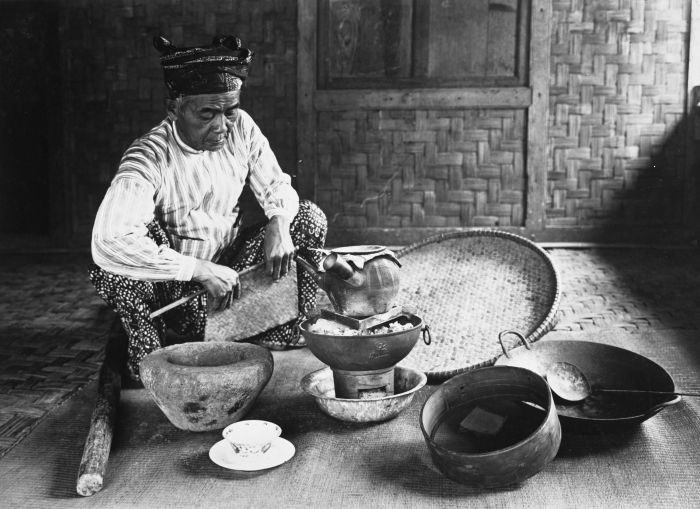 🇮🇩 Indonesia and 2 moreDukun
A traditional healer and spirit medium in Indonesian folk practiceTradition · Healing · Seeing and foretelling Living
🇮🇩 Indonesia and 2 moreDukun
A traditional healer and spirit medium in Indonesian folk practiceTradition · Healing · Seeing and foretelling Living
 🇮🇳 India and 5 moreHoliहोली
A Hindu spring festival marked by coloured powders and bonfires to celebrate love and virtue.Tradition · Love and attraction · Cursing and harm Living
🇮🇳 India and 5 moreHoliहोली
A Hindu spring festival marked by coloured powders and bonfires to celebrate love and virtue.Tradition · Love and attraction · Cursing and harm Living