
Warlock
from Old English wǣrloga, an oath-breaker; a Norse source has been doubted
A word for a male witch, rooted in an old term for oath-breaker and devil pacts
Warlock is a word for a man said to work witchcraft or sorcery. It grew out of an Old English term for a promise-breaker, was used for the devil by about 1000 AD, and in Scotland named the male counterpart of a witch before moving into popular culture.
- Comes from Old English wǣrloga, a word for an oath-breaker or deceiver
- By about 1000 AD it was used above all as a name for the devil
- In early modern Scotland it served as the male counterpart of 'witch'
- Men too died in Scotland's witch trials under the warlock name
- John Napier (1550-1617) drew suspicion as a warlock for his interest in the occult
What it is
A warlock is a man believed to work witchcraft or sorcery. The word belongs chiefly to Scotland, where in the early modern period it served as the male counterpart of the witch. 'Witch' itself can describe a person of either sex, but usage over the centuries has leaned heavily towards women, so a separate word for men found a use. The name was never neutral. In its Scottish setting it implied a man who had bargained with the devil, and men accused under it could face trial and execution. Even a respected scholar might attract the label. From Scotland the word travelled into Romantic-era writing and then into twentieth-century popular culture, where most people now meet it.
Where it comes from
The oldest root is the Old English wǣrloga, a word for someone who betrays a sworn promise or tricks others. Around the year 1000 it had narrowed until it served as a name for the devil himself. In Scotland the word later widened to cover men accused of witchcraft. One explanation for that shift is the belief that male witches had bargained with Auld Hornie, as the devil was called there, and so had turned against the Christian faith and broken the promises made at their baptism. A few writers have looked instead to Old Norse varð-lokkur, said to mean one who calls up spirits, but the Oxford English Dictionary finds that story hard to credit. In time the word left the courtroom for Romantic-era literature, and through it reached twentieth-century popular culture.
Warlock, drawn and placed
- Living
- Revived
- Fading
- Historical
- Legendary
- Performed
- Lineage
- witchcraft belief in early modern Scotland, with Old English roots
Who does it
The name marked out men. Most people who died in Scotland's early modern witch trials were women, but a smaller number of men were condemned and executed as warlocks. The label could reach surprisingly far up the social scale. John Napier, the Scottish mathematician who lived from 1550 to 1617, was widely taken to be a warlock, even a magician, because he studied divination and the occult. His standing among the establishment of the time, the record suggests, is probably what kept him out of court.
At a glance: who, where and when
What people believe
Behind the word stands a picture of the devil as a being men might bargain with. By about 1000 AD warlock already served as a title for the devil, and that older sense coloured the Scottish one. There, a man called a warlock was understood to have entered a pact with Auld Hornie, the devil of Scots speech. Such a bargain counted as betrayal twice over: it turned against the Christian faith and it broke the vows or promises sworn at baptism. A word that once meant a promise-breaker thus fitted a man said to have broken his highest promise of all.
How scholars and sceptics see it
Language scholars have weighed the word's past closely. The Oxford English Dictionary backs the Old English line and rejects the proposed Norse one, varð-lokkur, on two grounds: the Norse phrase survives so rarely, and spellings lacking the hard -k, which suit the Old English account, appear earlier in the record than spellings that carry it. Historians of the trials add a demographic picture: in early modern Scotland, women formed the great majority of the dead, with executed men a small minority. Napier's case shows how the name could rest on reputation alone, and how social rank could shield a suspect from formal charges.
Compare and confuse
The warlock sits beside several neighbouring words. 'Witch' names a practitioner of either sex, though it has mostly been given to women over time, and in Scotland the two terms worked as a pair. 'Magician' was among the words applied to Napier, and sorcery names the craft the term points to. What sets warlock apart is its own history: a promise-breaker's word, tied in Scotland to the idea of a pact with the devil.
Law and persecution
The witch trials of early modern Scotland were where the word did its hardest work. Prosecution could end in death: women made up most of the victims, but men too were put to death under the warlock name. Reputation alone could place a person under suspicion, as Napier's case shows. His interest in divination and occult studies was enough for others to see a warlock in him, yet his establishment position probably kept the courts at a distance.
Questions people ask about Warlock
What is a warlock?
A word for a man said to work witchcraft or sorcery. In early modern Scotland it named the male counterpart of the witch, a term that fits any sex but has mostly been used for women. Today it is met mainly in fiction and popular culture.
Where does the word come from?
Most accounts trace it to Old English wǣrloga, meaning an oath-breaker or deceiver, and by about 1000 AD it named the devil. A derivation from Old Norse varð-lokkur, a spirit-caller, has been proposed, but the Oxford English Dictionary finds it unlikely.
Why is the word linked to the devil?
In Scotland the label came to mark men believed to have bargained with Auld Hornie, a Scots name for the devil. Such a bargain was taken as a betrayal of the Christian faith and a breaking of the vows made at baptism.
Were men accused of witchcraft too?
Yes. Women formed the majority of victims in the early modern Scottish witch trials, but some men were condemned and executed under the warlock name.
Why was the mathematician John Napier suspected?
Napier, who lived from 1550 to 1617, interested himself in divination and the occult, and in his own day many took him for a warlock or a magician. His establishment position, it is thought, is what kept him from facing prosecution.
Good reading and sources
The facts on this page come from the Wikipedia article "Warlock", written by its contributors and used under the CC BY-SA 4.0 licence, and from its Wikidata record (CC0). EveryJaadu rewrote the text in its own words, with AI assistance, and compares every page with the article to make sure no passage is copied. It may be reused under the same CC BY-SA 4.0 licence with a link back.
It may contain mistakes. Names and customs differ from one community to the next, and some knowledge is closed to outsiders and left out here. This page describes belief and practice. It does not say that any of it works, it is not a how-to, and it is not medical advice. If something is wrong, tell us. Last refreshed 2026-10-19.
More from the United Kingdom
All the entries from the United Kingdom 🇫🇷 France and 2 moreKing ArthurBrenin Arthur
A legendary British king and folk hero of medieval literature and Welsh mythologyFigure · Power and authority · Wonder and entertainment Legendary
 🇬🇧 United KingdomBideford witch trial
The final English hangings for witchcraft in 1682.Belief · Cursing and harm Historical
🇬🇧 United KingdomWitch trials in England
A historical period of legal persecution for alleged sorcery in England from the 15th to the 18th centuryBelief · Cursing and harm Historical
🇬🇧 United KingdomPaisley witches
A 1697 Scottish witch trial ending in mass execution after a child's illness sparked local panic.Belief · Cursing and harm Historical
Related elsewhere
All figure 🇨🇬 Republic of the CongoNkisi
A Kongo spirit, and the object a spirit is held to live inBeing · Protection · Healing Living
 🇲🇽 Mexico and 5 moreLa Llorona
A vengeful ghost in Hispanic American folklore who mourns drowned children near water.Being · Cursing and harm · Seeing and foretelling Legendary
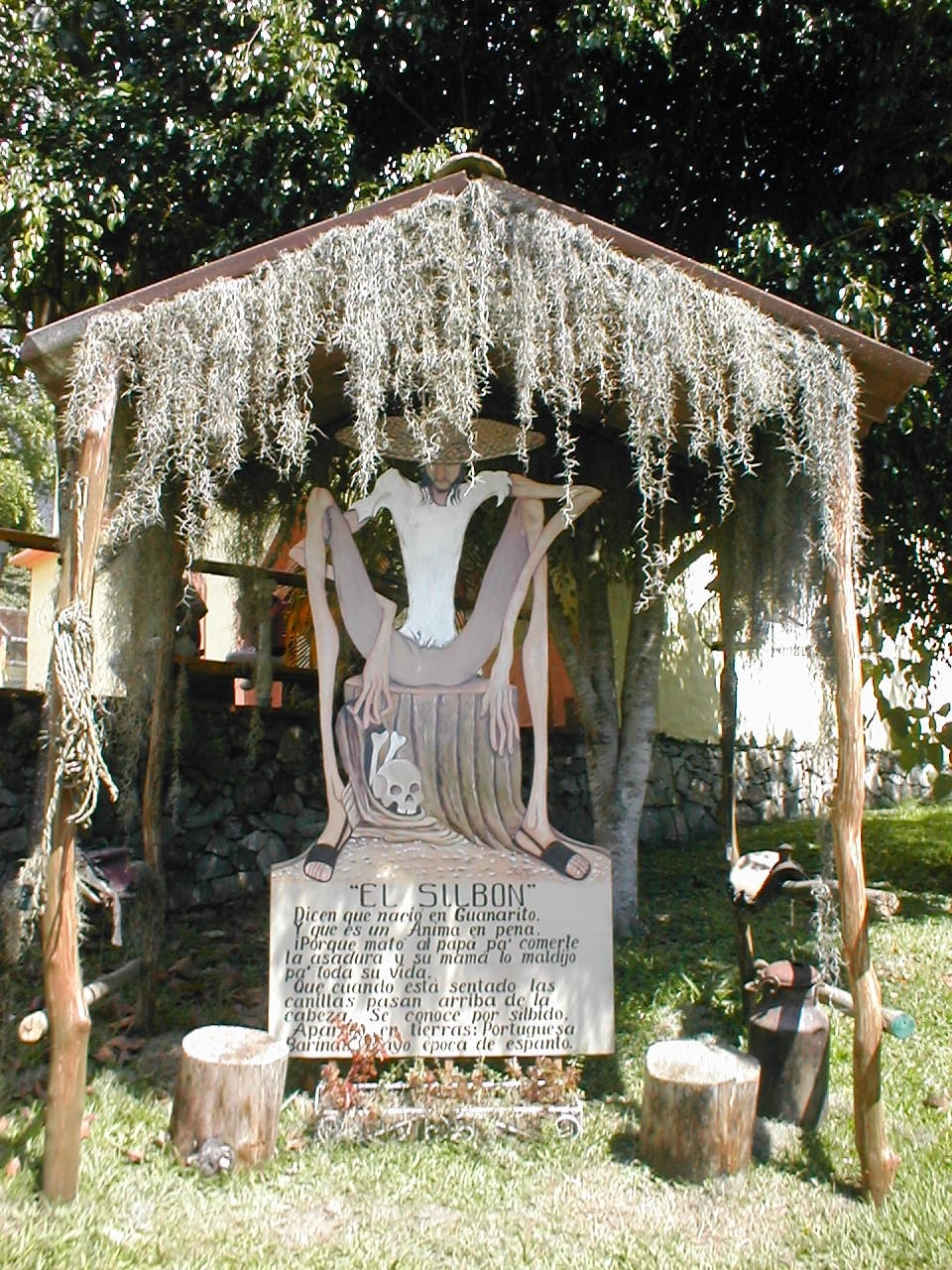 🇻🇪 Venezuela and 1 moreEl Silbón
A Venezuelan and Colombian legend of a cursed spirit who carries his father's bones.Figure · Cursing and harm · Seeing and foretelling Legendary