
Voodoo doll
from the misnamed association with Voodoo
A pin-stuffed figure linked to magic in popular culture, not Haitian Vodou
An effigy typically pierced with pins, widely recognized in global entertainment. The name suggests a link to Haitian Vodou, but practitioners of that tradition do not use such dolls for their rituals.
- Not used in Haitian Vodou or Louisiana Voodoo
- Popularized by 20th-century American films and books
- Similar pinning magic exists in ancient Greece and India
- Sold as novelty items in vending machines and stores
- Features in movies like Creepshow and Pirates of the Caribbean
What it is
The voodoo doll is a small human-shaped figure made from cloth, straw, or wax. It is most famous for being pierced with sharp pins. People believe this action can cause pain or illness to the person the doll represents. This practice appears in many magical traditions worldwide. Despite its common name, the doll has no real connection to the religion of Vodou. Practitioners of Haitian Vodou and Louisiana Voodoo do not use these items in their spiritual work. The object is largely a product of external misunderstanding and media portrayal rather than an authentic religious artifact.
Where it comes from
The link between the doll and Voodoo emerged in the early twentieth century through Western media. Authors and filmmakers portrayed African diaspora religions negatively to audiences in the United States. A 1933 book by John Houston Craige described a prisoner using an effigy to harm others. Horror films like White Zombie and I Walked with a Zombie reinforced this image. Scholars note that similar pinning practices exist in ancient Greece and India, where they were used for defensive binding. The modern 'voodoo doll' is a hybrid concept created by colonial stereotypes and entertainment needs.
How it is done
The standard method involves creating a simple human form from soft materials. Pins are inserted into specific body parts of the figure. Users believe this causes corresponding physical sensations in the target individual. Some versions include hair or clothing from the intended victim to strengthen the link. The act is often performed in secret. In commercial contexts, the dolls are sold as toys or novelty gifts without any ritual intent. The process requires no special tools beyond needles and stuffing material.
Tools and materials
The primary tool is the effigy itself, usually stuffed with straw or wrapped in fabric. Pins or needles are essential for the ritual action. Some traditions add personal items like hair or nails to the doll to increase its power. Colors may be chosen to represent different intentions, though no single palette is standard. The simplicity of the materials allows anyone to construct one easily. This accessibility contributed to its spread as a mass-produced item in shops and vending machines.
Voodoo doll, drawn and placed
- Living
- Revived
- Fading
- Historical
- Legendary
- Performed
What it is for
Users typically employ the doll to inflict harm or cause illness on an enemy. It serves as a sympathetic magic tool, where the doll stands in for a real person. Some users seek revenge or wish to punish someone who wronged them. In rare cases, it is used for protection by binding negative forces. However, the most common purpose in popular imagination is malicious cursing. Commercial versions are bought for humor or decoration, lacking any serious intent.
Who does it
No specific group of religious practitioners uses the voodoo doll authentically. The idea was popularized by writers, filmmakers, and later by toy manufacturers. Scholars study the doll to understand how misconceptions about African religions formed. Ordinary people may buy the dolls as jokes or party favors. There is no formal training required to make or use one. The role of the practitioner is often that of an outsider projecting fears onto another culture.
Peoples and places
The doll is associated with Haiti due to its name, but Haitians do not practice this ritual. Similar effigy magic exists in Greece, where it was used for binding spells. Indian traditions also feature clay figures for ritual purposes. The United States played a key role in spreading the myth through cinema and literature. The concept has become global through English-language media. Different cultures have their own versions of pinning dolls, but none are called voodoo dolls by their originators.
At a glance: who, where and when
Who does it

What people believe
The underlying belief is sympathetic magic: the idea that affecting a model affects the original. Pinning the doll is thought to transfer pain to the target. This relies on the principle of resemblance. Users believe the doll acts as a conduit for magical energy. Skeptics view this as psychological projection or placebo effect. Anthropologists see it as a reflection of colonial anxieties about foreign religions. The belief persists because it fits neatly into horror narratives and folk superstitions.
When it is done
There are no specific festivals or holy days tied to the voodoo doll. It is not part of any liturgical calendar. Usage is random and driven by personal conflict or curiosity. In pop culture, it appears frequently around Halloween or in horror-themed media. Commercial sales peak during holiday seasons when novelty gifts are purchased. The timing of use is entirely dependent on the user's immediate desires rather than cosmic cycles.
How scholars and sceptics see it
Researchers like Natalie Armitage trace the doll's origins to European and African ritual magic. They argue the 'voodoo doll' is a myth constructed by outsiders. Christopher Faraone studied ancient Greek binding tablets, which share similarities but lack the voodoo label. Ronald Hutton examined how modern witchcraft adopted these tropes. Scholars agree that the doll misrepresents actual Vodou practices. Their work aims to separate historical fact from cinematic fiction and racial stereotyping.
Cautions and what is closed
The doll itself poses no physical danger. However, the belief in its power can lead to social conflict or harassment. Accusations of using such dolls have sometimes fueled violence against communities. Fraudsters sell fake magical services using these items to exploit vulnerable people. There are no known health risks from handling the dolls. The main caution is cultural sensitivity; using the term 'voodoo' incorrectly perpetuates harmful stereotypes about Haitian religion.
Compare and confuse
The voodoo doll is often confused with the poppet, a figure used in European folk magic. It is also related to the shikigami of Japanese Onmyodo. Greek kólyphda and Indian clay figures serve similar symbolic functions. Unlike these authentic traditions, the voodoo doll lacks a continuous lineage of practice. It is primarily a literary and cinematic invention. The confusion arises because all these objects involve representing a person through a model.
Questions people ask about Voodoo doll
What is a voodoo doll?
It is a small human-shaped figure made of cloth or straw, often pierced with pins. It is believed by some to cause harm to a person it represents, though this is a misconception regarding Haitian Vodou.
Do Vodou priests use voodoo dolls?
No. Practitioners of Haitian Vodou and Louisiana Voodoo do not use these dolls in their rituals. The association is a myth created by Western media and colonial stereotypes in the early twentieth century.
Where did the voodoo doll originate?
The specific 'voodoo doll' is a product of Western popular culture. While similar effigy magic exists in Greece and India, the name and widespread image come from American films and books portraying African diaspora religions.
How is a voodoo doll made?
It is typically crafted from simple materials like straw, cloth, or wax. Pins are inserted into the figure to symbolize pain or injury to a target. No special religious tools are required for its construction.
Good reading and sources
- Voodoo doll on WikipediaEncyclopedia
- More photos on Wikimedia CommonsPhotos and video
- Wikidata recordOpen data
The facts on this page come from the Wikipedia article "Voodoo doll", written by its contributors and used under the CC BY-SA 4.0 licence, and from its Wikidata record (CC0). EveryJaadu rewrote the text in its own words, with AI assistance, and compares every page with the article to make sure no passage is copied. It may be reused under the same CC BY-SA 4.0 licence with a link back.
It may contain mistakes. Names and customs differ from one community to the next, and some knowledge is closed to outsiders and left out here. This page describes belief and practice. It does not say that any of it works, it is not a how-to, and it is not medical advice. If something is wrong, tell us. Last refreshed 2026-10-06.
More from Haiti
All the entries from Haiti 🇩🇴 Dominican Republic and 5 moreZemi
A Taíno deity or ancestral spirit housed in a carved object used for worship and protectionBeing · Protection · Healing Historical
🇧🇧 Barbados and 2 moreObeah and Wanga
A Caribbean folk magic tradition and a Haitian charm packet, referenced in Western occult texts.Tradition · Power and authority · Cursing and harm Living
🇩🇴 Dominican Republic and 5 moreZemi
A Taíno deity or ancestral spirit housed in a carved object used for worship and protectionBeing · Protection · Healing Historical
🇧🇧 Barbados and 2 moreObeah and Wanga
A Caribbean folk magic tradition and a Haitian charm packet, referenced in Western occult texts.Tradition · Power and authority · Cursing and harm Living
 🇭🇹 Haiti and 1 moreEzili DantorÈzili Dantò
A fierce mother spirit in Haitian Vodou who protects the marginalized and demands loyalty.Being · Protection · Love and attraction Living
🇭🇹 Haiti and 1 moreEzili DantorÈzili Dantò
A fierce mother spirit in Haitian Vodou who protects the marginalized and demands loyalty.Being · Protection · Love and attraction Living
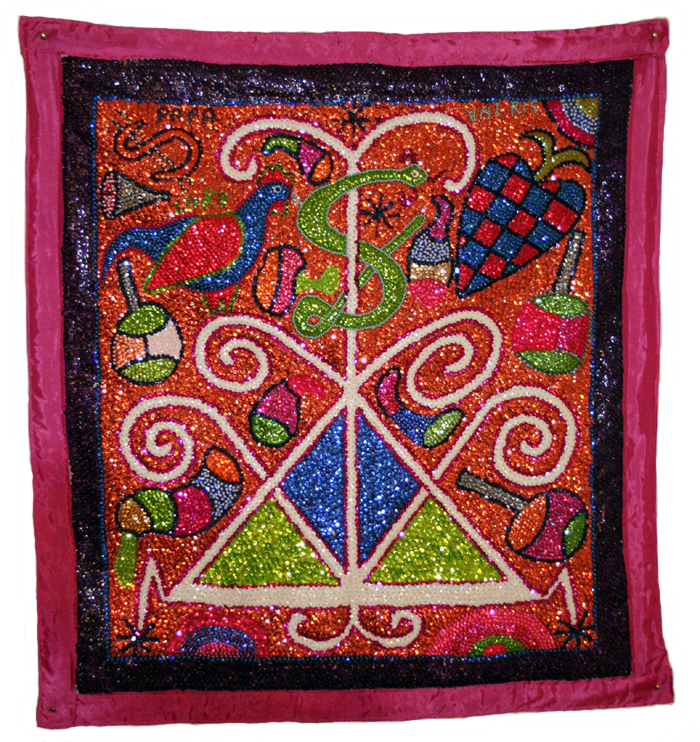 🇭🇹 Haiti and 2 moreHaitian VodouVodou
An Afro-Haitian religion blending West African traditions with Catholicism and FreemasonryTradition · Protection · Healing Living
🇭🇹 Haiti and 2 moreHaitian VodouVodou
An Afro-Haitian religion blending West African traditions with Catholicism and FreemasonryTradition · Protection · Healing Living
Related elsewhere
All charm 🇷🇸 Serbia and 5 moreVampire
An undead creature from folklore that feeds on the blood or life force of the livingBeing · Cursing and harm · Luck and prosperity Legendary
🇷🇸 Serbia and 5 moreVampire
An undead creature from folklore that feeds on the blood or life force of the livingBeing · Cursing and harm · Luck and prosperity Legendary
 🇫🇷 France and 5 moreWerewolf
A mythical shapeshifter that turns into a wolf, central to European witch-hunts and Gothic horror.Being · Cursing and harm · Wonder and entertainment Legendary
🇫🇷 France and 5 moreWerewolf
A mythical shapeshifter that turns into a wolf, central to European witch-hunts and Gothic horror.Being · Cursing and harm · Wonder and entertainment Legendary
 🇪🇬 Egypt and 1 moreLilithלִילִית
A feminine figure from Mesopotamian and Jewish mythology, often depicted as a night demon or spirit.Being · Cursing and harm Legendary
🇪🇬 Egypt and 1 moreLilithלִילִית
A feminine figure from Mesopotamian and Jewish mythology, often depicted as a night demon or spirit.Being · Cursing and harm Legendary
 🇪🇬 EgyptCurse
A spoken wish for misfortune to befall a person or placeBelief · Cursing and harm · Luck and prosperity Historical
🇪🇬 EgyptCurse
A spoken wish for misfortune to befall a person or placeBelief · Cursing and harm · Luck and prosperity Historical