
Ojibwe religion
from the Algonquian word ojib, meaning puckered up, a reference to moccasin seams
The traditional spiritual practices of the Ojibwe people of North America
Ojibwe religion is the traditional Native American faith of the Ojibwe people, found in Canada and the United States. It centers on relationships with powerful spirit beings called manitouk, who are believed to influence human life through dreams, visions, and offerings.
- Central spirits are called manitouk, powerful beings influencing human life
- Vision quests at puberty established lifelong relationships with guardian spirits
- Kitche Manitou is the creator being, often equated with the Christian God
- Nanabush is the culture hero and trickster figure in Ojibwe mythology
- Midewiwin is a healing society formed by southern Ojibwe in the 18th century
What it is
Ojibwe religion is the traditional spiritual system of the Ojibwe people, an Algonquian-speaking group living in the Great Lakes region of North America. The tradition lacks a formal hierarchy or written texts, relying instead on oral transmission and personal experience. Central to this worldview are the manitouk, powerful spirit beings that inhabit the natural world. Humans seek to maintain harmonious relationships with these spirits through rituals, offerings, and dreams. The practice is holistic, integrated into daily life rather than separated as a distinct religious activity. Many adherents view their beliefs as 'our way' of life, emphasizing a deep connection to the environment and the spiritual forces within it.
Where it comes from
The Ojibwe originally lived as hunter-gatherers, a lifestyle that shaped their reliance on manitouk for food and survival. Early contact with Christian Europeans began in the seventeenth century, leading to the establishment of Roman Catholic missions. By the eighteenth century, southern Ojibwe communities formed the Midewiwin, a healing society. The nineteenth century brought Protestant missions and forced relocation to reservations, which caused a decline in traditional practices like puberty vision quests. Revitalization efforts emerged in the 1960s and 1970s, encouraged by the American Indian Movement, helping to restore traditional beliefs. In the late twentieth century, Ojibwe practices were further influenced by other Native American religions, particularly those of the Lakota.
How it is done
Practitioners engage in rituals to communicate with manitouk and secure their support. A key rite is the vision quest, historically undertaken by males at puberty to establish a lifelong relationship with a guiding spirit. Ritual specialists, such as the Jiisakiiwinini, perform the shaking tent ritual to invoke spirits for healing and locating game. Offerings of tobacco are common gifts to secure favor. Communication often occurs through dreams and visions, which are interpreted as messages from the spirits. If an unwanted spirit appears in a dream, a person might scrape their tongue with a cedar knife to ward it off. These practices are performed within the community context, adapting over time to new circumstances while maintaining core spiritual principles.
Tools and materials
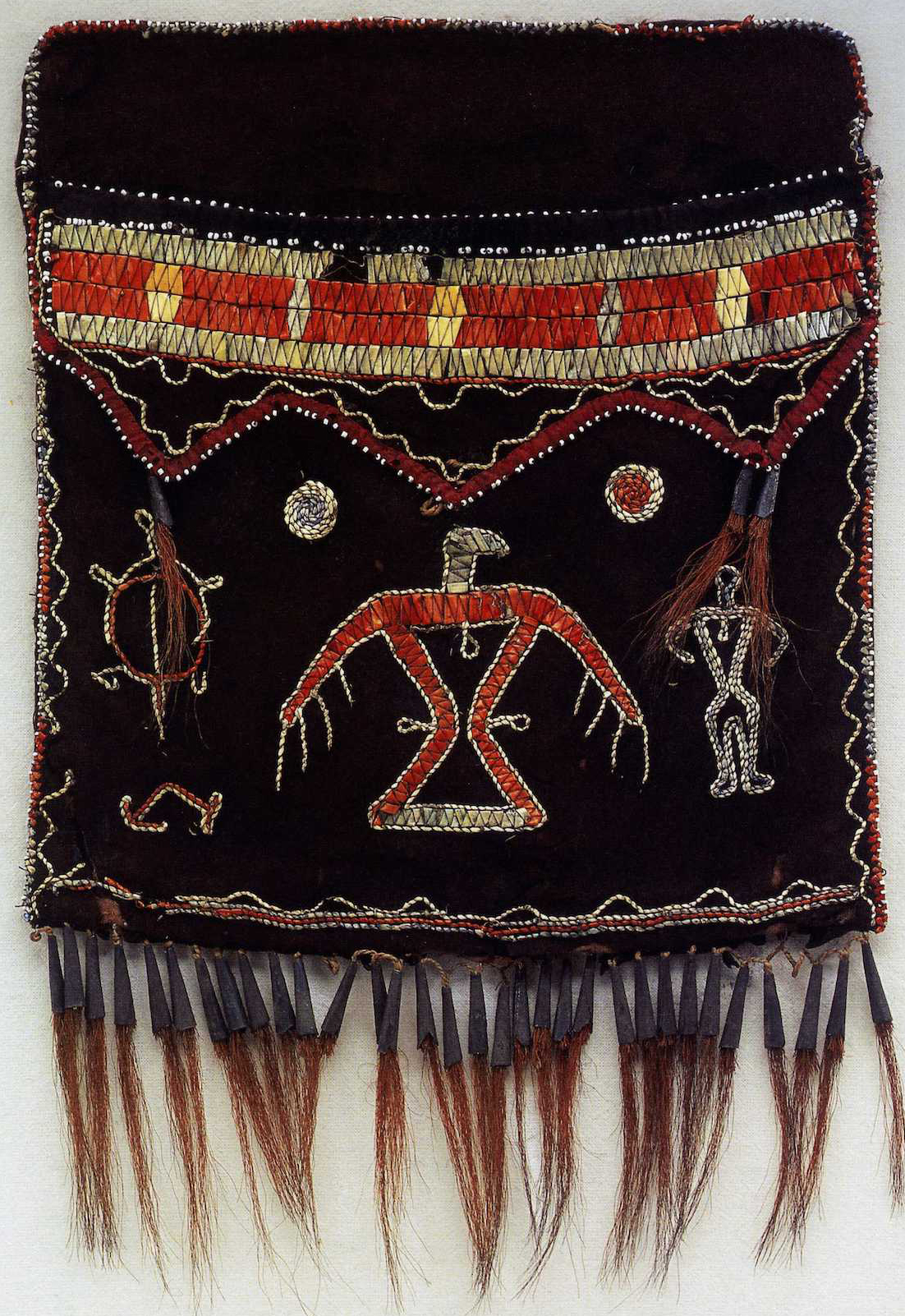
Tobacco serves as the primary offering to manitouk, symbolizing respect and establishing connections. Birchbark scrolls are used by the Midewiwin society to record and convey sacred knowledge. Drums and woven bags often feature symbolic representations of spirits. Cedar knives are utilized in specific rituals, such as scraping the tongue to repel harmful dream visitors. Pictographs painted on rocks also serve as artistic and spiritual expressions of the manitouk. These materials are not merely physical objects but are imbued with spiritual significance, acting as bridges between the human and spirit worlds.
Ojibwe religion, drawn and placed
- Living
- Revived
- Fading
- Historical
- Legendary
- Performed
- Lineage
- Algonquian-speaking traditions
- Timing
- at puberty for vision quests and daily prayer
What it is for
The primary purpose of Ojibwe religion is to secure the support of manitouk for a successful life. This includes obtaining success in hunting, war, and overcoming sorcery. Healing is a central goal, achieved through the intervention of ritual specialists and the power of spirits. Practitioners seek to maintain balance and harmony with the natural world, recognizing that human existence depends on these spiritual relationships. The tradition also aims to protect individuals from harmful spirits, such as the Mishebeshu or windigo. Through dreams and visions, individuals receive guidance and gifts, ensuring their well-being and the prosperity of their community.
Who does it
Ritual specialists, known as Jiisakiiwinini, hold significant status within Ojibwe communities. They are believed to possess powers granted by the manitouk and are responsible for healing, locating game, and performing ceremonies like the shaking tent ritual. Historically, almost every Ojibwe male underwent a vision quest at puberty to establish a personal guardian spirit. While women also participate in the tradition, the role of the specialist is often male-dominated. Practitioners are chosen or recognized through their spiritual experiences and abilities, rather than through formal institutional training. Their status is derived from their perceived connection to the powerful spirit beings.
Peoples and places
The Ojibwe are part of the Three Fires Confederacy, alongside the Odawa and Potawatomi nations. Their religion shares similarities with other Algonquian-speaking peoples, including the Menominee and Cree. Southern Ojibwe developed the Midewiwin society, focusing on healing and ritual organization. Northern Ojibwe communities place emphasis on dream visitors and specific spirit interactions. The tradition has adapted to influences from European Americans and other Native groups. Despite internal variations, the core belief in manitouk remains consistent across different Ojibwe communities. The term Anishnaabeg is sometimes used to refer to the people and their spiritual path, encompassing all Algonquian speakers.
At a glance: who, where and when
Who does it
Peoples
Belief worlds
Occasions


What people believe
Ojibwe theology is polytheistic, centering on the manitouk, or spirit beings. These entities are not fundamentally different from humans but possess greater power and metamorphic abilities. Kitche Manitou, the creator being, is seen as largely uninvolved in daily affairs but is identified with the sun. Nanabush, the culture hero and trickster, plays a key role in mythology, teaching humans skills and interacting with spirits. The four winds are also manitouk, influencing seasons and weather. Harmful spirits, termed matchi-manitou, pose threats to humans. The worldview rejects a strict divide between the natural and supernatural, viewing all elements of the world as interconnected and alive with spiritual presence.
When it is done
The vision quest is a pivotal rite traditionally undertaken by youth at puberty. Daily prayers, known as namhwin, are part of regular spiritual practice. Seasonal activities, such as fishing and hunting, are influenced by the desire to appease the four winds. Life events, such as birth and death, likely involve spiritual considerations, though specific calendar markers are not explicitly listed. The tradition adapts to environmental changes, aligning spiritual practices with the rhythms of nature and community needs.
How scholars and sceptics see it
Scholars describe Ojibwe religion as an aboriginal tradition with no textual canon or dogma. Theresa S. Smith characterizes manitouk as 'power beings' within the Ojibwe cosmos. Historians note the impact of Christian missions on the evolution of Ojibwe beliefs, including the potential Christian innovation of Kitche Manitou as a supreme deity. John Cooper argues for the pre-contact existence of a creator divinity among northern Algonquian peoples. Anthropologists observe the holistic integration of religion into Ojibwe life and culture. The tradition's adaptability and lack of rigid structure are highlighted by researchers, noting its openness to change based on dreams and external influences.
Cautions and what is closed
Falsely claiming the patronage of a manitou is believed to result in severe, violent retribution from the spirit. Harmful manitouk, such as the windigo and Mishebeshu, pose dangers to humans and require protection. The tradition does not provide explicit medical advice, but relies on spiritual healing through specialists. Some Christians have expressed hostility towards Ojibwe religious traditions, creating tension for dual practitioners. The closed nature of certain rituals and knowledge means that outsiders may not fully understand or access these practices. Respect for the spirits and adherence to proper protocols are essential to avoid negative consequences.
Compare and confuse
Ojibwe religion is often compared to other Algonquian-speaking traditions due to shared cosmologies and spirit concepts. The term 'religion' itself is an English import, with indigenous terms like mnidooked describing veneration of spirits. Kitche Manitou is sometimes equated with the Christian God, reflecting syncretism. Nanabush shares traits with trickster figures in other Native American mythologies. The Midewiwin society is unique to the Ojibwe and related groups, focusing on healing and initiation. The tradition differs from organized religions by lacking a central authority or fixed doctrine, relying instead on personal spiritual experiences and community consensus.
Questions people ask about Ojibwe religion
What are the main spirit beings in Ojibwe religion?
The main spirit beings are called manitouk. These include thunderbirds, underwater serpents, and the creator Kitche Manitou. They are believed to influence human life and require respectful interaction through offerings and rituals.
How do Ojibwe people communicate with spirits?
Communication occurs primarily through dreams and visions. Individuals may offer tobacco to show respect. Ritual specialists perform ceremonies like the shaking tent to invoke spirits for healing and guidance.
What is the role of the vision quest?
The vision quest is a rite of passage for youth at puberty. It establishes a lifelong relationship with a guardian spirit that provides protection and guidance. Historically, most Ojibwe males participated in this ceremony.
Is Ojibwe religion practiced alongside Christianity?
Yes, many Ojibwe practice both traditions simultaneously. They often identify Kitche Manitou with the Christian God. However, some Christians oppose Ojibwe beliefs, creating tension for dual practitioners.
Who are the ritual specialists in Ojibwe communities?
Ritual specialists are known as Jiisakiiwinini. They perform the shaking tent ritual to heal and locate game. They are believed to possess powers from the manitouk and hold significant status in their communities.
Good reading and sources
The facts on this page come from the Wikipedia article "Ojibwe religion", written by its contributors and used under the CC BY-SA 4.0 licence, and from its Wikidata record (CC0). EveryJaadu rewrote the text in its own words, with AI assistance, and compares every page with the article to make sure no passage is copied. It may be reused under the same CC BY-SA 4.0 licence with a link back.
It may contain mistakes. Names and customs differ from one community to the next, and some knowledge is closed to outsiders and left out here. This page describes belief and practice. It does not say that any of it works, it is not a how-to, and it is not medical advice. If something is wrong, tell us. Last refreshed 2026-10-05.
More from the United States
All the entries from the United States 🇺🇸 United States and 4 moreRainmaking
Efforts to induce rain through technology, ritual, or prayer.Tradition · Protection · Healing Living
🇺🇸 United StatesBraucherei
A Pennsylvania German folk healing tradition using prayers and gestures to cure illness and remove curses.Tradition · Healing · Protection Fading
🇺🇸 United States and 4 moreRainmaking
Efforts to induce rain through technology, ritual, or prayer.Tradition · Protection · Healing Living
🇺🇸 United StatesBraucherei
A Pennsylvania German folk healing tradition using prayers and gestures to cure illness and remove curses.Tradition · Healing · Protection Fading
 🇺🇸 United StatesFolk healer
An unlicensed community member who provides healing care using local plants and traditional knowledge.Tradition · Healing · Protection Historical
🇺🇸 United StatesFolk healer
An unlicensed community member who provides healing care using local plants and traditional knowledge.Tradition · Healing · Protection Historical
 🇺🇸 United States and 3 moreHoodoo
A spiritual tradition of the African diaspora in the American South using herbs and charms for protection and justice.Tradition · Protection · Healing Living
🇺🇸 United States and 3 moreHoodoo
A spiritual tradition of the African diaspora in the American South using herbs and charms for protection and justice.Tradition · Protection · Healing Living
Related elsewhere
All tradition 🇰🇷 South Korea and 1 moreKorean shamanismKorean shamanism (Korean: Korean shamanism)
A traditional practice of ritual specialists who mediate between the human and spirit worlds.Tradition · Healing · Protection Living
🇰🇷 South Korea and 1 moreKorean shamanismKorean shamanism (Korean: Korean shamanism)
A traditional practice of ritual specialists who mediate between the human and spirit worlds.Tradition · Healing · Protection Living
 🇷🇺 Russia and 3 moreSiberian shamanism
The spirit-journey practices of North Asian peoples and their linguistic relativesTradition · Healing · Speaking with spirits and the dead Fading
🇷🇺 Russia and 3 moreSiberian shamanism
The spirit-journey practices of North Asian peoples and their linguistic relativesTradition · Healing · Speaking with spirits and the dead Fading
 🇹🇭 Thailand and 3 moreThai Buddha amuletsพระเครื่อง (phrakhrueang)
Sacred Buddhist images and relics worn for protection, merit, and fortune in Thailand.Charm · Protection · Luck and prosperity Living
🇹🇭 Thailand and 3 moreThai Buddha amuletsพระเครื่อง (phrakhrueang)
Sacred Buddhist images and relics worn for protection, merit, and fortune in Thailand.Charm · Protection · Luck and prosperity Living
 🇰🇷 South Korea and 3 moreKorean shamanism무속
A Korean folk religion centered on ritual specialists who mediate between humans and spiritsTradition · Protection · Healing Living
🇰🇷 South Korea and 3 moreKorean shamanism무속
A Korean folk religion centered on ritual specialists who mediate between humans and spiritsTradition · Protection · Healing Living