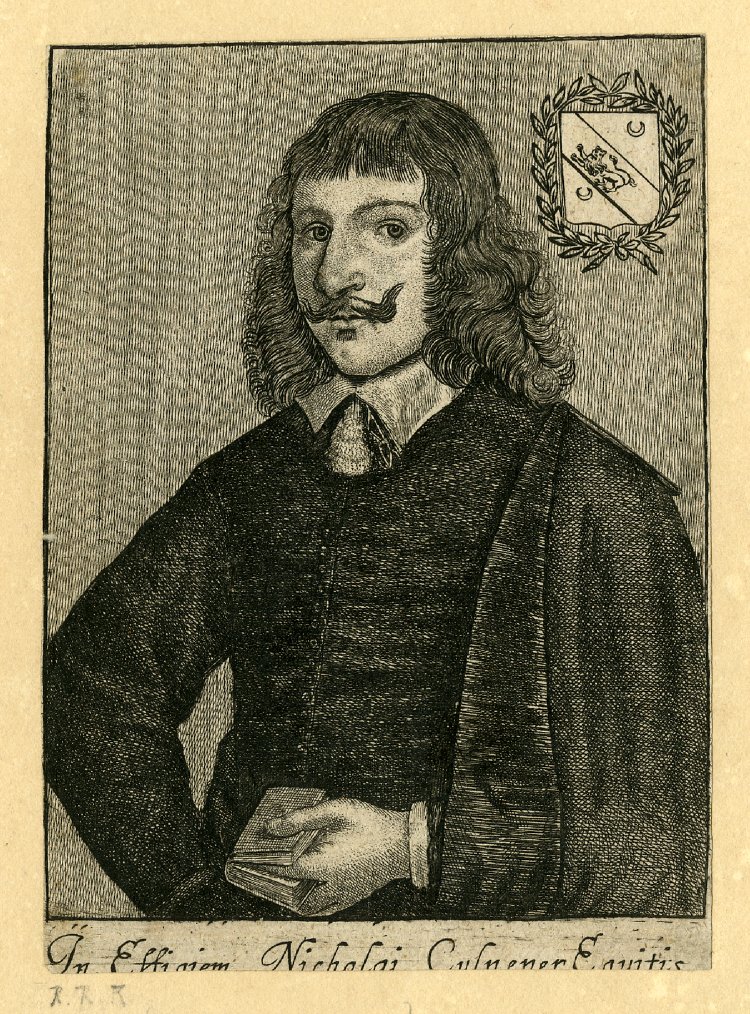
Nicholas Culpeper
An English herbalist and astrologer who translated medical texts into English for the poor.
Nicholas Culpeper (1616–1654) was an English botanist, physician, and astrologer. He is best known for his book The English Physitian, which provided affordable herbal remedies to the public during a time when medical care was expensive and restricted to Latin-speaking professionals.
- Published The English Physitian in 1652.
- Linked herbs to planetary influences.
- Challenged the medical establishment's monopoly.
- Work influenced North American herbalism.
- Accused of witchcraft during the Civil War.
What it is
Nicholas Culpeper was a seventeenth-century figure who blended botany with astrology to create a system of folk medicine. He wrote extensively about medicinal plants and their uses, often linking them to celestial bodies. His work served as a practical guide for those seeking healing outside the formal medical establishment. He is remembered primarily for his publications that made medical knowledge accessible to ordinary people.
Where it comes from
Culpeper was born in Ockley, Surrey, in 1616. After his father died, he was raised by his maternal grandfather, who influenced his early interest in astronomy and languages. He studied at Cambridge University and later apprenticed as an apothecary. These experiences laid the groundwork for his future career in herbal medicine and astrology. His background in both science and the stars shaped his unique approach to healing.
How it is done
Culpeper used astrology to determine the properties of plants. He believed that each herb was governed by a specific planet and would be most effective when harvested or used under that planet's influence. He paired diseases with opposing planetary forces to create remedies. His method involved cataloguing hundreds of herbs and describing their preparation and application for various ailments.
Tools and materials
The primary tools of Culpeper's practice were the herbs themselves and the printed word. He relied on botanical specimens found in the countryside and compiled his findings into detailed books. He also used astrological charts to align treatments with celestial events. His main tool for dissemination was inexpensive printing, which allowed his works to reach a wide audience.
Nicholas Culpeper, drawn and placed
- Living
- Revived
- Fading
- Historical
- Legendary
- Performed
- Lineage
- Medical astrology and herbalism
What it is for
Culpeper aimed to democratize healthcare. He sought to provide affordable medical advice to the poor, who could not afford the high fees charged by licensed physicians. He viewed medicine as a public right rather than a commercial secret. His purpose was to empower individuals to treat themselves using readily available natural resources.
Who does it
Culpeper trained as an apothecary and worked as a physician in Spitalfields, London. He treated patients directly, often seeing dozens daily. He was supported by his wife, Alice Field, whose inheritance helped fund his pharmacy. His practice was radical for its time, as it challenged the monopoly held by the College of Physicians and the Society of Apothecaries.
Peoples and places
Culpeper's work was primarily English but gained significant traction in colonial America. His books were widely read in North American colonies, where colonists introduced European medicinal plants to the New World. Today, his legacy persists in North America through herb shops named after him and continued interest in alternative holistic medicine.
At a glance: who, where and when
What people believe
His philosophy combined Galenic humoral theory with astrological beliefs. He held that health depended on balancing bodily fluids and aligning with planetary forces. This worldview was considered questionable by some contemporaries, who viewed his astrological claims as nonsense. Despite this, his system was widely read and influential in shaping early modern medical thought.
When it is done
Culpeper did not tie his practices to specific festivals but focused on the timing of plant harvesting according to astrological cycles. He believed that the moon and planets affected the potency of herbs. His work was published annually, with new editions appearing regularly to meet demand. His writings remained in print continuously from the seventeenth century onward.
How scholars and sceptics see it
Modern analysis shows that much of Culpeper's botanical content was derived from John Parkinson's earlier work. Critics have accused him of plagiarism and quackery, noting that he streamlined existing knowledge for cheaper publication. Some scholars suggest he understood the commercial value of his astrological claims. His reputation remains mixed, balancing between popular healer and controversial figure.
Cautions and what is closed
Culpeper faced accusations of witchcraft during the English Civil War. He was targeted by the Society of Apothecaries for challenging their professional standards. His use of certain herbs, such as hellebore and pennyroyal, involved substances now known to be toxic or dangerous if misused. His anti-establishment stance led to legal and professional conflicts throughout his life.
Compare and confuse
Culpeper's work is often compared to traditional herbalism and medical astrology. He differs from licensed physicians of his time by rejecting Latin terminology and high fees. His approach contrasts with modern pharmacology, which isolates active ingredients rather than using whole plants. His legacy is distinct from other astrologers due to his focus on practical medical applications.
Law and persecution
Culpeper operated outside the authority of the City of London, setting up his pharmacy in Spitalfields to avoid regulation. He openly criticized the College of Physicians and their restrictive practices. During the English Civil War, he joined the parliamentary forces and faced legal threats from medical authorities. His publications bypassed censorship laws that restricted medical texts to Latin.
Questions people ask about Nicholas Culpeper
What was Nicholas Culpeper's main contribution to medicine?
He translated complex medical texts into English and created affordable herbal guides for the public, making healthcare more accessible to those who could not afford licensed physicians.
How did Culpeper use astrology in his practice?
He believed plants were governed by planets and used astrological timing to harvest herbs and treat diseases, pairing remedies with opposing planetary influences to restore balance.
Why was Culpeper controversial in his time?
He criticized the high fees and Latin-only practices of the College of Physicians, offering cheap alternatives that threatened the professional monopoly of established medical authorities.
Is Culpeper's work still relevant today?
Yes, his books remain in print, and his influence persists in North American herbal shops and alternative medicine communities that value his historical approaches to plant-based healing.
Did Culpeper face legal trouble for his methods?
He was accused of witchcraft during the English Civil War and faced opposition from the Society of Apothecaries, who viewed his unlicensed practice and cheap remedies as a threat.
Good reading and sources
- Nicholas Culpeper on WikipediaEncyclopedia
- More photos on Wikimedia CommonsPhotos and video
- Wikidata recordOpen data
The facts on this page come from the Wikipedia article "Nicholas Culpeper", written by its contributors and used under the CC BY-SA 4.0 licence, and from its Wikidata record (CC0). EveryJaadu rewrote the text in its own words, with AI assistance, and compares every page with the article to make sure no passage is copied. It may be reused under the same CC BY-SA 4.0 licence with a link back.
It may contain mistakes. Names and customs differ from one community to the next, and some knowledge is closed to outsiders and left out here. This page describes belief and practice. It does not say that any of it works, it is not a how-to, and it is not medical advice. If something is wrong, tell us. Last refreshed 2026-10-05.
More from the United Kingdom
All the entries from the United Kingdom 🇬🇧 United KingdomHarry Price
A British psychic researcher and conjurer who investigated paranormal claims and exposed fraudulent mediums.Tradition · Wonder and entertainment Historical
🇬🇧 United KingdomHarry Price
A British psychic researcher and conjurer who investigated paranormal claims and exposed fraudulent mediums.Tradition · Wonder and entertainment Historical
 🇫🇷 France and 2 moreÉliphas Lévi
A French writer who shaped modern occult thought and ceremonial magic.Text · Power and authority · Speaking with spirits and the dead Historical
🇬🇧 United KingdomCharmer
English folk healers who used gifts or verses to treat natural ailments without chargeTradition · Healing Historical
🇫🇷 France and 2 moreÉliphas Lévi
A French writer who shaped modern occult thought and ceremonial magic.Text · Power and authority · Speaking with spirits and the dead Historical
🇬🇧 United KingdomCharmer
English folk healers who used gifts or verses to treat natural ailments without chargeTradition · Healing Historical
 🇬🇧 United KingdomWilliam Lilly
A seventeenth-century English astrologer and author who shaped Western tradition.Text · Seeing and foretelling · Power and authority Historical
🇬🇧 United KingdomWilliam Lilly
A seventeenth-century English astrologer and author who shaped Western tradition.Text · Seeing and foretelling · Power and authority Historical
Related elsewhere
All text 🇨🇳 China and 2 moreEight Immortals八仙
Eight legendary Taoist figures of China, each with a power and a vesselFigure · Protection · Healing Living
🇨🇳 China and 2 moreEight Immortals八仙
Eight legendary Taoist figures of China, each with a power and a vesselFigure · Protection · Healing Living
 🇮🇳 India and 1 moreAmritaअमृत (Sanskrit)
A Sanskrit concept of immortality and the nectar that grants it across Indian religionsBelief · Healing · Power and authority Living
🇮🇳 India and 1 moreAmritaअमृत (Sanskrit)
A Sanskrit concept of immortality and the nectar that grants it across Indian religionsBelief · Healing · Power and authority Living
 🇪🇬 Egypt and 2 moreIsisꜣst (Egyptian)
Egyptian goddess of magic, mourning and kingship, mother of HorusBeing · Protection · Healing Historical
🇪🇬 Egypt and 2 moreIsisꜣst (Egyptian)
Egyptian goddess of magic, mourning and kingship, mother of HorusBeing · Protection · Healing Historical
 🇿🇦 South AfricaSympathetic magic
A magical principle based on imitation and contact to influence the worldTradition · Protection · Healing Historical
🇿🇦 South AfricaSympathetic magic
A magical principle based on imitation and contact to influence the worldTradition · Protection · Healing Historical