
New Thought is a religious movement that originated in the United States during the early nineteenth century. It teaches that positive thinking and inner spiritual power can improve physical health, personal circumstances, and daily life.
- Originated in the US in the early 19th century
- Phineas Quimby taught illness stems from mind errors
- Teaches right thinking has a healing effect
- International New Thought Alliance formed in 1916
- Seicho-No-Ie is the largest denomination in Japan
What it is
New Thought is a loose collection of religious denominations and philosophical groups that share a focus on metaphysics and the power of the mind. Adherents believe that Infinite Intelligence or God exists everywhere and that spirit is the only true reality. They hold that human selfhood is divine and that right thinking has a direct healing effect on the body. The movement emphasizes creative visualization, personal power, and the law of attraction as tools for improving life.
Where it comes from
The movement coalesced in the United States in the early nineteenth century. Its origins are often traced to Phineas Quimby, an American mesmerist who taught that illness stems from erroneous beliefs in the mind. His ideas merged with Warren Felt Evans's Mental Science and influenced Mary Baker Eddy, though Christian Science diverged due to its theism. Later leaders like Emma Curtis Hopkins and Myrtle Fillmore expanded the philosophy through churches and publications.
How it is done
Practitioners use affirmations and mental discipline to align their thoughts with divine truth. The process involves identifying negative or fearful mental states and replacing them with courage, hope, and trust. Healing is achieved by affirming oneness with Infinite Intelligence. This mental shift is believed to correct wrong impressions and restore health, transforming daily experiences through constructive thought.
Tools and materials
The movement relies heavily on printed materials, including books, magazines, and essays. Publications like Nautilus and Daily Word spread ideas about the law of attraction and thought force. Leaders such as William Walker Atkinson wrote extensively on how mental vibrations influence the world. These texts serve as primary tools for teaching principles of positive thinking and spiritual alignment to a wide audience.
New Thought, drawn and placed
- Living
- Revived
- Fading
- Historical
- Legendary
- Performed
- Lineage
- Mind-cure movement
What it is for
The primary intent is healing, both physical and spiritual, by correcting mental errors. Followers also seek prosperity, freedom, and personal power through the constructive use of their minds. The belief system aims to help individuals mold their bodies and life circumstances by realizing the truth of their divine nature and the omnipresence of God.
Who does it
Many early teachers and founders were women, including Malinda Cramer and Nona L. Brooks. Churches and community centers have often been led by women since the eighteen eighties. Practitioners include authors, philosophers, and religious leaders who disseminate teachings through writing and speaking. The movement encourages individual intuition and continuous revelation over rigid dogma.
Peoples and places
The movement began in the United States and spread globally. In Japan, Seicho-No-Ie, founded by Masaharu Taniguchi, became one of the largest New Thought-oriented denominations. Other groups include Jewish Science and Religious Science. The International New Thought Alliance connects various groups worldwide, emphasizing shared principles of mental construction and spiritual unity across different cultural contexts.
At a glance: who, where and when
Who does it
Belief worlds


What people believe
Core beliefs include that disease originates in the mind and that spirit is the ultimate reality. True human selfhood is considered divine, and divinely attuned thought is a positive force. Adherents believe that mental states manifest into daily experience. The theology promotes therapeutic ideas where healing comes from realizing oneness with Infinite Intelligence, rejecting doubt and fear as barriers to health.
How scholars and sceptics see it
William James described New Thought as a genuine religious power with both speculative and practical sides. He noted its optimistic scheme of life and its ability to absorb elements from idealism, Hinduism, and spiritism. Scholars recognize it as a significant religious phenomenon that developed a large literature market and influenced popular culture through its emphasis on healthy-minded attitudes and the conquering efficacy of hope.
Cautions and what is closed
The movement has faced criticism for promoting get-rich-quick schemes through esoteric advice on making money. Some observers view the focus on prosperity and thought force as potentially misleading. The movement itself acknowledges the need for continuous evolution and adaptation to new knowledge, suggesting that rigid adherence to old methods may not serve modern practitioners effectively.
Compare and confuse
New Thought is closely related to the Mind-cure movement and shares similarities with Christian Science, though it differs in its lack of strict theistic doctrine. It also draws from Emersonian transcendentalism and Berkeleyan idealism. Unlike traditional religions, it does not rely on established authority but on what practices can accomplish for individuals, blending metaphysical concepts with practical daily living.
Today
New Thought publishing and educational activities reach approximately two and a half million people annually. Major organizations include Unity Church, Centers for Spiritual Living, and Seicho-No-Ie in Japan. The movement continues to evolve, with some groups removing Christian references to focus on universal spiritual principles. Magazines and online resources remain key tools for spreading its teachings on positive thinking and mental healing.
Questions people ask about New Thought
What is New Thought?
New Thought is a spiritual philosophy originating in the United States that links mental states to physical health and prosperity. It teaches that positive thinking and inner spiritual power can improve life circumstances and heal the body.
Where did New Thought come from?
It emerged in the early nineteenth century in the United States, tracing roots to Phineas Quimby's teachings on mesmerism and mental healing. It later incorporated ideas from transcendentalism, Hinduism, and spiritism.
How does New Thought view illness?
Adherents believe sickness originates in the mind due to erroneous beliefs. Healing is achieved by correcting these mental errors through right thinking and affirming oneness with Infinite Intelligence.
Who are the main practitioners?
The movement includes religious denominations, authors, and philosophers. Many early leaders were women, and today it encompasses groups like Unity Church and Seicho-No-Ie in Japan.
Good reading and sources
- New Thought on WikipediaEncyclopedia
- More photos on Wikimedia CommonsPhotos and video
- Wikidata recordOpen data
The facts on this page come from the Wikipedia article "New Thought", written by its contributors and used under the CC BY-SA 4.0 licence, and from its Wikidata record (CC0). EveryJaadu rewrote the text in its own words, with AI assistance, and compares every page with the article to make sure no passage is copied. It may be reused under the same CC BY-SA 4.0 licence with a link back.
It may contain mistakes. Names and customs differ from one community to the next, and some knowledge is closed to outsiders and left out here. This page describes belief and practice. It does not say that any of it works, it is not a how-to, and it is not medical advice. If something is wrong, tell us. Last refreshed 2026-10-06.
More from the United States
All the entries from the United States 🇺🇸 United States and 1 moreMedicine wheel
Circular stone formations built by Indigenous peoples of North America for ceremony and astronomy.Tradition · Speaking with spirits and the dead · Power and authority Living
🇺🇸 United States and 1 moreMedicine wheel
Circular stone formations built by Indigenous peoples of North America for ceremony and astronomy.Tradition · Speaking with spirits and the dead · Power and authority Living
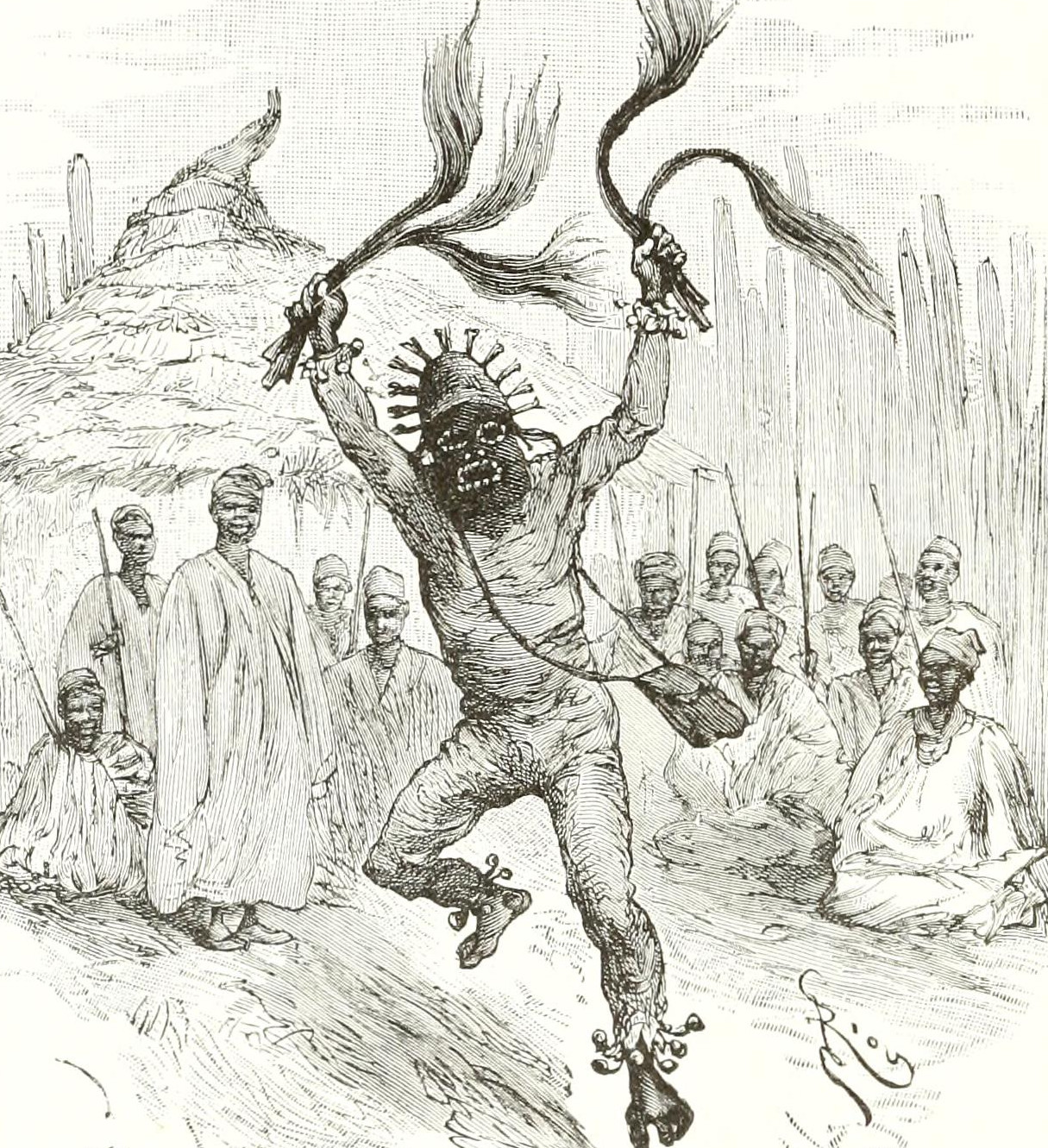 🇺🇸 United States and 2 moreLouisiana Voodoo
An African diasporic religion practiced in Louisiana from the 18th to early 20th centuriesTradition · Healing · Protection Historical
🇺🇸 United States and 2 moreLouisiana Voodoo
An African diasporic religion practiced in Louisiana from the 18th to early 20th centuriesTradition · Healing · Protection Historical
 🇺🇸 United StatesFolk healer
An unlicensed community member who provides healing care using local plants and traditional knowledge.Tradition · Healing · Protection Historical
🇺🇸 United StatesFolk healer
An unlicensed community member who provides healing care using local plants and traditional knowledge.Tradition · Healing · Protection Historical
 🇺🇸 United States and 1 moreGroundhog DayGrund'sau dåk
A North American custom using a burrowing rodent to forecast the end of winterTradition · Seeing and foretelling · Luck and prosperity Living
🇺🇸 United States and 1 moreGroundhog DayGrund'sau dåk
A North American custom using a burrowing rodent to forecast the end of winterTradition · Seeing and foretelling · Luck and prosperity Living
Related elsewhere
All tradition 🇫🇷 FranceHoly GrailSaint Graal
A cup or stone from Arthurian tales that grants healing and eternal lifeFigure · Healing · Luck and prosperity Legendary
🇫🇷 FranceHoly GrailSaint Graal
A cup or stone from Arthurian tales that grants healing and eternal lifeFigure · Healing · Luck and prosperity Legendary
 🇬🇹 GuatemalaMaximónRi Laj Mam
A Maya folk saint and trickster deity venerated in the Guatemalan HighlandsBeing · Protection · Healing Living
🇬🇹 GuatemalaMaximónRi Laj Mam
A Maya folk saint and trickster deity venerated in the Guatemalan HighlandsBeing · Protection · Healing Living
 🇨🇳 China and 2 moreEight Immortals八仙
Eight legendary Taoist figures of China, each with a power and a vesselFigure · Protection · Healing Living
🇨🇳 China and 2 moreEight Immortals八仙
Eight legendary Taoist figures of China, each with a power and a vesselFigure · Protection · Healing Living
 🇮🇳 India and 5 moreAstrology
A divinatory practice that reads human fate through the positions of celestial bodies.Belief · Seeing and foretelling · Luck and prosperity Living
🇮🇳 India and 5 moreAstrology
A divinatory practice that reads human fate through the positions of celestial bodies.Belief · Seeing and foretelling · Luck and prosperity Living