Leabharcham was an old poet tasked with nursing Deirdre in seclusion until she could wed King Conchobar. She later reported that Deirdre had lost her beauty to spare the king from vengeance.
- Nursed Deirdre in seclusion for King Conchobar
- Identified Naoise, triggering the escape to Alba
- Lied about Deirdre's beauty to save her life
- Character named Lavarcham in Synge's 1910 play
What it is
Leabharcham is a legendary figure from Irish mythology, specifically within the Ulster Cycle. She serves as a nurse and guardian to the prophesied maiden Deirdre. The story centers on her duty to raise Deirdre in isolation until the girl reached marriageable age for King Conchobar mac Nessa. Leabharcham acts as a bridge between the secluded world of the girl and the political court of the king.
Where it comes from
The narrative originates from ancient Irish tales concerning the birth of Deirdre. A prophecy declared that the infant would be the fairest woman in Ireland but would bring ruin to Ulster. Leabharcham was charged by King Conchobar to fulfill this role of caretaker. Her actions inadvertently contribute to the fulfillment of the druid Cathbad's prophecy when she identifies Naoise, a warrior Deirdre loves.
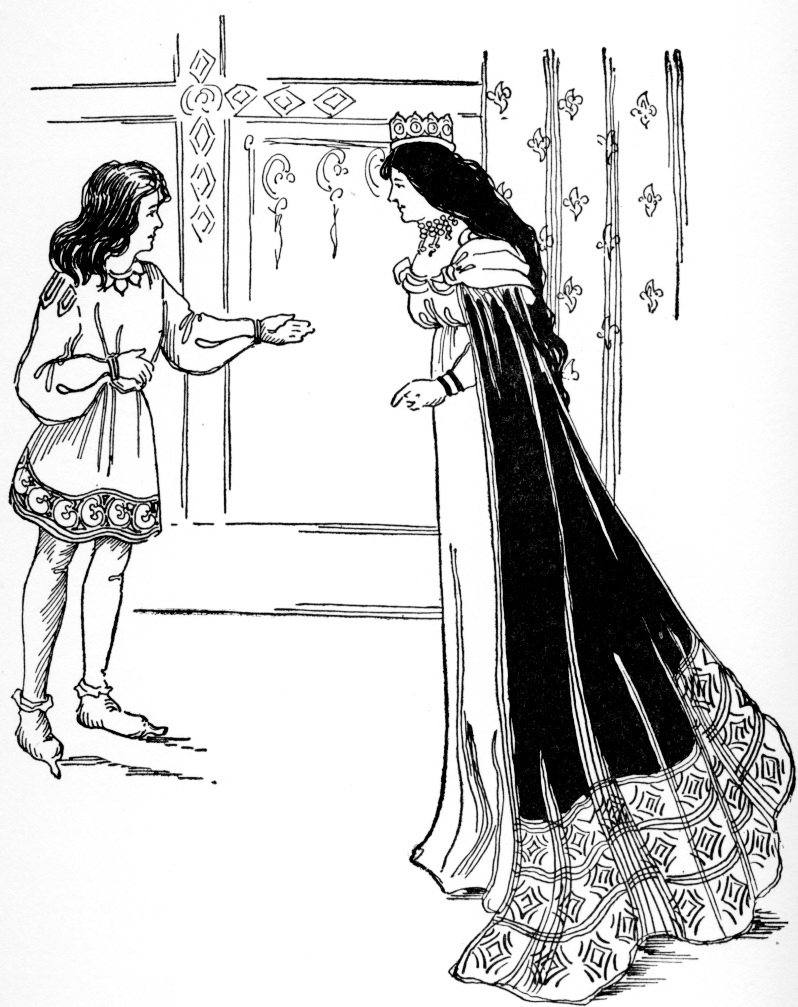
Leabharcham, drawn and placed
- Living
- Revived
- Fading
- Historical
- Legendary
- Performed
- Lineage
- Ulster Cycle
Peoples and places
The character is embedded in the traditions of the Ulster people. She is depicted as an old poet who dutifully returns Deirdre to the court at Emain Macha. Years later, she is sent back by the king to assess Deirdre's appearance after the lovers return from Alba. Leabharcham lies to protect Deirdre, claiming the maiden has lost her beauty to discourage the king's wrath.
At a glance: who, where and when
Peoples
Today
Leabharcham appears in modern literary adaptations of the myth. In J. M. Synge's 1910 play 'Deirdre of the Sorrows', she is named Lavarcham. She delivers the final lines of the play, mourning the deaths of Deirdre and Naoise, describing a dark sky and a hard earth.
Questions people ask about Leabharcham
Who is Leabharcham?
Leabharcham is a legendary nurse in Irish mythology who raised the maiden Deirdre in seclusion for King Conchobar mac Nessa until she was old enough to marry him.
Where does the story of Leabharcham come from?
The story comes from the Ulster Cycle of Irish mythology. It involves the prophecy surrounding Deirdre's birth and the subsequent tragedy that befell the province of Ulster.
What did Leabharcham do to protect Deirdre?
When sent by the angry King Conchobar to check if Deirdre was still beautiful, Leabharcham lied. She reported that Deirdre had lost all her beauty to prevent the king from seeking vengeance against Naoise.
Is Leabharcham mentioned in modern literature?
Yes, she appears as Lavarcham in J. M. Synge's 1910 play 'Deirdre of the Sorrows'. She delivers the final lines of the play, mourning the deaths of the main characters.
Good reading and sources
The facts on this page come from the Wikipedia article "Leabharcham", written by its contributors and used under the CC BY-SA 4.0 licence, and from its Wikidata record (CC0). EveryJaadu rewrote the text in its own words, with AI assistance, and compares every page with the article to make sure no passage is copied. It may be reused under the same CC BY-SA 4.0 licence with a link back.
It may contain mistakes. Names and customs differ from one community to the next, and some knowledge is closed to outsiders and left out here. This page describes belief and practice. It does not say that any of it works, it is not a how-to, and it is not medical advice. If something is wrong, tell us. Last refreshed 2026-10-06.
More from Ireland
All the entries from Ireland 🇬🇧 United Kingdom and 2 moreKing ArthurBrenin Arthur
A legendary British king and folk hero of medieval literature and Welsh mythologyFigure · Power and authority · Wonder and entertainment Legendary
🇬🇧 United Kingdom and 2 moreKing ArthurBrenin Arthur
A legendary British king and folk hero of medieval literature and Welsh mythologyFigure · Power and authority · Wonder and entertainment Legendary
 🇬🇧 United Kingdom and 2 moreExcalibur
The mythical sword of King Arthur, symbolizing rightful sovereignty and magical power.Figure · Power and authority Legendary
🇬🇧 United Kingdom and 2 moreExcalibur
The mythical sword of King Arthur, symbolizing rightful sovereignty and magical power.Figure · Power and authority Legendary
 🇧🇷 Brazil and 5 moreWhite Lady
A female ghost in white clothing linked to tragedy and omens across many culturesFigure · Cursing and harm · Seeing and foretelling Legendary
🇧🇷 Brazil and 5 moreWhite Lady
A female ghost in white clothing linked to tragedy and omens across many culturesFigure · Cursing and harm · Seeing and foretelling Legendary
 🇬🇧 United Kingdom and 3 moreMorgause
A legendary queen of Orkney and sister to King Arthur in British mythFigure · Power and authority Legendary
🇬🇧 United Kingdom and 3 moreMorgause
A legendary queen of Orkney and sister to King Arthur in British mythFigure · Power and authority Legendary
Related elsewhere
All figure 🇪🇬 Egypt and 1 moreLilithלִילִית
A feminine figure from Mesopotamian and Jewish mythology, often depicted as a night demon or spirit.Being · Cursing and harm Legendary
🇬🇧 United KingdomGiles Corey
An English-born farmer pressed to death for refusing to plead during the Salem witch trialsFigure Historical
🇪🇬 Egypt and 1 moreLilithלִילִית
A feminine figure from Mesopotamian and Jewish mythology, often depicted as a night demon or spirit.Being · Cursing and harm Legendary
🇬🇧 United KingdomGiles Corey
An English-born farmer pressed to death for refusing to plead during the Salem witch trialsFigure Historical
 🇨🇳 China and 2 moreEight Immortals八仙
Eight legendary Taoist figures of China, each with a power and a vesselFigure · Protection · Healing Living
🇪🇬 EgyptDjedi
A fictional magician from the Westcar Papyrus who resurrects animals and foretells a king's lineage.Figure · Seeing and foretelling · Wonder and entertainment Legendary
🇨🇳 China and 2 moreEight Immortals八仙
Eight legendary Taoist figures of China, each with a power and a vesselFigure · Protection · Healing Living
🇪🇬 EgyptDjedi
A fictional magician from the Westcar Papyrus who resurrects animals and foretells a king's lineage.Figure · Seeing and foretelling · Wonder and entertainment Legendary