
Indian basket trick
A stage illusion where an assistant vanishes inside a pierced wicker container
The Indian basket trick is one of the oldest known stage illusions. It features an assistant who disappears from a wicker basket that has been pierced by swords, reappearing unharmed elsewhere.
- One of the oldest known stage illusions
- Assistant vanishes from a pierced wicker basket
- Swords pass between the assistant's body parts
- Originally performed in Indian streets
- Colonel Stodare adapted it for the stage
What it is
The Indian basket trick is a classic stage illusion performed for entertainment. An assistant enters a wicker basket, which the magician then pierces with long swords. The assistant subsequently vanishes and reappears safely away from the container. This effect relies on misdirection and cognitive illusions to hide the method from the audience. It is recognized as one of the oldest forms of this type of performance art.
Where it comes from
The trick originated in India, where it was initially performed in street settings. Over time, it was adapted for formal stage magic. Colonel Stodare played a key role in transitioning the act from public streets to theatrical stages. Western magicians have used adapted versions of the trick for a long period, integrating it into their repertoires.
Tools and materials
The primary tool is a wicker basket, though modern performers often use a box instead. Long swords are used to pierce the container. The design of the basket allows for bulging sides where the assistant can hide. Prearranged gaps ensure the swords do not strike the person inside.
Indian basket trick, drawn and placed
- Living
- Revived
- Fading
- Historical
- Legendary
- Performed
What it is for
The trick is designed to create wonder and entertain audiences. It demonstrates skill in deception and handling props. Performers use it to showcase mastery over seemingly impossible physical constraints. The goal is to amaze viewers with the safe disappearance of a human subject.
Who does it
Performers trained in stage magic execute this illusion. The magician directs the audience's attention while the assistant positions themselves correctly. Training involves mastering the timing of sword insertion and the mechanics of the container.
At a glance: who, where and when
Who does it
What people believe
There is no specific religious or spiritual belief attached to the trick. It is treated purely as a mechanical and psychological puzzle. Audiences understand it is a constructed deception rather than a supernatural event. Scholars view it as an example of historical entertainment techniques.
When it is done
The trick is not tied to specific festivals or calendar days. It is performed whenever a magician schedules a show or street performance. Its presentation depends on the availability of the venue and the audience rather than seasonal cycles.
How scholars and sceptics see it
Scholars analyze the trick as part of the history of magic and deception. Lee Siegel examined wonders and deceptions in India, providing context for such performances. Researchers study how the trick evolved from street entertainment to stage spectacle. The revelation of its secrets by magicians like Samri Baldwin highlights the transparency of the art form.
Cautions and what is closed
The trick involves physical risk if performed incorrectly. Swords must be placed precisely to avoid injuring the assistant. Modern performers mitigate these risks by using boxes and careful choreography. Fraudulent claims of supernatural ability associated with such tricks can mislead audiences about the nature of the performance.
Compare and confuse
The Indian basket trick is sometimes confused with other vanishing acts. It differs from simple sleight of hand by involving large props and multiple people. Similar illusions exist in Western magic but often use different containers. The name reflects its cultural origin, though the mechanics are universal.
Questions people ask about Indian basket trick
What is the Indian basket trick?
It is a stage illusion where an assistant enters a wicker basket that is then pierced with swords.
Where did the trick originate?
The trick originated in India. It began as a street performance before being adapted for formal stage magic by figures like Colonel Stodare, eventually spreading to Western magicians.
How does the assistant survive the swords?
The assistant coils around the bulging sides of the basket. The swords are inserted only at prearranged spots that pass between the limbs and body, avoiding contact with the person inside.
Good reading and sources
The facts on this page come from the Wikipedia article "Indian basket trick", written by its contributors and used under the CC BY-SA 4.0 licence, and from its Wikidata record (CC0). EveryJaadu rewrote the text in its own words, with AI assistance, and compares every page with the article to make sure no passage is copied. It may be reused under the same CC BY-SA 4.0 licence with a link back.
It may contain mistakes. Names and customs differ from one community to the next, and some knowledge is closed to outsiders and left out here. This page describes belief and practice. It does not say that any of it works, it is not a how-to, and it is not medical advice. If something is wrong, tell us. Last refreshed 2026-10-15.
More from India
All the entries from India 🇮🇳 India and 5 moreSnake charming
A street performance using a gourd flute to make snakes swayIllusion · Wonder and entertainment · Luck and prosperity Fading
🇮🇳 India and 5 moreSnake charming
A street performance using a gourd flute to make snakes swayIllusion · Wonder and entertainment · Luck and prosperity Fading
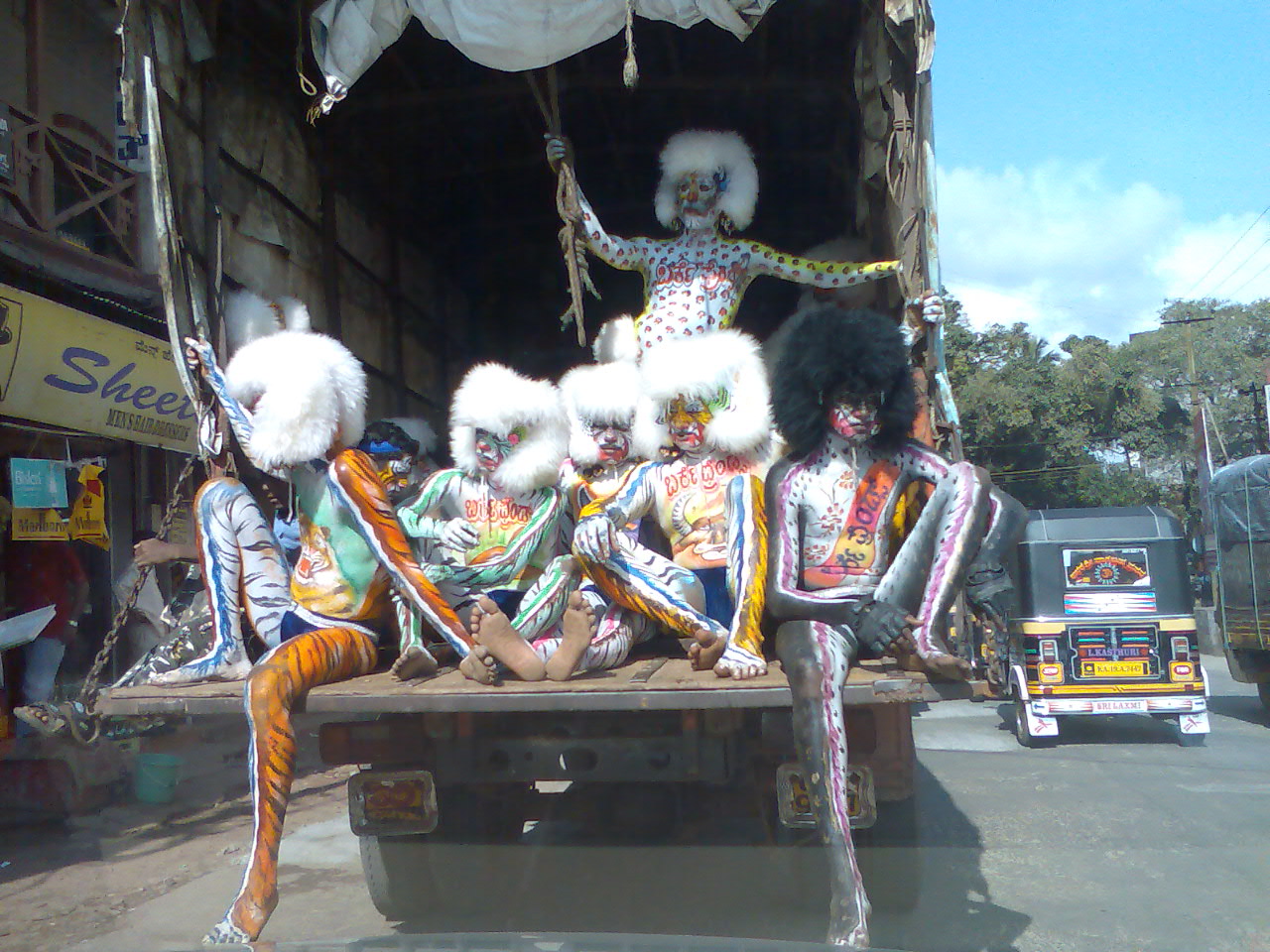 🇮🇳 IndiaPili Yesaಪಿಲಿವೇಷ
A coastal Karnataka folk dance where performers paint themselves as tigers to honour the Goddess DurgaIllusion · Protection · Power and authority Living
🇮🇳 IndiaPili Yesaಪಿಲಿವೇಷ
A coastal Karnataka folk dance where performers paint themselves as tigers to honour the Goddess DurgaIllusion · Protection · Power and authority Living
 🇮🇳 India and 1 moreFire eating
A performance art of extinguishing flames in the mouthIllusion · Wonder and entertainment Performed
🇮🇳 India and 1 moreFire eating
A performance art of extinguishing flames in the mouthIllusion · Wonder and entertainment Performed
 🇮🇳 India and 1 moreGarba
A Gujarati circle dance performed around a central symbol during NavaratriIllusion · Power and authority · Luck and prosperity Living
🇮🇳 India and 1 moreGarba
A Gujarati circle dance performed around a central symbol during NavaratriIllusion · Power and authority · Luck and prosperity Living
Related elsewhere
All illusion 🇫🇷 France and 2 moreKing ArthurBrenin Arthur
A legendary British king and folk hero of medieval literature and Welsh mythologyFigure · Power and authority · Wonder and entertainment Legendary
🇫🇷 France and 2 moreKing ArthurBrenin Arthur
A legendary British king and folk hero of medieval literature and Welsh mythologyFigure · Power and authority · Wonder and entertainment Legendary
 🇫🇷 FranceHoly GrailSaint Graal
A cup or stone from Arthurian legend with miraculous powersFigure · Healing · Luck and prosperity Legendary
🇪🇬 EgyptDjedi
A fictional magician from the Westcar Papyrus who resurrects animals and foretells a king's lineage.Figure · Seeing and foretelling · Wonder and entertainment Legendary
🇬🇧 United KingdomGreen Children of Woolpit
A medieval English legend about two green-skinned siblings who appeared in a Suffolk village.Figure · Wonder and entertainment Legendary
🇫🇷 FranceHoly GrailSaint Graal
A cup or stone from Arthurian legend with miraculous powersFigure · Healing · Luck and prosperity Legendary
🇪🇬 EgyptDjedi
A fictional magician from the Westcar Papyrus who resurrects animals and foretells a king's lineage.Figure · Seeing and foretelling · Wonder and entertainment Legendary
🇬🇧 United KingdomGreen Children of Woolpit
A medieval English legend about two green-skinned siblings who appeared in a Suffolk village.Figure · Wonder and entertainment Legendary