
Hercules' Club
In its own language: Herkuleskeule
from the name of the hero-god Hercules
A club-shaped amulet worn in the Roman Empire and by Germanic peoples as a protective charm.
The Hercules' Club is an amulet shaped like a wooden club, used from the Roman era through the Migration period. It was associated with the god Hercules in the Roman world and later identified with the thunder god Donar among Germanic tribes. Practitioners wore these charms for protection.
- Roman-era clubs were often made of gold and cast in molds.
- Germanic versions were carved from deer antler or bone.
- Finds are exclusively located in female graves.
- Tacitus linked Germanic thunder gods to Hercules.
- Christianization replaced the club with Thor's hammer pendants.
What it is
The Hercules' Club is a small amulet cast or carved to resemble a thick wooden club. It appears in two main sizes during the Roman period, typically made of gold. The shape mimics the weapon often carried by the hero Hercules. Later versions were crafted from materials like deer antler, bone, or wood. These items functioned as personal talismans rather than weapons.
Where it comes from
The object originated in the Roman Empire between the second and third centuries. Archaeological finds confirm its link to Hercules, such as an inscription found in Köln-Nippes. Tacitus noted that Germanic tribes already viewed their own thunder gods as similar to Hercules. This interpretatio romana allowed the symbol to transition into Germanic culture. During the Migration period, the amulet spread rapidly across Europe from the Elbe region.
How it is done
Wearers attached the clubs to their clothing or bodies. Evidence shows they were placed in female graves, indicating they were worn during life. They were likely fastened as pendants on a belt or as earrings. The Romans produced them using molds for smaller pieces or by hammering sheet metal for larger ones. Germanic makers carved them from natural materials like antlers.
Tools and materials
Roman examples were frequently made of gold. Later Germanic versions used deer antler, bone, or wood, with occasional bronze or precious metal variants. Some pieces featured decorative elements. A bronze mace found in Cambridgeshire included Celtic animal heads and wheel designs at the base, showing local artistic influence alongside the standard club shape.
Hercules' Club, drawn and placed
- Living
- Revived
- Fading
- Historical
- Legendary
- Performed
- Lineage
- Roman and Germanic pagan traditions
- Timing
- worn on belts or ears
What it is for
The amulet served as a protective charm. Its association with Hercules provided divine strength and safety. For Germanic users, it connected them to Donar, the thunder god who protected against chaos and harm. The placement in female graves suggests it was a significant part of personal identity and spiritual defense.
Who does it
Ordinary people wore these charms in daily life. The artifacts are found exclusively in female graves, suggesting women were the primary wearers or recipients. No specific priestly class is mentioned for this item. It was a common folk practice integrated into personal adornment and burial customs across different social levels.
Peoples and places
The tradition began with Romans and spread to Britain and continental Europe. Germanic tribes adopted the symbol, renaming it Donar's Club. Celtic artisans added their own iconography to Roman models. Bone pendants with similar shapes have also been found in Iron Age Palestine, linking it to broader Mediterranean jewelry trends of the era.
At a glance: who, where and when
Who does it
Peoples
Belief worlds
What people believe
The charm relied on the power of the deity it represented. Romans believed Hercules offered protection through his heroic status. Germanic peoples saw Donar as a defender of order. The physical object acted as a conduit for this divine authority. The shift from Hercules to Donar reflects how communities adapted symbols to fit their own theological frameworks while maintaining the core idea of divine protection.
When it is done
There are no specific festivals tied to the wearing of the club. It was a personal item worn throughout life. Its use declined during the Christianization of Scandinavia in the eighth and ninth centuries, when Thor's hammer pendants replaced it as the dominant symbol of faith.
How scholars and sceptics see it
Historians trace the object through archaeological records and texts like those of Tacitus. Scholars note the continuity between Roman and Germanic religious practices. The presence of similar bone pendants in Palestine highlights cross-cultural exchanges in jewelry design. Researchers distinguish between the Roman gold versions and the later organic material examples based on manufacturing techniques.
Cautions and what is closed
No specific dangers or frauds are recorded for this historical artifact. It is a subject of academic study rather than active practice. The decline of the tradition was driven by religious change rather than persecution of the object itself.
Compare and confuse
The Hercules' Club is distinct from the later Thor's hammer, though both served similar protective roles. It differs from actual weapons due to its small size and ornamental nature. The Palestinian bone pendants share the shape but lack the direct mythological association found in European examples.
Questions people ask about Hercules' Club
What is a Hercules' Club?
It is a small amulet shaped like a wooden club, worn as a protective charm. It originated in the Roman Empire and was later adopted by Germanic tribes who associated it with their own thunder god.
Who wore these amulets?
Archaeological evidence shows they were worn primarily by women. They were attached to belts or ears as personal jewelry during the Roman and Migration periods.
Why did the tradition end?
The practice faded during the Christianization of Scandinavia. Thor's hammer pendants replaced the club as the preferred symbol for believers in the new religion.
Good reading and sources
The facts on this page come from the Wikipedia article "Hercules' Club (amulet)", written by its contributors and used under the CC BY-SA 4.0 licence, and from its Wikidata record (CC0). EveryJaadu rewrote the text in its own words, with AI assistance, and compares every page with the article to make sure no passage is copied. It may be reused under the same CC BY-SA 4.0 licence with a link back.
It may contain mistakes. Names and customs differ from one community to the next, and some knowledge is closed to outsiders and left out here. This page describes belief and practice. It does not say that any of it works, it is not a how-to, and it is not medical advice. If something is wrong, tell us. Last refreshed 2026-10-06.
More from Germany
All the entries from Germany 🇬🇧 United Kingdom and 5 moreConcealed shoes
Shoes hidden in building structures as folk charms for protection and fertilityCharm · Protection · Speaking with spirits and the dead Historical
🇬🇧 United Kingdom and 5 moreConcealed shoes
Shoes hidden in building structures as folk charms for protection and fertilityCharm · Protection · Speaking with spirits and the dead Historical
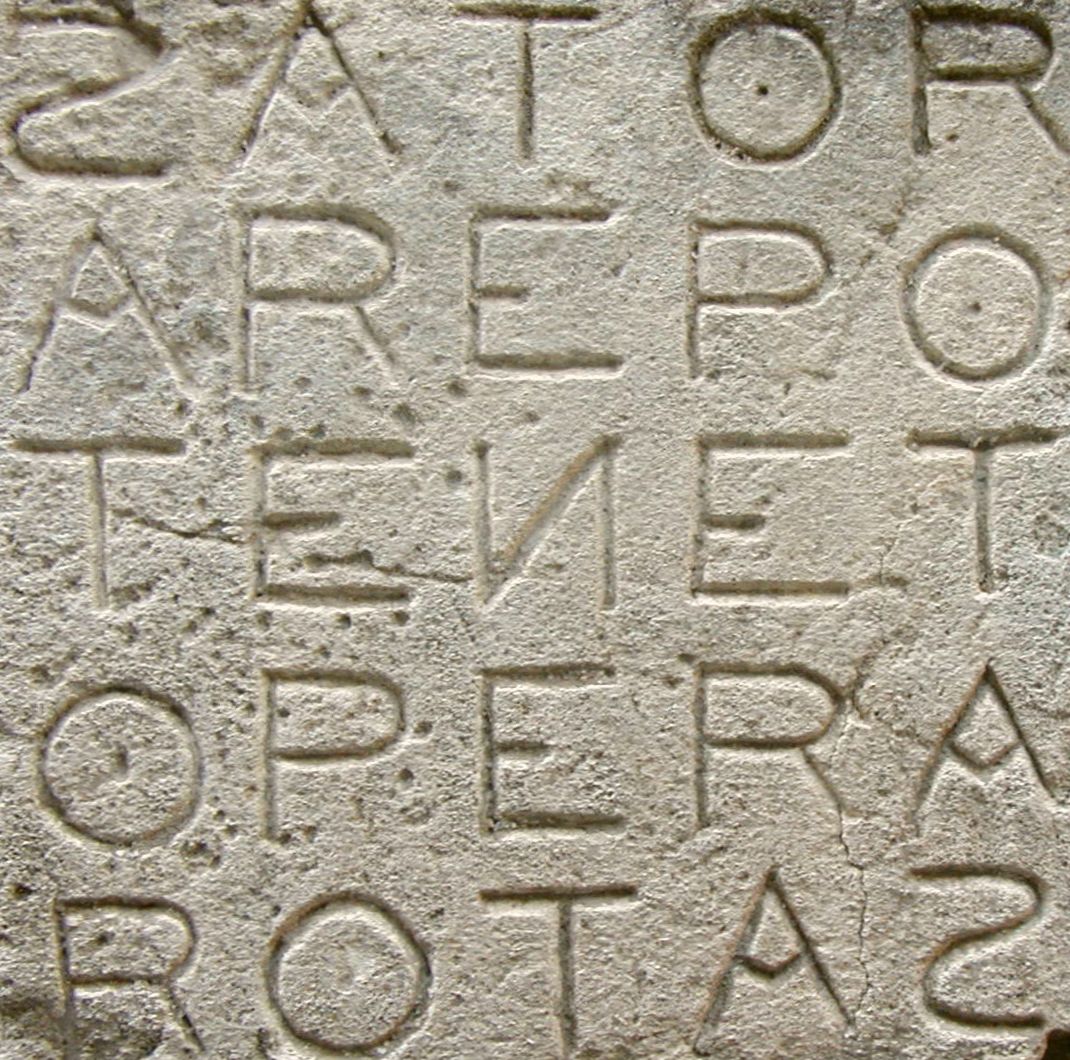 🇮🇹 Italy and 5 moreSator Square
A five-word Latin palindrome found in Roman ruins and medieval churchesCharm · Protection · Healing Historical
🇮🇹 Italy and 5 moreSator Square
A five-word Latin palindrome found in Roman ruins and medieval churchesCharm · Protection · Healing Historical
 🇮🇹 Italy and 5 moreRelic
An object or body part kept to honor a holy person and mark their connection to the divineCharm · Protection · Healing Living
🇮🇹 Italy and 5 moreRelic
An object or body part kept to honor a holy person and mark their connection to the divineCharm · Protection · Healing Living
 🇬🇧 United Kingdom and 2 moreAdder stone
A naturally perforated stone used as a protective talisman in European folkloreCharm · Protection · Luck and prosperity Historical
🇬🇧 United Kingdom and 2 moreAdder stone
A naturally perforated stone used as a protective talisman in European folkloreCharm · Protection · Luck and prosperity Historical
Related elsewhere
All charm 🇪🇬 Egypt and 1 moreSphinx
A mythical hybrid with a human head and lion body, serving as guardian or riddler in Egyptian and Greek traditions.Being · Protection · Wonder and entertainment Legendary
🇪🇬 Egypt and 1 moreSphinx
A mythical hybrid with a human head and lion body, serving as guardian or riddler in Egyptian and Greek traditions.Being · Protection · Wonder and entertainment Legendary
 🇪🇬 Egypt and 3 moreAmulet
A portable object worn or carried to ward off harm and invite fortuneCharm · Protection · Luck and prosperity Living
🇪🇬 Egypt and 3 moreAmulet
A portable object worn or carried to ward off harm and invite fortuneCharm · Protection · Luck and prosperity Living
 🇨🇳 China and 3 moreChinese dragon龍
A legendary water deity and imperial symbol in East Asian cultureBeing · Protection · Luck and prosperity Historical
🇨🇳 China and 3 moreChinese dragon龍
A legendary water deity and imperial symbol in East Asian cultureBeing · Protection · Luck and prosperity Historical
 🇮🇳 India and 2 moreHomaहोम
A fire ritual found across Asian religions where offerings are burned as a votive exchange with the divine.Rite · Protection · Speaking with spirits and the dead Living
🇮🇳 India and 2 moreHomaहोम
A fire ritual found across Asian religions where offerings are burned as a votive exchange with the divine.Rite · Protection · Speaking with spirits and the dead Living