
Fakir
In its own language: فقير
from Arabic faqr, meaning poverty
An Islamic ascetic who seeks spiritual neediness and devotion to God.
The term originates in Arabic and describes a state of spiritual poverty rather than material lack. It is also used in South Asia for Hindu mystics.
- Derived from Arabic faqr meaning poverty
- Focuses on spiritual neediness not material lack
- Used for Hindu ascetics in South Asia
- Engages in dhikr devotional practices
- Spread Islam across multiple continents
What it is
The word fakir refers to an ascetic within the Sufi tradition of Islam. Practitioners focus on spiritual neediness rather than physical deprivation. They seek purity and direct connection with the divine through devotion. The term implies a state of being empty of worldly desires to be filled with God’s presence. In some regions, it describes holy men believed to hold special powers.
Where it comes from
Sufism emerged during the early Umayyad Caliphate as a reaction to societal worldliness. Early teachings were passed orally because open discussion was restricted. The concept of faqr centers on the belief that humans are spiritually poor without God. Over centuries, Sufi orders spread across vast territories from North Africa to Southeast Asia.
How it is done
Fakirs engage in dhikr, which involves repeating the names of God. This practice often follows daily prayers. Scholars describe their path as one of self-dissolution into divine oneness. They maintain perspective on temporal life while dedicating themselves to worship. Some traditions view them as possessing authority granted by the divine.
Tools and materials
The primary tool is the heart, purified of attachment. Devotional formulas and repetition serve as instruments of focus. No specific physical objects are mandated for the core practice. The body itself becomes a site of discipline and spiritual transformation through ascetic living.
Fakir, drawn and placed
- Living
- Revived
- Fading
- Historical
- Legendary
- Performed
- Lineage
- Sufism
What it is for
Practitioners aim for eternity by eliminating separation from the divine. They are seen as self-sufficient in spirit, needing only God. Communities may regard them as sources of blessing or miraculous power.
Who does it
Fakirs are typically male ascetics chosen by their own vow. Training involves rigorous spiritual discipline under a guide. Some scholars define them as having commanding powers gifted by Allah. The role requires complete dedication to the path of tasawwuf.
Peoples and places
The term is prevalent in the Middle East and South Asia. In India, it applies to both Muslim Sufis and Hindu ascetics like sadhus. This usage developed during the Mughal era. Distinct clans of faqeers reside at Sufi shrines in North India.
At a glance: who, where and when

What people believe
Islamic theology views the fakir as one who recognizes total dependence on God. The concept of Wahdat al-wujud suggests unity with the divine. Practitioners believe they transcend the mortal world to reach manifestation of God. Spiritual neediness is valued over material wealth.
How scholars and sceptics see it
Academics note the term’s evolution from mendicant dervish to general ascetic. Some apply it to non-Muslim mystics in South Asia. Researchers study Sufi orders like the Chishtiyah and Qadiriyah. The Cambridge English Dictionary defines it as a member of an Islamic religious group.
Compare and confuse
The term is related to dervish and sadhu. Gurdjieff used it to denote the physical path of development. It differs from monk, which he associated with emotional growth. Yogis represent mental development in his framework.
Today
Fakirs remain active in South Asia and the Middle East. The term is used colloquially for various ascetics. Hindu mystics are sometimes called fakirs in Indian contexts. Sufi shrines continue to attract followers and residents.
Questions people ask about Fakir
What does the word fakir mean?
It comes from the Arabic word faqr, which means poverty. However, it refers to spiritual poverty and neediness for God, not necessarily a lack of money or food.
Is a fakir always a Muslim?
Originally yes, as it is an Islamic term for Sufi ascetics. In South Asia, it is also applied to Hindu mystics like sadhus due to cultural blending during the Mughal era.
What do fakirs do in their daily lives?
They practice dhikr, which is the repetition of God’s names.
Good reading and sources
- Fakir on WikipediaEncyclopedia
- More photos on Wikimedia CommonsPhotos and video
- Wikidata recordOpen data
The facts on this page come from the Wikipedia article "Fakir", written by its contributors and used under the CC BY-SA 4.0 licence, and from its Wikidata record (CC0). EveryJaadu rewrote the text in its own words, with AI assistance, and compares every page with the article to make sure no passage is copied. It may be reused under the same CC BY-SA 4.0 licence with a link back.
It may contain mistakes. Names and customs differ from one community to the next, and some knowledge is closed to outsiders and left out here. This page describes belief and practice. It does not say that any of it works, it is not a how-to, and it is not medical advice. If something is wrong, tell us. Last refreshed 2026-10-10.
More from India
All the entries from India 🇮🇳 IndiaChakraचक्र
Meditation points in the subtle body used in Hindu and Buddhist yogaTradition · Speaking with spirits and the dead · Change and initiation Living
🇮🇳 IndiaChakraचक्र
Meditation points in the subtle body used in Hindu and Buddhist yogaTradition · Speaking with spirits and the dead · Change and initiation Living
 🇮🇳 IndiaMahakaleshwar JyotirlingaMahākāleśvara
A sacred Shiva shrine in Ujjain, India, known for its south-facing idol and ancient origins.Tradition · Protection · Power and authority Living
🇮🇳 IndiaMahakaleshwar JyotirlingaMahākāleśvara
A sacred Shiva shrine in Ujjain, India, known for its south-facing idol and ancient origins.Tradition · Protection · Power and authority Living
 🇮🇳 India and 5 moreHoliहोली
A Hindu spring festival marked by coloured powders and bonfires to celebrate love and virtue.Tradition · Love and attraction · Cursing and harm Living
🇮🇳 India and 5 moreHoliहोली
A Hindu spring festival marked by coloured powders and bonfires to celebrate love and virtue.Tradition · Love and attraction · Cursing and harm Living
 🇮🇳 India and 5 moreKolamகோலம்
A daily geometric floor drawing made with rice flour at the home entrance in South IndiaTradition · Protection · Luck and prosperity Living
🇮🇳 India and 5 moreKolamகோலம்
A daily geometric floor drawing made with rice flour at the home entrance in South IndiaTradition · Protection · Luck and prosperity Living
Related elsewhere
All tradition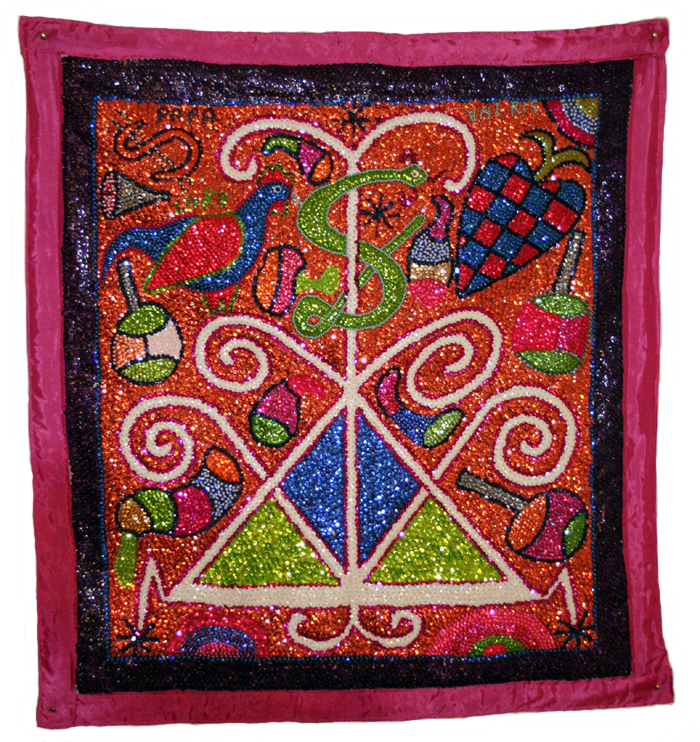 🇭🇹 Haiti and 2 moreHaitian VodouVodou
An Afro-Haitian religion blending West African traditions with Catholicism and FreemasonryTradition · Protection · Healing Living
🇭🇹 Haiti and 2 moreHaitian VodouVodou
An Afro-Haitian religion blending West African traditions with Catholicism and FreemasonryTradition · Protection · Healing Living
 🇮🇶 Iraq and 5 moreGrimoire
A textbook containing instructions for spells, rituals, and the creation of magical objects.Text · Protection · Healing Historical
🇮🇶 Iraq and 5 moreGrimoire
A textbook containing instructions for spells, rituals, and the creation of magical objects.Text · Protection · Healing Historical
 🇫🇷 France and 2 moreÉliphas Lévi
A French writer who shaped modern occult thought and ceremonial magic.Text · Power and authority · Speaking with spirits and the dead Historical
🇫🇷 France and 2 moreÉliphas Lévi
A French writer who shaped modern occult thought and ceremonial magic.Text · Power and authority · Speaking with spirits and the dead Historical