
A fairy path is a supernatural track believed to be used by fairies or spirits. It is most common in Celtic folklore, especially in Ireland, but also appears in parts of Germany, Sweden, and Canada.
- Paths are usually straight lines between sacred sites
- Building on a path was believed to cause illness
- Wise women advised on detecting these routes
- Underwater paths connected Irish islands
- Trods in England offered relief for rheumatism
What it is
A fairy path is an unseen trail that fairies or other spirits are thought to use. These routes are usually drawn as straight lines between places of spiritual importance. Such sites might include ancient earthworks known as raths, eerie mountains, springs, or old burial mounds. The concept shares similarities with ley lines and corpse roads. While some paths are circular, like fairy rings where fairies dance, the typical fairy path is linear. This belief is deeply rooted in Celtic tradition, particularly in Ireland, though it extends across Northern Europe and into North America.
Where it comes from
The idea of these paths comes from older European folklore. In many regions, round barrows were seen as homes for elves, trolls, or fallen angels. People avoided disturbing these mounds. In Denmark, beliefs about elf-barrows were widespread, with stories of smiths and giants dwelling within them. Similar ideas existed in Sweden, where certain mounds were linked to figures like Odin. In Germany, tales spoke of wild troops riding straight lines between castles. Corpse roads across Europe likely share this origin, serving as invisible tracks for spirits. The belief system suggests that these paths have always existed, sometimes accompanying human settlers to new lands like Canada.
How it is done
People adapted their building practices to respect these invisible lines. Houses were often built with front and back doors aligned so they could be left open at night for passage. Builders sometimes knocked off corners of structures if they blocked a path. To detect a path, some would mark a floor plan on the ground and leave stone piles overnight; undisturbed stones meant the site was safe. Others consulted wise women after misfortune occurred. If a house was built on a path, it was said the fairies would destroy it twice before allowing it to stand a third time. Avoiding disturbance was key to maintaining peace.
Tools and materials
Builders avoided using white quartz, which was considered a fairy stone. Instead, they relied on observation and advice from local wise women. Some remedies involved lighting small fires along the path using wood blessed on Saint John's Eve. These fires were intended to ward off illness or bad luck caused by obstructing the route. The alignment of doors and windows served as a practical tool for allowing passage without physical alteration to the structure itself.
Fairy path, drawn and placed
- Living
- Revived
- Fading
- Historical
- Legendary
- Performed
- Lineage
- Celtic folklore
What it is for
These paths were primarily associated with avoiding harm. Blocking a fairy path was believed to cause illness, death, or misfortune for those living nearby. For example, families reported sudden sicknesses that resolved only when obstructions were removed. Conversely, walking along certain grassy paths called trods was thought to relieve rheumatism, though animals avoided them. However, walking on paths used by beings like the Tylwyth teg or the Breton Ankou was considered fatal for mortals. The purpose was largely protective, ensuring humans did not interfere with spirit movement.
Who does it
Ordinary households were the main practitioners, adjusting their daily lives and construction to avoid offending the fairies. Wise women provided guidance, though they were usually consulted only after problems arose. Builders followed specific techniques to ensure safety. The belief required constant vigilance and respect for the unseen world. No formal training was needed, but knowledge of local lore was essential for navigating these invisible boundaries safely.
Peoples and places
The belief is strongest in Ireland, where fairy forts and raths are common landmarks. It also appears in Brittany, Cornwall, and Wales, with distinct local variations. In Germany, the Wild Troop of Rodenstein rode straight lines between castles. Swedish beliefs included mounds linked to Odin or hell-mouths. Danish tales featured elf-barrows and smiths. In Canada, specifically Newfoundland, folktales describe couples dealing with fairies who had emigrated with humans. Each culture added its own details, such as coral-paved underwater paths in Ireland or specific deadly paths for Welsh spirits.
At a glance: who, where and when
Belief worlds
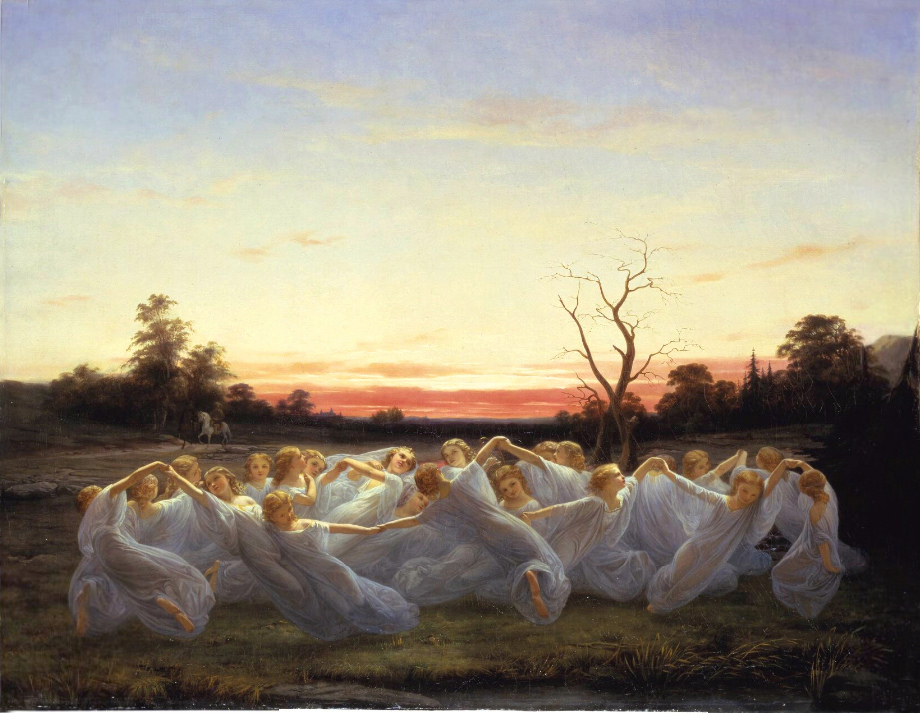
What people believe
Fairies and spirits inhabit these invisible tracks, moving between sacred sites. They are powerful forces that can cause illness or death if offended. The belief holds that these paths are real in a spiritual sense, even if invisible to the eye. Obstructing them invites retribution, while respecting them ensures safety. Some paths are used for dancing, others for travel. Underwater versions connect islands, visible to fishermen. The worldview sees the natural landscape as layered with supernatural activity, requiring careful navigation to avoid conflict with non-human inhabitants.
When it is done
Specific times were associated with danger. Parents brought children indoors before fairies processed through villages. Nighttime was particularly risky, as fairies traveled then. Saint John's Eve, on June 23, was significant for lighting blessed fires to counteract negative effects. The belief did not tie to a single festival but rather to daily life and seasonal changes, emphasizing constant awareness of the spirit world's movements.
How scholars and sceptics see it
Scholars view fairy paths as part of broader European folklore traditions. They note similarities with ley lines and corpse roads, suggesting a shared cultural origin. Anthropologists see these beliefs as reflecting how people interacted with the landscape, adapting architecture to fit perceived spiritual geography. Historians document how these stories persisted through centuries, often blending with Christian elements like Saint John's Eve rituals. Skeptics attribute the phenomena to psychological factors or misinterpretations of natural features, but the cultural impact remains significant.
Cautions and what is closed
Blocking a fairy path was believed to cause serious harm, including illness and death. Stories recount families suffering until obstructions were removed. Walking on certain paths, like those of the Tylwyth teg, was fatal. Misfortune could strike those who disturbed bushes or built incorrectly. Fraudulent claims by fake healers or wise women exploiting fear were possible, though not explicitly detailed in all accounts. The belief system emphasized caution and respect to avoid supernatural retribution.
Compare and confuse
Fairy paths are often confused with ley lines due to their straight nature and connection to ancient sites. They also resemble corpse roads, which serve similar purposes for spirits. In different regions, they may be called ghost-ways or death-roads. Fairy rings are related but circular, used for dancing rather than travel. The concept varies by culture, with Irish raths, German castles, and Canadian settlements each adding unique details to the core idea of invisible spirit trails.
Questions people ask about Fairy path
What is a fairy path?
It is an invisible trail believed to be used by fairies or spirits, typically drawn as a straight line between significant sites like ancient mounds or hills.
Where do fairy paths come from?
They originate in Celtic folklore, especially in Ireland, but also appear in German, Swedish, and Canadian traditions, often linked to older spirit beliefs.
What happens if you block a fairy path?
It is believed to cause illness, death, or misfortune for those living nearby, unless the obstruction is removed or passage is allowed through open doors.
Good reading and sources
The facts on this page come from the Wikipedia article "Fairy path", written by its contributors and used under the CC BY-SA 4.0 licence, and from its Wikidata record (CC0). EveryJaadu rewrote the text in its own words, with AI assistance, and compares every page with the article to make sure no passage is copied. It may be reused under the same CC BY-SA 4.0 licence with a link back.
It may contain mistakes. Names and customs differ from one community to the next, and some knowledge is closed to outsiders and left out here. This page describes belief and practice. It does not say that any of it works, it is not a how-to, and it is not medical advice. If something is wrong, tell us. Last refreshed 2026-10-12.
More from Ireland
All the entries from Ireland 🇫🇷 France and 2 moreKing ArthurBrenin Arthur
A legendary British king and folk hero of medieval literature and Welsh mythologyFigure · Power and authority · Wonder and entertainment Legendary
🇮🇪 IrelandFetch
A spectral double of a living person, seen as an omen of death or long life.Being · Seeing and foretelling Historical
🇫🇷 France and 2 moreKing ArthurBrenin Arthur
A legendary British king and folk hero of medieval literature and Welsh mythologyFigure · Power and authority · Wonder and entertainment Legendary
🇮🇪 IrelandFetch
A spectral double of a living person, seen as an omen of death or long life.Being · Seeing and foretelling Historical
 🇮🇪 Ireland and 5 moreCairn
A human-made stack of stones used as a marker, memorial, or religious symbol across many cultures.Tradition · Protection · Speaking with spirits and the dead Living
🇮🇪 Ireland and 5 moreCairn
A human-made stack of stones used as a marker, memorial, or religious symbol across many cultures.Tradition · Protection · Speaking with spirits and the dead Living
 🇪🇸 Spain and 5 moreSt John's Eve
A Christian vigil marked by bonfires and plant gathering on the summer solstice eveRite · Protection · Speaking with spirits and the dead Living
🇪🇸 Spain and 5 moreSt John's Eve
A Christian vigil marked by bonfires and plant gathering on the summer solstice eveRite · Protection · Speaking with spirits and the dead Living
Related elsewhere
All belief 🇹🇷 Turkey and 5 moreEvil eye
A curse caused by an envious look and the charms used to block itBelief · Protection · Cursing and harm Living
🇹🇷 Turkey and 5 moreEvil eye
A curse caused by an envious look and the charms used to block itBelief · Protection · Cursing and harm Living
 🇺🇸 United States and 2 moreLouisiana Voodoo
An African diasporic religion practiced in Louisiana from the 18th to early 20th centuriesTradition · Healing · Protection Historical
🇺🇸 United States and 2 moreLouisiana Voodoo
An African diasporic religion practiced in Louisiana from the 18th to early 20th centuriesTradition · Healing · Protection Historical
 🇮🇩 Indonesia and 2 moreDukun
A traditional healer and spirit medium in Indonesian folk practiceTradition · Healing · Seeing and foretelling Living
🇮🇩 Indonesia and 2 moreDukun
A traditional healer and spirit medium in Indonesian folk practiceTradition · Healing · Seeing and foretelling Living
 🇮🇷 Iran and 4 moreJinnجِنّ
Supernatural beings in Islamic and pre-Islamic Arabian belief, capable of shapeshifting and living in society.Being · Protection · Cursing and harm Living
🇮🇷 Iran and 4 moreJinnجِنّ
Supernatural beings in Islamic and pre-Islamic Arabian belief, capable of shapeshifting and living in society.Being · Protection · Cursing and harm Living