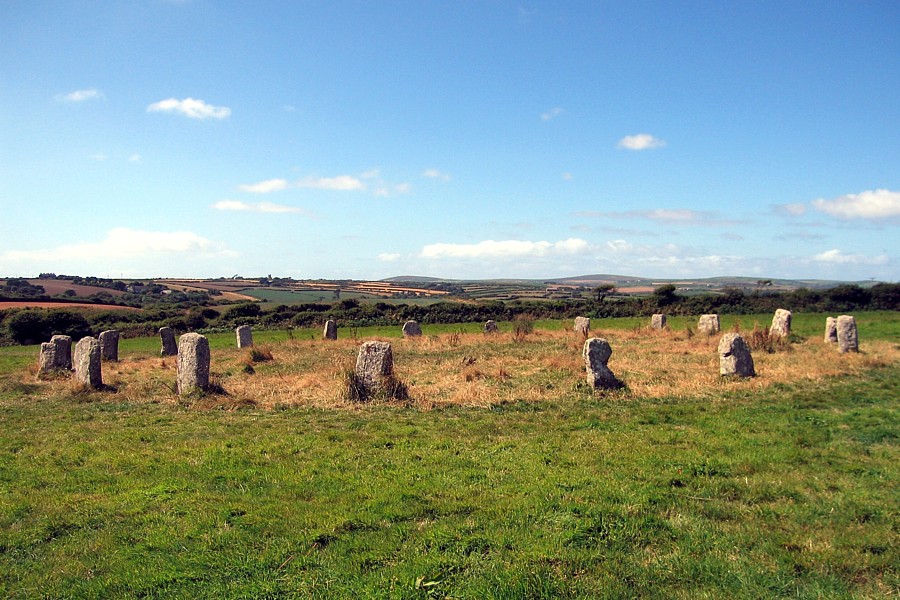
Cornish mythology is the body of stories and beliefs belonging to the Cornish people. It shares roots with Breton and Welsh traditions and includes remnants of pre-Christian British lore. The corpus features giants, fairies, and local spirits alongside Arthurian romance.
- Knockers are miner spirits living underground near mines.
- Jack the Giant Killer is set in Cornwall.
- Lyonesse is a lost land similar to Breton Ys.
- Blackberries must not be picked after Old Michaelmas.
- Mist direction predicts weather in north Cornwall.
What it is
Cornish mythology encompasses the folklore and legendary history of Cornwall. It forms part of a broader Brythonic cultural sphere that extends into Brittany and Wales. The stories preserve elements of ancient British religion while incorporating later medieval romances. Common subjects include supernatural beings like pixies and buccas, as well as heroic figures from the Arthurian cycle. These narratives explain natural landscapes and historical events through a magical lens.
Where it comes from
The tradition draws from pre-Christian Britain and early medieval Celtic culture. Many tales were recorded in Welsh manuscripts and relate to the kingdom of Cerniw. Later layers include stories of smugglers and pirates who operated along the coast. Some legends emerged from the dangerous conditions of tin mining, where cave-ins and exhaustion inspired tales of underground spirits. The corpus also reflects shared myths with neighboring Celtic regions across the sea.
How it is done
Stories are passed down orally and through literature. Traditional droll tellers perform these tales at public gatherings. The narratives serve to explain local geography, such as rock formations or coastal bays. They also provide moral lessons or warnings about behavior, such as avoiding blackberries after autumn festivals. The tales function as a cultural memory for the community, linking the present landscape to mythical pasts.
Tools and materials
The primary tools are language and performance. Droll tellers use storytelling techniques to engage audiences. Physical objects like pasties appear in tales about appeasing miners' spirits. Stone circles and pools feature prominently as settings for petrification myths. Literary works by collectors like Enys Tregarthen helped preserve these oral traditions in written form.
Cornish mythology, drawn and placed
- Living
- Revived
- Fading
- Historical
- Legendary
- Performed
- Lineage
- Celtic mythology
What it is for
The myths entertain and educate listeners about local history and geography. They offer supernatural explanations for natural phenomena like weather patterns or geological features. Stories warn against breaking religious observances, such as dancing on Sundays. They also reinforce community identity by connecting the Cornish people to their Celtic ancestors and shared literary heritage.
Who does it
Traditionally, droll tellers performed these stories for local audiences. Modern preservation relies on scholars and writers who collect and publish the tales. Nellie Sloggett, writing as Enys Tregarthen, documented many fairy stories. Researchers study these texts to understand Celtic cultural connections between Cornwall, Wales, and Brittany.
Peoples and places
The Cornish share this mythological tradition with the Bretons and Welsh. All three groups speak related Celtic languages and share ancient legends. The Arthurian cycle and Tristan romance are common across these regions. Local variations exist, such as the Cornish name for St Michael's Mount. The shared heritage reflects the historical movement of peoples around the British Sea.
At a glance: who, where and when
Who does it
Peoples
Belief worlds


What people believe
Beliefs include the existence of pixies, buccas, and knockers. Knockers are miner spirits said to live underground and cause mischief. Giants are credited with shaping the landscape. The washerwomen legend warns travelers to avoid being seen by spectral laundresses. Weather lore connects mist direction to upcoming rain or sunshine. Blackberry picking is restricted after Old Michaelmas due to devil-related taboos.
When it is done
Old Michaelmas Day on October 11 marks a time when blackberries should not be harvested. This date coincides with legends of Satan falling into brambles. Stone circle myths often involve punishment for dancing on Sundays. The tales are performed year-round but may have seasonal associations with harvest festivals or mining cycles.
How scholars and sceptics see it
Anthropologists view these myths as expressions of Celtic cultural identity. Historians trace connections to medieval Welsh manuscripts and Roman-era Britain. Scholars note the influence of tin mining on spirit lore, suggesting knockers originated from occupational hazards. Literary critics analyze the adaptation of Arthurian legends in Cornish contexts. The tradition is studied as part of broader Brythonic folklore.
Cautions and what is closed
Some legends contain warnings about supernatural harm. The washerwomen tale describes death for those who fail to twist sheets correctly. Mining stories reflect real dangers of cave-ins and oxygen deprivation. Blackberry taboos stem from religious superstitions rather than health risks. No physical harm is associated with the myths themselves, though they reflect historical anxieties about labor and nature.
Compare and confuse
Cornish mythology closely resembles Breton and Welsh folklore. The Arthurian legends appear in all three traditions, with Tintagel linked to King Arthur's birth. The lost land of Lyonesse parallels the Breton legend of Ys. Giant slayer tales connect to broader European folklore. Stone circle myths about petrified dancers appear in various Celtic regions.
Law and persecution
No specific laws govern Cornish mythology. The traditions are part of the cultural heritage protected under general heritage conservation laws. Witchcraft history in Cornwall has been studied, but no active persecution exists. The myths are freely published and performed as part of regional tourism and education.
Today
Cornish mythology remains popular through children's books and local tourism. Droll telling performances continue at festivals and cultural events. Writers and artists draw inspiration from these legends. The stories are taught in schools as part of local history curricula. Digital archives preserve collected tales for future generations.
Questions people ask about Cornish mythology
What is Cornish mythology?
It is the collection of folk tales, legends, and beliefs belonging to the Cornish people. It shares roots with Welsh and Breton traditions and includes stories of giants, fairies, and Arthurian heroes.
Where does it come from?
It originates from pre-Christian Britain and early Celtic culture. It was shaped by centuries of oral storytelling, mining communities, and shared literary traditions with neighboring Celtic regions.
Who are the main characters?
Common figures include pixies, buccas, knockers, and giants. Legendary humans like King Arthur, Tristan, and Jack the Giant Killer also feature prominently in the stories.
Why are there miner spirits?
Knockers likely originated from the dangers of tin mining. Cave-ins and exhaustion may have inspired tales of underground spirits causing mischief or warning miners of danger.
Is it still practiced today?
While not a religion, the stories remain alive through droll telling performances, children's books, and local festivals. Scholars and writers continue to document and adapt these legends.
Good reading and sources
The facts on this page come from the Wikipedia article "Cornish mythology", written by its contributors and used under the CC BY-SA 4.0 licence, and from its Wikidata record (CC0). EveryJaadu rewrote the text in its own words, with AI assistance, and compares every page with the article to make sure no passage is copied. It may be reused under the same CC BY-SA 4.0 licence with a link back.
It may contain mistakes. Names and customs differ from one community to the next, and some knowledge is closed to outsiders and left out here. This page describes belief and practice. It does not say that any of it works, it is not a how-to, and it is not medical advice. If something is wrong, tell us. Last refreshed 2026-10-05.
More from the United Kingdom
All the entries from the United Kingdom 🇬🇧 United Kingdom and 2 moreKing ArthurBrenin Arthur
A legendary British king and folk hero of medieval literature and Welsh mythologyFigure · Power and authority · Wonder and entertainment Legendary
🇬🇧 United KingdomCharmer
English folk healers who used gifts or verses to treat natural ailments without chargeTradition · Healing Historical
🇬🇧 United Kingdom and 2 moreKing ArthurBrenin Arthur
A legendary British king and folk hero of medieval literature and Welsh mythologyFigure · Power and authority · Wonder and entertainment Legendary
🇬🇧 United KingdomCharmer
English folk healers who used gifts or verses to treat natural ailments without chargeTradition · Healing Historical
 🇪🇸 Spain and 5 moreSt John's Eve
A Christian vigil marked by bonfires and plant gathering on the summer solstice eveRite · Protection · Speaking with spirits and the dead Living
🇪🇸 Spain and 5 moreSt John's Eve
A Christian vigil marked by bonfires and plant gathering on the summer solstice eveRite · Protection · Speaking with spirits and the dead Living
 🇫🇷 France and 5 moreYule log
A large wooden log burned in the hearth during winter festivals across Europe and North America.Tradition · Protection · Luck and prosperity Living
🇫🇷 France and 5 moreYule log
A large wooden log burned in the hearth during winter festivals across Europe and North America.Tradition · Protection · Luck and prosperity Living
Related elsewhere
All tradition 🇪🇬 Egypt and 1 moreSphinx
A mythical hybrid with a human head and lion body, serving as guardian or riddler in Egyptian and Greek traditions.Being · Protection · Wonder and entertainment Legendary
🇨🇱 ChileChilean mythology
The myths and legends of Chile, blending indigenous roots with colonial influences.Tradition · Wonder and entertainment Living
🇷🇺 Russia and 3 moreNart sagaНарты кадджытæ
A collection of epic tales from the North Caucasus about a legendary group of heroes.Text · Wonder and entertainment Historical
🇪🇬 EgyptDjedi
A fictional magician from the Westcar Papyrus who resurrects animals and foretells a king's lineage.Figure · Seeing and foretelling · Wonder and entertainment Legendary
🇪🇬 Egypt and 1 moreSphinx
A mythical hybrid with a human head and lion body, serving as guardian or riddler in Egyptian and Greek traditions.Being · Protection · Wonder and entertainment Legendary
🇨🇱 ChileChilean mythology
The myths and legends of Chile, blending indigenous roots with colonial influences.Tradition · Wonder and entertainment Living
🇷🇺 Russia and 3 moreNart sagaНарты кадджытæ
A collection of epic tales from the North Caucasus about a legendary group of heroes.Text · Wonder and entertainment Historical
🇪🇬 EgyptDjedi
A fictional magician from the Westcar Papyrus who resurrects animals and foretells a king's lineage.Figure · Seeing and foretelling · Wonder and entertainment Legendary