
Cintāmaṇi
In its own language: चिन्तामणि
from Sanskrit cintāmaṇi, meaning 'wish-fulfilling gem'
A wish-fulfilling jewel from Hindu and Buddhist traditions
The Cintāmaṇi is a mythical gem described in Hindu and Mahayana Buddhist texts as granting the desires of its holder. It appears in scriptures held by deities like Vishnu and Bodhisattvas such as Avalokiteśvara. The stone symbolizes spiritual wisdom and the ability to transform suffering into enlightenment.
- Sanskrit term meaning 'wish-fulfilling gem'
- Held by Vishnu, Ganesha, and Avalokiteśvara
- One of four relics that fell from the sky in Tibet
- Named after the Kintamani region in Bali
- Translated as Ruyi Baozhu in Chinese
What it is
The Cintāmaṇi is a legendary magical object found in the sacred literature of Hinduism and Buddhism. It is depicted as a radiant jewel or luminous pearl that grants the wishes of those who possess it. In Hindu lore, it is often linked to gods like Vishnu and Ganesha, appearing as the Kaustubha Mani or on the foreheads of serpent kings. Buddhist texts describe it as a symbol of the Buddha's qualities, capable of curing disease, purifying water, and providing material needs. It represents the power to turn afflictions into wisdom and is said to help devotees see the Holy Retinue of Amitabha upon death.
Where it comes from
The concept originates in ancient Indian religious texts. The Yoga Vasistha, dated to the 10th century CE, contains early narratives about the stone. The Vishnu Purana, attributed to the mid-first millennium CE, discusses related gems like the Syamanta jewel. In Tibetan Buddhism, tradition holds that the Cintāmaṇi was one of four relics that fell from the sky during the reign of King Lha Thothori Nyantsen. These objects were kept in reverence before being explained by mysterious strangers as bringers of the Dharma to Tibet. The name also gave rise to the Kintamani region in Bali.
Tools and materials
The jewel is described as a fabulous gem, sometimes resembling a pearl. In Tibetan contexts, it is associated with a mani stone inscribed with the mantra Om Mani Padme Hum. It is carried by divine beings, including the wind horse Lung Ta on prayer flags. In Japan, the goddess Kisshōten (Lakshmi) is depicted holding the stone in her hand. The object serves as a physical manifestation of spiritual power and divine compassion.
Cintāmaṇi, drawn and placed
- Living
- Revived
- Fading
- Historical
- Legendary
- Performed
- Lineage
- Hindu and Buddhist mythology
What it is for
Devotees believe the Cintāmaṇi fulfills worldly desires such as wealth, clothing, and food. It is also sought for spiritual goals, including attaining the Wisdom of Buddha and understanding the truth of existence. The stone helps transform negative emotions into Bodhi (enlightenment). In Hindu tradition, it contrasts with ordinary gems; while glass or gold can be bought, the Cintāmaṇi is rare and signifies supreme devotion and liberation beyond heavenly pleasures.
Peoples and places
The Cintāmaṇi is central to Hindu and Mahayana Buddhist cultures. In India, it is connected to Vishnu and Ganesha. Tibetan Buddhians view it as a sacred relic from the sky. In Japan, where Lakshmi is worshipped as Kisshōten, the jewel is a common iconographic element. The name influenced place names in Southeast Asia, such as the Kintamani mountains in Bali. Scholars note parallels between the Cintāmaṇi and other mythic objects like the philosopher's stone or the Holy Grail.
At a glance: who, where and when
Who does it
Belief worlds
What people believe
The jewel embodies the intersection of material and spiritual fulfillment. Hindus believe it represents prema-bhakti (loving devotion), which is rarer than heaven itself. Buddhists see it as a symbol of the teachings that cure suffering. The Tibetan account suggests it brings the Dharma to new lands. René Guénon interpreted it as equivalent to the philosopher's stone, linking it to esoteric transformation. The stone is not merely a treasure but a conduit for divine grace and cosmic order.
How scholars and sceptics see it
Researchers analyze the Cintāmaṇi as a key symbol in Asian religious art and literature. It appears in encyclopedias of Tibetan motifs and dictionaries of Buddhism. Scholars compare it to other wish-fulfilling objects across cultures, noting its role in expressing the desire for both temporal prosperity and spiritual liberation. The text highlights how the same symbol adapts across Hindu and Buddhist contexts, maintaining its core function as a grantor of wishes while shifting theological emphasis.
Compare and confuse
The Cintāmaṇi is often compared to the Syamanta jewel in Hindu texts and the philosopher's stone in Western esotericism. In East Asia, it corresponds to the Ruyi Baozhu (as-one-wishes precious jewel). Similar concepts include the Ark of the Covenant, the Holy Chalice, and the Sampo. These objects share traits of rarity, divine origin, and the power to provide sustenance or protection to their holders.
Questions people ask about Cintāmaṇi
What is the Cintāmaṇi?
It is a mythical wish-fulfilling jewel described in Hindu and Buddhist scriptures. It is believed to grant desires, cure illness, and provide spiritual wisdom to its holder.
Where does the Cintāmaṇi come from?
The concept originates in ancient Indian texts like the Vishnu Purana and Yoga Vasistha. In Tibet, it is said to be a relic that fell from the sky during the reign of King Lha Thothori Nyantsen.
Who possesses the Cintāmaṇi?
In Hinduism, it is linked to Vishnu and Ganesha. In Buddhism, it is held by Bodhisattvas like Avalokiteśvara and Kṣitigarbha. In Japan, the goddess Kisshōten is depicted with it.
What does the name mean?
The Sanskrit word Cintāmaṇi translates to 'wish-fulfilling gem'. In Chinese, it is known as Ruyi Baozhu, meaning 'as-one-wishes precious jewel'.
Good reading and sources
- Cintamani on WikipediaEncyclopedia
- More photos on Wikimedia CommonsPhotos and video
- Wikidata recordOpen data
The facts on this page come from the Wikipedia article "Cintamani", written by its contributors and used under the CC BY-SA 4.0 licence, and from its Wikidata record (CC0). EveryJaadu rewrote the text in its own words, with AI assistance, and compares every page with the article to make sure no passage is copied. It may be reused under the same CC BY-SA 4.0 licence with a link back.
It may contain mistakes. Names and customs differ from one community to the next, and some knowledge is closed to outsiders and left out here. This page describes belief and practice. It does not say that any of it works, it is not a how-to, and it is not medical advice. If something is wrong, tell us. Last refreshed 2026-10-09.
More from India
All the entries from India 🇮🇷 Iran and 2 moreSomaसोम
A sacred ritual drink of the ancient Vedic religion and its Iranian counterpartSubstance · Power and authority · Speaking with spirits and the dead Historical
🇮🇷 Iran and 2 moreSomaसोम
A sacred ritual drink of the ancient Vedic religion and its Iranian counterpartSubstance · Power and authority · Speaking with spirits and the dead Historical
 🇮🇳 India and 1 moreAmritaअमृत (Sanskrit)
A Sanskrit concept of immortality and the nectar that grants it across Indian religionsBelief · Healing · Power and authority Living
🇮🇳 IndiaPanchagavya
A fermented mixture of five cow products used in Hindu rituals and Ayurvedic traditions.Substance · Cleansing and purification · Healing Living
🇮🇳 India and 1 moreAmritaअमृत (Sanskrit)
A Sanskrit concept of immortality and the nectar that grants it across Indian religionsBelief · Healing · Power and authority Living
🇮🇳 IndiaPanchagavya
A fermented mixture of five cow products used in Hindu rituals and Ayurvedic traditions.Substance · Cleansing and purification · Healing Living
 🇮🇳 India and 1 moreHeliotrope
A green and red mineral stone used as an amulet for health, invisibility, and courage.Charm · Protection · Healing Historical
🇮🇳 India and 1 moreHeliotrope
A green and red mineral stone used as an amulet for health, invisibility, and courage.Charm · Protection · Healing Historical
Related elsewhere
All substance 🇫🇷 FranceHoly GrailSaint Graal
A cup or stone from Arthurian tales that grants healing and eternal lifeFigure · Healing · Luck and prosperity Legendary
🇫🇷 FranceHoly GrailSaint Graal
A cup or stone from Arthurian tales that grants healing and eternal lifeFigure · Healing · Luck and prosperity Legendary
 🇨🇳 China and 2 moreEight Immortals八仙
Eight legendary Taoist figures of China, each with a power and a vesselFigure · Protection · Healing Living
🇨🇳 China and 2 moreEight Immortals八仙
Eight legendary Taoist figures of China, each with a power and a vesselFigure · Protection · Healing Living
 🇮🇶 Iraq and 5 moreGrimoire
A textbook containing instructions for spells, rituals, and the creation of magical objects.Text · Protection · Healing Historical
🇮🇶 Iraq and 5 moreGrimoire
A textbook containing instructions for spells, rituals, and the creation of magical objects.Text · Protection · Healing Historical
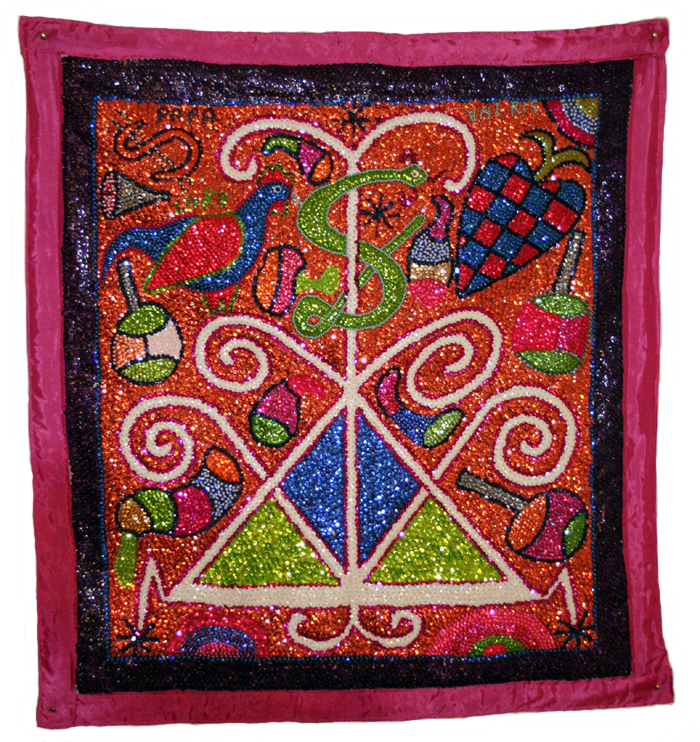 🇭🇹 Haiti and 2 moreHaitian VodouVodou
An Afro-Haitian religion blending West African traditions with Catholicism and FreemasonryTradition · Protection · Healing Living
🇭🇹 Haiti and 2 moreHaitian VodouVodou
An Afro-Haitian religion blending West African traditions with Catholicism and FreemasonryTradition · Protection · Healing Living